Railway or Tramway Locomotive or Rolling Stock Parts
CN → US| HS Code | Tariff Rate | Origin | Destination | Doc |
|---|---|---|---|---|
| 8607995000 | 38.1% | CN | US | Official Doc |
| 8608000000 | 38.8% | CN | US | Official Doc |
| 7302909000 | 35.0% | CN | US | Official Doc |
| 7302300000 | 85.0% | CN | US | Official Doc |
| 8607991000 | 37.8% | CN | US | Official Doc |
Product Images
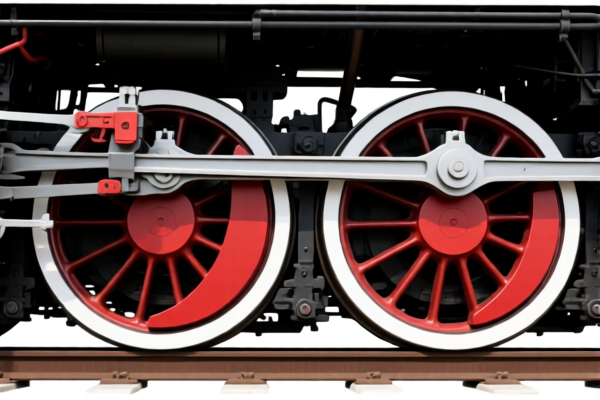
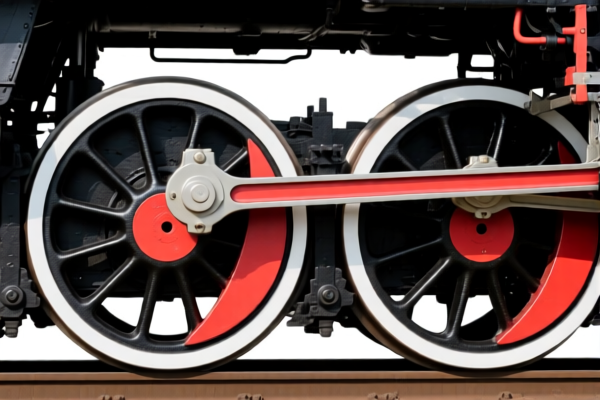
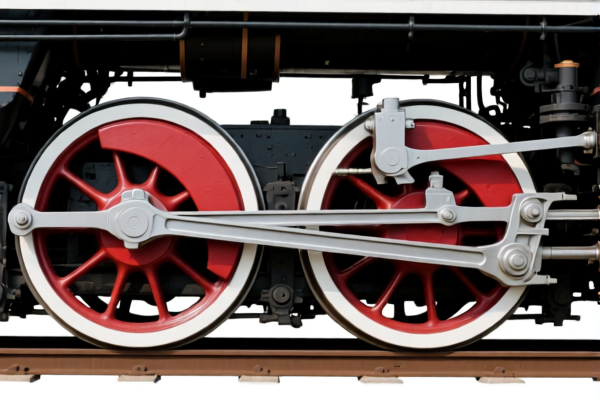
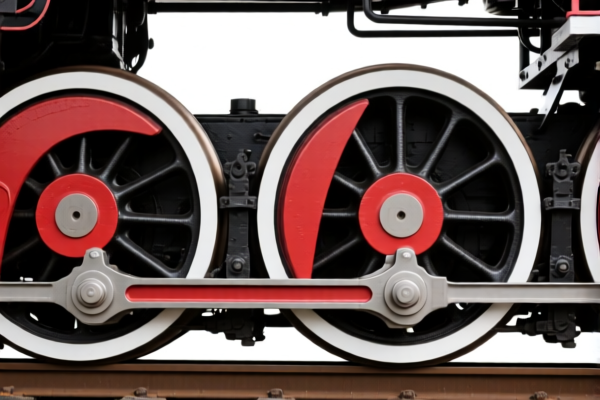
AI Analysis
🚂 Railway & Tramway Rolling Stock Parts (Components, Spare Parts & Accessories)
🌐 HS Code Reference & Customs Clearance Guide | 2026 Latest Tariff Analysis | Professional Transit Strategy
📌 Part 1: Product Definition & Classification
Railway or Tramway Locomotive or Rolling Stock Parts refers to components, spare parts, and accessories specifically designed for trains, trams, metro cars, and locomotives. These are critical for the operation, maintenance, and repair of rail transport systems.
In international trade, classification depends heavily on: 1. Material Composition (Steel, Aluminum, Composite, etc.) 2. Specific Function (Undercarriage, Braking, Coupling, Interior, Electrical) 3. Integration Level (General purpose vs. Vehicle-specific)
⚠️ Key Distinction:
- If the part is specifically identifiable as belonging to railway rolling stock (e.g., wheelsets, bogie frames, couplers), it generally falls under Chapter 86.
- If the part is made of steel and used for track construction or structural support, it may fall under Chapter 73.
- General-purpose mechanical parts may fall under different headings if not specifically dedicated to rail use.
📦 Part 2: HS Code Classification Details (2026 Latest Tariff Authority Comparison)
| HS Code | Product Description | Application Scenario | Material/Function |
|---|---|---|---|
| 8607.99.50.00 | Parts and accessories of railway or tramway locomotives or rolling stock | General vehicle parts, non-specific to track or steel structure. High match for vehicle components. | Vehicle-specific parts; no material conflict. |
| 8608.00.00.00 | Railway or tramway track fixtures and fittings; mechanical (including thermal) or electro-mechanical signaling, safety or traffic control equipment | Track fixtures, fittings, and accessories highly consistent with vehicle parts in function. | Fixtures and fittings for rail infrastructure. |
| 7302.90.90.00 | Steel constructional parts for bridges, viaducts, towers, pylraers... | Inferred to contain steel components; reasonable scope for other categories if not clearly rail-specific. | Steel-based structural parts. |
| 7302.30.00.00 | Steel sleepers (cross-ties) | Inferred to contain iron or steel track construction materials (cross-components). | Steel cross-ties/sleepers. |
| 8607.99.10.00 | Parts and accessories of railway or tramway locomotives or rolling stock | Vehicle parts and accessories in the residual category; no material conflict. | General vehicle parts; catch-all for rail vehicle components. |
🔍 Important Reminder:
- Chapter 86 (8607/8608) is the primary destination for vehicle-specific parts.
- Chapter 73 (7302) applies if the item is primarily a steel constructional part or sleepers, not a functional vehicle component.
- Misclassification between Chapter 86 and 73 can lead to significant tariff differences and customs delays.
💰 Part 3: 2026 Latest Tariff Rate Breakdown (Including Surtaxes & Policy Surcharges)
✅ Applicable Country: United States (US)
✅ Origin: China (CN)
✅ Effective Date: From November 10, 2025 onwards (including subsequent imports)
🎯 1. 8607.99.50.00 — Parts and Accessories of Railway Rolling Stock (General Match)
| Item | Content |
|---|---|
| Base Duty Rate | 3.1% (ad valorem) |
| Section 301 Surtax | +25.0% |
| IEEPA Surtax (Section 122) | +10.0% |
| Total Effective Rate | 38.1% |
| Tax Calculation | CIF Value × 38.1% |
| De Minimis Exemption Eligible? | ❌ No (deny_de_minimis) |
| Legal Basis Path | USITC:8607.99.50.00 → Section 301: 25% → IEEPA: 10% |
📌 Explanation:
- This code has a low base duty (3.1%) but is subject to full surtaxes.
- The 38.1% total rate is high and must be factored into cost calculations.
🎯 2. 8608.00.00.00 — Railway Track Fixtures and Fittings
| Item | Content |
|---|---|
| Base Duty Rate | 3.8% (ad valorem) |
| Section 301 Surtax | +25.0% |
| IEEPA Surtax (Section 122) | +10.0% |
| Total Effective Rate | 38.8% |
| Tax Calculation | CIF Value × 38.8% |
| De Minimis Exemption Eligible? | ❌ No (deny_de_minimis) |
| Legal Basis Path | USITC:8608.00.00.00 → Section 301: 25% → IEEPA: 10% |
📌 Note:
- Slightly higher than8607.99.50.00due to higher base duty (3.8%).
- Applicable if parts are classified as track fixtures rather than vehicle parts.
🎯 3. 7302.90.90.00 — Steel Constructional Parts (Other)
| Item | Content |
|---|---|
| Base Duty Rate | 0.0% (ad valorem) |
| Section 301 Surtax | +25.0% |
| IEEPA Surtax (Section 122) | +10.0% |
| Total Effective Rate | 35.0% |
| Tax Calculation | CIF Value × 35.0% |
| De Minimis Exemption Eligible? | ❌ No (deny_de_minimis) |
| Legal Basis Path | USITC:7302.90.90.00 → Section 301: 25% → IEEPA: 10% |
📌 Explanation:
- Lowest total rate among the listed codes (35.0%).
- Applies only if the part is clearly a steel constructional part and not specifically a vehicle component.
- Risk of misclassification: If deemed a vehicle part, it should be in Chapter 86, not 73.
🎯 4. 7302.30.00.00 — Steel Sleepers (Cross-Ties)
| Item | Content |
|---|---|
| Base Duty Rate | 0.0% (ad valorem) |
| Section 301 Surtax | +25.0% |
| IEEPA Surtax (Section 122) | +10.0% |
| Surtax on Steel/Aluminum/Copper Products | +50.0% |
| Total Effective Rate | 85.0% |
| Tax Calculation | CIF Value × 85.0% |
| De Minimis Exemption Eligible? | ❌ No (deny_de_minimis) |
| Legal Basis Path | USITC:7302.30.00.00 → Section 301: 25% → IEEPA: 10% → Steel/Aluminum/Copper Surtax: 50% |
📌 Critical Warning:
- Extremely high tariff (85.0%) due to additional 50% surtax on steel products.
- Only applies to steel sleepers/cross-ties.
- Avoid this code unless the product is strictly steel sleepers.
🎯 5. 8607.99.10.00 — Parts and Accessories of Railway Rolling Stock (Residual Category)
| Item | Content |
|---|---|
| Base Duty Rate | 2.8% (ad valorem) |
| Section 301 Surtax | +25.0% |
| IEEPA Surtax (Section 122) | +10.0% |
| Total Effective Rate | 37.8% |
| Tax Calculation | CIF Value × 37.8% |
| De Minimis Exemption Eligible? | ❌ No (deny_de_minimis) |
| Legal Basis Path | USITC:8607.99.10.00 → Section 301: 25% → IEEPA: 10% |
📌 Note:
- Similar to8607.99.50.00but with a lower base duty (2.8%).
- Applicable for vehicle parts that do not fit more specific subheadings.
🛠️ Part 4: Customs Clearance Practical Advice (Real-World Pitfall Guide)
✅ 1. Documentation Checklist (Mandatory)
| Document | Required | Notes |
|---|---|---|
| ✅ Product Specification Sheet | ✔️ | Dimensions, material, weight, intended use |
| ✅ Technical Drawings | ✔️ | To prove if part is vehicle-specific or structural |
| ✅ Product Photos (with Nameplate) | ✔️ | Clear view of model, brand, and technical data |
| ✅ Third-Party Test Report | ✔️ | AAR, EN, ISO certifications if applicable |
| ✅ Commercial Invoice | ✔️ | Must clearly state "Parts for Railway Rolling Stock" |
| ✅ Packing List | ✔️ | Detailing components and accessories |
| ✅ Certificate of Origin (CO) | ✔️ | For potential preferential treatment (if applicable) |
✅ 2. Declaration Strategy (Key Tips)
🔥 "Be Specific, Provide Evidence, Avoid Ambiguity!"
| Scenario | Correct Declaration | Incorrect Action |
|---|---|---|
| Vehicle-specific part (e.g., brake pad, coupler) | 8607.99.50.00 or 8607.99.10.00 |
Misclassify as general steel part → Risk of 85% |
| Track fixture (e.g., rail clip, anchor) | 8608.00.00.00 |
Misclassify as vehicle part → Potential penalty |
| Steel sleeper/cross-tie | 7302.30.00.00 |
Misclassify as vehicle part → 85% tariff |
| General steel structural part | 7302.90.90.00 |
If vehicle-specific, risk of reclassification |
✅ 3. Special Circumstances Handling
| Situation | Recommendation |
|---|---|
| OEM Custom Parts | Provide client order + design drawings to prove vehicle-specificity |
| Mixed Shipments (Vehicle + Track Parts) | Declare separately to avoid ambiguous classification |
| Parts with Mixed Materials | Provide material composition breakdown; prioritize vehicle-specific function |
| Used/Second-Hand Parts | Provide proof of prior use and condition; may affect classification |
🌍 Part 5: Global Market Comparison (2026 Latest)
| Country/Region | Recommended HS Code | Tariff | Certification Requirements | Notes |
|---|---|---|---|---|
| 🇺🇸 USA | 8607.99.50.00 |
38.1% (China-origin) | AAR, ISO | High surtaxes apply |
| 🇨🇳 China | 8607.99.50.00 |
8% (Import Duty) | CCC (if applicable) | No additional surtaxes |
| 🇪🇺 EU | 8607.99.50.00 |
4.5% (Import Duty) | EN Standards | No additional surtaxes |
| 🇬🇧 UK | 8607.99.50.00 |
4.5% (Import Duty) | UKCA | Post-Brexit rules apply |
| 🇦🇺 Australia | 8607.99.50.00 |
5% (Import Duty) | AS/NZS Standards | No additional surtaxes |
📌 Conclusion:
- USA imposes the highest total tariffs (35–85%) due to surtaxes.
- EU and UK have moderate tariffs (4.5–5%) with no major surtaxes.
- China-origin parts face significant cost penalties in the US market.
📌 Part 6: Common Mistakes & Pitfalls (Lessons Learned)
❌ Mistake 1: Declaring vehicle parts as "general steel parts" (7302.90.90.00)
👉 Consequence: If customs determines they are vehicle-specific, they may reclassify to 8607.99.50.00 with penalties.
❌ Mistake 2: Using ambiguous descriptions like "Rail Parts"
👉 Consequence: Customs may select the highest tariff code or delay clearance.
❌ Mistake 3: Failing to provide technical drawings for custom parts
👉 Consequence: Inability to prove vehicle-specificity → Potential misclassification.
❌ Mistake 4: Combining vehicle parts and track fixtures in one shipment without clear separation
👉 Consequence: Confusion in classification → Potential penalties.
✅ Correct Approach:
"Railway Vehicle Brake Assembly, Model XYZ, Made of Steel, Specific for Train Type ABC, Compliant with AAR Standards"
🎯 Part 7: Conclusion: Professional Declaration, Save Time, Reduce Costs
🎯 Key Takeaways:
🔹 "Specificity Saves Money" – Declare parts accurately based on function and material.
🔹 "High Tariffs in USA" – Factor in 35–85% total tariffs for China-origin rail parts.
🔹 "Avoid Steel Sleeper Code" –7302.30.00.00has 85% tariff; only use for actual sleepers.
🔹 "Documentation is Key" – Provide drawings, specs, and test reports to support classification.
📌 Pro Tip:
If your rail parts are originating from Vietnam, Mexico, Thailand, or Malaysia, you may apply for IEEPA exemption or lower surtax rates.
Consider Advance Ruling (Pre-classification) with US Customs to mitigate risks.
📣 Immediate Action:
📞 Contact professional customs broker + Provide product images + Apply for HS Code Advance Ruling
🚀 Ensure smooth customs clearance, reduce costs, and maximize profits!
✨ Professional clearance starts with accurate classification!
💼 Every cent of your cost deserves precise calculation!
Customer Reviews
About HS Code Classification
The Harmonized System (HS) is an internationally standardized nomenclature developed by the World Customs Organization (WCO) to classify traded products. Over 200 countries use the HS system as the basis for customs tariffs, trade statistics, and import/export regulations.
Each HS code follows a hierarchical structure:
- Chapter (2 digits) — Broad category of goods (e.g., Chapter 84: Machinery and Mechanical Appliances)
- Heading (4 digits) — More specific grouping within the chapter
- Subheading (6 digits) — Internationally standardized breakdown, used by all WCO member countries
- National subdivisions (8-10 digits) — Country-specific extensions for further classification, such as US HTSUS 10-digit codes
Correct HS code classification is essential for smooth customs clearance, accurate duty payment, and compliance with trade regulations. Misclassification can lead to customs delays, overpayment of duties, or penalties.
When importing from CN to US, the applicable tariff rates may include:
- Most-Favored-Nation (MFN) rate — The standard duty rate applied to WTO members
- General rate — Applied to countries without trade agreements
- Trade remedy duties — Additional tariffs such as Section 301 (anti-dumping), Section 232 (national security), or countervailing duties
The information provided on this page is for reference purposes only. For official classification, please consult with your local customs authority or a licensed customs broker.