Railway signal glass lens
CN → US| HS Code | Tariff Rate | Origin | Destination | Doc |
|---|---|---|---|---|
| 7014002000 | 40.0% | CN | US | Official Doc |
| 7014003000 | 38.4% | CN | US | Official Doc |
| 8530100000 | 35.0% | CN | US | Official Doc |
| 8530900000 | 35.0% | CN | US | Official Doc |
| 9013105000 | 22.8% | CN | US | Official Doc |
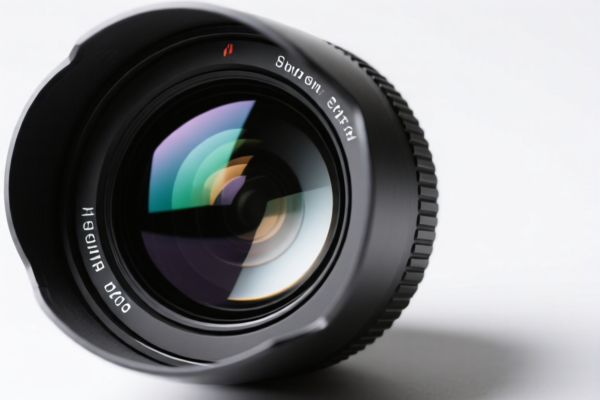
Product Images



AI Analysis
🚆 Railway Signal Glass Lens
🌐 HS Code Reference & Clearance Guide | 2026 Latest Tariff Analysis | Professional Clearance Strategy
📌 I. Product Definition & Classification: What is a "Railway Signal Glass Lens"?
Railway signal glass lenses are critical optical components used in railway signaling systems to project light and ensure safety. In international trade, these items are complex because they sit at the intersection of optical instruments and railway signaling equipment.
The classification depends heavily on whether the lens is viewed as a standalone optical element or as a functional part of a railway signal device.
⚠️ Key Distinction Point:
- If classified as a pure optical glass element/lens without specific railway integration context → Likely falls under Chapter 70 (Glass) or Chapter 90 (Optical Instruments).
- If classified as a spare part/component specifically for railway signaling equipment → Likely falls under Chapter 85 (Electrical Machinery/Signaling Equipment).
📦 II. HS Code Classification Details (2026 Latest Tariff Authority Comparison)
| HS Code | Product Description | Application Scenario | Tax Rate Summary |
|---|---|---|---|
7014.00.20.00 |
Glass material, used as signal lens (optical element); fits definition of "optical glass components & others" | Standalone optical glass lenses intended for signaling | 40.0% |
7014.00.30.00 |
Glass material, shape is lens, used for railway signals; consistent with "glass signal glass products & lenses" | Specific glass signal lenses for railways | 38.4% |
8530.10.00.00 |
Component for railway signaling equipment, made of glass; fits definition of "electrical signaling equipment & parts" | Glass lens identified strictly as a part of a railway signal apparatus | 35.0% |
8530.90.00.00 |
Used for railway signals, made of glass; a reasonable part of traffic control equipment components | General railway signal glass components (catch-all for signaling parts) | 35.0% |
9013.10.50.00 |
Lens belongs to optical elements, fits characteristics of optical devices/instruments; catch-all category for optical instrument parts | Viewed primarily as an optical instrument component rather than just a railway part | 22.8% |
🔍 Key Insight:
- The lowest tax rate (22.8%) is found under Chapter 90 (9013.10.50.00) if the lens can be successfully argued as a general optical instrument component.
- The highest tax rates (38.4% - 40.0%) are under Chapter 70 (7014.00.20.00 / 7014.00.30.00) when classified purely as glass products.
- The mid-range rate (35.0%) is under Chapter 85 (8530.10.00.00 / 8530.90.00.00) when classified as railway signaling equipment parts.
💰 III. 2026 Latest Tariff Rate Breakdown (Including Surtaxes & Policy Add-ons)
✅ Applicable Country: United States (US)
✅ Origin: China (CN)
✅ Effective Date: From November 10, 2025 (including subsequent imports)
🎯 1. 7014.00.20.00 —— Glass Material, Signal Lens (Optical Element)
| Item | Content |
|---|---|
| Base Tariff | 5.0% |
| Section 301 Surcharge | +25.0% |
| 122 Clause Tariff | +10.0% |
| Total Rate | 40.0% |
| Tax Calculation | CIF Value × 40% |
| De Minimis Exemption | ❌ Not Applicable |
| Legal Basis Path | Base Rate (5%) + Section 301 (25%) + 122 Clause (10%) |
📌 Explanation:
- This classification is treated as a glass product.
- It attracts the full Section 301 surcharge (25%) and the 122 Clause tariff (10%), resulting in a very high total duty of 40%.
- Risk: High cost burden. Only use this if no better classification applies.
🎯 2. 7014.00.30.00 —— Glass Lens for Railway Signals
| Item | Content |
|---|---|
| Base Tariff | 3.4% |
| Section 301 Surcharge | +25.0% |
| 122 Clause Tariff | +10.0% |
| Total Rate | 38.4% |
| Tax Calculation | CIF Value × 38.4% |
| De Minimis Exemption | ❌ Not Applicable |
| Legal Basis Path | Base Rate (3.4%) + Section 301 (25%) + 122 Clause (10%) |
📌 Note:
- Slightly lower than the previous code due to a lower base rate (3.4% vs 5.0%).
- Still suffers from high surcharges.
- Suitable for specific "glass signal products" that are clearly identified as such.
🎯 3. 8530.10.00.00 & 8530.90.00.00 —— Railway Signaling Equipment Parts
| Item | Content |
|---|---|
| Base Tariff | 0.0% |
| Section 301 Surcharge | +25.0% |
| 122 Clause Tariff | +10.0% |
| Total Rate | 35.0% |
| Tax Calculation | CIF Value × 35.0% |
| De Minimis Exemption | ❌ Not Applicable |
| Legal Basis Path | Base Rate (0%) + Section 301 (25%) + 122 Clause (10%) |
📌 Key Advantage:
- Zero Base Tariff significantly reduces the overall burden compared to Chapter 70.
- This is the second-best option for cost savings.
- Requires strong justification that the lens is a functional part of railway signaling equipment, not just a generic optical glass item.
🎯 4. 9013.10.50.00 —— Optical Instrument Component (Catch-all)
| Item | Content |
|---|---|
| Base Tariff | 5.3% |
| Section 301 Surcharge | +7.5% |
| 122 Clause Tariff | +10.0% |
| Total Rate | 22.8% |
| Tax Calculation | CIF Value × 22.8% |
| De Minimis Exemption | ❌ Not Applicable |
| Legal Basis Path | Base Rate (5.3%) + Section 301 (7.5%) + 122 Clause (10%) |
🏆 Best Cost-Optimization Option:
- This classification offers the lowest total tax rate (22.8%).
- Crucial Condition: You must argue that the lens is primarily an optical instrument component (Chapter 90) rather than a railway-specific part or a simple glass product.
- Note: The Section 301 surcharge here is only +7.5% (likely under a different footnote or exemption category for certain optical goods), compared to 25% for other categories.
- Strategy: If your lens can be described as a high-precision optical element for instruments, this is the winning classification.
🛠️ IV. Practical Clearance Advice (实战避坑指南)
✅ 1. Preparation Checklist (All Required)
| Document | Required | Description |
|---|---|---|
| ✅ Product Specification Sheet | ✔️ | Include material (glass type), dimensions, optical power, coating details. |
| ✅ Technical Data Sheet | ✔️ | Specify if it is a standalone lens or part of a signal unit. |
| ✅ High-Resolution Photos | ✔️ | Clear images of the lens, including any markings, packaging, and context (if part of a signal). |
| ✅ Commercial Invoice | ✔️ | Clearly state "Railway Signal Glass Lens" or "Optical Glass Lens for Signal Systems". |
| ✅ Packing List | ✔️ | Detail quantity, weight, and value. |
| ✅ Certificate of Origin (CO) | ✔️ | To prove origin (China) and apply correct surcharges. |
| ✅ Third-Party Test Report | ✔️ | Optional but helpful: Optical performance tests, durability tests. |
✅ 2. Declaration Tips (Key Mnemonics)
🔥 "Optical First, Railway Second, Glass Last – Save Money!"
| Scenario | Correct Declaration | Wrong Action |
|---|---|---|
| High-precision lens | 9013.10.50.00 (Optical Component) |
Declare as "Glass Lens" → 40% Tax |
| Part of Signal Unit | 8530.90.00.00 (Railway Part) |
Declare as "Glass Product" → 38.4% Tax |
| Standalone Glass Lens | 7014.00.30.00 (Glass Signal Product) |
Declare as "Optical Instrument" → Risk of Rejection |
💡 Pro Tip:
- If possible, provide documentation that highlights the optical precision and instrumental use of the lens to support the 9013.10.50.00 classification.
- Avoid using the word "Glass" in the primary description if classifying under Chapter 90. Use "Optical Lens" or "Optical Component."
- If classifying under Chapter 85, emphasize "Railway Signaling Equipment Part."
✅ 3. Special Circumstances
| Situation | Handling Advice |
|---|---|
| OEM Custom Lenses | Provide customer orders and design specs to prove specific use (Railway vs. General Optical). |
| Mixed Shipments | If shipping both lenses and signal units, declare separately to optimize tax for each part. |
| Re-export/Transshipment | Check if lenses are used in other countries for final assembly; ensure origin rules are met. |
🌍 V. Global Market Clearance Comparison (2026 Latest)
| Country/Region | Recommended HS Code | Tariff (China Origin) | Certification | Notes |
|---|---|---|---|---|
| 🇺🇸 USA | 9013.10.50.00 |
22.8% | FCC (if electronic) | Lowest rate; requires optical instrument justification. |
| 🇺🇸 USA | 8530.90.00.00 |
35.0% | FCC (if electronic) | Good alternative if optical argument fails. |
| 🇺🇸 USA | 7014.00.30.00 |
38.4% | None | High cost; only if clearly a "glass signal product." |
| 🇨🇳 China | 9013.10.50.00 |
~5-7% | CCC (if applicable) | Lower base rates; no US surcharges. |
| 🇪🇺 EU | 9013.10.50.00 |
0% | CE | No additional surcharges; favorable trade terms. |
📌 Conclusion:
- The US market has high tariffs due to trade policies.
- Optimization is critical: Choosing9013.10.50.00can save ~15-17% in total duty compared to Chapter 70 codes.
- China and EU markets are more favorable, with lower base rates.
📌 VI. Common Mistakes & Pitfalls (Lessons Learned)
❌ Mistake 1: Declaring optical lenses as "Glass Products" (7014)
👉 Consequence: 40% tax due to full Section 301 + 122 Clause surcharges.
❌ Mistake 2: Declaring railway signal parts as "General Optical Instruments" (9013) without proof
👉 Consequence: Customs may reject the classification, leading to delays, audits, or reclassification to a higher tax code.
❌ Mistake 3: Ignoring the "122 Clause" surcharge
👉 Consequence: Unexpected 10% additional tax on top of base and Section 301 rates. Always include this in cost calculations.
✅ Correct Approach:
"Precision Optical Lens for Railway Signal Systems, Model XYZ, High-Grade Glass, Certified to ISO Standards"
🎯 VII. Conclusion: Professional Declaration, Cost Savings!
🎯 Remember the Golden Rule:
🔹 "Optical First, Railway Second, Glass Last – Save Money!"
🔹 "HS Code Determines Destiny; 2.8% vs 40% is a Massive Difference!"
📌 Pro Tip:
- Apply for Advance Ruling (Pre-classification) with US Customs (CBP) if the product's nature is ambiguous.
- Keep detailed technical documentation ready to support the 9013.10.50.00 or 8530.90.00.00 classification.
- Consider supply chain diversification (e.g., sourcing from non-China origins) if tariffs remain too high, though optical glass often still attracts duties.
📣 Take Action Now:
📞 Contact professional customs brokers
📄 Prepare technical specs and optical certifications
🚀 Ensure smooth clearance and maximize profit margins!
✨ Professional Clearance Starts with Accurate Classification!
💼 Every Cent Saved is Pure Profit!
Customer Reviews
About HS Code Classification
The Harmonized System (HS) is an internationally standardized nomenclature developed by the World Customs Organization (WCO) to classify traded products. Over 200 countries use the HS system as the basis for customs tariffs, trade statistics, and import/export regulations.
Each HS code follows a hierarchical structure:
- Chapter (2 digits) — Broad category of goods (e.g., Chapter 84: Machinery and Mechanical Appliances)
- Heading (4 digits) — More specific grouping within the chapter
- Subheading (6 digits) — Internationally standardized breakdown, used by all WCO member countries
- National subdivisions (8-10 digits) — Country-specific extensions for further classification, such as US HTSUS 10-digit codes
Correct HS code classification is essential for smooth customs clearance, accurate duty payment, and compliance with trade regulations. Misclassification can lead to customs delays, overpayment of duties, or penalties.
When importing from CN to US, the applicable tariff rates may include:
- Most-Favored-Nation (MFN) rate — The standard duty rate applied to WTO members
- General rate — Applied to countries without trade agreements
- Trade remedy duties — Additional tariffs such as Section 301 (anti-dumping), Section 232 (national security), or countervailing duties
The information provided on this page is for reference purposes only. For official classification, please consult with your local customs authority or a licensed customs broker.