Rainbow Makeup Bag
CN → US| HS Code | Tariff Rate | Origin | Destination | Doc |
|---|---|---|---|---|
| 4205006000 | 39.9% | CN | US | Official Doc |
| 4202329300 | 52.6% | CN | US | Official Doc |
| 4205008000 | 35.0% | CN | US | Official Doc |
| 4202329900 | 52.6% | CN | US | Official Doc |
| 4202329300 | 52.6% | CN | US | Official Doc |
Product Images
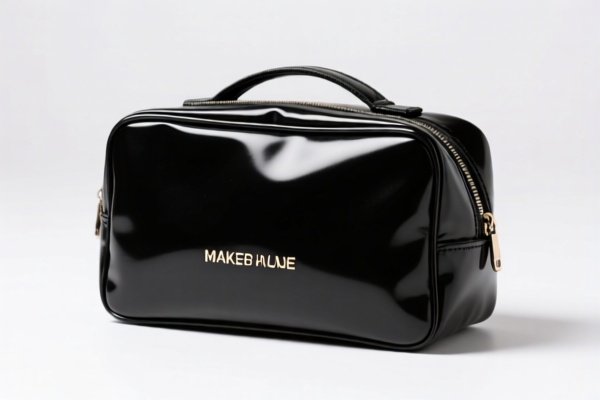
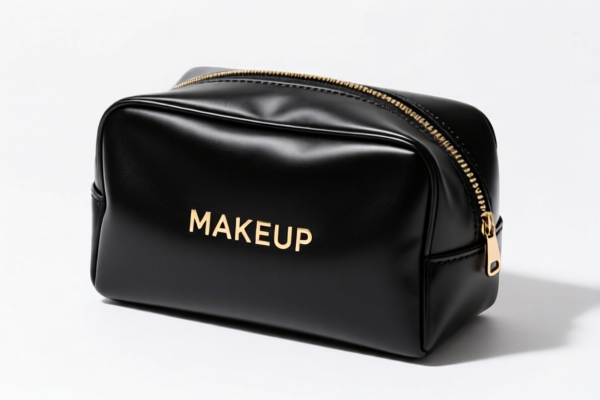
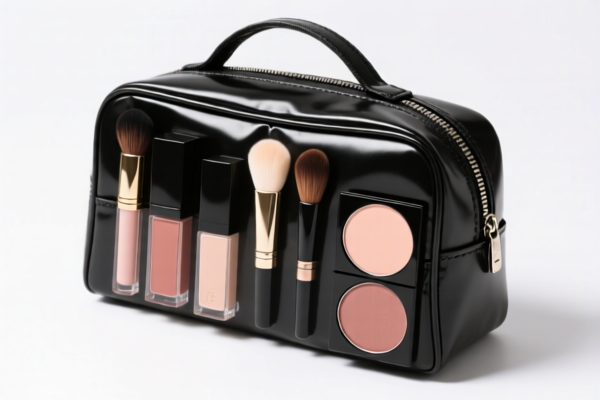
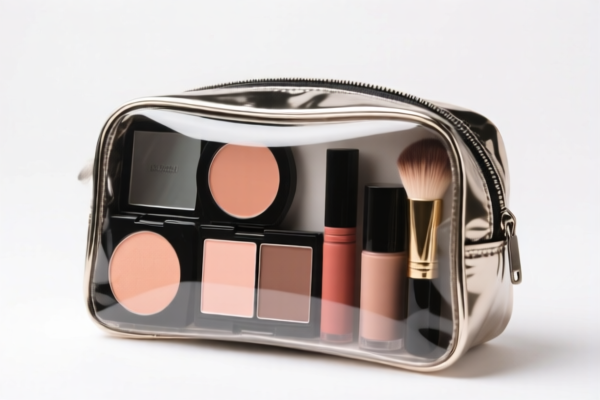
AI Analysis
🌈 Rainbow Makeup Bag (Cosmetic Pouches)
🌐 HS Code Reference & Customs Clearance Guide | 2026 Latest Tariff Analysis | Strategic Classification for Cross-Border Trade
📌 Part 1: Product Definition – What Exactly is a "Rainbow Makeup Bag"?
A "Rainbow Makeup Bag" is a general consumer term for a container used to store cosmetics, toiletries, and small personal care items. In international trade, the specific HS Code classification depends entirely on the material of the outer surface.
There are two primary material categories: 1. Textile Material: Made from polyester, nylon, cotton, or woven fabrics. 2. Leather/Synthetic Leather: Made from genuine leather or polyurethane (PU)/polyvinyl chloride (PVC) coatings.
⚠️ Critical Distinction Point:
- If the outer surface is Textile (fabric) → Classified under Chapter 42, Heading 4202.32.
- If the outer surface is Leather or Synthetic Leather → Classified under Chapter 42, Heading 4205.00.
- Do not assume "Rainbow" refers to color; customs looks at material composition.
📦 Part 2: HS Code Classification Details (2026 Latest Tariff Authority Match)
Based on the provided data <DATA>, here are the valid HS Codes and their corresponding tax breakdowns for US Imports from China.
| HS Code | Product Description | Material Basis | Applicable Scenario |
|---|---|---|---|
4202.32.93.00 |
Outer surface is textile material; case, bag & similar container. | Textile | Most common cosmetic pouches (polyester/nylon). |
4202.32.99.00 |
Other bags of textile material. | Textile | Catch-all for textile bags not specified elsewhere. |
4205.00.60.00 |
Other articles of leather or composition leather. | Leather/Synthetic | Cosmetic bags made of PU leather or genuine leather. |
4205.00.80.00 |
Other articles of leather or composition leather (Fallback). | Leather/Synthetic | Bottom-up category for leather goods. |
🔍 Key Reminder:
- Textile-based bags attract higher base tariffs (17.6%) but are often cheaper to manufacture. - Leather/Synthetic-based bags attract lower or zero base tariffs but may face different duty structures depending on the specific subheading. - "Rainbow" is a descriptive term; it does not change the HS code. The material defines the code.
💰 Part 3: 2026 Latest Tariff Rate Breakdown (Including Add-ons)
✅ Applicable Country: United States (US)
✅ Origin: China (CN)
✅ Effective Time: Ongoing (Includes Section 301 & IEEPA tariffs)
🎯 1. Textile-Based Makeup Bags (4202.32.93.00 / 4202.32.99.00)
These are the most common cosmetic bags found on platforms like Amazon or Temu.
| Item | Content |
|---|---|
| HS Code | 4202.32.93.00 or 4202.32.99.00 |
| Base Tariff | 17.6% |
| Section 301 Tariff (Additional) | 25.0% |
| Section 122 Tariff (IEEPA) | 10.0% |
| Total Effective Tax Rate | 52.6% |
| Tax Calculation | CIF Value × 52.6% |
| De Minimis Eligibility | ❌ No (Must declare fully; value threshold does not apply for Chinese goods in this category). |
📌 Explanation:
- The 17.6% is the standard MFN (Most Favored Nation) duty for textile bags. - The 25% is the Section 301 additional duty targeting Chinese goods. - The 10% is the Section 122 duty (often associated with specific emergency powers or trade adjustments). - Total: 52.6%. This is a very high tariff. Cost calculation must include this margin.
🎯 2. Leather/Synthetic Leather-Based Bags (4205.00.60.00 / 4205.00.80.00)
If the bag is made of PU (Polyurethane) or PVC leather, it falls under Chapter 42.00.
A. HS Code: 4205.00.60.00
| Item | Content |
|---|---|
| Base Tariff | 4.9% |
| Section 301 Tariff | 25.0% |
| Section 122 Tariff | 10.0% |
| Total Effective Tax Rate | 39.9% |
| Tax Calculation | CIF Value × 39.9% |
B. HS Code: 4205.00.80.00
| Item | Content |
|---|---|
| Base Tariff | 0.0% |
| Section 301 Tariff | 25.0% |
| Section 122 Tariff | 10.0% |
| Total Effective Tax Rate | 35.0% |
| Tax Calculation | CIF Value × 35.0% |
📌 Explanation:
-4205.00.80.00offers the lowest total tax (35%) if the product fits this "other articles" description. -4205.00.60.00is slightly higher at 39.9% due to a 4.9% base duty. - Crucial: You must prove the material is leather or composition leather (PU/PVC). If it is fabric, you cannot use these codes.
🛠️ Part 4: Customs Clearance Practical Advice (Pitfall Avoidance Guide)
✅ 1. Preparation Checklist (Non-Negotiable)
| Document | Required? | Notes |
|---|---|---|
| Material Composition Statement | ✔️ | Must explicitly state: "Outer Surface: 100% Polyester" OR "Outer Surface: Polyurethane (PU) Leather". |
| Product Photos | ✔️ | Show the texture. Is it woven (textile) or smooth/plastic-like (leather)? |
| Commercial Invoice | ✔️ | Description must match HS code. E.g., "Cosmetic Pouch, PU Leather, Made in China". |
| Packing List | ✔️ | Weight and dimensions must be accurate for CIF calculation. |
✅ 2. Classification Strategy (Key Mantra)
🔥 "Material is King, Description is Queen. Don't Guess, Verify!"
| Scenario | Correct HS Code | Risk of Error |
|---|---|---|
| Bag is Nylon/Polyester | 4202.32.93.00 (52.6%) |
High cost. Do not mislabel as leather to avoid tax → Customs Fraud. |
| Bag is PU Leather | 4205.00.80.00 (35.0%) |
Best tax rate. Must ensure it is not lined with fabric that makes it primarily textile. |
| Bag is Genuine Leather | 4205.00.60.00 (39.9%) |
Slightly higher base tax, but still lower than textile. |
⚠️ Warning:
- If you classify a Textile bag as Leather (4205.00) to save taxes, Customs will inspect the physical sample. If found non-compliant, you will face penalties, back-taxes, and potential seizure. - Conversely, if you classify a Leather bag as Textile (4202.32), you will overpay taxes unnecessarily.
✅ 3. Special Cases
| Situation | Handling Advice |
|---|---|
| Mixed Materials | If the bag is 50% leather, 50% fabric, the outer surface material determines the code. Check which material is dominant on the exterior. |
| Lining Material | Do not confuse lining (often cotton/polyester) with outer surface. Outer surface = What you see/touch first. |
| "Rainbow" Color | Irrelevant to HS Code. Ensure your invoice says "Multi-color" or "Rainbow" but never use this as the basis for classification. |
🌍 Part 5: Global Market Comparison (2026 Snapshot)
| Market | Recommended HS Code | Est. Total Duty | Notes |
|---|---|---|---|
| 🇺🇸 USA (China Origin) | 4202.32.93.00 (Textile) |
52.6% | High due to 25% + 10% add-ons. |
| 🇺🇸 USA (China Origin) | 4205.00.80.00 (Leather) |
35.0% | Lower base, same add-ons. Better for PU leather. |
| 🇨🇳 China (Export) | N/A | 0% | China does not charge export tariffs for these goods. |
| 🇪🇺 EU | 4202.32 or 4205.00 |
Varies (0-12%) | No Section 301/122 duties. Standard EU customs duty applies. |
📌 Conclusion:
- The US market is the most challenging due to the 52.6% or 35% total duty. - Profit Margin Calculation: You must build at least a 20-30% margin on top of the landed cost to absorb the 52.6% tariff if selling textile bags. - PU Leather bags are more tax-efficient for the US market (35%) compared to textile bags (52.6%).
📌 Part 6: Common Errors & Pitfalls (Lessons Learned)
❌ Error 1: Using "Makeup Bag" as the HS Code description without specifying material.
👉 Result: Customs will assign a default code, likely the highest tax one.
❌ Error 2: Misclassifying PU Leather as "Textile" because it feels soft.
👉 Result: Overpayment of taxes (35% vs 52.6%? No, PU Leather should be 35%. Wait, if you misclassify PU as Textile, you pay 52.6% instead of 35%. So you overpay. If you misclassify Textile as Leather, you underpay and face fraud charges).
❌ Error 3: Ignoring Section 122 Tariff.
👉 Result: Missing the 10% IEEPA duty leads to underpayment. Customs will bill you later with interest.
✅ Correct Practice:
"Cosmetic Pouch, 100% Polyester Outer, Zipper Closure, Made in China" → HS: 4202.32.93.00
"Cosmetic Pouch, 100% PU Leather Outer, Zipper Closure, Made in China" → HS: 4205.00.80.00
🎯 Part 7: Conclusion – Smart Classification, Smarter Profit!
🎯 Remember the Mantra:
🔹 "Textile pays 52.6%, Leather pays 35% (if PU). Know your material!"
🔹 "Section 301 and 122 are unavoidable for China. Plan your margin!"
📌 Pro Tip:
- If your margin is thin, consider sourcing PU Leather bags instead of Polyester bags to save 17.6% in taxes.
- Always request a Material Test Report from your supplier to confirm the outer surface composition.
- For high-value shipments, apply for an Advance Ruling from US Customs to secure the correct HS Code before shipping.
📣 Immediate Action:
📞 Confirm material with supplier → Select HS Code → Calculate Landed Cost (CIF + 52.6% or 35%) → Set Selling Price.
🚀 Clear Customs Smoothly, Maximize Profit!
✨ Professional Classification Starts with Accurate Material Definition!
💼 Every Percent of Duty Counts!
Customer Reviews
About HS Code Classification
The Harmonized System (HS) is an internationally standardized nomenclature developed by the World Customs Organization (WCO) to classify traded products. Over 200 countries use the HS system as the basis for customs tariffs, trade statistics, and import/export regulations.
Each HS code follows a hierarchical structure:
- Chapter (2 digits) — Broad category of goods (e.g., Chapter 84: Machinery and Mechanical Appliances)
- Heading (4 digits) — More specific grouping within the chapter
- Subheading (6 digits) — Internationally standardized breakdown, used by all WCO member countries
- National subdivisions (8-10 digits) — Country-specific extensions for further classification, such as US HTSUS 10-digit codes
Correct HS code classification is essential for smooth customs clearance, accurate duty payment, and compliance with trade regulations. Misclassification can lead to customs delays, overpayment of duties, or penalties.
When importing from CN to US, the applicable tariff rates may include:
- Most-Favored-Nation (MFN) rate — The standard duty rate applied to WTO members
- General rate — Applied to countries without trade agreements
- Trade remedy duties — Additional tariffs such as Section 301 (anti-dumping), Section 232 (national security), or countervailing duties
The information provided on this page is for reference purposes only. For official classification, please consult with your local customs authority or a licensed customs broker.