Rainbow Plastic Film
CN → US| HS Code | Tariff Rate | Origin | Destination | Doc |
|---|---|---|---|---|
| 3920991000 | 41.0% | CN | US | Official Doc |
| 3921905050 | 39.8% | CN | US | Official Doc |
| 3921904090 | 39.2% | CN | US | Official Doc |
| 3920992000 | 39.2% | CN | US | Official Doc |
Product Images
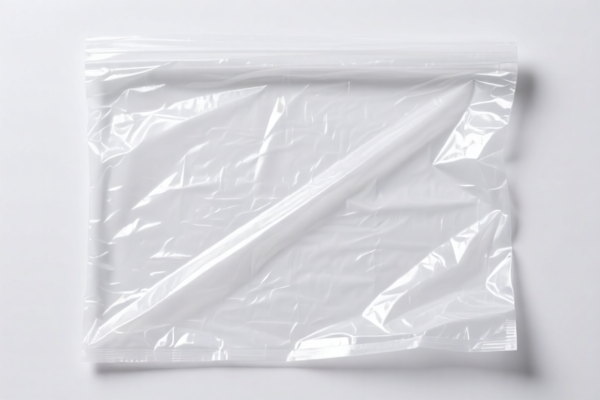


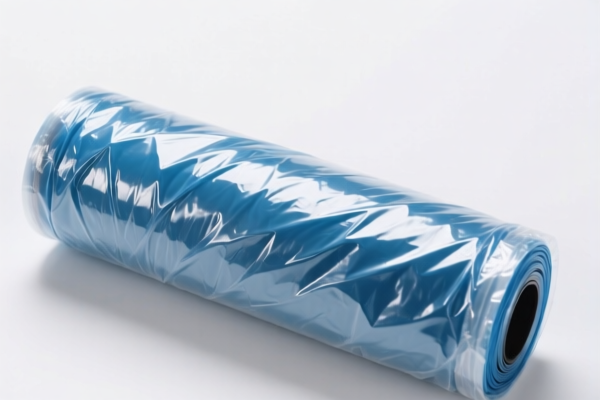
AI Analysis
🌈 Rainbow Plastic Film: HS Code Classification & US Customs Clearance Guide (2026)
🌐 HS Code Reference & Customs Clearance Guide | 2026 Latest Tariff Analysis | Professional-Level Entry Strategy
📌 I. Product Definition & Classification: What Exactly Is "Rainbow Plastic Film"?
Rainbow Plastic Film refers to a plastic film with multicolor visual effects (often created via interlayering, metallization, or pigmentation). In international trade, it is primarily classified based on its material composition (Plastic) and form factor (Film/Sheet).
⚠️ Key Distinction for Classification:
- Plastic Film vs. Plastic Sheet: If the thickness is thin and flexible, it falls under Chapter 39.02 (Plastics in Primary Forms) or 39.20/39.21 (Plastic Plates, Sheets, Film, Foil, and Strip).
- Specific Use Matters: Unlike general-purpose films, "Rainbow" films are often used for packaging, decoration, or industrial lamination. They do not have a specific dedicated HS code for "rainbow effect" itself; instead, they fall under general plastic film categories.
📦 II. HS Code Classification Details (Based on Provided Data)
Based on the provided <DATA> JSON, the following 4 HS Codes are potential classifications for Rainbow Plastic Film. Each is analyzed below with its rationale and tax implications.
| HS Code | Summary of Classification Rationale | Total Tax Rate | Tax Details |
|---|---|---|---|
| 3920.99.10.00 | Material: Plastic; Form: Film. Classified as a fallback category ("other plastics, non-cellular, not elsewhere specified"). | 41.0% | Base: 6.0% Add'l: 25.0% Section 301: 10% |
| 3921.90.50.50 | Material: Plastic; Form: Film. Fully matches the description of plastic plates, sheets, film, foil, and strip. | 39.8% | Base: 4.8% Add'l: 25.0% Section 301: 10% |
| 3921.90.40.90 | Matches Plastic Material + Film Form. Classified under "Other" subcategory. | 39.2% | Base: 4.2% Add'l: 25.0% Section 301: 10% |
| 3920.99.20.00 | Material: Plastic; Form: Film. Fits characteristics of flexible film, strip, and sheet. | 39.2% | Base: 4.2% Add'l: 25.0% Section 301: 10% |
🔍 Critical Insight:
- 3921.90.50.50 is the most precise fit because the summary explicitly states it "fully matches the requirements for plastic plates, sheets, film, foil, and strip."
- 3920.99.10.00 has the highest total tax (41.0%) due to a higher base tariff (6.0%) and is described as a "fallback" category, which may be less favorable in audits.
- 3921.90.40.90 and 3920.99.20.00 share the lowest total tax (39.2%), but their summaries are less specific than 3921.90.50.50.
💰 III. 2026 US Tariff Rate Breakdown (Detailed Tax Clauses)
✅ Applicable Country: United States (US)
✅ Origin: China (CN) (Assumed based on "122 Section" and typical tax structures in data)
✅ Effective Date: 2025/2026 (Current Tariff Regime)
🎯 1. HS Code: 3921.90.50.50 – Recommended for Best Fit
- Summary: Matches plastic plate, sheet, film, foil, and strip requirements.
- Base Tariff: 4.8%
- Section 301 (Add'l Tariff): 25.0%
- Section 301 (122 Clause): 10.0%
- Total Effective Tax Rate: 39.8%
- Legal Path:
HTSUS:3921.90.50.50→USITC:25%→IEEPA:10%
📌 Why this is the best choice:
The classification explicitly matches the product's physical characteristics (plastic film). Lower total tax than the fallback option, and more specific than "other" categories.
🎯 2. HS Code: 3921.90.40.90 – Lowest Tax, General Category
- Summary: Matches plastic material + film form, falls under "Other."
- Base Tariff: 4.2%
- Section 301 (Add'l Tariff): 25.0%
- Section 301 (122 Clause): 10.0%
- Total Effective Tax Rate: 39.2%
- Legal Path:
HTSUS:3921.90.40.90→USITC:25%→IEEPA:10%
📌 Caution:
While the tax is slightly lower (39.2% vs. 39.8%), this code is for "Other" plastic products. If US Customs determines the film does not fit "Other" but rather "Plates/Sheets/Film" (3921.90.50.50), you may face penalties for misclassification.
🎯 3. HS Code: 3920.99.20.00 – Flexible Film Characteristic
- Summary: Fits characteristics of flexible film, strip, and sheet.
- Base Tariff: 4.2%
- Section 301 (Add'l Tariff): 25.0%
- Section 301 (122 Clause): 10.0%
- Total Effective Tax Rate: 39.2%
- Legal Path:
HTSUS:3920.99.20.00→USITC:25%→IEEPA:10%
📌 Note:
Chapter 39.20 covers "Plastics, not cellular, in primary forms." If the film is in rolls (primary form), this may be appropriate. However, if it's cut sheets or ready for use, Chapter 39.21 might be more accurate.
🎯 4. HS Code: 3920.99.10.00 – Fallback Category
- Summary: Plastic, film form, based on fallback principle.
- Base Tariff: 6.0%
- Section 301 (Add'l Tariff): 25.0%
- Section 301 (122 Clause): 10.0%
- Total Effective Tax Rate: 41.0%
- Legal Path:
HTSUS:3920.99.10.00→USITC:25%→IEEPA:10%
📌 Avoid if possible:
This has the highest tax rate (41.0%) and is a "fallback" category, meaning it should only be used if no other specific code applies. For standard plastic film, it is likely over-inclusive and expensive.
🛠️ IV. Customs Clearance Practical Advice (Avoiding Pitfalls)
✅ 1. Recommended HS Code Selection Strategy
| Scenario | Recommended HS Code | Reason |
|---|---|---|
| Standard Rainbow Plastic Film (rolls or sheets) | 3921.90.50.50 | Most accurate description of "plastic plate, sheet, film." Lowest risk of audit. |
| Film in Primary Form (large rolls, not yet cut) | 3920.99.20.00 | If the film is in a primary form suitable for further processing. |
| Unclear/General Plastic Film | 3921.90.40.90 | If it doesn't fit specific subcategories but is clearly plastic film. |
| Last Resort/Unspecified | 3920.99.10.00 | Highest tax, highest risk. Only use if no other fit exists. |
✅ 2. Documentation Checklist (Must-Haves)
| Document | Requirement | Notes |
|---|---|---|
| Product Description | ✅ Rainbow Plastic Film, [Thickness]mm, [Width]mm, [Material Type e.g., PET, PP] | Be specific about material composition. |
| Technical Data Sheet | ✅ Include thickness, tensile strength, and optical properties (rainbow effect method). | Helps prove it fits "film" vs. "sheet." |
| Commercial Invoice | ✅ Clearly state "Plastic Film" and HS Code. | Avoid vague terms like "Decorative Material." |
| Packing List | ✅ Show unit of measurement (e.g., square meters, rolls). | |
| Certificate of Origin | ✅ If claiming any potential exemptions (unlikely for CN origin under 301). |
✅ 3. Common Misclassification Errors
❌ Error 1: Classifying Rainbow Film as Textile (Chapter 54/55)
👉 Consequence: If the film is plastic-based, this is incorrect. Textiles are fiber-based. Misclassification can lead to higher duties or seizure.
❌ Error 2: Using 3920.99.10.00 for standard film
👉 Consequence: Paying 41.0% tax instead of 39.2–39.8%. Unnecessary cost increase.
❌ Error 3: Not declaring "Plastic" material explicitly
👉 Consequence: Customs may reclassify under a different material (e.g., paper or metalized), leading to delays and penalties.
✅ 4. Pro Tip for Clearance
🔥 "Be Specific, Be Accurate!"
- Do NOT just write "Plastic Film."
- DO write: "Rainbow-effect plastic film, made of [e.g., Biaxially Oriented Polypropylene (BOPP)], thickness 0.05mm, width 100cm, used for [e.g., packaging/decoration]."
- This clarity supports the use of 3921.90.50.50 or 3920.99.20.00, which are more precise and potentially cheaper.
🌍 V. Global Market Comparison (2026)
| Market | Recommended HS Code | Base Tariff | Add'l Tariffs (China) | Total Est. Tax | Notes |
|---|---|---|---|---|---|
| 🇺🇸 USA | 3921.90.50.50 | 4.8% | 25% (301) + 10% (122) | 39.8% | Highest cost due to trade war. |
| 🇨🇳 China (Import) | 3921.90.50.50 | ~5–7% | None | ~5–7% | Low entry barrier. |
| 🇪🇺 EU | 3920.99.90 / 3921.90.90 | ~3–5% | None | ~3–5% | No 301 tariffs. |
| 🇬🇧 UK | 3921.90.90 | ~3–5% | None | ~3–5% | Post-Brexit rules apply. |
📌 Conclusion:
The US market is the most expensive for Rainbow Plastic Film from China due to Section 301 and 122 tariffs. For US-bound goods, accurate classification is critical to avoid paying the highest fallback rate (41.0%).
📌 VI. Final Recommendation & Action Items
🎯 Best Choice: 3921.90.50.50
- Why: It is the most accurate description for plastic film, and the tax rate (39.8%) is reasonable.
- Action: Use this code if the film is in the form of plates, sheets, or strips ready for further use.
🥈 Alternative: 3921.90.40.90 or 3920.99.20.00
- Why: Lower tax (39.2%), but risk of audit if the film doesn't fit the "Other" or "Primary Form" definition.
- Action: Use only if the film is in primary form (e.g., large rolls for industrial conversion) or if customs rulings support this classification.
🚫 Avoid: 3920.99.10.00
- Why: Highest tax (41.0%) and least specific. Only use if no other code fits.
📞 Immediate Action Plan
- Confirm Material Composition: Is it PET, PP, PVC, or PE? This affects Chapter 39 subheading.
- Check Thickness: If <0.5mm, it's more likely "film." If thicker, "sheet" may apply.
- Apply for Advance Ruling: If the product is unique, consider applying for a US Customs Advance Ruling to confirm
3921.90.50.50is correct. - Document Everything: Keep technical specs, photos, and supplier declarations ready for customs inspection.
✨ Professional Customs Clearance Starts with Precision!
💼 Your Cost Savings Depend on the Right HS Code!
Customer Reviews
About HS Code Classification
The Harmonized System (HS) is an internationally standardized nomenclature developed by the World Customs Organization (WCO) to classify traded products. Over 200 countries use the HS system as the basis for customs tariffs, trade statistics, and import/export regulations.
Each HS code follows a hierarchical structure:
- Chapter (2 digits) — Broad category of goods (e.g., Chapter 84: Machinery and Mechanical Appliances)
- Heading (4 digits) — More specific grouping within the chapter
- Subheading (6 digits) — Internationally standardized breakdown, used by all WCO member countries
- National subdivisions (8-10 digits) — Country-specific extensions for further classification, such as US HTSUS 10-digit codes
Correct HS code classification is essential for smooth customs clearance, accurate duty payment, and compliance with trade regulations. Misclassification can lead to customs delays, overpayment of duties, or penalties.
When importing from CN to US, the applicable tariff rates may include:
- Most-Favored-Nation (MFN) rate — The standard duty rate applied to WTO members
- General rate — Applied to countries without trade agreements
- Trade remedy duties — Additional tariffs such as Section 301 (anti-dumping), Section 232 (national security), or countervailing duties
The information provided on this page is for reference purposes only. For official classification, please consult with your local customs authority or a licensed customs broker.