Rapid Development Film
CN → US| HS Code | Tariff Rate | Origin | Destination | Doc |
|---|---|---|---|---|
| 3822190030 | 10.0% | CN | US | Official Doc |
| 3707906000 | 35.0% | CN | US | Official Doc |
| 3822190080 | 10.0% | CN | US | Official Doc |
| 3707100090 | 38.0% | CN | US | Official Doc |
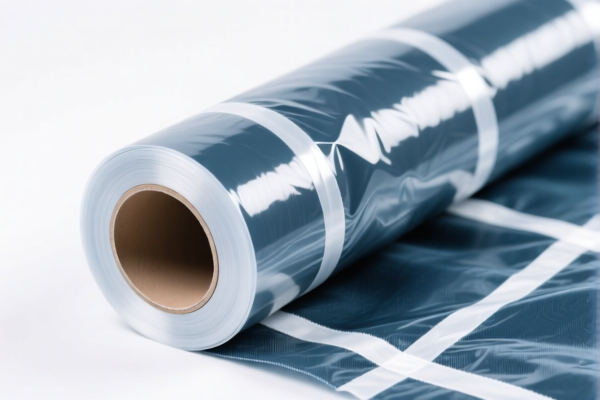
Product Images



AI Analysis
🎞️ Rapid Development Film (Film Developers)
🌐 HS Code Classification & Customs Clearance Guide | 2026 Tariff Analysis | Strategic Compliance Strategy
📌 1. Product Definition: What is "Rapid Development Film"?
In international trade, "Rapid Development Film" typically refers to chemical agents, reagents, or solutions used for processing photographic film (developing, fixing, or reversing), rather than the film stock itself. These are liquid chemicals containing active ingredients (such as hydroquinone, metol, or iron salts) designed for laboratory or photographic use.
⚠️ Critical Distinction:
- If it is a chemical solution for developing photos → It falls under Chemical Products (Chapter 38 or 37).
- If it is unexposed photographic film stock → It would fall under Heading 3701/3702 (not listed in your data).
- Based on your provided data, the focus is on the chemical reagents/liquids used in the development process.
📦 2. HS Code Classification Matrix (Based on Provided Data)
| HS Code | Product Description | Summary Logic from Data | Tax Rate (China-Origin → US) |
|---|---|---|---|
3822.19.00.30 |
Diagnostic/Laboratory Reagents | "Chemical development process; contains chemical reagents; fits diagnostic/lab reagent category." | 10.0% |
3822.19.00.80 |
Other Laboratory Reagents | "Chemical reagent for film development; fits other diagnostic/lab reagent category." | 10.0% |
3707.90.60.00 |
Photographic Chemicals (Unmixed) | "Chemical product for photographic use; fits 'unmixed products for photography' definition." | 35.0% |
3707.10.00.90 |
Other Photographic Preparations | "Chemical sensitizer for image processing; fits other categories logic." | 38.0% |
🔍 Key Insight:
The classification hinges on how the product is described and used:
- Is it marketed as a general lab/diagnostic reagent? → Chapter 38 (Lower Tax).
- Is it explicitly labeled as a photographic preparation? → Chapter 37 (Higher Tax).
💰 3. 2026 Tariff Rate Breakdown (Detailed)
✅ Applicable Country: United States (US)
✅ Origin: China (CN)
✅ Effective Date: Current rates apply (including Section 301 & IEEPA surcharges)
🎯 A. Chapter 38: Chemical Products (Lower Tax Bracket)
1. HS Code 3822.19.00.30
- Description: Diagnostic or Laboratory Reagents (Other).
- Tax Detail:
- Base Duty: 0.0%
- Section 301 Add-on: 0.0%
- IEEPA (122 Clause) Surcharge: 10.0%
- Total Effective Rate: 10.0%
- Why this code? The data states it fits the "diagnostic or laboratory reagent" category. If your product can be argued as a general chemical reagent rather than a specific photographic agent, this is the most cost-effective option.
2. HS Code 3822.19.00.80
- Description: Other Diagnostic/Laboratory Reagents.
- Tax Detail:
- Base Duty: 0.0%
- Section 301 Add-on: 0.0%
- IEEPA (122 Clause) Surcharge: 10.0%
- Total Effective Rate: 10.0%
- Why this code? Similar to above, but categorized as "other." Use if the product doesn't fit the specific "30" subheading but still qualifies as a general lab reagent.
🎯 B. Chapter 37: Photographic Goods (Higher Tax Bracket)
3. HS Code 3707.90.60.00
- Description: Photographic Preparations, Unmixed.
- Tax Detail:
- Base Duty: 0.0%
- Section 301 Add-on: 25.0%
- IEEPA (122 Clause) Surcharge: 10.0%
- Total Effective Rate: 35.0%
- Why this code? The data explicitly states it is a "chemical product for photographic use." If your invoice, packaging, or technical data sheet clearly states "For Photographic Use" or "Film Developer," customs may enforce this higher rate.
4. HS Code 3707.10.00.90
- Description: Other Photographic Preparations (e.g., sensitizers).
- Tax Detail:
- Base Duty: 3.0%
- Section 301 Add-on: 25.0%
- IEEPA (122 Clause) Surcharge: 10.0%
- Total Effective Rate: 38.0%
- Why this code? The data mentions "chemical sensitizer for image processing." This is the highest tax bracket and should be avoided unless the product is strictly a sensitizer and cannot be classified under lab reagents.
🛠️ 4. Customs Clearance Strategy & Practical Advice
✅ 1. Optimize HS Code Selection (Tax Savings!)
- Goal: Aim for
3822.19.00.30or3822.19.00.80(10%) instead of Chapter 37 (35-38%). - How?
- Describe as "Laboratory Chemical Reagent" rather than "Photographic Film Developer" on the commercial invoice.
- Use neutral terms like "Chemical Solution for Image Processing" or "Development Reagent for Laboratory Use."
- Avoid explicit references to "photography," "film stock," or "consumer photo labs" in marketing materials submitted to customs.
✅ 2. Documentation Requirements
| Document | Requirement | Reason |
|---|---|---|
| Commercial Invoice | Must specify "Chemical Reagent" or "Laboratory Solution" | Determines HS Code classification. |
| MSDS (Material Safety Data Sheet) | Provide full SDS | Customs and CBP require SDS for chemical imports to verify hazard class and composition. |
| Product Specification Sheet | Detail chemical composition | Must align with HS Code description (e.g., if claiming Chapter 38, emphasize lab use). |
| Certificate of Origin | Required for IEEPA determination | To confirm China origin and apply correct surcharges. |
✅ 3. Risk Mitigation & Common Pitfalls
| Pitfall | Consequence | Solution |
|---|---|---|
| Misclassification | Using 3707 code when 3822 is applicable |
Result: Overpayment of taxes (10% vs 35%). Always argue for Chapter 38 if possible. |
| Labeling Conflict | Packaging says "For Photographic Use Only" | Result: Customs may override your HS Code choice and assess 35-38%. Fix: Use generic "Industrial/Laboratory Chemical" labeling. |
| Section 301 Exclusion | Not checking current exclusions | Result: Paying unnecessary 25% add-on. Check: Current USITC exclusion lists for 3822 vs 3707. |
| IEEPA Surcharge | Ignoring 10% surcharge | Result: Underpayment. Note: 10% IEEPA surcharge applies to both chapters for China-origin goods. |
🌍 5. Global Market Comparison (2026)
| Country | Recommended HS Code | Base Tax | Surcharge (China) | Total Est. Tax | Notes |
|---|---|---|---|---|---|
| 🇺🇸 USA | 3822.19.00.30 |
0% | +10% (IEEPA) | 10.0% | Best Option. Avoid Chapter 37 (35%+). |
| 🇨🇳 China | 3822.19.00.00 |
Varies | N/A | ~13-16% | Import duty + VAT. |
| 🇪🇺 EU | 3822.00 |
0-6.5% | N/A | ~6.5% | No Section 301/IEEPA. |
| 🇬🇧 UK | 3822.00 |
0-6.5% | N/A | ~6.5% | Post-Brexit rules. |
📌 Key Takeaway:
The USA has the most complex tariff structure for these chemicals due to Section 301 (25%) and IEEPA (10%) surcharges.
- Chapter 38 is significantly cheaper (10% total) than Chapter 37 (35-38% total).
- Strategy: Classify as "Laboratory Chemical Reagent" (3822) to save 25-28% in duties.
📌 6. Conclusion & Action Plan
🎯 Final Recommendation
- Select HS Code
3822.19.00.30or3822.19.00.80to minimize tax liability to 10%. - Draft Invoices Carefully: Use terms like "Chemical Reagent for Laboratory/Image Processing" instead of "Photographic Film Developer."
- Prepare MSDS: Ensure the chemical composition supports a general lab reagent classification.
- Consult a Customs Broker: Verify if your specific chemical composition qualifies for Chapter 38 under USITC rulings.
🚀 Pro Tip
"Classify as Lab Reagent, Not Photo Chemical. Save 25% in Taxes. Avoid Chapter 37 Traps."
✨ Professional Clearance Starts with Accurate Classification!
💼 Every percent counts in global trade compliance.
Customer Reviews
About HS Code Classification
The Harmonized System (HS) is an internationally standardized nomenclature developed by the World Customs Organization (WCO) to classify traded products. Over 200 countries use the HS system as the basis for customs tariffs, trade statistics, and import/export regulations.
Each HS code follows a hierarchical structure:
- Chapter (2 digits) — Broad category of goods (e.g., Chapter 84: Machinery and Mechanical Appliances)
- Heading (4 digits) — More specific grouping within the chapter
- Subheading (6 digits) — Internationally standardized breakdown, used by all WCO member countries
- National subdivisions (8-10 digits) — Country-specific extensions for further classification, such as US HTSUS 10-digit codes
Correct HS code classification is essential for smooth customs clearance, accurate duty payment, and compliance with trade regulations. Misclassification can lead to customs delays, overpayment of duties, or penalties.
When importing from CN to US, the applicable tariff rates may include:
- Most-Favored-Nation (MFN) rate — The standard duty rate applied to WTO members
- General rate — Applied to countries without trade agreements
- Trade remedy duties — Additional tariffs such as Section 301 (anti-dumping), Section 232 (national security), or countervailing duties
The information provided on this page is for reference purposes only. For official classification, please consult with your local customs authority or a licensed customs broker.