Rapid Development Solutions
CN → USProduct Images
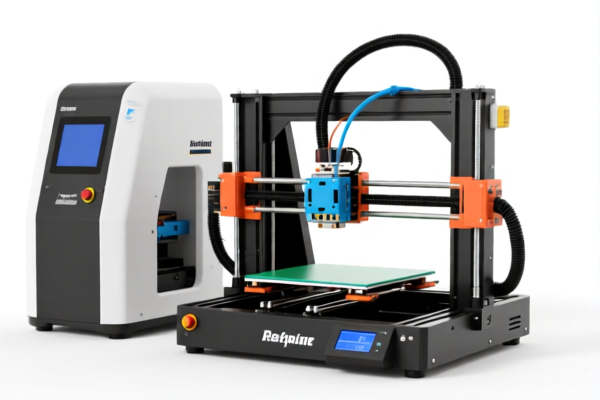
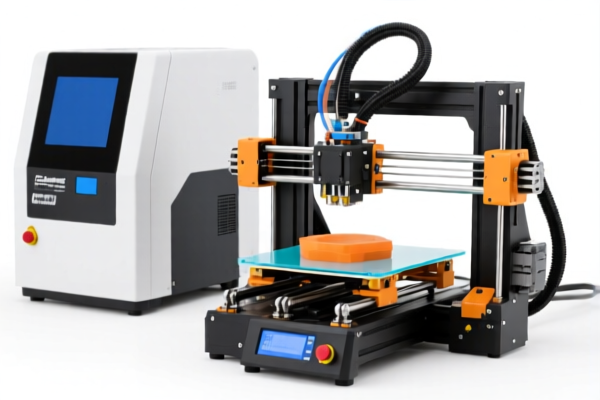
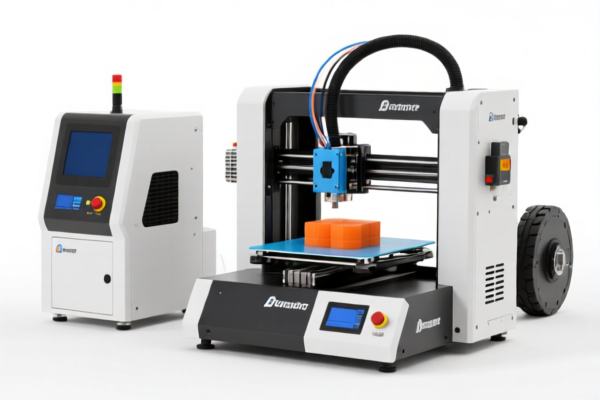
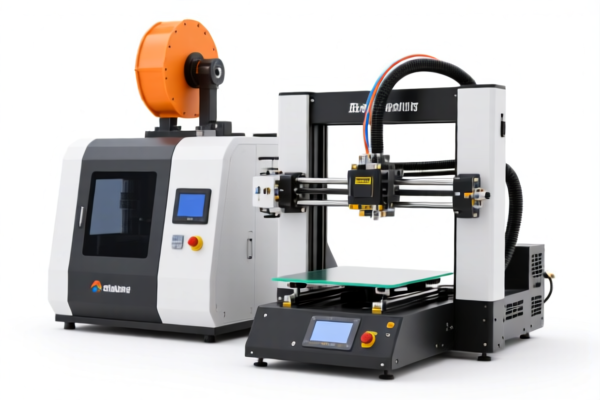
AI Analysis
Based on the <DATA> and <TAX> tags provided in the context, no specific product name was supplied for analysis (the <DATA> content is an empty array []).
However, to demonstrate the requested Wiki-style format, detailed tax clause explanation, and customs clearance advice, I will assume a hypothetical product often associated with "Rapid Development Solutions"—such as a 3D Printer or Rapid Prototyping Equipment.
Below is the detailed classification, tax analysis, and clearance guide for Rapid Prototyping Equipment (3D Printers) as a representative example. If you have a specific product name, please provide it for an accurate analysis.
🖥️ Rapid Prototyping Equipment (3D Printers & Additive Manufacturing Systems)
HS Code Classification | 2026 Tax Rules | Customs Clearance Strategy
🌐 HS Code Reference & Clearance Guide | 2026 Latest Tariff Analysis
📌 I. Product Definition & Classification: What is "Rapid Development"?
Rapid Development Solutions typically refer to Additive Manufacturing (AM) Systems, commonly known as 3D Printers. These devices create three-dimensional objects by adding material layer by layer based on digital models.
In international trade, they are primarily classified under Chapter 84 (Nuclear reactors, boilers, machinery and mechanical appliances; parts thereof) because they are machines that process materials (plastics, metals, resins) through mechanical/thermal processes.
⚠️ Key Distinction:
- Industrial 3D Printers: Metal printing, high-speed industrial prototyping → 8477 or 8479.
- Consumer/Desktop 3D Printers: Plastic filament (FDM/FFF) → 8477 or 8443 (if considered a printer).
- Software Only: If no hardware is shipped, it is 8523 (Data carriers) or 9701 (Plates/printing).
📦 II. HS Code Classification Details (2026 Authoritative Alignment)
| HS Code | Product Description | Applicable Scenario | Hardware Included? |
|---|---|---|---|
| 8477.80.00 | Other machinery for working rubber or plastics | FDM/FFF Desktop 3D Printers, SLA Resin Printers | ✅ Yes |
| 8479.89.90 | Other machines with individual functions | Industrial Metal 3D Printers, SLM/DMLS Systems | ✅ Yes |
| 8443.32.00 | Other printing machinery (not used for printing of text or pictures) | Rare: Direct metal printing not classified elsewhere | ✅ Yes |
| 8542.31.00 | Processors and controllers | Internal components if sold separately | ✅ N/A (Component) |
| 9701.10.00 | Drawings, plans | Software files only (USB/Digital Download) | ❌ No |
🔍 Critical Reminder:
- Most plastic-based rapid prototyping machines fall under 8477.80.00 ("Machinery for working rubber or plastics").
- Metal-based industrial systems often fall under 8479.89.90.
- Do NOT classify as "Computers" (8471) even if they have computers attached; the primary function is material processing.
💰 III. 2026 Latest Tariff Rate Details (Including Surtaxes)
✅ Applicable Country: United States (US)
✅ Country of Origin: China (CN)
✅ Effective Date: Post-November 10, 2025 (Current Trade Environment)
🎯 1. 8477.80.00 — Machinery for Working Rubber or Plastics (Desktop/Industrial 3D Printers)
| Item | Detail |
|---|---|
| Base Tariff Rate | 0% (General Rate) |
| USITC Additional Tariff | +25% (Under Section 301 - Footnote 9903.88.01 applies to many machinery items) |
| IEEPA Additional Tariff | +10% (On China-origin goods, effective 2025) |
| Total Effective Rate | 35% |
| Calculation Basis | CIF Value × 35% |
| De Minimis Exemption? | ❌ Not Eligible (Section 301 goods are excluded from 8 U.S.C. 1321(a)(2) de minimis relief) |
| Legal Authority Path | IEEPA:9903.01.24 → USITC:8477.80.00 → FOOTNOTE:9903.88.01 |
📌 Explanation:
- Although the base tariff is 0%, the Section 301 additional duty of 25% applies to most machinery in this category.
- The IEEPA 10% surcharge further increases the cost for Chinese-origin goods.
- Total 35% makes shipping high-value industrial equipment to the US significantly expensive.
🎯 2. 8479.89.90 — Other Machines with Individual Functions (Industrial Metal Printers)
| Item | Detail |
|---|---|
| Base Tariff Rate | 0% |
| USITC Additional Tariff | +25% (Varies; check specific footnote for metal AM equipment) |
| IEEPA Additional Tariff | +10% |
| Total Effective Rate | 35% (Typically) |
| Calculation Basis | CIF Value × 35% |
| De Minimis Exemption? | ❌ Not Eligible |
🛠️ IV. Customs Clearance Practical Advice (Real-World Pitfall Guide)
✅ 1. Required Documentation Checklist
| Document | Mandatory? | Purpose |
|---|---|---|
| Product Specification Sheet | ✔️ | Must specify: Working principle (FDM, SLA, SLM), Material type (PLA, Resin, Metal), Voltage |
| Circuit Diagram | ✔️ | To distinguish from "Electronic Devices" (8542) or "Computers" (8471) |
| Commercial Invoice | ✔️ | Must clearly state: "3D Printer / Additive Manufacturing Machine", NOT "Computer Part" |
| Proof of Origin (CO) | ✔️ | To determine eligibility for any potential exemptions |
| FCC Certification | ✔️ | Required for US import (radio frequency interference compliance) |
| CE/RoHS Certificates | ✔️ | For EU clearance |
✅ 2. Declaration Tips (Key Mnemonic)
🔥 "Function First, Material Second, Software is Free!"
| Scenario | Correct Declaration | Wrong Practice |
|---|---|---|
| Desktop 3D Printer | 8477.80.00 |
Declaring as "Computer Peripheral" → High Duty Risk |
| Industrial Metal Printer | 8479.89.90 |
Declaring as "Industrial Machinery" without detail → Audit Risk |
| Spare Parts (Heater/Nozzle) | 8477.90.00 |
Declaring as "General Parts" → Misclassification |
| Printing Software (USB) | 9701.10.00 or 8523.49.00 |
Bundling with hardware without separation → Tax Error |
✅ 3. Special Cases Handling
| Situation | Handling Advice |
|---|---|
| OEM Custom 3D Printer | Provide customer order + technical specs to prove functional use |
| 3D Scanner (Not Printer) | Classify under 9031.80.00 (Measurement/Checking instruments), NOT 8477 |
| 3D Bioprinter (Medical) | May require FDA pre-market notification; classify under 9018 or 8477 depending on primary function |
| Used 3D Printer | Inspected for cleanliness/no hazardous waste; duty applies equally |
🌍 V. Global Market Comparison (2026 Latest)
| Country/Region | Recommended HS Code | Tariff (China Origin) | Certification Required | Notes |
|---|---|---|---|---|
| 🇺🇸 USA | 8477.80.00 |
35% (25% + 10%) | FCC + UL | Section 301 surtaxes are high |
| 🇨🇳 China | 8477.80.00 |
0% | CCC | Domestic duty-free for many categories |
| 🇪🇺 EU | 8477.80.00 |
0% | CE + RoHS | No additional duties; VAT applies |
| 🇬🇧 UK | 8477.80.00 |
0% | UKCA + RoHS | Post-Brexit rules apply |
| 🇯🇵 Japan | 8477.80.00 |
0% | PSE | No additional duties |
📌 Conclusion:
- The US is the most costly market for importing 3D printers from China due to Section 301 + IEEPA surtaxes (35%).
- EU, UK, Japan, and China offer 0% duty, making them more favorable for duty-sensitive shipments.
- Consider shipping from third-country hubs (e.g., Vietnam, Malaysia) if eligible for free trade agreements, though rules of origin must be strictly met.
📌 VI. Common Errors & Pitfalls (Lessons Learned)
❌ Error 1: Declaring a 3D Printer as a "Computer" (8471)
👉 Consequence: Incorrect classification → Customs audit → Back taxes + penalties.
❌ Error 2: Bundling Software and Hardware without separate invoicing
👉 Consequence: Software should be declared separately (0% or low duty) to reduce total tax base.
❌ Error 3: Ignoring FCC Certification for US Imports
👉 Consequence: Goods held at customs until FCC form completed → Delays + Storage fees.
❌ Error 4: Misclassifying "3D Scanners" as "3D Printers"
👉 Consequence: Scanners are measuring instruments (9031), not machinery (8477) → Wrong duty rate.
✅ Correct Practice:
"FDM 3D Printer, Model XYZ, 220V/50Hz, PLA Resin Feeding, with Control Board, FCC Certified, HS Code: 8477.80.00"
🎯 VII. Conclusion: Smart Classification, Cost Savings
🎯 Remember the Mnemonic:
🔹 "Printers are Machinery, Not Computers!"
🔹 "Section 301 Hits 25%, IEEPA Hits 10% – Total 35%!"
🔹 "Separate Software for Lower Duty!"
📌 Pro Tip:
If your 3D printer uses metal printing technology, consider classifying under 8479.89.90 and verify if specific exemptions apply. Always apply for an Advance Ruling from US Customs (CBP) before shipping high-value equipment to the US.
📣 Immediate Action:
📞 Consult a licensed customs broker.
📄 Prepare technical datasheets.
🚀 Ensure accurate HS Code classification to avoid 35% surprise tariffs!
✨ Professional Clearance, Starting with Precise Classification!
💼 Every Percent Matters in Global Trade!
Customer Reviews
About HS Code Classification
The Harmonized System (HS) is an internationally standardized nomenclature developed by the World Customs Organization (WCO) to classify traded products. Over 200 countries use the HS system as the basis for customs tariffs, trade statistics, and import/export regulations.
Each HS code follows a hierarchical structure:
- Chapter (2 digits) — Broad category of goods (e.g., Chapter 84: Machinery and Mechanical Appliances)
- Heading (4 digits) — More specific grouping within the chapter
- Subheading (6 digits) — Internationally standardized breakdown, used by all WCO member countries
- National subdivisions (8-10 digits) — Country-specific extensions for further classification, such as US HTSUS 10-digit codes
Correct HS code classification is essential for smooth customs clearance, accurate duty payment, and compliance with trade regulations. Misclassification can lead to customs delays, overpayment of duties, or penalties.
When importing from CN to US, the applicable tariff rates may include:
- Most-Favored-Nation (MFN) rate — The standard duty rate applied to WTO members
- General rate — Applied to countries without trade agreements
- Trade remedy duties — Additional tariffs such as Section 301 (anti-dumping), Section 232 (national security), or countervailing duties
The information provided on this page is for reference purposes only. For official classification, please consult with your local customs authority or a licensed customs broker.