Rattan Craft Material
CN → US| HS Code | Tariff Rate | Origin | Destination | Doc |
|---|---|---|---|---|
| 4602198000 | 37.3% | CN | US | Official Doc |
| 9403893020 | 35.0% | CN | US | Official Doc |
| 9403893010 | 35.0% | CN | US | Official Doc |
Product Images
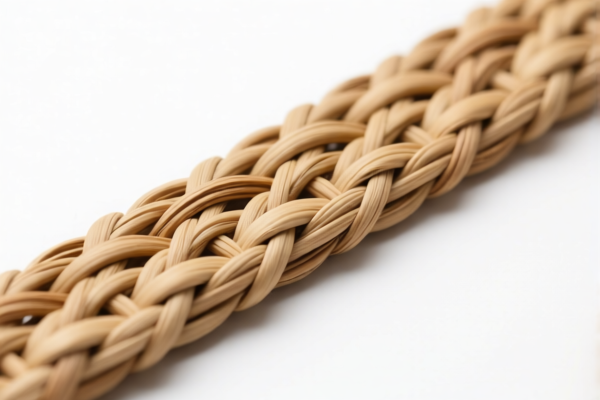
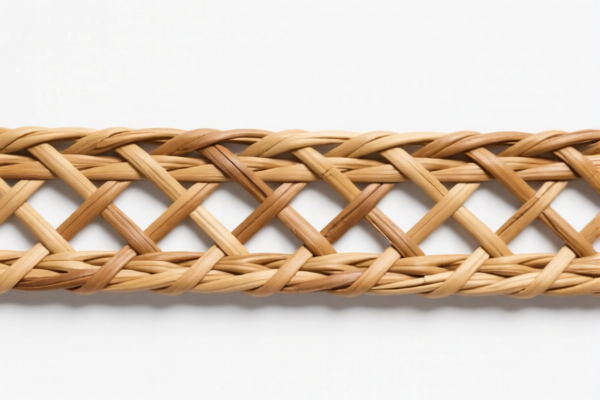
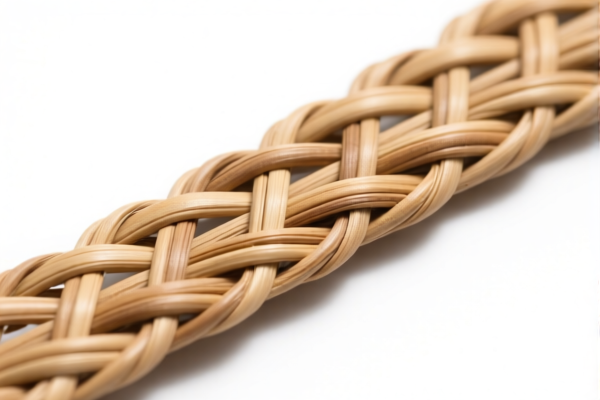
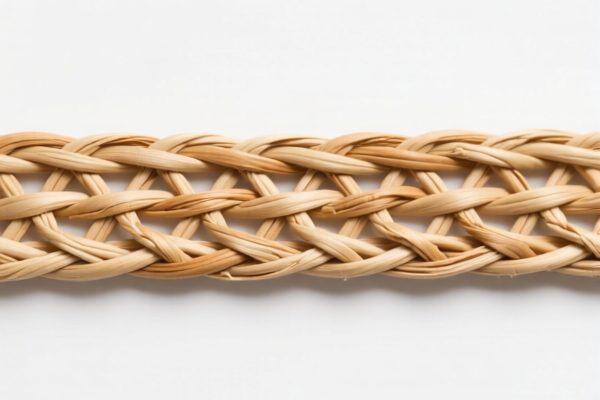
AI Analysis
🌿 Rattan Craft Material (Rattan Strips for Handicrafts)
🌐 HS Code Reference & Customs Clearance Guide | 2026 Latest Tariff Analysis | Professional Compliance Strategy
📌 I. Product Definition & Classification: What is "Rattan Craft Material"?
Rattan craft materials refer to raw or semi-finished plant-based materials used in handicrafts, furniture assembly, or weaving. In international trade, the classification depends heavily on the form (raw strip vs. finished mat) and the intended use (industrial raw material vs. consumer good).
Raw/Raw-like Rattan Strips: Unprocessed or lightly processed rattan strips, often used as raw materials for weaving. These are typically classified under Chapter 94 (Furniture) as "parts" or "other materials" rather than Chapter 46 (Wickerwork) because they are not yet formed into wickerwork articles. Semi-finished/Finished Rattan Mats: Pre-woven mats or strips ready for final product assembly. These may fall under Chapter 46 if considered "wickerwork," but often face higher duties if deemed simple manufactures.
⚠️ Key Distinction Point:
- If the material is a raw strip used as a component for furniture or handicrafts, it is often classified under 9403.89 (Other furniture parts/materials).
- If it is a finished woven mat or basic wickerwork item, it falls under 4602.19 (Wickerwork).
- Crucial Note: Raw rattan strips are frequently misclassified. If they are simple raw materials, Chapter 94 is often more appropriate for cost and regulatory reasons, but duties vary significantly.
📦 II. HS Code Classification Details (2026 Latest Tariff Authority)
| HS Code | Product Description | Application Scenario | Duty Status |
|---|---|---|---|
4602.19.80.00 |
Wickerwork of vegetable material (other than rattan mats); Rattan craft raw materials/straps in primary/semi-finished state | Rattan weaving mats, semi-finished craft strips, basic plant fiber products | ✅ High Duty |
9403.89.30.20 |
Rattan strips for handicrafts; Material is rattan or similar, in primary form or raw state, not finished household furniture | Raw rattan strips, semi-finished weaving materials, craft inputs | ⚠️ Moderate-High Duty |
9403.89.30.10 |
Rattan strips for handicrafts; Material conforms to rattan, willow, or similar, treated as furniture part material | Processed rattan strips, furniture components, raw material for furniture making | ⚠️ Moderate-High Duty |
🔍 Key Reminder:
-4602.19.80.00is often the default for "wickerwork" but may not apply if the item is merely a raw strip.
-9403.89.30.10and9403.89.30.20are critical for raw/semi-finished rattan strips. They are classified as "other furniture" or "parts," which can sometimes offer slightly different duty structures compared to Chapter 46.
- Do not confuse raw rattan strips with finished rattan chairs or baskets. The former are materials; the latter are finished goods.
💰 III. 2026 Latest Tariff Rate Breakdown (Including Surtaxes & Policy Surcharges)
✅ Applicable Country: United States (US)
✅ Country of Origin: China (CN)
✅ Effective Time: From November 10, 2025 (including subsequent imports)
🎯 1. 4602.19.80.00 – Wickerwork/Rattan Craft Raw Materials (Primary/Semi-finished)
| Item | Content |
|---|---|
| Base Duty Rate | 2.3% (ad valorem) |
| USITC Surtax (Section 301) | +25.0% |
| IEEPA Surtax (Section 122) | +10.0% |
| Total Duty Rate | 37.3% |
| Tax Calculation | CIF Value × 37.3% |
| De Minimis Exemption Eligible | ❌ No (deny_de_minimis) |
| Legal Basis Path | USITC:4602.19.80.00 → FOOTNOTE:9903.88.01 → IEEPA:9903.01.25 → IEEPA:9903.01.24 |
📌 Explanation:
- Base 2.3%: Standard Most Favored Nation (MFN) duty for wickerwork.
- 25% Section 301: Additional tariff imposed on Chinese goods under the Trade Act of 1974.
- 10% IEEPA: Additional tariff under the International Emergency Economic Powers Act, specifically targeting certain Chinese imports.
- Total 37.3%: This is a significant duty burden. Importers must account for this in cost modeling.
🎯 2. 9403.89.30.20 – Rattan Strips for Handicrafts (Primary/Raw Form)
| Item | Content |
|---|---|
| Base Duty Rate | 0.0% |
| USITC Surtax (Section 301) | +25.0% |
| IEEPA Surtax (Section 122) | +10.0% |
| Total Duty Rate | 35.0% |
| Tax Calculation | CIF Value × 35.0% |
| De Minimis Exemption Eligible | ❌ No (deny_de_minimis) |
| Legal Basis Path | USITC:9403.89.30.20 → FOOTNOTE:9903.88.01 → IEEPA:9903.01.25 → IEEPA:9903.01.24 |
📌 Note:
- Base 0.0%: As a "part" or "material" under Chapter 94, the base rate is often 0%.
- Total 35.0%: Despite the 0% base, the 35% total is still high due to surtaxes. However, it is 2.3% cheaper than4602.19.80.00.
- Classification Logic: This code applies when the rattan is in a primary form or raw state, not yet a finished wickerwork article.
🎯 3. 9403.89.30.10 – Rattan Strips for Handicrafts (Furniture Part Material)
| Item | Content |
|---|---|
| Base Duty Rate | 0.0% |
| USITC Surtax (Section 301) | +25.0% |
| IEEPA Surtax (Section 122) | +10.0% |
| Total Duty Rate | 35.0% |
| Tax Calculation | CIF Value × 35.0% |
| De Minimis Exemption Eligible | ❌ No (deny_de_minimis) |
| Legal Basis Path | USITC:9403.89.30.10 → FOOTNOTE:9903.88.01 → IEEPA:9903.01.25 → IEEPA:9903.01.24 |
📌 Note:
- Identical tax treatment to9403.89.30.20.
- Use this code if the rattan strips are specifically identified as materials for furniture parts or processed raw materials.
- Total 35.0%: Same as above, 2.3% lower than the wickerwork classification.
🛠️ IV. Customs Clearance Practical Advice (Battle-Tested Pitfall Guide)
✅ 1. Documentation Checklist (Non-negotiable)
| Document | Required | Explanation |
|---|---|---|
| ✅ Product Specification Sheet | ✔️ | Must detail material (rattan, willow, etc.), form (strip, mat), and processing level (raw, semi-finished, finished). |
| ✅ Product Photos (Clear) | ✔️ | Show texture, diameter, length, and whether it's woven or just stripped. |
| ✅ Commercial Invoice | ✔️ | Must explicitly state: "Rattan Strips for Handicrafts – Raw Material" or "Woven Rattan Mats." Do not use vague terms like "Plastic-like material." |
| ✅ Packing List | ✔️ | Detail weight, dimensions, and number of bundles. |
| ✅ Certificate of Origin (CO) | ✔️ | Essential for proving Chinese origin and applying (or confirming) surtaxes. |
| ✅ Third-Party Test Report | ✔️ | If claiming wood/plant pest-free status, include fumigation certificates or ISPM 15 compliance. |
✅ 2. Declaration Strategy (Key Mnemonics)
🔥 “Raw Strips = 9403, Finished Mats = 4602, 35% vs 37.3%, Choose Wisely!”
| Scenario | Correct Declaration | Common Mistake |
|---|---|---|
| Raw Rattan Strips | 9403.89.30.10 or 9403.89.30.20 |
Misclassified as 4602.19.80.00 → Paying 2.3% extra unnecessarily. |
| Semi-finished Woven Mats | 4602.19.80.00 |
Misclassified as raw material → Risk of rejection if too processed. |
| Finished Rattan Chairs | 9403.89.90.40 (not listed in DATA) |
Using raw material code → Major misclassification. |
| Rattan + Other Materials | Depends on essential character | Assuming all parts are rattan → Incorrect base rate. |
✅ 3. Special Cases Handling
| Situation | Handling Advice |
|---|---|
| Mixed Bundles | If a shipment contains both raw strips and finished mats, split the HS codes. Do not mix. |
| Processed vs. Raw | If rattan is bleached, dyed, or woven into a grid, it may move from 9403 (raw) to 4602 (wickerwork). Ensure documentation matches. |
| De Minimis (Section 321) | ❌ Not Eligible. Rattan crafts/materials from China are explicitly denied de minimis treatment. All shipments must go through formal entry. |
| Fumigation | Raw plant materials often require ISPM 15 compliance. Ensure phytosanitary certificates are included to avoid delays. |
🌍 V. Global Market Comparison (2026 Latest)
| Country/Region | Recommended HS Code | Duty Rate (China Origin) | Certification Required | Notes |
|---|---|---|---|---|
| 🇺🇸 USA | 9403.89.30.10 / 9403.89.30.20 |
35.0% | ISPM 15 (Fumigation) | 10% IEEPA + 25% Section 301 applies. High cost. |
| 🇺🇸 USA | 4602.19.80.00 |
37.3% | ISPM 15 (Fumigation) | Higher if classified as wickerwork. |
| 🇨🇳 China | 4602.19.80.00 / 9403.89.30.xx |
Low (0-10%) | CCC (if furniture) | No US surtaxes. Favorable for export hub. |
| 🇪🇺 EU | 4602.11.00 / 9403.89 |
0-6.5% | CE (if applicable) | No Section 301/IEEPA. More competitive. |
| 🇬🇧 UK | 4602.11.00 / 9403.89 |
0-6.5% | UKCA | Post-Brexit rules apply. No US surtaxes. |
📌 Conclusion:
- USA is the most challenging market due to 35-37.3% total duties.
- EU/UK/Asia are more favorable with 0-6.5% duties.
- Cost Optimization: If possible, consider third-country processing (e.g., Vietnam, Thailand) to potentially mitigate US surtaxes, but ensure substantial transformation rules are met.
📌 VI. Common Mistakes & Pitfall Guide (Lessons Learned)
❌ Mistake 1: Declaring "Rattan Strips" as 4602.19.80.00 when they are raw.
👉 Consequence: Paying 37.3% instead of 35.0%. Small difference, but over large volumes, it adds up. More importantly, if the goods are too raw, customs may reject 4602 for being "unfinished."
❌ Mistake 2: Assuming De Minimis ($800) applies.
👉 Consequence: Shipments seized, delayed, or fined. Rattan from China is explicitly excluded from de minimis. Formal entry is mandatory.
❌ Mistake 3: Vague Description "Rattan Material."
👉 Consequence: Customs officers may choose the highest duty code or request additional documentation, causing delays.
✅ Correct Description: "Rattan Strips, Raw, Diameter 5mm, Length 1m, for Handicraft Weaving, HS 9403.89.30.20"
❌ Mistake 4: Ignoring Fumigation.
👉 Consequence: Rejection at port, re-export, or destruction. Plant materials require ISPM 15 compliance.
🎯 VII. Conclusion: Precision in Classification, Profit in Clearance
🎯 Remember the Mnemonic:
🔹 "Raw Strips = 9403, 35% Duty; Woven Mats = 4602, 37.3% Duty."
🔹 "No De Minimis, Formal Entry Required, Fumigation is Key."
🔹 "35% is Better than 37.3%, But Still High – Plan Ahead!"
📌 Pro Tip:
- If your business volume is high, consider Advance Ruling (USCBP Ruling) to confirm the correct HS code for your specific rattan product. This provides legal certainty and avoids unexpected duties.
- Explore Supply Chain Diversification: If US tariffs are too high, consider sourcing or assembling in Vietnam, Indonesia, or Thailand to leverage lower duty rates or potential exemptions.
📣 Immediate Action:
📞 Contact a Licensed Customs Broker
📤 Submit Product Images & Specs
📝 Apply for USCBP Advance Ruling
🚀 Ensure ISPM 15 Compliance for Plant Materials
✨ Professional Customs Clearance Starts with Accurate Classification!
💼 Your Bottom Line Depends on Every Percent Point!
Customer Reviews
About HS Code Classification
The Harmonized System (HS) is an internationally standardized nomenclature developed by the World Customs Organization (WCO) to classify traded products. Over 200 countries use the HS system as the basis for customs tariffs, trade statistics, and import/export regulations.
Each HS code follows a hierarchical structure:
- Chapter (2 digits) — Broad category of goods (e.g., Chapter 84: Machinery and Mechanical Appliances)
- Heading (4 digits) — More specific grouping within the chapter
- Subheading (6 digits) — Internationally standardized breakdown, used by all WCO member countries
- National subdivisions (8-10 digits) — Country-specific extensions for further classification, such as US HTSUS 10-digit codes
Correct HS code classification is essential for smooth customs clearance, accurate duty payment, and compliance with trade regulations. Misclassification can lead to customs delays, overpayment of duties, or penalties.
When importing from CN to US, the applicable tariff rates may include:
- Most-Favored-Nation (MFN) rate — The standard duty rate applied to WTO members
- General rate — Applied to countries without trade agreements
- Trade remedy duties — Additional tariffs such as Section 301 (anti-dumping), Section 232 (national security), or countervailing duties
The information provided on this page is for reference purposes only. For official classification, please consult with your local customs authority or a licensed customs broker.