Rattan Cushion Semi finished Product
CN → US| HS Code | Tariff Rate | Origin | Destination | Doc |
|---|---|---|---|---|
| 4602120000 | 0.0% | CN | US | Official Doc |
| 4602124500 | 41.6% | CN | US | Official Doc |
| 1401202090 | 17.5% | CN | US | Official Doc |
| 1401204000 | 12.0% | CN | US | Official Doc |
| 9403830030 | 35.0% | CN | US | Official Doc |
| 9403992040 | 35.0% | CN | US | Official Doc |
Product Images

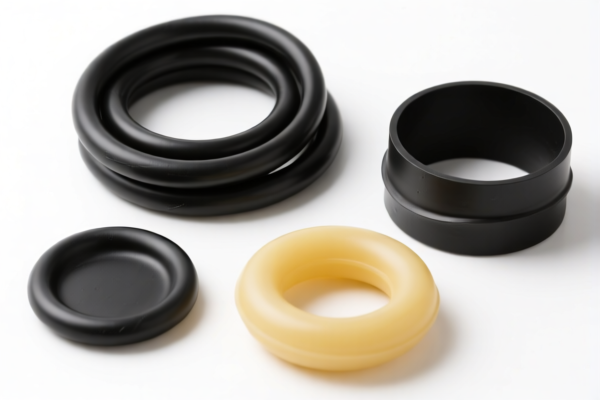
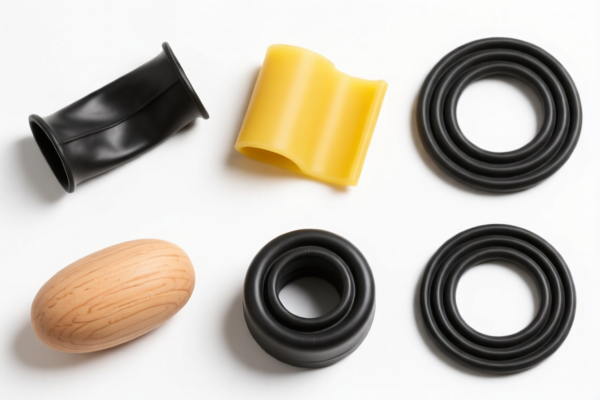

AI Analysis
🪑 Rattan Cushion Semi-Finished Product: The "Tricky" Hybrid Classification Guide
🌐 HS Code Reference & Customs Clearance Guide | 2026 Latest Tariff Analysis | Professional Strategy for Wicker & Furniture Hybrids
📌 I. Product Definition & Classification: What Exactly Is a "Semi-Finished Rattan Cushion"?
A "Rattan Cushion Semi-Finished Product" is a complex hybrid item that sits on the boundary between raw materials, wickerwork, and furniture parts. It typically consists of: * A woven rattan base/frame (structural element made from plaited rattan). * An attached or loosely fitted cushion (fabric/foam part). * Status: "Semi-finished" implies it is not yet a complete, standalone furniture piece (like a finished armchair) but is further along than raw rattan poles.
In international trade, this product is classified differently depending on whether the rattan structure is the essential character (classified as furniture/wickerwork) or if it is merely a part/accessory to a larger furniture piece.
⚠️ Key Distinction Point:
- If the item is a finished basket, tray, or small woven article with a cushion → Classified under Heading 4602 (Wickerwork).
- If the item is a part of a larger furniture set (e.g., a seat cushion base for a chair) → Classified under Heading 9403.99 (Furniture Parts).
- If the item is raw rattan material processed but not woven into articles → Classified under Heading 1401 (Vegetable Materials).
📦 II. HS Code Classification Details (2026 Latest Tariff Authority Mapping)
Based on the provided data, here are the applicable HS Codes for "Rattan Cushion Semi-Finished Products," categorized by their structural nature:
| HS Code | Product Description | Applicable Scenario | Nature of Item |
|---|---|---|---|
9403.83.00.30 |
Other furniture: Of rattan, Other | Semi-finished rattan furniture components (e.g., seat bases, armrests) that retain furniture character but are not complete units. | ✅ Furniture Component |
9403.99.20.40 |
Parts of furniture: Of cane, osier, bamboo or similar materials, Of rattan, Other | Loose rattan parts intended for assembly into larger furniture (e.g., rattan seat inserts, backrest frames). | ✅ Furniture Part |
1401.20.20.90 |
Vegetable materials: Rattans, In the rough or cut transversely into sections, Other | Raw or minimally processed rattan poles/strips, possibly with some soft padding for protection during transport, but no woven structure. | ✅ Raw Material |
1401.20.40.00 |
Vegetable materials: Rattans, Other | Processed rattan materials not specified above (e.g., dyed, cleaned strips), not yet woven into articles. | ✅ Raw Material |
4602.12.00.00 |
Basketwork/Wickerwork: Of vegetable materials, Of rattan, Other, Other | Woven rattan articles (e.g., baskets, trays) with cushions, where the woven part is the primary functional unit. | ⚠️ Tax Error Retrieval |
4602.12.45.00 |
Basketwork/Wickerwork: Of vegetable materials, Of rattan, Other, Other | Woven rattan articles (e.g., decorative trays, small seats) with cushions. | ✅ Wickerwork Article |
🔍 Critical Note:
- HS Codes9403.83.00.30and9403.99.20.40are the most common for "semi-finished furniture" contexts.
- HS Code4602.12.45.00applies if the item is clearly a finished woven article (like a basket) with a cushion, rather than a furniture part.
- HS Codes1401.20.20.90and1401.20.40.00apply only if the item is not yet woven (i.e., just rattan strips/poles).
💰 III. 2026 Latest Tariff Rate Breakdown (Including Additional Taxes)
✅ Applicable Country: United States (US)
✅ Origin: China (CN)
✅ Effective Date: 2025-11-10 onwards (including subsequent imports)
🎯 1. 9403.83.00.30 & 9403.99.20.40 —— Furniture & Parts (Rattan)
| Item | Details |
|---|---|
| Base Tariff | 0.0% (ad valorem) |
| Additional Tax (Section 301) | +25.0% |
| Total Tariff Rate | 25.0% |
| Tax Calculation | CIF Value × 25% |
| De Minimis Exemption? | ❌ No (Not eligible for de minimis) |
| Legal Basis | USITC Tariff Schedule → Section 301 Trade Actions |
📌 Explanation:
- Rattan furniture and its parts are subject to a 25% additional tariff under Section 301.
- Although the base tariff is 0%, the total cost impact is 25%.
- No IEEPA 10% add-on is listed for these specific codes in the provided data, so the total is 25%.
🎯 2. 1401.20.20.90 & 1401.20.40.00 —— Raw Rattan Materials
| Item | Details |
|---|---|
| Base Tariff | 0.0% |
| Additional Tax (Section 301) | 7.5% (for 1401.20.20.90), 0.0% (for 1401.20.40.00) |
| Total Tariff Rate | 7.5% (for 1401.20.20.90), 0.0% (for 1401.20.40.00) |
| Tax Calculation | CIF Value × Rate |
| De Minimis Exemption? | ❌ No (Usually not eligible for de minimis for raw materials under 301) |
| Legal Basis | USITC Tariff Schedule → Section 301 Trade Actions |
📌 Explanation:
- Raw rattan materials face a lower additional tariff (7.5%) or no additional tariff (0%) compared to finished furniture parts.
- Strategic Implication: If possible, importing raw rattan strips (1401.20.40.00) and finishing them domestically could reduce tariff costs, but this depends on supply chain capabilities.
🎯 3. 4602.12.45.00 —— Wickerwork Articles (Baskets/Trays with Cushions)
| Item | Details |
|---|---|
| Base Tariff | 6.6% |
| Additional Tax (Section 301) | 25.0% |
| Total Tariff Rate | 31.6% |
| Tax Calculation | CIF Value × 31.6% |
| De Minimis Exemption? | ❌ No |
| Legal Basis | USITC Tariff Schedule → Section 301 Trade Actions |
📌 Explanation:
- Wickerwork articles have a higher base tariff (6.6%) plus the 25% Section 301 tax, totaling 31.6%.
- Note: The code4602.12.00.00had a tax retrieval error, so only4602.12.45.00is confirmed at 31.6%.
🛠️ IV. Customs Clearance Practical Advice (Actionable Tips)
✅ 1. Documentation Checklist (Must-Have)
| Document | Required | Notes |
|---|---|---|
| ✅ Product Description | ✔️ | Clearly state "Rattan Semi-Finished Furniture Part" or "Wickerwork Article" |
| ✅ Composition Breakdown | ✔️ | Specify % of rattan, fabric, foam, glue |
| ✅ Photos | ✔️ | Show weave structure, attachment method of cushion, and overall shape |
| ✅ Commercial Invoice | ✔️ | Declare value accurately; avoid vague terms like "Cushion" |
| ✅ Origin Certificate | ✔️ | Critical for verifying Section 301 applicability |
| ✅ Packaging List | ✔️ | Detail items per carton to avoid mixed shipments |
✅ 2. Declaration Strategy (Key Mnemonics)
🔥 "Shape Defines Code, Structure Dictates Tax!"
| Scenario | Correct HS Code | Wrong Declaration | Risk |
|---|---|---|---|
| Rattan base with cushion, intended for furniture assembly | 9403.83.00.30 or 9403.99.20.40 |
Declare as "Cushion" or "Textile Article" | Misclassification → 25% tariff applies, but potential penalties for incorrect code |
| Woven rattan basket with cushion | 4602.12.45.00 |
Declare as "Furniture Part" | Misclassification → 31.6% vs 25% tariff difference + audit risk |
| Raw rattan poles/strips | 1401.20.40.00 |
Declare as "Semi-Finished Furniture" | Overpayment of 25% instead of 0% |
✅ 3. Special Cases Handling
| Situation | Recommendation |
|---|---|
| Mixed Shipment | Ensure rattan parts are not mixed with other non-rattan furniture parts in the same container to avoid complex valuation issues. |
| OEM Orders | Provide client’s design specs to prove the item is a "part" of their specific furniture line, supporting 9403.99.20.40. |
| Customs Audit | Be prepared to show that the cushion is integral to the rattan structure and not a removable, standalone textile product. |
| Tariff Engineering | If possible, import raw rattan (1401.20.40.00) and add cushions locally to reduce duty from 25% to 0%. |
🌍 V. Global Market Comparison (2026 Latest)
| Market | Recommended HS Code | Tariff Rate | Notes |
|---|---|---|---|
| 🇺🇸 USA | 9403.99.20.40 |
25.0% | Section 301 tax applies |
| 🇺🇸 USA | 4602.12.45.00 |
31.6% | Higher base + Section 301 |
| 🇺🇸 USA | 1401.20.40.00 |
0.0% | Raw material advantage |
| 🇨🇳 China | 9403.99.20.40 |
Varies | Check local MFN rates |
| 🇪🇺 EU | 9403.99 |
Varies | Typically lower than US |
📌 Conclusion:
- USA imposes significant tariffs on rattan furniture and wickerwork.
- Raw materials (1401) are tariff-free or low-tariff, offering a potential cost-saving strategy if domestic finishing is feasible.
📌 VI. Common Mistakes & Pitfalls
❌ Mistake 1: Declaring rattan furniture parts as "Cushions" (Textiles)
👉 Result: Misclassification → Potential 25% tariff evasion detection → Penalties.
❌ Mistake 2: Declaring woven wicker baskets as "Furniture Parts"
👉 Result: Wrong HS Code → 31.6% vs 25% tariff discrepancy → Audit trigger.
❌ Mistake 3: Ignoring Section 301 Additional Taxes
👉 Result: Underestimating landed cost by 25-31.6% → Profit margin erosion.
❌ Mistake 4: Mixing raw rattan and semi-finished goods in one shipment without clear separation
👉 Result: Customs may apply the highest tariff rate to the entire shipment.
✅ Correct Approach:
"Rattan Woven Seat Base with Attached Foam Cushion, Semi-Finished Furniture Part, Model XYZ, CN Origin"
🎯 VII. Conclusion: Professional Declaration, Cost Efficiency, Risk Mitigation
🎯 Remember the Mnemonic:
🔹 "Furniture Part: 25%, Wicker: 31.6%, Raw: 0-7.5%"
🔹 "Know Your Shape, Save Your Cash!"
📌 Pro Tip:
If your rattan cushion semi-finished product is intended for use in a larger furniture piece, clearly declare it as a "Part of Furniture" under 9403.99.20.40 to potentially qualify for lower base rates (though Section 301 still applies).
If it is a standalone woven article (like a basket), declare under 4602.12.45.00.
📣 Immediate Action:
📞 Consult a customs broker to confirm the "essential character" of your product.
📄 Provide detailed photos and structure diagrams to support your HS Code claim.
🚀 Optimize your supply chain to leverage lower tariffs on raw materials if feasible.
✨ Professional Customs Clearance Starts with Accurate Classification!
💼 Your Bottom Line Depends on the Right HS Code!
Customer Reviews
About HS Code Classification
The Harmonized System (HS) is an internationally standardized nomenclature developed by the World Customs Organization (WCO) to classify traded products. Over 200 countries use the HS system as the basis for customs tariffs, trade statistics, and import/export regulations.
Each HS code follows a hierarchical structure:
- Chapter (2 digits) — Broad category of goods (e.g., Chapter 84: Machinery and Mechanical Appliances)
- Heading (4 digits) — More specific grouping within the chapter
- Subheading (6 digits) — Internationally standardized breakdown, used by all WCO member countries
- National subdivisions (8-10 digits) — Country-specific extensions for further classification, such as US HTSUS 10-digit codes
Correct HS code classification is essential for smooth customs clearance, accurate duty payment, and compliance with trade regulations. Misclassification can lead to customs delays, overpayment of duties, or penalties.
When importing from CN to US, the applicable tariff rates may include:
- Most-Favored-Nation (MFN) rate — The standard duty rate applied to WTO members
- General rate — Applied to countries without trade agreements
- Trade remedy duties — Additional tariffs such as Section 301 (anti-dumping), Section 232 (national security), or countervailing duties
The information provided on this page is for reference purposes only. For official classification, please consult with your local customs authority or a licensed customs broker.