Rattan Doormat
CN → US| HS Code | Tariff Rate | Origin | Destination | Doc |
|---|---|---|---|---|
| 5705002090 | 38.3% | CN | US | Official Doc |
| 4602124500 | 41.6% | CN | US | Official Doc |
| 4602123500 | 10.0% | CN | US | Official Doc |
| 4601228000 | 35.0% | CN | US | Official Doc |
| 4601224000 | 38.3% | CN | US | Official Doc |
Product Images
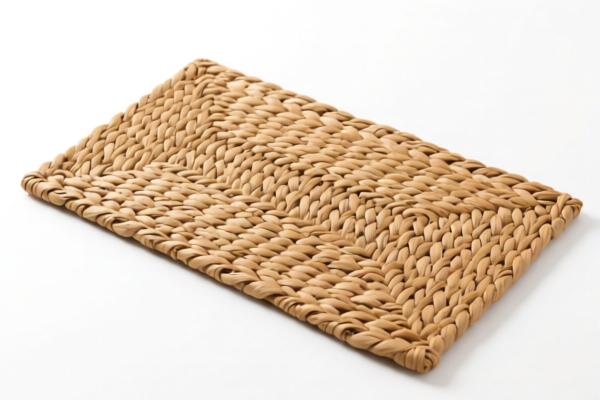
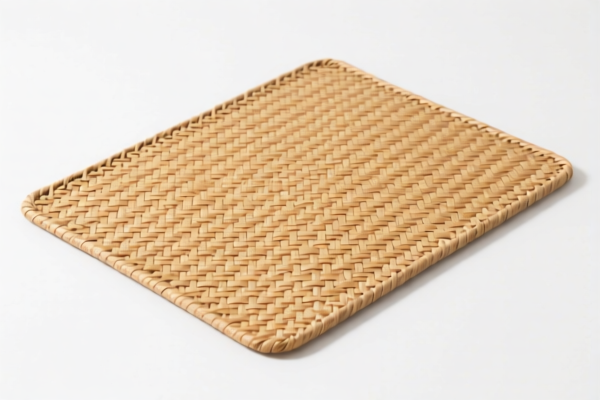
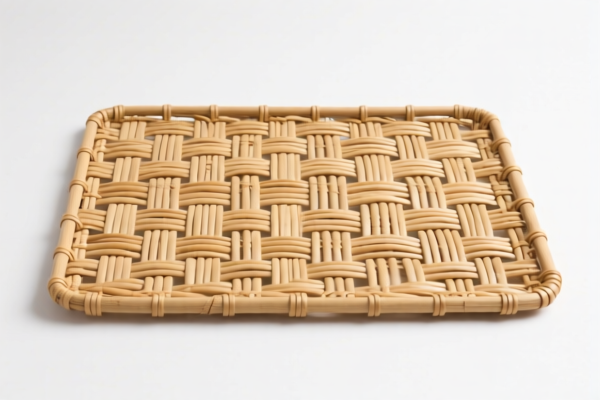

AI Analysis
🌴 Rattan Doormat: Ultimate HS Code Classification & 2026 Tax Strategy Guide
🌍 Rattan Doormat Classification & Clearance Guide | 2026 Tax Rate Breakdown | Professional Customs Strategy
📌 1. Product Definition & Classification: What Exactly is a "Rattan Doormat"?
Rattan Doormats are woven floor coverings made from natural rattan vines. In international trade, they are a "cross-over" product that can be classified under Floor Coverings (Chapter 57) or Woven Rattan Articles (Chapter 46) depending on the specific manufacturing method, density, and intended use.
The Two Main Classification Paths: * Path A (Floor Covering): If the mat is designed primarily as a durable floor covering, similar to a rug or carpet, it falls under Chapter 57. * Path B (Woven Article): If the mat is viewed strictly as a woven basket-like article made of rattan strips, it falls under Chapter 46.
⚠️ Critical Distinction:
- If the item is explicitly marketed as a "Rug," "Carpet," or "Floor Mat" with high pile or dense weaving → HS 5705.00.20.90
- If the item is a flat, woven tray-like mat with open weave, categorized as "Other wicker/plant material articles" → HS 4602 Series
- Note: The tax burden varies drastically between these paths (10% vs. 41.6%).
📦 2. HS Code Classification Breakdown (2026 Authorized Reference)
Based strictly on the provided data for Rattan Doormats.
| HS Code | Product Description & Logic | Tax Rate (Total) | Key Tax Components |
|---|---|---|---|
| 5705.00.20.90 | Woven Rattan Floor Covering Classified as "Other Carpets or Textile Floor Coverings." Fits the "catch-all" category for floor mats not specified elsewhere. |
38.3% | Base: 3.3% Add-on: 25.0% Section 122: 10% |
| 4602.12.45.00 | Rattan Woven Product Material: Rattan. Form: Woven article. Fits the requirement for "woven materials & plant materials." |
41.6% | Base: 6.6% Add-on: 25.0% Section 122: 10% |
| 4602.12.35.00 | Rattan Woven Item (Low Tax) Material: Rattan. Form: Woven article. Matches "Rattan woven articles" classification perfectly. |
10.0% | Base: 0.0% Add-on: 0.0% Section 122: 10% |
| 4601.22.80.00 | Rattan Strips & Mats Explicitly contains Rattan material + Floor usage. Fits "Rattan strip products" & "Floor laying materials." |
35.0% | Base: 0.0% Add-on: 25.0% Section 122: 10% |
| 4601.22.40.00 | Rattan Mats & Sheets Material: Rattan. Form: Mats, pads, & netting. Fits classification requirements for mats/pads. |
38.3% | Base: 3.3% Add-on: 25.0% Section 122: 10% |
🔍 Key Insight:
The most critical tax difference is between 4602.12.35.00 (10.0%) and the others (35% - 41.6%). The 10% rate applies only if the product is strictly defined as a "Rattan woven article" without triggering the "Floor Covering" or "High Add-on" rules.
💰 3. 2026 Tariff Rate Breakdown (Detailed Tax Logic)
✅ Applicable Region: US Market (implied by "122 Clause" & high add-ons)
✅ Origin: China (CN)
✅ Context: 2026 Tax Regime
🎯 Scenario A: The "Low Tax" Path (4602.12.35.00)
Best Case Scenario for Importers
| Item | Value |
|---|---|
| Base Tariff | 0.0% (Duty-free entry for specific woven rattan) |
| Section 301 Add-on | 0.0% (No additional penalty in this specific sub-category) |
| Section 122 Tariff | +10% (Specific US-China trade measure) |
| Total Effective Rate | 10.0% |
| Legal Basis | Based on specific "Rattan woven article" exemption logic. |
📌 Why it works: This classification treats the doormat purely as a woven basketry item, avoiding the "Carpet" and "Textile" surcharges.
🎯 Scenario B: The "High Tax" Paths (4602, 4601, 5705)
Most Common Scenarios (Risk of High Duty)
| HS Code | Base Tariff | Section 301 Add-on | Section 122 Tariff | Total Rate |
|---|---|---|---|---|
| 5705.00.20.90 | 3.3% | 25.0% | 10% | 38.3% |
| 4602.12.45.00 | 6.6% | 25.0% | 10% | 41.6% |
| 4601.22.80.00 | 0.0% | 25.0% | 10% | 35.0% |
| 4601.22.40.00 | 3.3% | 25.0% | 10% | 38.3% |
📌 Why it's expensive:
- Section 301 (25%): Applied because these codes are viewed as "Floor Coverings" or "Textile-like" goods, triggering the heavy tariff on Chinese imports.
- Section 122 (10%): A specific additional tax layer for these product types.
- Base Tariff: Ranges from 0% to 6.6% depending on the specific sub-heading.
🛠️ 4. Customs Clearance Practical Advice (Real-World Strategy)
✅ 1. Preparation Checklist (Must-Haves)
| Document | Requirement | Why It Matters |
|---|---|---|
| Product Photos | ✔️ Mandatory | Must show the weave density, backing (if any), and thickness. If it looks like a carpet, it risks 5705. |
| Composition Report | ✔️ Mandatory | Must explicitly state "100% Rattan" (No synthetic backing). If synthetic backing exists, it forces textile classification (5705). |
| Usage Declaration | ✔️ Mandatory | Declare as "Woven Rattan Mat" or "Basketry Article." Avoid words like "Carpet," "Rug," or "Textile Floor Covering." |
| Weave Pattern Diagram | ✔️ Recommended | Helps prove it is a "woven article" (Chap 46) rather than a "tufted/knitted carpet" (Chap 57). |
✅ 2. Declaration Strategy (The Golden Rule)
🔥 Mantra: "Woven, Not Woven Textile! Declare as Basketry to Avoid 301!"
| Situation | Recommended Declaration | HS Code | Avoid This |
|---|---|---|---|
| Flat, open-weave mat | "Rattan Woven Mat, Plant Material" | 4602.12.35.00 | Calling it a "Doormat" (Triggers 35-41%) |
| Dense, carpet-like mat | "Rattan Floor Covering, Woven" | 5705.00.20.90 | Calling it "Basketry" (Will be rejected) |
| Mat with backing | "Rattan on Jute Backing" | 5705.00.20.90 | Hiding the backing |
| Mat with synthetic fibers | "Rattan/Synthetic Blend" | 5705.00.20.90 | Claiming 100% Natural |
✅ 3. Critical Risk Alerts (Avoid These Pitfalls)
| ❌ Mistake | Consequence |
|---|---|
| Using the word "Carpet" or "Rug" in the commercial invoice | Result: Customs will auto-classify to 5705 → Tax jumps to 38.3%. |
| Missing the "100% Rattan" claim | Result: If any synthetic glue/backing is found, the "Plant Material" exemption fails → 41.6% tax. |
| Ignoring the "Section 122" clause | Result: Even if Base+301 is 0% (like 4602.12.35), the 10% Section 122 still applies. |
| Misclassifying a "Rug" as a "Mat" | Result: If the item is heavy and floor-covering oriented, customs will override your 4602 claim and hit you with 35%+. |
🚨 Strategic Tip: If your doormat is light, flat, and clearly "basketry" style, aggressively push for 4602.12.35.00 (10% tax). If it is thick, heavy, and looks like a rug, accept 4601.22.40.00 or 5705 (35%+ tax) and calculate your margin accordingly.
🌍 5. Global Market Comparison (2026 Outlook)
| Market | Best HS Code | Est. Rate | Note |
|---|---|---|---|
| 🇺🇸 USA | 4602.12.35.00 | 10.0% | Optimal Strategy: Prove it's "Woven Article" not "Carpet." |
| 🇺🇸 USA | 5705.00.20.90 | 38.3% | High risk for "Carpet-like" mats. |
| 🇪🇺 EU | Varies | 0-4% | EU often treats Rattan as "Non-Textile" (No 301 equivalent). |
| 🇨🇦 Canada | Varies | 5-10% | Generally lower tariffs, similar classification logic. |
📌 Conclusion:
The US market is the most critical for classification strategy due to the Section 301 (25%) and Section 122 (10%) layer. The difference between 10% and 41.6% is a 31.6% margin killer.
📌 6. Final Checklist for Exporters
- Inspect the Weave: Is it open (basket-like) or closed (carpet-like)?
- Check the Backing: Is it natural fiber or synthetic? (Synthetic = Textile Class).
- Review the Invoice: Do NOT use the words "Carpet," "Rug," or "Textile." Use "Rattan Woven Mat" or "Rattan Woven Article."
- Calculate Duty: Run both 4602.12.35.00 (10%) and 5705 (38.3%) scenarios to decide which fits best based on physical specs.
- Apply Pre-Ruling: If the mat is borderline, apply for an Advance Ruling from US Customs (CBP) to lock in the 10% rate before shipping.
🎯 Conclusion: Smart Classify, Save Big!
🔹 Remember:
"Rattan Mat = 10% (if Basketry)"
"Rattan Rug = 38% (if Carpet)"
"One Word Change = $3,000 Savings!"
🚀 Action Step:
Review your product photos and invoice descriptions NOW. If you can prove it is a "Woven Article" and not a "Carpet," you save 28.3% in taxes.
✨ Professional Clearance starts with precise definitions!
💼 Don't let a 31% tax difference eat your profit margin!
Customer Reviews
About HS Code Classification
The Harmonized System (HS) is an internationally standardized nomenclature developed by the World Customs Organization (WCO) to classify traded products. Over 200 countries use the HS system as the basis for customs tariffs, trade statistics, and import/export regulations.
Each HS code follows a hierarchical structure:
- Chapter (2 digits) — Broad category of goods (e.g., Chapter 84: Machinery and Mechanical Appliances)
- Heading (4 digits) — More specific grouping within the chapter
- Subheading (6 digits) — Internationally standardized breakdown, used by all WCO member countries
- National subdivisions (8-10 digits) — Country-specific extensions for further classification, such as US HTSUS 10-digit codes
Correct HS code classification is essential for smooth customs clearance, accurate duty payment, and compliance with trade regulations. Misclassification can lead to customs delays, overpayment of duties, or penalties.
When importing from CN to US, the applicable tariff rates may include:
- Most-Favored-Nation (MFN) rate — The standard duty rate applied to WTO members
- General rate — Applied to countries without trade agreements
- Trade remedy duties — Additional tariffs such as Section 301 (anti-dumping), Section 232 (national security), or countervailing duties
The information provided on this page is for reference purposes only. For official classification, please consult with your local customs authority or a licensed customs broker.