Rattan Floor Mats
CN → US| HS Code | Tariff Rate | Origin | Destination | Doc |
|---|---|---|---|---|
| 5705002090 | 38.3% | CN | US | Official Doc |
| 4602124500 | 41.6% | CN | US | Official Doc |
| 4602123500 | 35.0% | CN | US | Official Doc |
| 4601228000 | 35.0% | CN | US | Official Doc |
| 4601224000 | 38.3% | CN | US | Official Doc |
Product Images
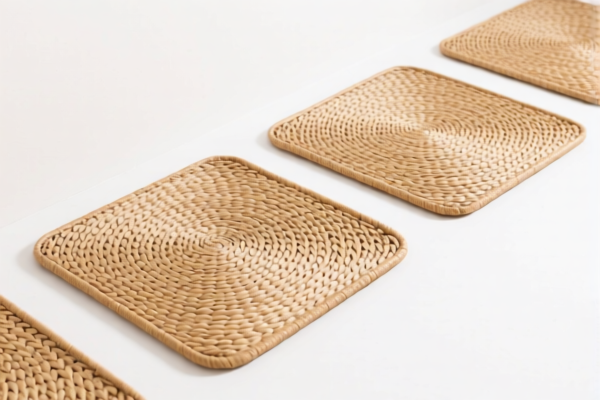
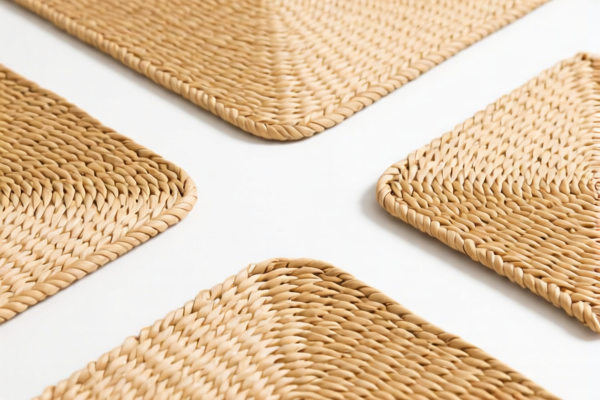
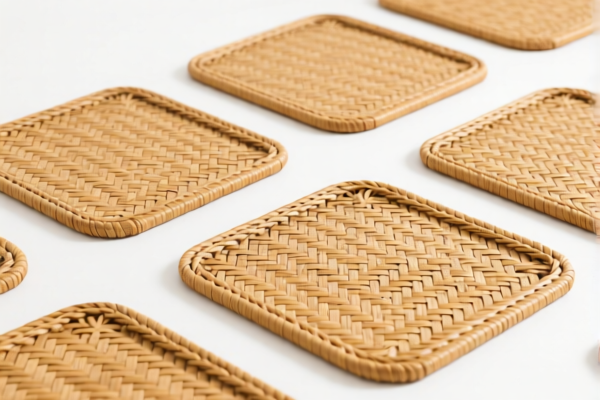
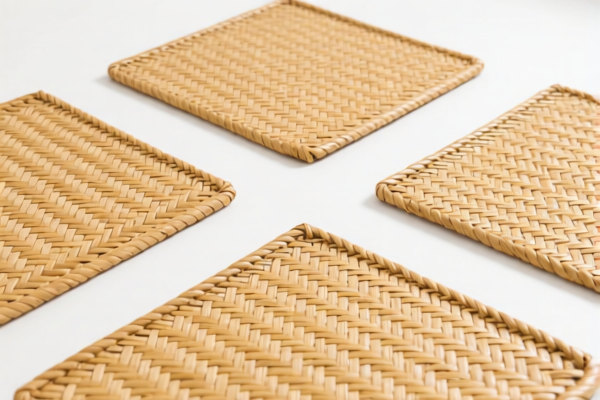
AI Analysis
🧶 Rattan Floor Mats (Woven Rattan Carpets)
🌐 HS Code Reference & Customs Clearance Guide | 2026 Latest Tariff Analysis | Professional Classification Strategy
📌 I. Product Definition & Classification: Do You Really Understand "Rattan Floor Mats"?
Rattan floor mats, often categorized as woven flooring coverings or rattan crafts, sit at the intersection of textile flooring and botanical handicrafts. In international trade, their classification depends heavily on whether they are viewed as finished floor coverings (textiles) or woven rattan articles (vegetable materials).
Woven Floor Coverings (Carpet Category): Treated as flooring products, often grouped under "other carpets or textile floor coverings." Rattan Woven Articles (Basketry Category): Treated as crafted goods from plant materials, specifically "woven articles of rattan."
⚠️ Key Distinction Point:
- If classified as floor coverings: Falls under Chapter 57 (Carpets), typically as a "basket weave" or general floor covering.
- If classified as rattan crafts: Falls under Chapter 46 (Prepared Vegetable Materials), specifically woven articles of rattan.
📦 II. HS Code Classification Details (2026 Latest Tariff Authority Comparison)
Based on the provided data, here are the five potential HS Code classifications with their specific tax implications and rationale:
| HS Code | Product Description | Classification Logic | Total Tax Rate | Tax Breakdown |
|---|---|---|---|---|
5705.00.20.90 |
Other Carpets or Textile Floor Coverings | Classified as a general floor covering (fallback category). "Rattan" is viewed through the lens of flooring utility. | 38.3% | Base: 3.3%, Add'l: 25.0%, Section 122: 10% |
4602.12.45.00 |
Woven Articles of Rattan | Classified as a woven product made of rattan material. Focuses on the "woven material" requirement. | 41.6% | Base: 6.6%, Add'l: 25.0%, Section 122: 10% |
4602.12.35.00 |
Other Woven Articles of Rattan | Classified specifically as woven rattan products. Aligns with the material (rattan) and form (woven). | 35.0% | Base: 0.0%, Add'l: 25.0%, Section 122: 10% |
4601.22.80.00 |
Woven Rattan Matting/Carpeting | Classified as a floor covering made of rattan strips/plaits. Combines "rattan material" with "floor covering use." | 35.0% | Base: 0.0%, Add'l: 25.0%, Section 122: 10% |
4601.22.40.00 |
Woven Rattan Matting (Rugs/Reed Mats) | Classified under reed, rushes, or similar materials, specifically for rugs/mats. Fits the "mat/rug" definition. | 38.3% | Base: 3.3%, Add'l: 25.0%, Section 122: 10% |
🔍 Key Observation:
- Lowest Tax Rates (35.0%): HS Codes4602.12.35.00and4601.22.80.00offer the lowest total duty at 35.0% because they benefit from a 0.0% Base Duty.
- Highest Tax Rates (41.6%): HS Code4602.12.45.00has the highest total duty at 41.6% due to a 6.6% Base Duty.
- Common Add-ons: All codes include a 25.0% Additional Duty (likely Section 301) and a 10% Duty (labeled as Section 122 in the data).
💰 III. 2026 Latest Tariff Rate Details (Including Surcharges & Policy Add-ons)
✅ Applicable Country: United States (US)
✅ Origin: China (CN) (Implied by "Section 122" and typical trade context for these surcharges)
✅ Effective Time: Current (as per data provided)
🎯 1. 5705.00.20.90 —— Other Carpets or Textile Floor Coverings
| Item | Content |
|---|---|
| Base Duty | 3.3% |
| Additional Duty (Section 301) | +25.0% |
| Section 122 Duty | +10.0% |
| Total Rate | 38.3% |
| Calculation | CIF Value × 38.3% |
| Legal Basis | HS:5705.00.20.90 + Add'l Tariff: 25% + Section 122: 10% |
📌 Explanation:
- This classification treats the mat as a textile/flooring product.
- The 3.3% base duty is the standard for other carpets.
- The 25% additional duty is the standard trade war tariff for many Chinese goods.
- The 10% Section 122 duty adds a significant layer of cost, bringing the total to nearly 40%.
🎯 2. 4602.12.45.00 —— Woven Articles of Rattan (Highest Cost)
| Item | Content |
|---|---|
| Base Duty | 6.6% |
| Additional Duty (Section 301) | +25.0% |
| Section 122 Duty | +10.0% |
| Total Rate | 41.6% |
| Calculation | CIF Value × 41.6% |
| Legal Basis | HS:4602.12.45.00 + Add'l Tariff: 25% + Section 122: 10% |
📌 Explanation:
- This classification views the product as a woven rattan craft.
- The 6.6% base duty is higher than other rattan classifications, making this the most expensive option.
- Avoid this HS code if cost efficiency is a priority.
🎯 3. 4602.12.35.00 & 4601.22.80.00 —— Lowest Cost Options (Recommended)
| Item | Content |
|---|---|
| Base Duty | 0.0% |
| Additional Duty (Section 301) | +25.0% |
| Section 122 Duty | +10.0% |
| Total Rate | 35.0% |
| Calculation | CIF Value × 35.0% |
| Legal Basis | HS:4602.12.35.00 / 4601.22.80.00 + Add'l Tariff: 25% + Section 122: 10% |
📌 Explanation:
- These codes offer a 0% base duty, significantly reducing the tariff burden.
-4602.12.35.00focuses on the material (rattan) and form (woven).
-4601.22.80.00focuses on the use (floor covering) and material (rattan).
- Savings: Compared to the highest rate (41.6%), these save 6.6% on the CIF value.
🛠️ IV. Customs Clearance Practical Advice (Real-World Pitfall Guide)
✅ 1. Preparation Checklist (Non-negotiable)
| Document | Required? | Explanation |
|---|---|---|
| ✅ Product Specifications | ✔️ | Must detail: Material (100% Rattan/Natural), Dimensions, Weight, Weave Type. |
| ✅ Material Composition Certificate | ✔️ | Proof that the product is made of rattan (vegetable material), not synthetic fibers. Critical for Chapter 46 classification. |
| ✅ Product Photos | ✔️ | Clear images showing the woven texture and floor-covering nature. |
| ✅ Commercial Invoice | ✔️ | Must clearly state: "Woven Rattan Floor Mat" or "Rattan Carpet." Avoid vague terms like "Home Decor." |
| ✅ Packing List | ✔️ | Include net/gross weight. Rattan is lightweight but bulky; ensure accurate volume for freight. |
| ✅ Origin Certificate (CO) | ✔️ | To prove country of origin (China), which triggers the 25% + 10% duties. |
✅ 2. Declaration Tips (Key Mnemonics)
🔥 “Material First, Use Second, Tax Drops!”
| Scenario | Correct Declaration | Error to Avoid |
|---|---|---|
| Product is 100% Natural Rattan | 4602.12.35.00 or 4601.22.80.00 |
Misdeclaring as "Textile Carpet" → 5705 (may be penalized if material is clearly botanical). |
| Product is Synthetic/Rattan-Like Plastic | 5705.00.20.90 |
Misdeclaring as "Natural Rattan" → Customs Penalties for False Declaration. |
| Mixed Material (Rattan + Fabric Backing) | 4602.12.35.00 (if rattan is essential character) |
Splitting into two HS codes → Complexity & Delay. |
✅ 3. Special Circumstances Handling
| Situation | Handling Advice |
|---|---|
| Rattan with Rubber Backing | If the backing is minor and doesn't change the essential character, it may still qualify for 4601 or 4602. If substantial, it might shift to Chapter 57 or 39 (Plastics). |
| Dyed vs. Natural Rattan | Both can fall under Chapter 46. Ensure the invoice specifies "Natural" or "Dyed Rattan" to avoid ambiguity. |
| Customs Audit for "Textile" vs. "Woven Vegetable" | Provide a Material Safety Data Sheet (MSDS) or Botanical Origin Report to prove it is a plant material, not a synthetic fiber. |
🌍 V. Global Market Comparison (2026 Latest)
| Country/Region | Recommended HS Code | Total Tax Rate (China Origin) | Key Certifications | Notes |
|---|---|---|---|---|
| 🇺🇸 USA | 4602.12.35.00 |
35.0% | None specific | Best Option: Lowest total tax due to 0% base duty. |
| 🇺🇸 USA | 5705.00.20.90 |
38.3% | None specific | Higher base duty (3.3%) makes it less competitive. |
| 🇪🇺 EU | 4602.12 |
~0-5% (Varies) | CE (if applicable) | EU often has lower base duties for natural fibers; no Section 122/301 equivalent. |
| 🇨🇳 China | 4602.12 |
0-5% | None | Export from China has low domestic duties, but focus is on foreign tariffs. |
📌 Conclusion:
- For the US Market,4602.12.35.00or4601.22.80.00are the most cost-effective choices, offering a 35.0% total duty.
-4602.12.45.00should be avoided due to its high base duty (6.6%), resulting in a 41.6% total tax.
-5705.00.20.90is a safe fallback if the rattan content is low or mixed with textiles, but at 38.3%, it is more expensive than the pure rattan classifications.
📌 VI. Common Mistakes & Pitfall Guide (Blood & Tears Lessons)
❌ Mistake 1: Declaring "Rattan Mats" as "Textile Carpets" (5705) without verifying material.
👉 Consequence: If customs inspects and finds it's 100% natural rattan, they may reject the classification or impose penalties for misdeclaration.
👉 Correction: Always specify "Natural Rattan" in the description.
❌ Mistake 2: Ignoring the 10% Section 122 Duty.
👉 Consequence: Underestimating landed cost. Many traders focus only on the 25% Section 301 tariff and forget the Section 122 add-on.
👉 Correction: Factor in 35-41.6% total duty in your pricing model.
❌ Mistake 3: Using 4602.12.45.00 without justification.
👉 Consequence: Paying 6.6% extra in base duties unnecessarily.
👉 Correction: Choose 4602.12.35.00 or 4601.22.80.00 for a 0% base duty.
✅ Correct Declaration Example:
"Woven Natural Rattan Floor Mat, 6'x9', Handmade, 100% Botanical Material, No Synthetic Blend"
🎯 VII. Conclusion: Professional Classification Saves Money!
🎯 Remember the Mnemonic:
🔹 “Rattan is Plant, Chapter 46 is Key, 0% Base Duty, Save the Money!”
🔹 “Avoid 45 and 90, Choose 35 and 80, Cut the Tax Cost in Half!”
📌 Pro Tip:
If your rattan mats are dyed or treated with chemicals, ensure they still fall under Chapter 46 (Prepared Vegetable Materials). If the treatment changes the nature of the material significantly, consult a customs broker to avoid reclassification.
📣 Immediate Action:
📞 Contact a Customs Broker + Provide Product Photos + Request HS Code Pre-Ruling
🚀 Optimize your HS Code to4602.12.35.00or4601.22.80.00for the lowest possible tax (35.0%) and maximize your profit margin!
✨ Professional Clearance Starts with Accurate Classification!
💼 Every percentage point saved is pure profit!
Customer Reviews
About HS Code Classification
The Harmonized System (HS) is an internationally standardized nomenclature developed by the World Customs Organization (WCO) to classify traded products. Over 200 countries use the HS system as the basis for customs tariffs, trade statistics, and import/export regulations.
Each HS code follows a hierarchical structure:
- Chapter (2 digits) — Broad category of goods (e.g., Chapter 84: Machinery and Mechanical Appliances)
- Heading (4 digits) — More specific grouping within the chapter
- Subheading (6 digits) — Internationally standardized breakdown, used by all WCO member countries
- National subdivisions (8-10 digits) — Country-specific extensions for further classification, such as US HTSUS 10-digit codes
Correct HS code classification is essential for smooth customs clearance, accurate duty payment, and compliance with trade regulations. Misclassification can lead to customs delays, overpayment of duties, or penalties.
When importing from CN to US, the applicable tariff rates may include:
- Most-Favored-Nation (MFN) rate — The standard duty rate applied to WTO members
- General rate — Applied to countries without trade agreements
- Trade remedy duties — Additional tariffs such as Section 301 (anti-dumping), Section 232 (national security), or countervailing duties
The information provided on this page is for reference purposes only. For official classification, please consult with your local customs authority or a licensed customs broker.