Rattan Handbag
CN → US| HS Code | Tariff Rate | Origin | Destination | Doc |
|---|---|---|---|---|
| 4602122300 | 44.0% | CN | US | Official Doc |
| 4601930500 | 37.7% | CN | US | Official Doc |
| 4601932000 | 41.6% | CN | US | Official Doc |
| 4602122500 | 53.0% | CN | US | Official Doc |
| 9403893010 | 35.0% | CN | US | Official Doc |
Product Images
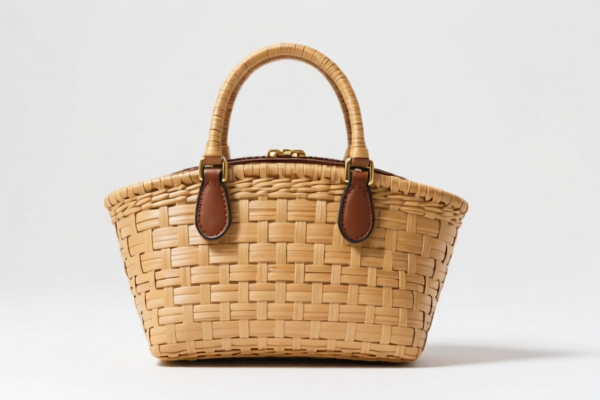
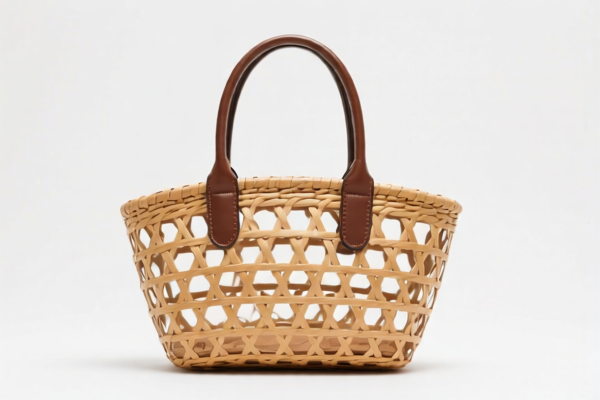
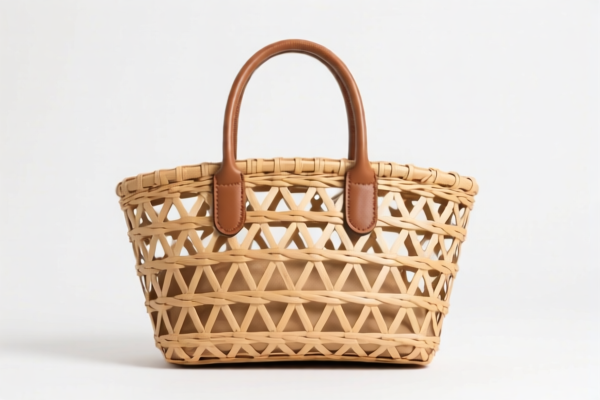
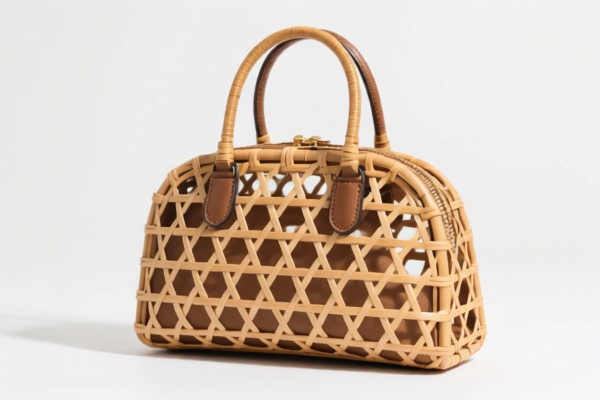
AI Analysis
🧺 Rattan Handbag: The Ultimate HS Code & Taxation Guide (2026 Edition)
🌐 HS Code Reference & Clearance Strategy | Professional Compliance & Duty Minimization
📌 I. Product Definition & Classification: Decoding the "Rattan" Mystery
Rattan Handbags are a unique intersection of natural fiber craftsmanship and finished consumer goods. In international trade, the classification hinges on two critical factors: 1. Material Composition: Is it 100% natural rattan, or blended? 2. End-Use & Form: Is it classified as a "woven material" (semi-finished) or a "basketware/handbag" (finished article)?
⚠️ Key Distinction Point:
- If the product is primarily viewed as a woven mat or panel being shaped into a bag, it may fall under Chapter 46 (Woven Materials).
- If the product is a finished container with handles, lining, and hardware, explicitly used for carrying items, it falls under Chapter 46 (Basketwork) or Chapter 94 (Household Articles).
📦 II. HS Code Classification Matrix (Based on Provided Data)
Below are the 5 possible classifications for "Rattan Handbags" based on the provided dataset. Note that the tax rates vary significantly based on the specific sub-heading chosen by customs brokers.
| HS Code | Product Description (Summary) | Classification Logic | Total Tax Rate (US Imports from CN) |
|---|---|---|---|
| 4602.12.23.00 | Natural rattan woven handbag; material: natural rattan; form/usage: handbag. | Classified as Basketware (Ch 46.02). Focuses on the "handbag" utility within basketware rules. | 44.0% |
| 4601.93.05.00 | Natural rattan handbag; material: natural rattan; form: woven article & handbag application. | Classified as Woven Fabric/Sheet (Ch 46.01). Treats the bag as a specialized application of woven rattan mats. | 37.7% |
| 4601.93.20.00 | Natural rattan handbag; material: natural rattan; form: woven article & finished bag category. | Another sub-variant of Woven Materials. Slightly higher base duty than 4601.93.05. | 41.6% |
| 4602.12.25.00 | Natural rattan handbag; material: natural rattan; form: handbag, complying with baggage requirements. | Classified as Basketware (Ch 46.02). Similar to 23.00 but different sub-sub-classification, leading to higher base duty. | 53.0% |
| 9403.89.30.10 | Rattan woven clothes storage basket; material: rattan; form: storage basket; use: household storage. | ⚠️ Misclassification Risk: Classified as Furniture/Household Article (Ch 94.03). Often used if the "handbag" is large, boxy, or primarily for storage rather than fashion carrying. | 35.0% |
🔍 Critical Observation:
- 4602 Codes (Basketware) generally have a 0% Base Duty (inferred from tax calculations) but attract 35% in Additional Duties (25% Section 301 + 10% IEEPA).
- 4601 Codes (Woven Materials) have Low Base Duties (2.7% - 6.6%) but also attract the same 35% Additional Duties.
- 9403 Code (Furniture) has 0% Base Duty and the same 35% Additional Duties.
- Result: The primary differentiator is the Base Duty (0% vs. ~2.7-18%).
💰 III. 2026 Tax Rate Breakdown (Detailed Analysis)
✅ Applicable Market: United States (US)
✅ Origin: China (CN)
✅ Structure:
Total Tax = Base Duty + Section 301 Duty (25%) + IEEPA Duty (10%)
Additional Duties = 35%(Fixed across all codes in this dataset)
🎯 1. 4601.93.05.00 — The "Woven Material" Strategy
Best for: Lighter, flexible rattan weaves that are clearly "woven sheets" assembled into bags.
| Item | Details |
|---|---|
| Base Duty | 2.7% |
| Section 301 Duty | +25% |
| IEEPA Duty | +10% |
| Total Tax | 37.7% |
| Tax Calculation | CIF Value × 37.7% |
| Legal Path | USITC:4601.93.05.00 → FOOTNOTE:301 → IEEPA:9903.01.25 |
📌 Why this matters:
- Lowest total tax among the "Handbag" specific codes.
- Relies on the argument that the product is a woven article first, a handbag second.
🎯 2. 4601.93.20.00 — The "Finished Woven Good"
Best for: Rattan bags with more complex weaving patterns or slight structural additions.
| Item | Details |
|---|---|
| Base Duty | 6.6% |
| Section 301 Duty | +25% |
| IEEPA Duty | +10% |
| Total Tax | 41.6% |
| Tax Calculation | CIF Value × 41.6% |
| Legal Path | USITC:4601.93.20.00 → FOOTNOTE:301 → IEEPA:9903.01.25 |
📌 Why this matters:
- Slightly higher base duty than 4601.93.05.00.
- Used when the weaving is too complex to be classified under .05.
🎯 3. 4602.12.23.00 — The "Standard Basketware" Approach
Best for: Traditional, rigid rattan handbags that look like small baskets with handles.
| Item | Details |
|---|---|
| Base Duty | 0.0% (Inferred) |
| Section 301 Duty | +25% |
| IEEPA Duty | +10% |
| Total Tax | 44.0% |
| Tax Calculation | CIF Value × 44.0% |
| Legal Path | USITC:4602.12.23.00 → FOOTNOTE:301 → IEEPA:9903.01.25 |
📌 Why this matters:
- Zero base duty helps, but the 35% add-on makes it more expensive than the 4601.93.05.00 option.
- Common for "market-style" rattan bags.
🎯 4. 4602.12.25.00 — The "Premium Basketware"
Best for: High-end rattan handbags with specific structural features.
| Item | Details |
|---|---|
| Base Duty | 18.0% (High!) |
| Section 301 Duty | +25% |
| IEEPA Duty | +10% |
| Total Tax | 53.0% |
| Tax Calculation | CIF Value × 53.0% |
| Legal Path | USITC:4602.12.25.00 → FOOTNOTE:301 → IEEPA:9903.01.25 |
⚠️ Warning:
- Highest Tax Rate. Avoid this code unless the product structure strictly mandates it.
- The 18% base duty is punitive compared to other rattan classifications.
🎯 5. 9403.89.30.10 — The "Storage Basket" Loophole?
Best for: Large, boxy rattan bags used primarily for storage, or misclassified "handbags" that lack clear fashion utility.
| Item | Details |
|---|---|
| Base Duty | 0.0% |
| Section 301 Duty | +25% |
| IEEPA Duty | +10% |
| Total Tax | 35.0% |
| Tax Calculation | CIF Value × 35.0% |
| Legal Path | USITC:9403.89.30.10 → FOOTNOTE:301 → IEEPA:9903.01.25 |
📌 Strategic Note:
- Lowest Overall Tax (35.0%).
- Risk: High risk of customs rejection if declared as a "handbag" for fashion. Must be marketed/structured as a storage basket or household article.
- Use Case: Only if the product is clearly a container for clothes/items, not a fashion accessory.
🛠️ IV. Clearance Practical Advice (Pitfall Avoidance Guide)
✅ 1. Documentation Checklist (Non-Negotiable)
| Document | Requirement | Why It Matters |
|---|---|---|
| Product Photos | ✔️ | Show handles, lining, hardware, and overall shape to distinguish between "woven mat" (4601) and "finished bag" (4602/9403). |
| Material Specification | ✔️ | Confirm 100% Natural Rattan. If blended (e.g., with plastic), HS Code changes entirely. |
| Commercial Invoice | ✔️ | Use precise descriptions: "Natural Rattan Woven Handbag" or "Rattan Storage Basket." Do not use vague terms like "Bag." |
| Packing List | ✔️ | Indicate if bags are shipped unassembled (parts) vs. assembled. |
| Country of Origin | ✔️ | Critical for Section 301 and IEEPA duties. Must be China. |
✅ 2. Declaration Strategy (Key Mnemonics)
🔥 "Woven Low, Basket Medium, Furniture Low but Risky!"
| Scenario | Recommended HS Code | Risk Level | Why? |
|---|---|---|---|
| Fashion Handbag (Flexible Weave) | 4601.93.05.00 |
🟢 Low | Best balance of base duty (2.7%) and classification accuracy. |
| Fashion Handbag (Rigid/Basket Shape) | 4602.12.23.00 |
🟡 Medium | Safe, but higher tax (44%) than 4601. |
| Boxy Storage Container | 9403.89.30.10 |
🔴 High | Lowest tax (35%), but high audit risk if it looks like a handbag. |
| High-End Structured Bag | 4602.12.25.00 |
🔴 High Avoid | Highest tax (53%). Only use if structurally unavoidable. |
✅ 3. Special Considerations
| Situation | Recommendation |
|---|---|
| Mixed Materials | If the bag has leather handles or metal clasps, ensure they are incidental to the rattan body. If leather > 50% value, HS Code shifts to Chapter 42 (Leather Goods). |
| OEM Customization | Provide design sheets showing the rattan is the primary material. |
| Pre-Ruling Request | Given the high variance (35% vs 53%), consider filing an Advance Ruling with CBP for large shipments to lock in the HS Code. |
🌍 V. Global Market Comparison (2026 Snapshot)
| Country | Recommended HS Code | Est. Duty (CN Origin) | Notes |
|---|---|---|---|
| 🇺🇸 USA | 4601.93.05.00 |
37.7% | Optimal Balance. Low base duty, manageable add-ons. |
| 🇪🇺 EU | 4602.12.00 |
~6-10% + VAT | No Section 301. Much cheaper than US. |
| 🇨🇳 China | 4602.12.00 |
~10-15% | Domestic production costs apply. |
| 🇬🇧 UK | 4602.12.00 |
~6-10% | Post-Brexit tariffs apply. |
📌 Conclusion:
The USA market is the most challenging due to the 35% combined Section 301 + IEEPA duties.
Strategy: Aim for 4601.93.05.00 (37.7%) for fashion bags, or 9403.89.30.10 (35.0%) for storage items, if you can justify the functional difference.
📌 VI. Common Errors & Pitfalls (Lessons Learned)
❌ Error 1: Declaring a rigid, handle-equipped rattan bag as 4601.93.05.00 (Woven Material).
👉 Consequence: CBP may reclassify to 4602 (Basketware) if the bag is too structured, or worse, to 4602.12.25.00 (53% tax).
✅ Fix: Provide photos showing flexibility and woven nature.
❌ Error 2: Declaring a fashion handbag as 9403.89.30.10 (Furniture) to save taxes.
👉 Consequence: High audit risk. CBP looks at "principal use." If it's worn on a shoulder, it's not furniture.
✅ Fix: Only use 9403 for items clearly designed for storage in the home.
❌ Error 3: Ignoring the 10% IEEPA Duty.
👉 Consequence: Underpayment of 10% on CIF value.
✅ Fix: Always include IEEPA in your landed cost calculations for China-origin goods.
🎯 VII. Final Recommendation: The "Smart Classification" Flowchart
- Is it 100% Rattan?
- ❌ No → Check Chapter 42 (Leather) or 4601 (Other Plastics/Fibers).
-
✅ Yes → Continue.
-
Is it a Fashion Handbag (Carried by person)?
- ✅ Yes → Use
4601.93.05.00(37.7%) for best tax efficiency. -
❌ No → Is it a Storage Basket?
- ✅ Yes → Use
9403.89.30.10(35.0%). - ❌ No (It's a rigid basket) → Use
4602.12.23.00(44.0%).
- ✅ Yes → Use
-
Avoid
4602.12.25.00(53.0%) unless structurally forced.
📢 Action Plan
📞 Step 1: Consult with a licensed customs broker.
📷 Step 2: Provide high-res photos of the interior, handles, and weaving pattern.
📄 Step 3: Request an Advance Ruling if your shipment value exceeds $10,000 to secure the 37.7% or 35% rate.
💡 Goal: Minimize Duty, Maximize Compliance.
✨ Professional Clearance, Precise Classification, Optimized Costs!
💼 Your Rattan Business Deserves the Best Tax Strategy!
Customer Reviews
About HS Code Classification
The Harmonized System (HS) is an internationally standardized nomenclature developed by the World Customs Organization (WCO) to classify traded products. Over 200 countries use the HS system as the basis for customs tariffs, trade statistics, and import/export regulations.
Each HS code follows a hierarchical structure:
- Chapter (2 digits) — Broad category of goods (e.g., Chapter 84: Machinery and Mechanical Appliances)
- Heading (4 digits) — More specific grouping within the chapter
- Subheading (6 digits) — Internationally standardized breakdown, used by all WCO member countries
- National subdivisions (8-10 digits) — Country-specific extensions for further classification, such as US HTSUS 10-digit codes
Correct HS code classification is essential for smooth customs clearance, accurate duty payment, and compliance with trade regulations. Misclassification can lead to customs delays, overpayment of duties, or penalties.
When importing from CN to US, the applicable tariff rates may include:
- Most-Favored-Nation (MFN) rate — The standard duty rate applied to WTO members
- General rate — Applied to countries without trade agreements
- Trade remedy duties — Additional tariffs such as Section 301 (anti-dumping), Section 232 (national security), or countervailing duties
The information provided on this page is for reference purposes only. For official classification, please consult with your local customs authority or a licensed customs broker.