Rattan Matting
CN → US| HS Code | Tariff Rate | Origin | Destination | Doc |
|---|---|---|---|---|
| 5705001000 | 35.0% | CN | US | Official Doc |
| 5705002090 | 38.3% | CN | US | Official Doc |
| 4602198000 | 37.3% | CN | US | Official Doc |
| 4602191800 | 39.5% | CN | US | Official Doc |
| 4602191800 | 39.5% | CN | US | Official Doc |
Product Images
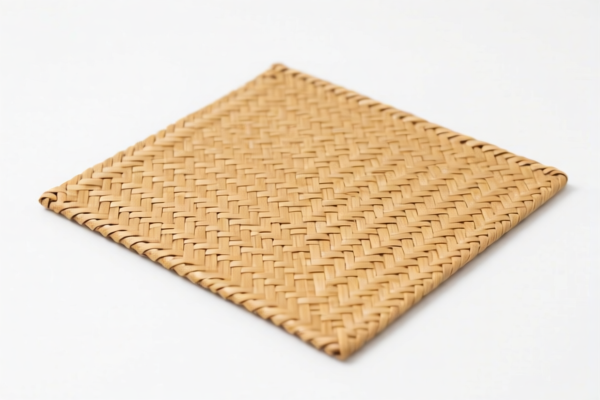
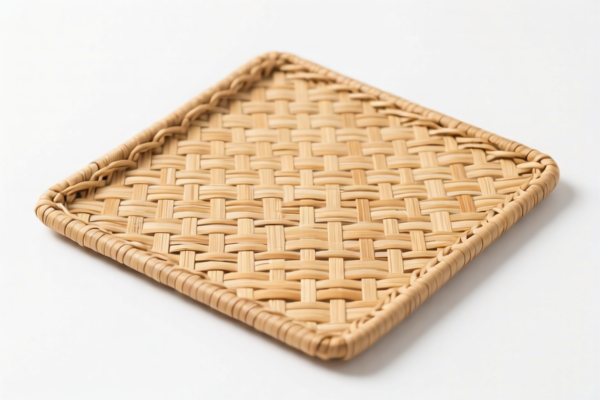
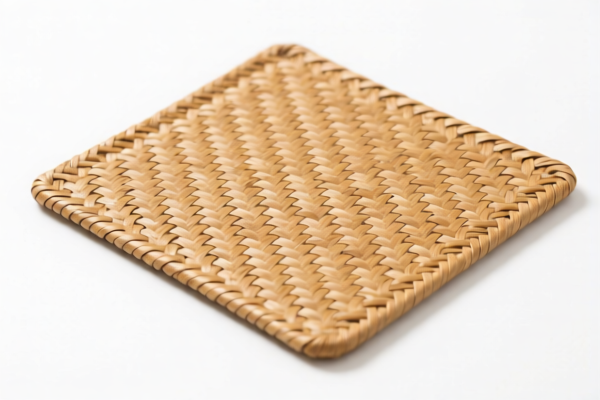
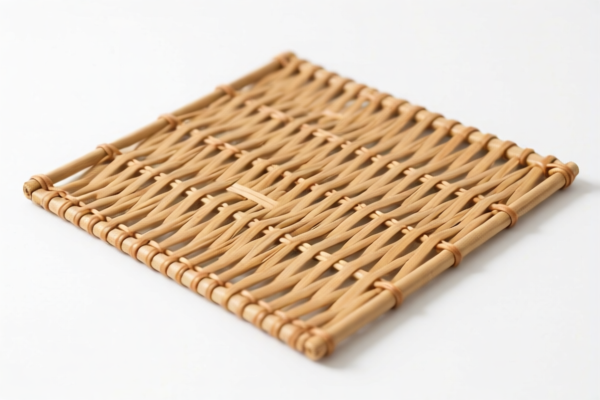
AI Analysis
🌿 Rattan Matting (Grass/Woven Mats)
🌐 HS Code Reference & Clearance Guide | 2026 Latest Tariff Analysis | Professional Entry Strategy
📌 I. Product Definition & Classification: Do You Really Understand "Rattan/Grass Mats"?
Rattan mats, often marketed as "Grass Mats" or "Woven Mats," are floor coverings or decorative items made from natural plant fibers. In international trade, the classification hinges on two key factors:
1. Material: Plant-based fibers (Rattan, Grass, Palm, Seagrass).
2. Function/Form: Is it a floor covering (carpet-like) or a woven article (basket/mat structure)?
⚠️ Key Distinction Point:
- If it functions as a floor covering (textile-based, woven floor textile) → Classified under Chapter 57.
- If it functions as a woven product/artcraft (basketry, matting, decorative weave) → Classified under Chapter 46.
📦 II. HS Code Classification Details (2026 Latest Tariff Authority Comparison)
| HS Code | Product Description | Application Scenario | Material Nature |
|---|---|---|---|
5705.00.10.00 |
Other carpets and other textile floor coverings, of coir or other vegetable textile materials | Lowest Tax Option: Grass/Rattan mats used as floor coverings, inferred as vegetable fiber textiles | ✅ Textile/Floor Covering |
5705.00.20.90 |
Other carpets and other textile floor coverings, of other textile materials | Grass/Rattan mats inferred as textile floor coverings, but classified under "Other" | ✅ Textile/Floor Covering |
4602.19.80.00 |
Other woven materials and articles of vegetable materials (e.g., baskets, mats) | Mats treated as woven articles, not strictly floor textiles | ✅ Vegetable Woven Article |
4602.19.18.00 |
Other baskets and other woven articles (Other) | Mats inferred as woven articles/containers/decorative items | ✅ Vegetable Woven Article |
🔍 Critical Reminder:
- Chapter 57 (5705) is often preferred for floor mats because it aligns with "Textile Floor Coverings."
- Chapter 46 (4602) applies if the item is considered a woven craft/basketry rather than a textile floor covering.
- No Material Conflict: All options accept "Grass/Rattan" as vegetable/plant fibers.
💰 III. 2026 Latest Tariff Rate Breakdown (Including Surcharges & Policy Add-ons)
✅ Applicable Country: United States (US)
✅ Origin: China (CN)
✅ Effective Date: From November 10, 2025 (and subsequent imports)
🎯 1. 5705.00.10.00 — Coir or Other Vegetable Textile Floor Coverings (🏆 Lowest Tax)
| Item | Content |
|---|---|
| Base Tariff | 0.0% (ad valorem) |
| Section 301 Surcharge | +25.0% |
| IEEPA Surcharge | +10.0% (122 Section, targeting China/HK) |
| Total Rate | 35.0% |
| Tax Calculation | CIF Value × 35% |
| De Minimis Eligibility | ❌ Not Eligible (deny_de_minimis) |
| Legal Basis Path | IEEPA:9903.01.25 → IEEPA:9903.01.24 → USITC:5705.00.10.00 → FOOTNOTE:9903.88.01 |
📌 Explanation:
- "Base 0%": Coir and other vegetable textile floor coverings enjoy a low base rate.
- "Total 35%": Combined with 25% (Section 301) + 10% (IEEPA 122), this is the most economical option among the four codes.
- Why Choose This?: If the mat is primarily used as a floor covering, this classification minimizes tariff burden.
🎯 2. 5705.00.20.90 — Other Textile Floor Coverings (Not Coir/Vegetable Specific)
| Item | Content |
|---|---|
| Base Tariff | 3.3% |
| Section 301 Surcharge | +25.0% |
| IEEPA Surcharge | +10.0% |
| Total Rate | 38.3% |
| Tax Calculation | CIF Value × 38.3% |
| De Minimis Eligibility | ❌ Not Eligible |
| Legal Basis Path | IEEPA:9903.01.25 → IEEPA:9903.01.24 → USITC:5705.00.20.90 → FOOTNOTE:9903.88.01 |
📌 Note:
- This code is for "Other" textile floor coverings not specifically classified as coir/vegetable.
- Higher by 3.3% compared to5705.00.10.00. Only use if the material is not clearly "vegetable fiber" under the specific subheading.
🎯 3. 4602.19.80.00 — Other Woven Articles of Vegetable Materials
| Item | Content |
|---|---|
| Base Tariff | 2.3% |
| Section 301 Surcharge | +25.0% |
| IEEPA Surcharge | +10.0% |
| Total Rate | 37.3% |
| Tax Calculation | CIF Value × 37.3% |
| De Minimis Eligibility | ❌ Not Eligible |
| Legal Basis Path | IEEPA:9903.01.25 → IEEPA:9903.01.24 → USITC:4602.19.80.00 → FOOTNOTE:9903.88.01 |
📌 Note:
- Classifies the mat as a woven article rather than a floor textile.
- Slightly higher (2.3%) than the optimal5705.00.10.00. Use only if customs requires a non-textile classification.
🎯 4. 4602.19.18.00 — Other Baskets and Woven Articles (Other)
| Item | Content |
|---|---|
| Base Tariff | 4.5% |
| Section 301 Surcharge | +25.0% |
| IEEPA Surcharge | +10.0% |
| Total Rate | 39.5% |
| Tax Calculation | CIF Value × 39.5% |
| De Minimis Eligibility | ❌ Not Eligible |
| Legal Basis Path | IEEPA:9903.01.25 → IEEPA:9903.01.24 → USITC:4602.19.18.00 → FOOTNOTE:9903.88.01 |
📌 Note:
- Highest base rate (4.5%).
- Use this only if the item is explicitly treated as a basket/decorative woven item and not a floor covering or general woven article.
- Avoid if cost efficiency is a priority.
🛠️ IV. Clearance Practical Advice (Real-World Pitfall Avoidance)
✅ 1. Required Documentation Checklist (Non-Negotiable)
| Document | Must Provide | Explanation |
|---|---|---|
| ✅ Product Specification Sheet | ✔️ | Dimensions, fiber type (e.g., "Natural Grass," "Rattan"), weave density |
| ✅ Product Photos | ✔️ | Clear images showing the mat’s texture, backing (if any), and intended use (floor vs. decor) |
| ✅ Commercial Invoice | ✔️ | Describe as "Woven Grass Floor Mat" or "Rattan Matting" — avoid vague terms like "Decoration" |
| ✅ Packing List | ✔️ | Indicate quantity, weight, and packaging type |
| ✅ Material Declaration | ✔️ | Confirm 100% vegetable/plant fiber content to support Chapter 46 or 57 classification |
| ✅ Origin Certificate (CO) | ✔️ | If not China-origin, may qualify for lower tariffs (but IEEPA/301 still apply if processed in China) |
✅ 2. Declaration Strategy (Key Mantra)
🔥 "Floor Covering = 5705; Woven Article = 4602; Choose 5705.10 for Savings!"
| Scenario | Correct Declaration | Wrong Practice |
|---|---|---|
| Mat used as floor covering | 5705.00.10.00 (35% total) |
Misdeclare as 4602.19.18.00 → 39.5% |
| Decorative wall hanging/mat | 4602.19.80.00 or 4602.19.18.00 |
Misdeclare as 5705 → Risk of misclassification audit |
| Mixed materials (e.g., grass + cotton backing) | Consult customs: Likely 5705 if textile dominates |
Assume 4602 without proof → Higher base rate |
| Small sample/De Minimis | ❌ Not Eligible for any of these codes | Assume $800 exemption → Shipment Seized! |
✅ 3. Special Handling Cases
| Situation | Handling Advice |
|---|---|
| Mat with Rubber Backing | Still likely 5705.00.10.00 if rubber is secondary; declare clearly |
| OEM Custom Mats | Provide design sketches + material bill of lading to prove vegetable fiber content |
| Used vs. New | Both are subject to these tariffs; no difference in HS Code |
| Bundle Sales (Mat + Frame) | Declare as "Set" — main value item (mat) dictates classification |
🌍 V. Global Market Comparison (2026 Latest)
| Country/Region | Recommended HS Code | Tariff (CN Origin) | Certification | Note |
|---|---|---|---|---|
| 🇺🇸 USA | 5705.00.10.00 |
35% (Total) | None specific | Lowest rate among options; IEEPA 122 applies |
| 🇨🇳 China | 5705.00.10.00 |
8%~15% (Import) | None | Lower than US; no 301/IEEPA surcharges |
| 🇪🇺 EU | 5705.00.10.00 |
6%~12% | None | No Section 301/IEEPA |
| 🇦🇺 Australia | 5705.00.10.00 |
5% | None | Competitive rate |
| 🇯🇵 Japan | 5705.00.10.00 |
0%~5% | None | FTA benefits may apply |
📌 Conclusion:
- USA is the only market imposing heavy surcharges (35% total).
- China-origin goods face 301 + IEEPA 122 penalties.
- No Duty-Free De Minimis exemption for these codes under $800.
📌 VI. Common Errors & Pitfall Avoidance (Lessons Learned)
❌ Error 1: Declaring "Grass Mat" as 4602.19.18.00 when it’s clearly a floor covering
👉 Consequence: 39.5% tax instead of 35% → Unnecessary 4.5% extra cost!
❌ Error 2: Assuming "De Minimis" applies to woven mats
👉 Consequence: Shipment blocked, fines, and back taxes → Total loss of shipment value!
❌ Error 3: Vague description "Home Decoration"
👉 Consequence: Customs reclassifies to highest base rate → Audit delay + penalty!
❌ Error 4: Ignoring IEEPA 122 (10%)
👉 Consequence: Underpayment → Retroactive tax + interest!
✅ Correct Declaration Example:
"Natural Grass Woven Floor Mat, 5x7 ft, 100% Vegetable Fiber, No Synthetic Backing, Model: GM-5705, Origin: China"
🎯 VII. Conclusion: Precision Classification, Cost Control, Smooth Clearance!
🎯 Remember the Mantra:
🔹 "Floor Mat = 5705.10 (35%); Woven Basket = 4602.18 (39.5%); Pick 5705.10 to Save!"
🔹 "No De Minimis for Mats; Declare Accurately to Avoid Seizure!"
🔹 "VEGETABLE FIBER + FLOOR COVERING = 35% Total. Anything Else = More!"
📌 Pro Tip:
If your mats are originating from Vietnam, Indonesia, or Thailand, you may qualify for lower or zero IEEPA/301 rates.
Consider supply chain diversification or Advance Ruling (Pre-classification) to lock in the 35% rate confidently.
📣 Immediate Action:
📞 Contact a Licensed Customs Broker + Provide Product Photos + Apply for HS Code Pre-Ruling
🚀 Ensure Your Rattan/Grass Mats Clear Customs Smoothly, Efficiently, and Profitably!
✨ Professional Clearance Starts with Accurate Classification!
💼 Every Percent Saved is Profit Gained!
Customer Reviews
About HS Code Classification
The Harmonized System (HS) is an internationally standardized nomenclature developed by the World Customs Organization (WCO) to classify traded products. Over 200 countries use the HS system as the basis for customs tariffs, trade statistics, and import/export regulations.
Each HS code follows a hierarchical structure:
- Chapter (2 digits) — Broad category of goods (e.g., Chapter 84: Machinery and Mechanical Appliances)
- Heading (4 digits) — More specific grouping within the chapter
- Subheading (6 digits) — Internationally standardized breakdown, used by all WCO member countries
- National subdivisions (8-10 digits) — Country-specific extensions for further classification, such as US HTSUS 10-digit codes
Correct HS code classification is essential for smooth customs clearance, accurate duty payment, and compliance with trade regulations. Misclassification can lead to customs delays, overpayment of duties, or penalties.
When importing from CN to US, the applicable tariff rates may include:
- Most-Favored-Nation (MFN) rate — The standard duty rate applied to WTO members
- General rate — Applied to countries without trade agreements
- Trade remedy duties — Additional tariffs such as Section 301 (anti-dumping), Section 232 (national security), or countervailing duties
The information provided on this page is for reference purposes only. For official classification, please consult with your local customs authority or a licensed customs broker.