Rattan Plaits for DIY Projects
CN → US| HS Code | Tariff Rate | Origin | Destination | Doc |
|---|---|---|---|---|
| 4602198000 | 37.3% | CN | US | Official Doc |
| 9403893020 | 35.0% | CN | US | Official Doc |
| 9403893010 | 35.0% | CN | US | Official Doc |
Product Images
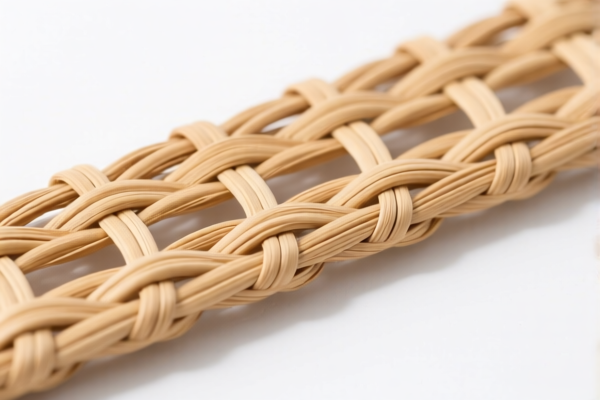
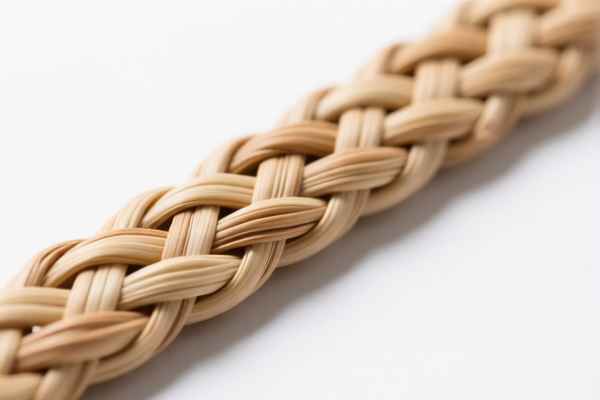
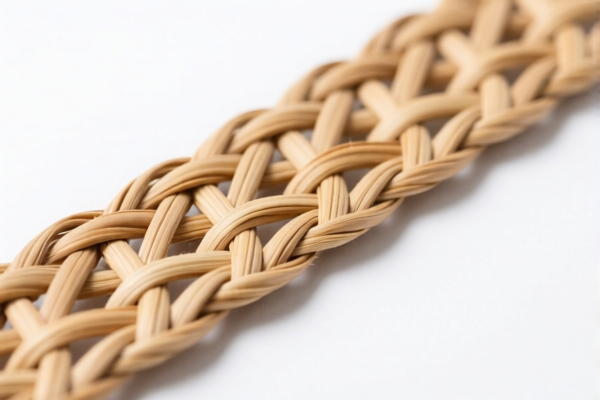
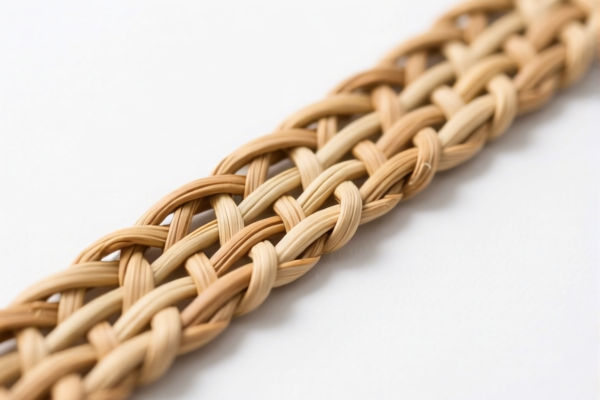
AI Analysis
🌿 Rattan Plaits for DIY & Craft Projects
🌐 HS Code Reference & Customs Clearance Guide | 2026 Tariff Full Analysis | Professional Entry Strategy
📌 I. Product Definition & Classification: What Exactly Are "Rattan Plaits" for DIY?
Rattan plaits, often used in handicrafts, furniture weaving, and interior decoration, are semi-processed or processed plant-based materials. In international trade, their classification depends heavily on material state, end-use, and processing level.
Plant-Based Woven Products (Rattan Strips): Raw or semi-processed strips made from rattan or similar plant fibers, used for weaving or crafts.
Furniture Parts/Components: If classified under furniture parts, it implies the material is already shaped for specific furniture assembly.
⚠️ Key Distinction Point:
- If the product is raw/semi-processed weaving material (e.g., stripped, dried, but not yet assembled into furniture) → Likely归类 to Chapter 46 (Woven Materials) or Chapter 94 (Furniture parts, if specifically defined).
- The provided DATA suggests two main classification paths: 4602.19.80.00 (Woven articles) and 9403.89.30.x0 (Other furniture parts).
📦 II. HS Code Classification Details (Based on Provided DATA)
| HS Code | Product Description | Summary/Logic | Total Tax Rate | Tax Breakdown |
|---|---|---|---|---|
4602.19.80.00 |
Woven articles of vegetable materials (Rattan strips for crafts) | Summarized as: "Rattan strips for handicrafts, belonging to woven articles made of plant materials." | 37.3% | Base: 2.3%, Section 301: 25%, 122 Clause: 10% |
9403.89.30.20 |
Parts of furniture (Rattan/plant material, primary form) | Summarized as: "Rattan strips for handicrafts, made of rattan or similar materials, belonging to primary form raw materials." | 35.0% | Base: 0.0%, Section 301: 25%, 122 Clause: 10% |
9403.89.30.10 |
Parts of furniture (Other) | Summarized as: "Rattan strips for handicrafts, conforming to rattan/cane material attributes, classified as other furniture and parts." | 35.0% | Base: 0.0%, Section 301: 25%, 122 Clause: 10% |
🔍 Critical Note:
- HS 4602.19.80.00 carries a higher base tariff (2.3%) compared to the 9403 series (0% base), but the total effective rate is higher (37.3% vs. 35.0%) due to the base tariff.
- HS 9403.89.30.10/20 are classified under "Furniture and Parts." Even if the item is raw rattan strips, if customs views them as "components destined for furniture," they fall here. The key difference between .10 and .20 in the data is the specific material attribute description, but both have the same total tax rate (35.0%).
💰 III. 2026 Tariff Rate Detailed Breakdown
✅ Applicable Country: United States (US)
✅ Origin: China (CN)
✅ Context: Import of Rattan Plaits for DIY/Crafts
🎯 1. 4602.19.80.00 —— Woven Articles of Vegetable Materials
| Item | Detail |
|---|---|
| Base Tariff | 2.3% (Ad Valorem) |
| Section 301 Tariff | +25% |
| 122 Clause Tariff | +10% |
| Total Effective Rate | 37.3% |
| Calculation | CIF Value × 37.3% |
| De Minimis Exemption? | ❌ NO (Section 301 and 122 tariffs generally apply regardless of value) |
| Legal Basis | HTSUS 4602.19.80.00 + Section 301 List 3/4 + 122 Clause Regulations |
📌 Explanation:
- This code treats the rattan as a finished or semi-finished woven product.
- The 2.3% base is unavoidable for woven vegetable materials.
- The 25% Section 301 and 10% 122 Clause are additional punitive tariffs against Chinese goods.
- Total: 37.3%.
🎯 2. 9403.89.30.20 & 9403.89.30.10 —— Parts of Other Furniture
| Item | Detail |
|---|---|
| Base Tariff | 0.0% |
| Section 301 Tariff | +25% |
| 122 Clause Tariff | +10% |
| Total Effective Rate | 35.0% |
| Calculation | CIF Value × 35.0% |
| De Minimis Exemption? | ❌ NO |
| Legal Basis | HTSUS 9403.89.30.xx + Section 301 List 3/4 + 122 Clause Regulations |
📌 Explanation:
- This code treats the rattan plaits as components of furniture.
- The 0% base tariff is a significant advantage over the 4602 code.
- The additional tariffs (25% + 10%) remain the same.
- Total: 35.0%. This is 2.3% cheaper than the 4602 classification due to the lower base rate.
🛠️ IV. Customs Clearance Operational Advice (Practical Pitfall Avoidance)
✅ 1. Documentation Checklist (Essential)
| Document | Required | Notes |
|---|---|---|
| ✅ Product Specification Sheet | ✔️ | Must specify: Material (Rattan/Cane), Form (Strip/Plaits), Processing Level (Raw/Processed), Use (DIY/Craft/Furniture Part). |
| ✅ Product Photos | ✔️ | Clear images of the strips, showing texture, cross-section, and packaging. |
| ✅ Commercial Invoice | ✔️ | Accurate description: "Rattan Plaits for Weaving" or "Rattan Furniture Components." Avoid vague terms like "Natural Material." |
| ✅ Packing List | ✔️ | Weight, dimensions, and quantity per carton. |
| ✅ Origin Certificate | ✔️ | Essential for proving Chinese origin (which triggers Section 301 & 122). |
✅ 2. Declaration Strategy (Key Tips)
🔥 “Classify as Furniture Parts to Save 2.3% Base Tariff!”
| Scenario | Recommended HS Code | Reasoning |
|---|---|---|
| Raw/Semi-processed Rattan Strips | 9403.89.30.20 or 9403.89.30.10 |
If the product is clearly intended as a component for furniture assembly, even if raw, customs may accept it under Chapter 94. This saves the 2.3% base tariff. |
| Finished Woven Mats/Baskets | 4602.19.80.00 |
If the product is already woven into a shape (mat, basket, panel), it must be classified as a woven article. |
| DIY Craft Strips | 9403.89.30.20 |
If sold as "DIY materials for making furniture," argue it is a furniture part/component. |
⚠️ Warning:
- Do NOT classify woven mats or finished baskets as "Furniture Parts" to save tax. Customs may reclassify and impose penalties.
- Ensure the product description on the invoice matches the HS code logic. If you declare9403.89.30.20, describe the item as "Rattan Components for Furniture Assembly," not "Decorative Woven Placemats."
✅ 3. Special Considerations
| Situation | Advice |
|---|---|
| De Minimis (Section 321) | ❌ Not Applicable. Section 301 and 122 tariffs cannot be avoided through de minimis shipments from China. |
| Material Verification | Customs may require lab tests to confirm the material is natural rattan/cane and not synthetic imitation (which might have different rates). |
| 122 Clause | Ensure the exporter is aware of the 122 Clause (likely related to specific trade actions or country-specific measures). This is a fixed 10% add-on. |
🌍 V. Global Market Comparison (2026)
| Country/Region | Recommended HS Code | Total Tariff (Approx.) | Notes |
|---|---|---|---|
| 🇺🇸 USA | 9403.89.30.20 |
35.0% | Best rate among the provided options. |
| 🇺🇸 USA | 4602.19.80.00 |
37.3% | Higher due to base tariff. |
| 🇨🇳 China (Import) | 4602.19.80.00 |
Varies | Usually lower base rates, no Section 301. |
| 🇪🇺 EU | 4602.19 |
~3-5% | No Section 301. Check local duty. |
📌 Conclusion:
- USA Market: The key is to classify under 9403.89.30.xx if possible to save the 2.3% base tariff.
- Total Cost Impact: A $10,000 shipment pays $3,500 in tax under 9403 vs. $3,730 under 4602. Savings: $230. On large volumes, this matters.
📌 VI. Common Errors & Pitfalls
❌ Error 1: Classifying finished woven items (like placemats) as furniture parts (9403).
👉 Consequence: Customs reclassification, delay, potential fines.
👉 Fix: If it’s a finished woven good, use 4602.19.80.00.
❌ Error 2: Assuming De Minimis applies to Section 301/122 goods.
👉 Consequence: Shipment held at border, taxed fully.
👉 Fix: Assume full tariff liability for all China-origin rattan plaits.
❌ Error 3: Vague description "Natural Plant Material."
👉 Consequence: Customs asks for clarification, delays release.
👉 Fix: Use precise terms: "Rattan Plaits, Dried, for Furniture Weaving."
✅ Correct Declaration Example:
"RATTAN PLAITS, DRIED, NATURAL VEGETABLE MATERIAL, USED AS COMPONENTS FOR FURNITURE WEAVING, MODEL: DIY-RTN-01"
🎯 VII. Conclusion: Strategic Classification for Cost Efficiency
🎯 Key Takeaway:
🔹 "Furniture Parts Classification (9403) Saves 2.3% Base Tariff vs. Woven Articles (4602)."
🔹 Total Rate: 35.0% (9403) vs. 37.3% (4602).
🔹 Section 301 (25%) and 122 Clause (10%) are unavoidable for China-origin goods.📌 Pro Tip:
If your product is raw strips intended for furniture manufacturing, insist on 9403.89.30.20 or 9403.89.30.10. Provide documentation showing it is a component, not a finished consumer good.
📣 Immediate Action:
📞 Consult your customs broker to confirm if your specific rattan plaits qualify as furniture components under 9403.
📄 Prepare technical specifications highlighting the "component" nature of the product.
🚀 Optimize your tariff classification to save 2.3% on every shipment!
✨ Professional Customs Clearance Starts with Accurate Classification!
💼 Every Percent Counts in International Trade!
Customer Reviews
About HS Code Classification
The Harmonized System (HS) is an internationally standardized nomenclature developed by the World Customs Organization (WCO) to classify traded products. Over 200 countries use the HS system as the basis for customs tariffs, trade statistics, and import/export regulations.
Each HS code follows a hierarchical structure:
- Chapter (2 digits) — Broad category of goods (e.g., Chapter 84: Machinery and Mechanical Appliances)
- Heading (4 digits) — More specific grouping within the chapter
- Subheading (6 digits) — Internationally standardized breakdown, used by all WCO member countries
- National subdivisions (8-10 digits) — Country-specific extensions for further classification, such as US HTSUS 10-digit codes
Correct HS code classification is essential for smooth customs clearance, accurate duty payment, and compliance with trade regulations. Misclassification can lead to customs delays, overpayment of duties, or penalties.
When importing from CN to US, the applicable tariff rates may include:
- Most-Favored-Nation (MFN) rate — The standard duty rate applied to WTO members
- General rate — Applied to countries without trade agreements
- Trade remedy duties — Additional tariffs such as Section 301 (anti-dumping), Section 232 (national security), or countervailing duties
The information provided on this page is for reference purposes only. For official classification, please consult with your local customs authority or a licensed customs broker.