Rattan Strip Plaits
CN → US| HS Code | Tariff Rate | Origin | Destination | Doc |
|---|---|---|---|---|
| 9403893010 | 35.0% | CN | US | Official Doc |
| 9403893020 | 35.0% | CN | US | Official Doc |
| 4602120000 | 0.0% | CN | US | Official Doc |
| 4602198000 | 37.3% | CN | US | Official Doc |
Product Images
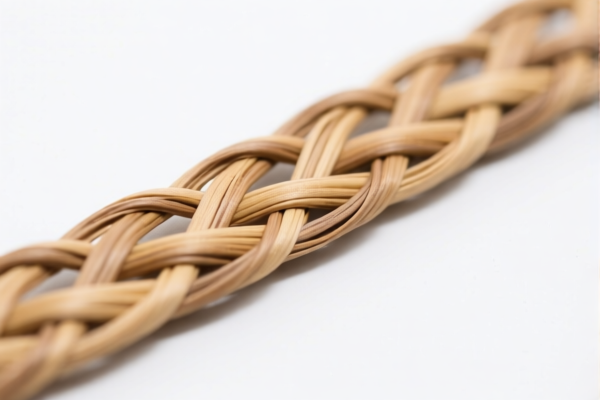
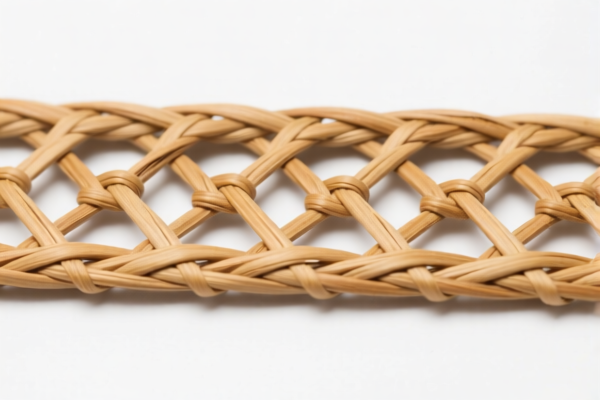
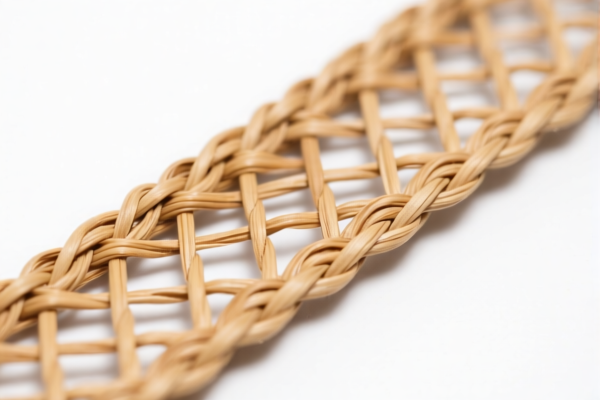
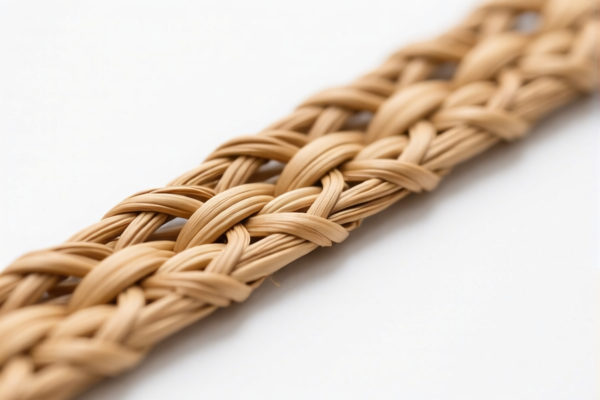
AI Analysis
🧺 Rattan Strip Plaits (编织藤条带)
🌐 HS Code Reference & Customs Clearance Guide | 2026 Latest Tariff Analysis | Professional Compliance Strategy
📌 Part 1: Product Definition & Classification: Do You Really Understand "Rattan Strips"?
Rattan Strip Plaits (often referred to as "Rattan Strips" or "Plaiting Materials") are semi-finished products used primarily in the manufacturing of furniture, baskets, and decorative items. In international trade, they are strictly classified based on their state of processing:
- Plaiting Materials (Raw/Strip Form): Rattan strips that are cut, split, or braided into plaits but not made into a final article. These fall under Chapter 46.
- Finished Articles (Made-up): If the rattan strips have been shaped, assembled, or fixed into a final article (e.g., a chair, basket, or table), they fall under Chapter 94 (Furniture) or 4602 (Basketwork/articles of plaiting material).
⚠️ Key Distinction Point:
- If the product is "just strips/plaits" ready for weaving → Chapter 46 (Low Duty, often 0%).
- If the product is a "finished piece" (like a rattan chair) → Chapter 94 (High Duty, often 25%+).
- Do not declare finished furniture as "rattan strips" to avoid anti-dumping tariffs or misclassification penalties.
📦 Part 2: HS Code Classification Details (2026 Latest Tariff Authority Comparison)
| HS Code | Product Description | Application Scenario | Processing State | Tax Status |
|---|---|---|---|---|
4602.12.00.00 |
Basketwork, wickerwork... Of vegetable materials: Of rattan: Other: Other | Semi-finished rattan plaits/straps; not yet made into a final article | ✅ Semi-finished | ⚠️ Failed to retrieve tax information (Requires manual verification) |
4602.19.80.00 |
Basketwork... Of vegetable materials: Other: Other: Other: Other | Other vegetable material plaiting articles (non-rattan or unrated rattan items) | ✅ Semi-finished/Article | ✅ 0.0% (Base: 0%, Additional: 0%) |
9403.89.30.10 |
Furniture... Of cane, osier or similar materials: Household | Finished rattan household furniture (e.g., chairs, tables) | ❌ Finished Article | 🔴 25.0% (Base: 0%, Additional: 25%) |
9403.89.30.20 |
Furniture... Of cane, osier or similar materials: Other | Finished rattan furniture (non-household, e.g., office, garden) | ❌ Finished Article | 🔴 25.0% (Base: 0%, Additional: 25%) |
🔍 Critical Reminder:
- Semi-finished Rattan Strips generally enjoy 0% duty if correctly classified under Chapter 46.
- Finished Rattan Furniture is subject to a 25% additional tariff (Section 301 Tariffs).
- Misclassification Risk: Declaring a finished rattan chair as "Rattan Strip" (4602.12.00.00) is a serious customs violation and may lead to seizure, fines, or retrospective tax collection.
💰 Part 3: 2026 Latest Tariff Rate Details (Including Surtaxes & Policy Add-ons)
✅ Applicable Country: United States (US)
✅ Origin: China (CN)
✅ Effective Time: Current regulations apply (Section 301 Surtaxes active)
🎯 1. 4602.12.00.00 —— Rattan Plaiting Materials / Semi-finished Articles
| Item | Content |
|---|---|
| Base Tariff | 0% (ad valorem) |
| USITC Additional Tariff | ⚠️ Information Missing (See Note Below) |
| IEEPA Additional Tariff | ⚠️ Information Missing (See Note Below) |
| Total Tariff | Unknown / Needs Verification |
| Tax Calculation | Based on CIF Value × Total Rate |
| De Minimis Exemption | ❓ Check Carefully (Often excluded for Chinese goods under Section 301) |
| Legal Basis Path | HTSUS:4602.12.00.00 |
📌 Explanation:
- The tax data for4602.12.00.00failed to retrieve. This is common for specific sub-headings where rates may have changed or require specific ruling.
- Action Required: You must consult with a licensed customs broker or apply for a Binding Tariff Information (BTI) or Advance Ruling from U.S. Customs and Border Protection (CBP) before shipping.
- Risk: If this item is considered a "finished article" under Section 301, it could be subject to 25% additional tariffs, even if the base rate is 0%.
🎯 2. 4602.19.80.00 —— Other Vegetable Material Plaiting Articles
| Item | Content |
|---|---|
| Base Tariff | 0% (ad valorem) |
| USITC Additional Tariff | 0% |
| IEEPA Additional Tariff | 0% |
| Total Tariff | 0.0% |
| Tax Calculation | No Tax |
| De Minimis Exemption | ✅ Possible (If under $800 and not restricted) |
| Legal Basis Path | HTSUS:4602.19.80.00 |
📌 Note:
- This code applies to non-rattan vegetable materials or rattan items that do not fit the specific "Of rattan" sub-heading.
- Zero Duty makes this highly favorable for importers, but ensure the product truly qualifies as "vegetable material" and not a finished good.
🎯 3. 9403.89.30.10 & 9403.89.30.20 —— Finished Rattan Furniture
| Item | Content |
|---|---|
| Base Tariff | 0% (ad valorem) |
| USITC Additional Tariff | +25% |
| IEEPA Additional Tariff | Included in 25% |
| Total Tariff | 25.0% |
| Tax Calculation | CIF Value × 25% |
| De Minimis Exemption | ❌ Not Applicable for Section 301 goods |
| Legal Basis Path | HTSUS:9403.89.30.10/20 → Section 301 Footnote 9903.88.01 |
📌 Warning:
- These codes apply to finished furniture.
- The 25% additional tariff is a significant cost driver. Many companies try to classify these as "parts" or "materials" to avoid this, but CBP scrutinizes this heavily.
- Household (...10) vs. Other (...20) does not change the tariff rate, but may affect other regulatory requirements.
🛠️ Part 4: Customs Clearance Practical Advice (Pitfall Avoidance Guide)
✅ 1. Documentation Checklist (Must-Haves)
| Document | Must Provide | Explanation |
|---|---|---|
| ✅ Product Photos | ✔️ | Clear images showing if it’s a strip (Chapter 46) or furniture (Chapter 94). |
| ✅ Technical Specification | ✔️ | Describe dimensions, thickness, and whether it’s pre-shaped or flat strips. |
| ✅ Commercial Invoice | ✔️ | Accurate description: "Rattan Strips for Weaving" vs. "Rattan Chair". |
| ✅ Bill of Lading | ✔️ | Weight and quantity must match invoice. |
| ✅ Origin Certificate | ✔️ | Essential for proving origin (China vs. Southeast Asia) to determine tariff eligibility. |
✅ 2. Declaration Tips (Key Mnemonics)
🔥 "Strips are Flat, Furniture is Shaped. Don't Mix Them Up!"
| Scenario | Correct HS Code | Wrong Action | Consequence |
|---|---|---|---|
| Rattan Strips/Plaits (Flat, unbent) | 4602.12.00.00 or 4602.19.80.00 |
Declared as Furniture | 25% Tax + Penalty |
| Rattan Chair/Table (Finished, shaped) | 9403.89.30.10 or ...20 |
Declared as Strips | Seizure + Fine for misdeclaration |
| Bamboo Strips (Not Rattan) | 4602.19.80.00 |
Declared as Rattan | Potential audit |
| Rattan Parts (e.g., legs only) | May still be 9403 |
Declared as Strips | Risk of classification error |
✅ 3. Special Cases
| Scenario | Handling Advice |
|---|---|
| Mixed Shipment (Strips + Furniture) | Declare Separately! Do not lump together. |
| Knocked-Down Furniture | If shipped flat-packed but clearly intended for assembly into furniture, it may still be classified as Furniture (9403), not strips. |
| Rattan vs. Bamboo | Ensure correct material identification. Bamboo has different sub-headings. |
🌍 Part 5: Global Market Comparison (2026 Latest)
| Country/Region | Recommended HS Code | Tariff Rate | Certification | Notes |
|---|---|---|---|---|
| 🇺🇸 USA | 4602.19.80.00 (Strips) |
0% | None | 4602.12.00.00 needs verification. Furniture = 25% |
| 🇨🇳 China | 4602.12.00.00 |
~5-10% | None | Import duty on rattan materials |
| 🇪🇺 EU | 4602.12.00 |
0% | FSC/PEFC (Sustainability) | Strict on sustainable sourcing |
| 🇬🇧 UK | 4602.12.00 |
0% | UKCA | Post-Brexit rules may vary |
📌 Conclusion:
- USA is the most complex market due to Section 301 tariffs on Chinese furniture.
- EU focuses on sustainability certification (FSC/PEFC) for wooden/v egetable materials.
- Zero Duty is available for semi-finished rattan strips in the US, making raw material import highly competitive.
📌 Part 6: Common Errors & Pitfalls (Blood & Tears Lessons)
❌ Mistake 1: Declaring finished rattan chairs as "Rattan Strips" to save tax
👉 Consequence: CBP inspection reveals shape → 25% tax + penalties + possible seizure.
❌ Mistake 2: Assuming all 4602 codes are 0%
👉 Consequence: 4602.12.00.00 has unclear tax status → Delayed clearance, additional fees, or surprise bills.
❌ Mistake 3: Mixing bamboo and rattan in one shipment without separate HS codes
👉 Consequence: Customs may classify the entire shipment under the highest-risk code.
❌ Mistake 4: Ignoring the "Made-up" definition
👉 Consequence: If strips are pre-cut to size and shaped for a specific chair part, CBP may deem them "parts of furniture" → 25% tariff.
✅ Correct Approach:
"Pre-cut Rattan Strips, 10mm Width, Unprocessed, For Handicraft Weaving, Model XYZ"
vs.
"Rattan Wicker Chair, Cushioned, Indoor/Outdoor, Model ABC"
🎯 Part 7: Conclusion: Precise Classification Saves Money!
🎯 Remember the Golden Rule:
🔹 "Strips = 0% (Usually), Furniture = 25%. Don't Cross the Line!"
🔹 "If in Doubt, Declare Accurately. False Declaration is Worse than Tax!"
📌 Pro Tip:
If you are importing Rattan Strips, ensure the description clearly states "Not Made Up" or "Plaiting Materials Only" to secure the lower tariff. If you are importing Furniture, budget for the 25% additional duty and consider sourcing from non-China origins if possible to mitigate risks.
📣 Immediate Action:
📞 Verify
4602.12.00.00Tax Status with a customs broker before shipping.
📸 Provide Clear Photos of products (strips vs. finished goods).
📄 Apply for CBP Advance Ruling if you have a large, recurring shipment.
✨ Professional Customs Clearance Starts with Accurate Classification!
💼 Every Dollar Saved on Duty is Pure Profit!
Customer Reviews
About HS Code Classification
The Harmonized System (HS) is an internationally standardized nomenclature developed by the World Customs Organization (WCO) to classify traded products. Over 200 countries use the HS system as the basis for customs tariffs, trade statistics, and import/export regulations.
Each HS code follows a hierarchical structure:
- Chapter (2 digits) — Broad category of goods (e.g., Chapter 84: Machinery and Mechanical Appliances)
- Heading (4 digits) — More specific grouping within the chapter
- Subheading (6 digits) — Internationally standardized breakdown, used by all WCO member countries
- National subdivisions (8-10 digits) — Country-specific extensions for further classification, such as US HTSUS 10-digit codes
Correct HS code classification is essential for smooth customs clearance, accurate duty payment, and compliance with trade regulations. Misclassification can lead to customs delays, overpayment of duties, or penalties.
When importing from CN to US, the applicable tariff rates may include:
- Most-Favored-Nation (MFN) rate — The standard duty rate applied to WTO members
- General rate — Applied to countries without trade agreements
- Trade remedy duties — Additional tariffs such as Section 301 (anti-dumping), Section 232 (national security), or countervailing duties
The information provided on this page is for reference purposes only. For official classification, please consult with your local customs authority or a licensed customs broker.