Rattan Strips for Crafts
CN → US| HS Code | Tariff Rate | Origin | Destination | Doc |
|---|---|---|---|---|
| 4602198000 | 37.3% | CN | US | Official Doc |
| 9403893020 | 35.0% | CN | US | Official Doc |
| 9403893010 | 35.0% | CN | US | Official Doc |
| 4602124500 | 41.6% | CN | US | Official Doc |
| 4601224000 | 38.3% | CN | US | Official Doc |
Product Images
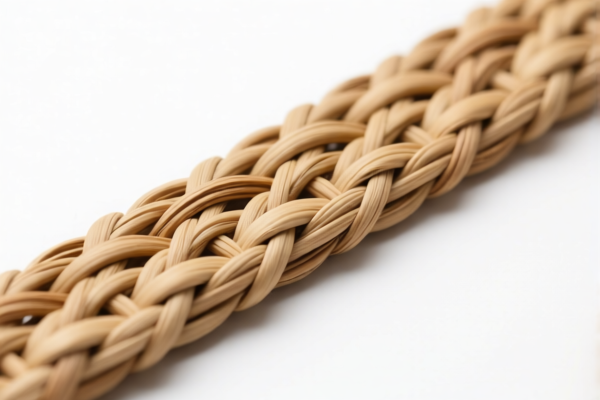
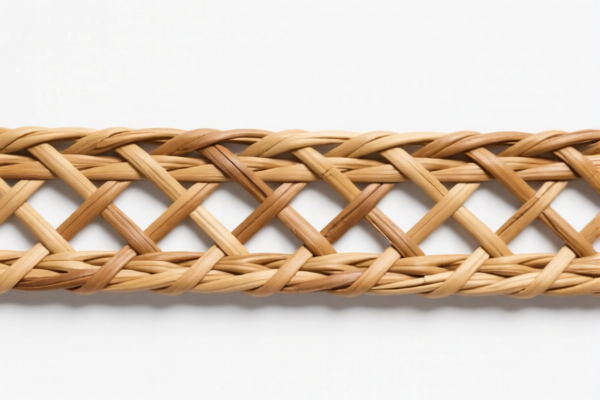
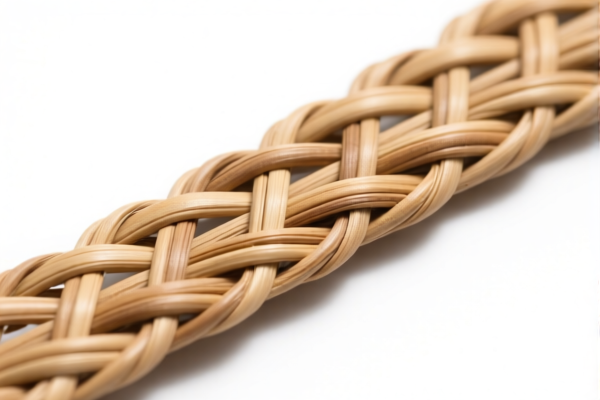
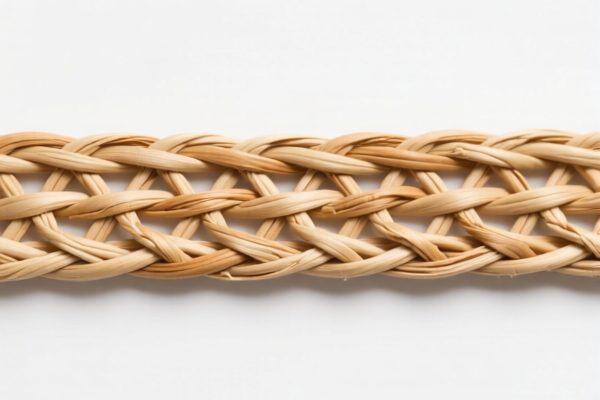
AI Analysis
🎋 Rattan Strips for Crafts (藤编条用于手工艺)
🌐 HS Code Reference & Customs Clearance Guide | 2026 Latest Tariff Analysis | Professional通关 Strategy
📌 I. Product Definition & Classification: What Exactly Are "Rattan Strips for Crafts"?
Rattan strips are versatile raw materials or semi-finished products derived from rattan or similar plant materials, primarily used in handcrafts, furniture weaving, or decorative arts. In international trade, they are categorized based on their state of processing and end-use:
1. Raw/Primary Material (初级形态原料):
- Unprocessed or simply prepared strips (e.g., split, dried, bleached) without specific shaping.
- Typically classified under Chapter 94 (Furniture parts) as raw components if they resemble furniture components, or under Chapter 46 (Wickerwork) if treated as woven materials.
2. Woven Products (编织成型产品):
- Strips that have been pre-woven, shaped, or formed into recognizable wicker structures or patterns.
- Classified under Chapter 46 (Wickerwork and Other Articles of Wickerwork) as finished or semi-finished woven goods.
⚠️ Key Distinction Point:
- If the rattan is in raw strip form, used as a basic material for weaving → Likely falls under 9403.89.30.20 or 9403.89.30.10 (Furniture parts/raw materials).
- If the rattan is pre-woven or shaped into a recognizable wicker form → Falls under 4602.19.80.00 or 4601.22.40.00 (Wickerwork products).
- Final woven goods with specific forms → 4602.12.45.00.
📦 II. HS Code Classification Details (2026 Latest Tariff Authority Comparison)
| HS Code | Product Description | Application Scenario | Processing State |
|---|---|---|---|
9403.89.30.20 |
Rattan strips for crafts, raw material form, made of rattan or similar materials | Raw strips, basic weaving material | ✅ Raw/Primary |
9403.89.30.10 |
Rattan strips for crafts, conforms to rattan/willow/similar material attributes, classified as other furniture parts | Semi-prepared strips, furniture component-like | ✅ Semi-prepared |
4602.19.80.00 |
Rattan strips for crafts, made of plant materials, classified as wickerwork products | Pre-woven or shaped strips, basic wicker form | ✅ Semi-finished/Woven |
4601.22.40.00 |
Rattan strips for crafts, conforms to wickerwork product shape requirements | Woven mats, basic patterns, pre-formed wicker | ✅ Woven/Finished |
4602.12.45.00 |
Finished rattan products, made of rattan, classified as shaped wicker products | Final woven goods, baskets, furniture parts, shaped forms | ✅ Finished/Shaped |
🔍 Key Reminder:
- Raw strips (unwoven) are typically classified under 9403 (Furniture parts) as they are considered components for furniture or crafts.
- Pre-woven or shaped strips fall under 4601/4602 (Wickerwork) as they exhibit the characteristics of woven articles.
- Final products (e.g., baskets, chairs) are classified under 4602.12.45.00.
💰 III. 2026 Latest Tariff Rate Breakdown (Including Supplementary Taxes & Policy Surcharges)
✅ Applicable Country: United States (US)
✅ Country of Origin: China (CN)
✅ Effective Date: From November 10, 2025 (and subsequent imports)
🎯 1. 4602.19.80.00 —— Rattan Strips (Plant Material Wickerwork)
| Item | Content |
|---|---|
| Base Tariff Rate | 2.3% (ad valorem) |
| USITC Supplementary Tariff | +25.0% (under USITC Footnote for China-origin goods) |
| IEEPA Supplementary Tariff | +10.0% (against China/Hong Kong products, effective Nov 10, 2025) |
| Total Tariff Rate | 37.3% |
| Tax Calculation | CIF Value × 37.3% |
| De Minimis Exemption Eligible? | ❌ No (deny_de_minimis) |
| Legal Basis Path | IEEPA:9903.01.25 → IEEPA:9903.01.24 → USITC:4602.19.80.00 → FOOTNOTE:9903.88.01 |
📌 Explanation:
- The 25% USITC tariff is part of the Section 301 duties on Chinese goods.
- The 10% IEEPA tariff is the additional levy under the International Emergency Economic Powers Act.
- Total 37.3% is a high tariff rate, requiring careful cost planning.
🎯 2. 9403.89.30.20 & 9403.89.30.10 —— Rattan Strips (Furniture Parts/Raw Materials)
| Item | Content |
|---|---|
| Base Tariff Rate | 0.0% (ad valorem) |
| USITC Supplementary Tariff | +25.0% |
| IEEPA Supplementary Tariff | +10.0% |
| Total Tariff Rate | 35.0% |
| Tax Calculation | CIF Value × 35.0% |
| De Minimis Exemption Eligible? | ❌ No (deny_de_minimis) |
| Legal Basis Path | IEEPA:9901.25 → IEEPA:9903.01.24 → USITC:9403.89.30.20 / 9403.89.30.10 → FOOTNOTE:9903.88.01 |
📌 Note:
- Both codes have the same total tariff of 35.0%.
- Even if classified as "raw materials" or "furniture parts," they are still subject to 301 and IEEPA surcharges.
- Key Difference:9403.89.30.20is for raw form, while9403.89.30.10is for furniture component-like strips.
🎯 3. 4601.22.40.00 —— Rattan Strips (Woven Articles)
| Item | Content |
|---|---|
| Base Tariff Rate | 3.3% (ad valorem) |
| USITC Supplementary Tariff | +25.0% |
| IEEPA Supplementary Tariff | +10.0% |
| Total Tariff Rate | 38.3% |
| Tax Calculation | CIF Value × 38.3% |
| De Minimis Exemption Eligible? | ❌ No (deny_de_minimis) |
| Legal Basis Path | IEEPA:9903.01.25 → IEEPA:9903.01.24 → USITC:4601.22.40.00 → FOOTNOTE:9903.88.01 |
📌 Explanation:
- Woven articles have a slightly higher base rate (3.3%) compared to raw strips (0.0%).
- Total 38.3% is among the highest rates for rattan products.
🎯 4. 4602.12.45.00 —— Finished Rattan Products
| Item | Content |
|---|---|
| Base Tariff Rate | 6.6% (ad valorem) |
| USITC Supplementary Tariff | +25.0% |
| IEEPA Supplementary Tariff | +10.0% |
| Total Tariff Rate | 41.6% |
| Tax Calculation | CIF Value × 41.6% |
| De Minimis Exemption Eligible? | ❌ No (deny_de_minimis) |
| Legal Basis Path | IEEPA:9903.01.25 → IEEPA:9903.01.24 → USITC:4602.12.45.00 → FOOTNOTE:9903.88.01 |
📌 Note:
- This is for final shaped products (e.g., baskets, chairs).
- Total 41.6% is the highest tariff among all rattan product categories.
🛠️ IV. Customs Clearance Practical Advice (Pitfall Avoidance Guide)
✅ 1. Preparation Checklist (All Documents Required)
| Document | Mandatory | Description |
|---|---|---|
| ✅ Product Specifications | ✔️ | Dimensions, material type (rattan/willow), processing state (raw/woven) |
| ✅ Product Photos (Including Label) | ✔️ | Clear images of strips, woven forms, and any labels/markings |
| ✅ Commercial Invoice | ✔️ | Must specify "Rattan Strips for Crafts" and HS Code |
| ✅ Packing List | ✔️ | Detail raw vs. woven forms to avoid misclassification |
| ✅ Origin Certificate (CO) | ✔️ | If not China-origin, apply for preferential rates |
| ✅ Third-Party Inspection Report | ✔️ | Wood fumigation, phytosanitary certificate (if applicable) |
✅ 2. Declaration Tips (Key Rules)
🔥 "Raw vs. Woven, Shape Matters, Name Precise, Tax Rate Halved!"
| Situation | Correct Declaration | Incorrect Action |
|---|---|---|
| Raw rattan strips (unwoven) | 9403.89.30.20 or 9403.89.30.10 |
Misdeclare as "woven products" → Higher tax (37.3%-41.6%) |
| Pre-woven strips (basic form) | 4602.19.80.00 or 4601.22.40.00 |
Misdeclare as "raw materials" → Under-declaration risk |
| Finished woven goods (baskets/chairs) | 4602.12.45.00 |
Misdeclare as "strips" → Significant underpayment |
| Mixed shipments (raw + woven) | Split declaration | Combined declaration → Confusion, penalties |
✅ 3. Special Cases Handling
| Situation | Handling Advice |
|---|---|
| OEM Custom Rattan Strips | Provide design drawings + order info to confirm classification |
| Rattan + Wood Composite | Declare separately if possible; otherwise, classify based on primary material |
| Rattan for Decorative Use Only | Still subject to full tariffs; no "non-commercial" exemption |
| Rattan from Non-China Origins | Apply for IEEPA exemption if from Vietnam, Thailand, etc. (rate 0-5%) |
🌍 V. Global Market Customs Comparison (2026 Latest)
| Country/Region | Recommended HS Code | Tariff | Certification | Notes |
|---|---|---|---|---|
| 🇺🇸 USA | 9403.89.30.20 / 4602.19.80.00 |
35%-41.6% (China-origin) | Phytosanitary, Fumigation | High tariffs; pre-ruling recommended |
| 🇨🇳 China | 4602.19.80.00 |
10%-13% (import) | None | No extra surcharges |
| 🇪🇺 EU | 4602.19.80.00 |
0%-5% (if CE/FSC) | CE, FSC | No 301/IEEPA surcharges |
| 🇦🇺 Australia | 4602.19.80.00 |
5% | None | Moderate tariffs |
| 🇯🇵 Japan | 4602.19.80.00 |
0%-5% | None | Low tariffs |
📌 Conclusion:
- USA is the only market with high supplementary tariffs (301 + IEEPA).
- China-origin rattan products face the highest clearance costs in the US.
- Consider supply chain relocation or pre-ruling applications for cost optimization.
📌 VI. Common Errors & Pitfall Avoidance (Lessons Learned)
❌ Error 1: Declaring "woven rattan" as "raw rattan strips"
👉 Consequence: Underpayment of tax → Back taxes + penalties!
❌ Error 2: Not providing phytosanitary certificates for plant materials
👉 Consequence: Shipment held or returned at customs.
❌ Error 3: Mixing raw and woven rattan in one shipment without clear declaration
👉 Consequence: Customs inspection delay or misclassification.
❌ Error 4: Using vague names like "Plant Material" instead of "Rattan Strips"
👉 Consequence: Customs clarification request → Delays.
✅ Correct Practice:
"Rattan Strips, Raw Form, Used for Handcrafts, Model XYZ, Phytosanitary Certified"
🎯 VII. Conclusion: Professional Declaration, Time-Saving, Cost-Efficient!
🎯 Remember These Rules:
🔹 "Raw vs. Woven, Shape Determines Code; 0% Base, 35% Total; Misdeclare, Pay Extra!"
🔹 "HS Code Defines Life, Tax Rate Differs 35%, Declare Correctly, Save Thousands!"
📌 Pro Tip:
If your rattan strips are originated from Vietnam, Mexico, Thailand, or Malaysia, you can apply for IEEPA exemption, with rates as low as 0%-5%.
It is highly recommended to apply for Advance Ruling (Pre-classification) to avoid clearance risks.
📣 Take Action Now:
📞 Contact professional customs brokers + Provide product photos + Apply for HS Code Pre-ruling
🚀 Ensure your rattan products clear customs smoothly, boost exports, and maximize profits!
✨ Professional Clearance Starts with Accurate Classification!
💼 Every cent of your cost deserves precise calculation!
Customer Reviews
About HS Code Classification
The Harmonized System (HS) is an internationally standardized nomenclature developed by the World Customs Organization (WCO) to classify traded products. Over 200 countries use the HS system as the basis for customs tariffs, trade statistics, and import/export regulations.
Each HS code follows a hierarchical structure:
- Chapter (2 digits) — Broad category of goods (e.g., Chapter 84: Machinery and Mechanical Appliances)
- Heading (4 digits) — More specific grouping within the chapter
- Subheading (6 digits) — Internationally standardized breakdown, used by all WCO member countries
- National subdivisions (8-10 digits) — Country-specific extensions for further classification, such as US HTSUS 10-digit codes
Correct HS code classification is essential for smooth customs clearance, accurate duty payment, and compliance with trade regulations. Misclassification can lead to customs delays, overpayment of duties, or penalties.
When importing from CN to US, the applicable tariff rates may include:
- Most-Favored-Nation (MFN) rate — The standard duty rate applied to WTO members
- General rate — Applied to countries without trade agreements
- Trade remedy duties — Additional tariffs such as Section 301 (anti-dumping), Section 232 (national security), or countervailing duties
The information provided on this page is for reference purposes only. For official classification, please consult with your local customs authority or a licensed customs broker.