Rattan Utility Bags
CN → US| HS Code | Tariff Rate | Origin | Destination | Doc |
|---|---|---|---|---|
| 9403893010 | 35.0% | CN | US | Official Doc |
| 4602110700 | 35.0% | CN | US | Official Doc |
| 9403893020 | 35.0% | CN | US | Official Doc |
| 4602113500 | 35.0% | CN | US | Official Doc |
| 4602121600 | 40.0% | CN | US | Official Doc |
Product Images
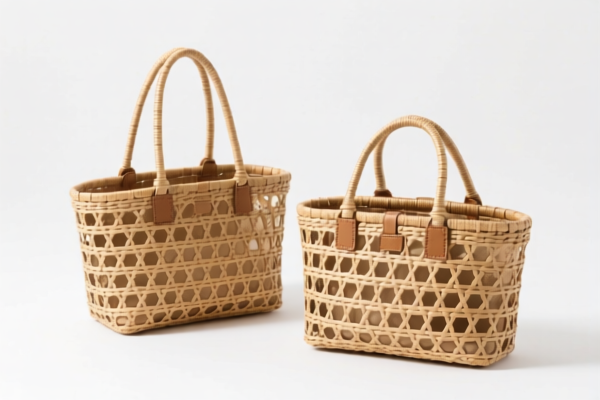
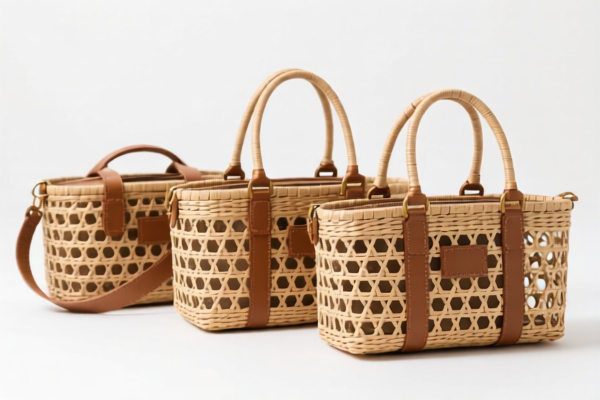
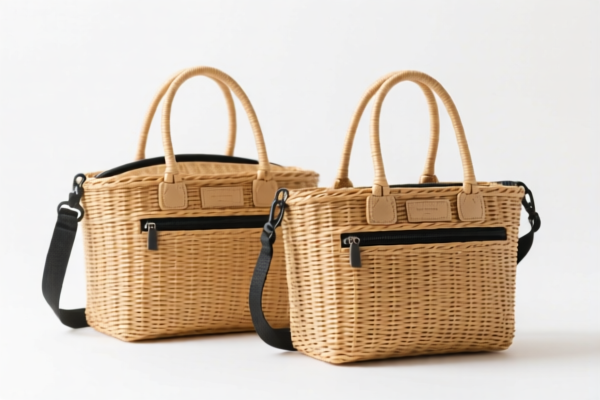
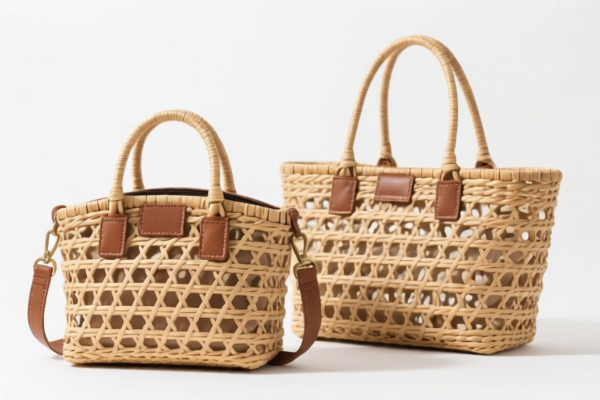
AI Analysis
🧺 Rattan Utility Bags (Rattan Storage Baskets)
🌐 HS Code Reference & Customs Clearance Guide | 2026 Latest Tariff Analysis | Professional-Level Clearance Strategy
📌 I. Product Definition & Classification: Do You Really Understand "Rattan Utility Bags"?
Rattan Utility Bags, often referred to as Rattan Storage Baskets or Woven Plant Fiber Containers, are household goods primarily used for storage and decoration. In international trade, their classification depends heavily on the specific material composition, manufacturing process, and intended use. They generally fall into two main categories in the Harmonized System (HS):
1. Furniture Category (Chapter 94):
If the basket is considered a "piece of furniture" or a "furniture part/accessory," it may fall under Heading 9403. This is common for rigid, standalone storage units that serve a functional role similar to shelves or cabinets.
2. Plant Fiber Products (Chapter 46):
If the product is classified primarily as a "woven basket" made from vegetable plaiting materials (like rattan, bamboo, reed, etc.), it falls under Heading 4602. This category focuses on the manufacturing technique (plaiting/woven) and raw material rather than the final "furniture" function.
⚠️ Key Distinction Point:
- If the item is rigid, has legs/stand, or is explicitly marketed as "home furniture" → Likely 9403
- If the item is a simple woven container, flexible or semi-rigid, defined by its weaving process → Likely 4602
- Note: Rattan is a natural plant fiber, which is the critical factor for Chapter 46 classification.
📦 II. HS Code Classification Details (2026 Latest Tariff Authority Comparison)
| HS Code | Product Description | Applicable Scenario | Key Classification Logic |
|---|---|---|---|
9403.89.30.10 |
Rattan clothing storage basket; material is rattan; form is storage basket; for storage; belongs to furniture/home goods. | Rigid rattan baskets used for storing clothes, categorized under furniture/home furnishings. | Furniture Logic: Emphasizes the "storage" function and "furniture" category. |
4602.11.07.00 |
Rattan clothing storage basket; form is storage basket; material is rattan; belongs to plant woven materials; fits woven basket characteristics. | General woven rattan baskets; classification based on plant fiber weaving. | Weaving Logic: Emphasizes "plant woven material" and "basket" form. |
9403.89.30.20 |
Rattan clothing storage basket; material is rattan; basket belongs to "other articles" under furniture category; fits material logic. | Similar to 9403.89.30.10, but potentially different sub-decision criteria for "other furniture." | Furniture Logic: Alternative furniture classification for rattan goods. |
4602.11.35.00 |
Rattan products; belongs to plant material woven articles; form is storage basket; belongs to woven category. | Generic rattan woven storage items; broad category for plant-based woven goods. | Weaving Logic: Broad classification for plant material woven items. |
4602.12.16.00 |
Rattan basket; material is rattan; form is basket; fully fits the classification definition of rattan baskets. | Specific rattan baskets defined strictly by material (rattan) and form (basket). | Material Logic: Specific sub-heading for rattan baskets. |
🔍 Key Reminder:
- Chapter 94 (Furniture) vs. Chapter 46 (Woven Plaiting Products) is the core debate.
- Customs officers may scrutinize the structure: Does it have legs? Is it rigid? Is it sold as "furniture" or "home decor/container"?
- Rattan is specifically listed in many national tariffs as a distinct plant fiber, affecting the sub-heading (e.g., 4602.12 for rattan vs. 4602.11 for other plant fibers).
💰 III. 2026 Latest Tariff Rate Details (Including Surcharges & Policy Add-ons)
✅ Applicable Country: United States (US)
✅ Origin: China (CN)
✅ Effective Date: From November 10, 2025 (including subsequent imports)
🎯 1. HS Codes 9403.89.30.10, 4602.11.07.00, 9403.89.30.20, 4602.11.35.00
| Item | Content |
|---|---|
| Base Duty Rate | 0% (ad valorem) |
| USITC Surcharge | +25% (under USITC Footnote for Section 301 Tariffs) |
| IEEPA Surcharge | +10% (Against China/HK products, effective from Nov 10, 2025) |
| Total Duty Rate | 35.0% |
| Tax Calculation | CIF Value × 35% |
| De Minimis Exemption | ❌ Not Eligible (deny_de_minimis) |
| Legal Basis Path | USITC:301 → IEEPA:9903.01.24 → USITC:9403/4602 Specific Code → FOOTNOTE |
📌 Explanation:
- Base Rate 0%: Most furniture and woven baskets from non-LDC countries have a low base rate.
- 25% Surcharge: This is the Section 301 Tariff (USITC Footnote 9903.88.01 or similar), applied to a wide range of Chinese goods.
- 10% IEEPA Tariff: The International Emergency Economic Powers Act tariff, a recent addition specifically targeting Chinese imports, effective late 2025.
- Total 35%: This is a high tariff burden. Importers must factor this into their landed cost.
🎯 2. HS Code 4602.12.16.00 (Rattan Basket Specific)
| Item | Content |
|---|---|
| Base Duty Rate | 5.0% (ad valorem) |
| USITC Surcharge | +25% |
| IEEPA Surcharge | +10% |
| Total Duty Rate | 40.0% |
| Tax Calculation | CIF Value × 40% |
| De Minimis Exemption | ❌ Not Eligible (deny_de_minimis) |
| Legal Basis Path | USITC:301 → IEEPA:9903.01.24 → USITC:4602.12.16.00 → FOOTNOTE |
📌 Explanation:
- Base Rate 5%: This specific sub-heading for "Rattan Baskets" has a slightly higher base duty compared to some generic woven baskets.
- Surcharges: The 25% (301) and 10% (IEEPA) surcharges still apply.
- Total 40%: This is the highest duty rate among the listed options.
- Strategic Note: Choosing4602.12.16.00might be technically accurate for pure rattan baskets, but it results in a 5% higher total tax than the4602.11or9403options. Importers should carefully verify if a more favorable classification (like4602.11or9403) is legally defensible.
🛠️ IV. Customs Clearance Practical Advice (Pitfall Avoidance Guide)
✅ 1. Document Preparation Checklist (Missing Any = Delay)
| Document | Required | Description |
|---|---|---|
| ✅ Product Specification Sheet | ✔️ | Details material (100% Rattan? Mixed?), dimensions, weight. |
| ✅ Product Photos (Labeled) | ✔️ | Clear images of the basket, interior, exterior, and any legs/stands. |
| ✅ Commercial Invoice | ✔️ | Must clearly state "Rattan Storage Basket" or "Rattan Utility Bag." |
| ✅ Packing List | ✔️ | Include net/gross weight. Critical for calculating ad valorem duties. |
| ✅ Origin Certificate (CO) | ✔️ | If claiming preferential treatment (though unlikely for CN in US now). |
| ✅ Third-Party Test Report | ✔️ | If treated as furniture, may need safety/flame retardancy tests (if required by retailer). |
✅ 2. Declaration Tips (Key Mantra)
🔥 "Material Defines Chapter, Form Defines Heading, Name Must Be Precise!"
| Scenario | Correct Declaration | Wrong Practice |
|---|---|---|
| Generic Rattan Basket | 4602.11.07.00 or 4602.11.35.00 |
Calling it "Furniture" → 35% |
| Rigid Storage Unit with Legs | 9403.89.30.10 |
Calling it "Weaving" → Risk of correction |
| Pure Rattan Woven Basket | 4602.12.16.00 |
Calling it "Plastic" → Fraud |
| Mixed Material (Rattan + Metal Frame) | Likely 9403 |
Splitting shipment → 89.5% on parts |
📌 Warning:
- Do NOT split a complete basket into "rattan strips" and "metal frame" if it is shipped as one unit. The complete basket governs.
- If the basket is marketed as "Home Decor" or "Storage Container,"4602is safer. If marketed as "Furniture,"9403is appropriate.
- The 10% IEEPA tariff is new and strict. Ensure your HTSUS code is correct to avoid audits.
✅ 3. Special Circumstances Handling
| Situation | Handling Advice |
|---|---|
| OEM/Private Label | Provide brand authorization if required, but classification remains on product nature. |
| Rattan vs. Synthetic | If "Rattan" is actually "Artificial Rattan (Plastic)," classification changes to Chapter 39 (Plastics), with different duties. Be honest about material. |
| Incomplete Kits | If shipped as "Rattan strips + kit for assembly," it may still be classified as the finished basket if essential characteristics are present. |
| De Minimis (Section 321) | ❌ Not Eligible. All these codes are denied de minimis exemption for Chinese origin. Must file formal entry. |
🌍 V. Global Market Clearance Comparison (2026 Latest)
| Country/Region | Recommended HS Code | Duty Rate (China Origin) | Certification | Remarks |
|---|---|---|---|---|
| 🇺🇸 United States | 4602.11.07.00 or 9403.89.30.10 |
35% | None specific | High due to 301 + IEEPA. |
| 🇺🇸 United States | 4602.12.16.00 |
40% | None specific | Highest duty among options. |
| 🇨🇳 China (Import) | 4602.11 / 9403.89 |
0% ~ 5% | None | Low duty for domestic/REEXPORT. |
| 🇪🇺 European Union | 4602.11 / 9403.89 |
0% ~ 6% | CE (if furniture) | No Section 301/IEEPA equivalents. |
| 🇬🇧 United Kingdom | 4602.11 / 9403.89 |
0% ~ 6% | UKCA | Post-Brexit, similar to EU. |
📌 Conclusion:
- The US is the most challenging market due to the 35-40% total duty burden.
- EU/UK are much more favorable, with no retaliatory tariffs on rattan products.
- Cost Optimization: Consider sourcing from Vietnam or Indonesia (if Rules of Origin allow) to potentially avoid Section 301 tariffs, though IEEPA may still apply depending on final policy interpretations.
📌 VI. Common Errors & Pitfall Guide (Blood & Tears Lessons)
❌ Error 1: Misclassifying "Artificial Rattan" as "Natural Rattan"
👉 Consequence: Customs may reclassify to Chapter 39 (Plastics), leading to additional duties and penalties for misdeclaration.
❌ Error 2: Declaring as "Home Decor" to avoid "Furniture" classification
👉 Consequence: If the item is rigid and has legs, US CBP may still classify it as 9403 (Furniture), resulting in 35% duty. Inconsistency leads to audits.
❌ Error 3: Ignoring the IEEPA 10% Surcharge
👉 Consequence: Calculating only 25% (301) + Base. Missing the extra 10% leads to underpayment and interest.
❌ Error 4: Using "Rattan Basket" for a Mixed-Material Item
👉 Consequence: If the basket has a significant plastic lining or metal frame, the primary character may shift, leading to incorrect HS Code.
✅ Correct Practice:
"Rattan Woven Storage Basket, Natural Material, Open Top, Dimensions 12x12x10 inches, No Legs, For Home Storage."
🎯 VII. Conclusion: Professional Declaration, Save Time, Cut Costs!
🎯 Remember the Mantra:
🔹 "Rattan is Plant Fiber, Basket is Weaving, Furniture is 9403, Storage is 4602."
🔹 "35% Total Duty in US, 40% for Pure Rattan Baskets, Plan Ahead!"
🔹 "No De Minimis, No Excuses, Formal Entry is Mandatory!"
📌 Tips:
- If your rattan bags are originally from Vietnam, Indonesia, or Malaysia, you may avoid the 25% Section 301 tariff, but the 10% IEEPA tariff might still apply depending on the final US government directives.
- Apply for an Advance Ruling if the classification is ambiguous between 9403 and 4602.
- Consider pricing models that include the 35-40% landed cost in the US.
📣 Immediate Action:
📞 Consult a Licensed Customs Broker + Provide Product Photos + Verify Material Composition (Natural vs. Synthetic)
🚀 Ensure your Rattan Utility Bags pass US customs smoothly, avoiding delays and hidden costs!
✨ Professional Clearance Starts with Accurate Classification!
💼 Your Bottom Line Depends on Precision!
Customer Reviews
About HS Code Classification
The Harmonized System (HS) is an internationally standardized nomenclature developed by the World Customs Organization (WCO) to classify traded products. Over 200 countries use the HS system as the basis for customs tariffs, trade statistics, and import/export regulations.
Each HS code follows a hierarchical structure:
- Chapter (2 digits) — Broad category of goods (e.g., Chapter 84: Machinery and Mechanical Appliances)
- Heading (4 digits) — More specific grouping within the chapter
- Subheading (6 digits) — Internationally standardized breakdown, used by all WCO member countries
- National subdivisions (8-10 digits) — Country-specific extensions for further classification, such as US HTSUS 10-digit codes
Correct HS code classification is essential for smooth customs clearance, accurate duty payment, and compliance with trade regulations. Misclassification can lead to customs delays, overpayment of duties, or penalties.
When importing from CN to US, the applicable tariff rates may include:
- Most-Favored-Nation (MFN) rate — The standard duty rate applied to WTO members
- General rate — Applied to countries without trade agreements
- Trade remedy duties — Additional tariffs such as Section 301 (anti-dumping), Section 232 (national security), or countervailing duties
The information provided on this page is for reference purposes only. For official classification, please consult with your local customs authority or a licensed customs broker.