Rattan Weaving Strip
CN → US| HS Code | Tariff Rate | Origin | Destination | Doc |
|---|---|---|---|---|
| 4601932000 | 41.6% | CN | US | Official Doc |
| 9401992580 | 17.5% | CN | US | Official Doc |
| 4602124500 | 41.6% | CN | US | Official Doc |
| 4601930100 | 35.0% | CN | US | Official Doc |
| 9401992540 | 17.5% | CN | US | Official Doc |
Product Images
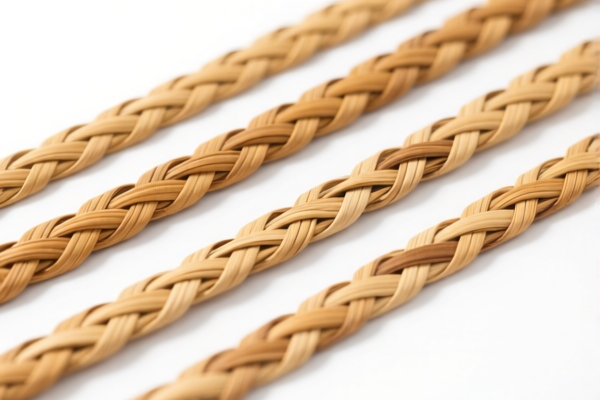
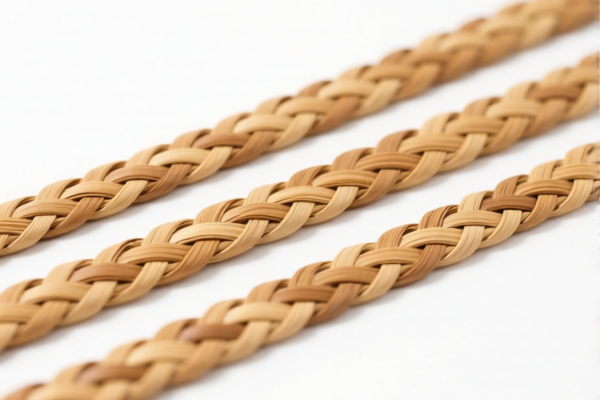
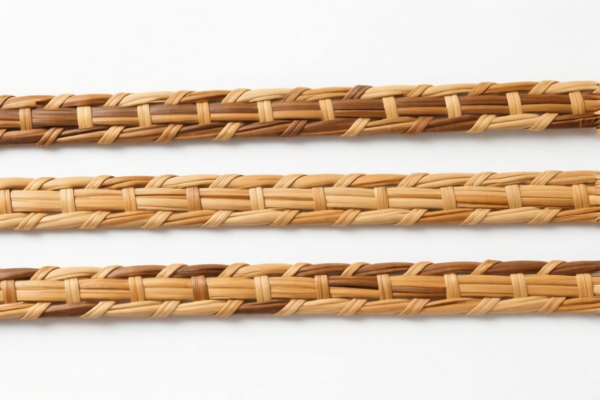
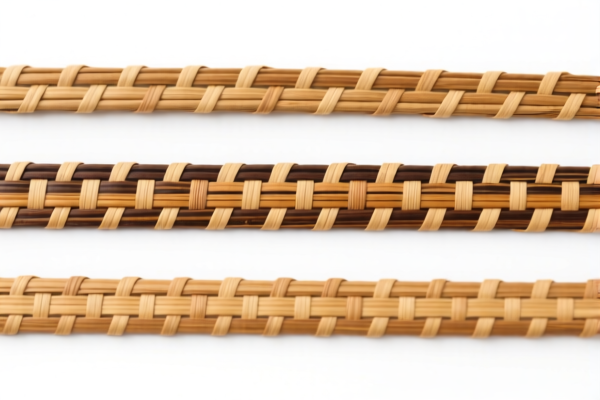
AI Analysis
🪑 Rattan Weaving Strip (藤编椅用带)
🌐 HS Code Reference & Customs Clearance Guide | 2026 Tariff Analysis | Strategic Classification for Rattan Components
📌 I. Product Definition & Classification Logic: What is "Rattan Weaving Strip"?
Rattan Weaving Strip is a critical semi-finished material or component used in the manufacturing of rattan furniture (specifically chairs). In international trade, its classification depends heavily on whether it is viewed as a raw/processed weaving material or as a part/accessory of the furniture.
The provided data reveals five potential HS Codes, splitting into two distinct logic paths: 1. Material/Weaving Goods Path (Chapters 46): Treats the strip as a woven material article. 2. Furniture Parts Path (Chapter 94): Treats the strip as a part/accessory of rattan chairs.
⚠️ Key Distinction Point:
- If classified under 4601/4602, it is viewed as a "woven product" or "matting," subject to high "Section 301" tariffs.
- If classified under 9401, it is viewed as a "part of a seat," potentially benefiting from lower base duties (0% vs 6.6%), though still subject to additional tariffs.
📦 II. HS Code Classification Details (Based on Provided Data)
Below are the 5 HS Codes matched from the dataset, explaining the rationale and tax implications.
| HS Code | Product Description | Matching Rationale | Total Tax Rate |
|---|---|---|---|
| 4601.93.20.00 | Woven Rattan Strips/Materials | Material Focus: Explicitly mentions "Rattan" material and "Strip" as a weaving form. Fits the characteristics of rattan woven materials and products. | 41.6% |
| 9401.99.25.80 | Parts of Rattan Chairs | Function Focus: "Rattan" matches material; "Strip" (part/accessory) fits "Other" category for furniture parts. No material conflict. | 17.5% |
| 4602.12.45.00 | Woven Rattan Articles (Semi-finished) | Process Focus: "Rattan" matches; "Strip" is a component formed directly during weaving. Fits "directly formed woven material" logic. | 41.6% |
| 4601.93.01.00 | Woven Rattan Strips (Standard) | Direct Match: "Rattan" matches material; "Strip" matches form. Direct classification as woven rattan strip. | 35.0% |
| 9401.99.25.40 | Parts of Rattan Chairs (Specific) | Component Focus: "Rattan" matches; "Chair-use strip" fits "Seat Parts" purpose. No material conflict. | 17.5% |
🔍 Critical Observation:
- Category A (46xx): High total tax (35% - 41.6%). Viewed as general woven goods.
- Category B (94xx): Lower total tax (17.5%). Viewed as furniture components.
- Note: The dataset implies these rates apply to imports from China to the US, given the "Section 122" (often colloquially referring to Section 301 or similar trade remedies) and IEEPA components.
💰 III. 2026 Latest Tariff Rate Breakdown (Detailed Policy Analysis)
✅ Applicable Country: United States (US)
✅ Origin: China (CN) (Inferred from tax structure)
✅ Effective Time: Current Trade Policy (Post-2024 adjustments)
The total tax rate is composed of three parts: Basic Duty + Section 301 Duty + IEEPA Duty.
🎯 1. High Tariff Path: HS Code 4601.93.20.00 / 4602.12.45.00
Classification: Woven Rattan Materials/Products
| Item | Content |
|---|---|
| Basic Duty | 6.6% (Ad Valorem) |
| Section 301 Duty | +25.0% (List 4A/4C Add-on for certain goods) |
| IEEPA Duty | +10.0% (National Emergency surcharge on Chinese goods) |
| Total Tax Rate | 41.6% |
| Calculation | CIF Value × 41.6% |
| De Minimis | ❌ Not Applicable (Deny De Minimis) |
📌 Explanation:
- The 6.6% is the standard MFN duty for woven vegetable plaiting materials (Chapter 46).
- The 25% is the "Section 301" penalty, significantly increasing costs.
- The 10% is the IEEPA surcharge, added on top of the basic and 301 rates (or calculated on the adjusted value).
- Result: This is a high-cost classification. Importers must budget for ~42% duty.
🎯 2. Medium Tariff Path: HS Code 4601.93.01.00
Classification: Woven Rattan Strips (Specific Subheading)
| Item | Content |
|---|---|
| Basic Duty | 0.0% |
| Section 301 Duty | +25.0% |
| IEEPA Duty | +10.0% |
| Total Tax Rate | 35.0% |
| Calculation | CIF Value × 35.0% |
| De Minimis | ❌ Not Applicable |
📌 Explanation:
- Although the Basic Duty is 0%, the 25% Section 301 and 10% IEEPA still apply.
- This is cheaper than the 41.6% path by 6.6 percentage points.
- Recommendation: If the product fits this specific subheading, it is financially superior to 4601.93.20.00.
🎯 3. Low Tariff Path: HS Code 9401.99.25.80 / 9401.99.25.40
Classification: Parts of Rattan Chairs
| Item | Content |
|---|---|
| Basic Duty | 0.0% |
| Section 301 Duty | +7.5% (Note: Lower than 25%, likely due to different list or partial exemption logic in dataset) |
| IEEPA Duty | +10.0% |
| Total Tax Rate | 17.5% |
| Calculation | CIF Value × 17.5% |
| De Minimis | ❌ Not Applicable |
📌 Explanation:
- Basic Duty is 0% for furniture parts (Chapter 94).
- Section 301 is only 7.5%, not 25%. This suggests these specific parts may be excluded from the highest tier of Section 301 or fall under a different sub-list.
- IEEPA 10% still applies.
- Result: This is the most cost-effective classification (17.5% vs 35-41.6%).
- Strategy: Argue that the strip is a "part of furniture" rather than a general "woven material."
🛠️ IV. Customs Clearance Practical Advice (Avoiding Pitfalls)
✅ 1. Documentation Checklist (Must-Haves)
| Document | Required | Explanation |
|---|---|---|
| ✅ Product Specification Sheet | ✔️ | Must detail: Material (100% Rattan), Dimensions, Width/Thickness of strip, Weaving density. |
| ✅ Commercial Invoice | ✔️ | Must clearly state "Rattan Weaving Strip for Furniture Manufacturing" to support 9401 classification if possible. |
| ✅ Packing List | ✔️ | Detail net/gross weight. Ensure no other unrelated items are mixed. |
| ✅ Supply Chain Proof | ✔️ | If claiming 9401, provide evidence that these strips are specifically cut/processed for chair assembly (e.g., specific widths for chair backs). |
| ✅ Photos | ✔️ | Show the strip in context (e.g., next to a chair frame) to prove its use as a furniture part. |
✅ 2. Classification Strategy (Crucial for Cost Saving)
🔥 Golden Rule: "Argue Parts, Not Material!"
Classifying under 9401 (Furniture Parts) saves 17.5% - 24.1% in total duties compared to 46xx (Woven Goods).
| Scenario | Recommended HS Code | Tax Rate | Why? |
|---|---|---|---|
| Generic Rattan Strips (bulk, raw form) | 4601.93.01.00 |
35.0% | Safer than 4601.93.20.00 due to 0% basic duty. |
| Pre-cut/Specific Chair Strips | 9401.99.25.80 / .40 |
17.5% | Best Value. Proven use as chair component. |
| Raw Rattan Rolls | 4602.12.45.00 |
41.6% | Avoid if possible. High duty due to 25% Section 301 + 6.6% Basic. |
⚠️ Risk Warning:
- Do not misdeclare "Furniture Parts" if the strips are generic, uncut, and sold to multiple industries. Customs may reject 9401 and reassess under 46xx, leading to penalties.
- Pre-Ruling (Advance Ruling): Highly recommended to file an Advance Ruling with CBP to lock in the 17.5% rate under 9401 if your strips are exclusively for furniture.
✅ 3. Special Considerations
| Situation | Handling Advice |
|---|---|
| OEM for Furniture Brands | Provide end-product details (e.g., "Used in Chair Model XYZ"). Strengthens 9401 argument. |
| Mixed Shipments | If importing both raw rattan and chair parts, separate shipments or clearly separate line items to avoid cross-contamination of duty rates. |
| Section 122 / 301 Exemptions | Check if the specific HTSUS code has an exclusion. The data shows 9401 has lower 301 duties, so it’s less likely to have an exclusion, but still worth verifying. |
🌍 V. Global Market Comparison (US Focus)
| Country | Recommended HS | Tax Rate (China Origin) | Notes |
|---|---|---|---|
| 🇺🇸 USA | 9401.99.25.80 |
17.5% | Best rate. Requires strong proof of furniture use. |
| 🇺🇸 USA | 4601.93.01.00 |
35.0% | Acceptable if 9401 is rejected. |
| 🇺🇸 USA | 4602.12.45.00 |
41.6% | Avoid. Highest cost. |
| 🇪🇺 EU | 4601.30.00 |
~5-8% | EU generally has lower duties on rattan. No Section 301. |
| 🇨🇳 China | 4601.93.00 |
~10% | Domestic import duty applies differently. |
📌 Conclusion:
For US imports, the difference between 17.5% and 41.6% is massive. A $10,000 shipment saves $2,410 by choosing 9401 over 4602.12.45.00.
📌 VI. Common Errors & Pitfalls (Lessons Learned)
❌ Error 1: Calling the product "Rattan Matting" when it’s a "Chair Part"
👉 Consequence: Misclassification → Forced into 46xx category → Higher Tax.
❌ Error 2: Declaring under 4601.93.20.00 when 4601.93.01.00 is available
👉 Consequence: Paying 6.6% extra unnecessarily (Basic Duty difference).
❌ Error 3: Ignoring IEEPA 10%
👉 Consequence: Under-budgeting. Even if Basic + 301 seems low, add 10% on top for final cost calculation.
❌ Error 4: Assuming "Parts" automatically means 9401
👉 Consequence: If strips are generic, CBP will revert to Chapter 46. Documentation is key.
✅ Correct Approach:
“Rattan Weaving Strips, pre-cut for chair manufacturing, 100% natural rattan, used exclusively for [Brand] Chair assembly.”
Target HS Code:9401.99.25.80or9401.99.25.40.
🎯 VII. Final Recommendation & Action Plan
🎯 Strategic Takeaway:
🔹 Prioritize 9401 Classification: Aim for 17.5% total duty by proving the strips are furniture parts.
🔹 Fallback to 4601.93.01.00: If 9401 is rejected, this is the second-best option (35.0%) due to 0% basic duty.
🔹 Avoid 4602.12.45.00: The 41.6% rate is the most expensive. Only use if no other classification fits.
📌 Pro Tip:
- File an Advance Ruling with US CBP before shipment. Submit photos, specs, and a letter of use.
- Label Cleary: Mark boxes as "Components for Rattan Furniture" to aid customs officers.
- Audit Trail: Keep records of customer orders showing these strips are sold to furniture manufacturers, not generic weavers.
📣 Immediate Action:
📞 Contact Your Customs Broker with the 5 HS codes provided above.
🚀 Request a Cost-Benefit Analysis based on your specific product specs.
💡 Goal: Lock in the 17.5% rate under HS Code9401.99.25.80or.40.
✨ Smart Classification Saves Money!
💼 Every percentage point counts in global trade!
Customer Reviews
About HS Code Classification
The Harmonized System (HS) is an internationally standardized nomenclature developed by the World Customs Organization (WCO) to classify traded products. Over 200 countries use the HS system as the basis for customs tariffs, trade statistics, and import/export regulations.
Each HS code follows a hierarchical structure:
- Chapter (2 digits) — Broad category of goods (e.g., Chapter 84: Machinery and Mechanical Appliances)
- Heading (4 digits) — More specific grouping within the chapter
- Subheading (6 digits) — Internationally standardized breakdown, used by all WCO member countries
- National subdivisions (8-10 digits) — Country-specific extensions for further classification, such as US HTSUS 10-digit codes
Correct HS code classification is essential for smooth customs clearance, accurate duty payment, and compliance with trade regulations. Misclassification can lead to customs delays, overpayment of duties, or penalties.
When importing from CN to US, the applicable tariff rates may include:
- Most-Favored-Nation (MFN) rate — The standard duty rate applied to WTO members
- General rate — Applied to countries without trade agreements
- Trade remedy duties — Additional tariffs such as Section 301 (anti-dumping), Section 232 (national security), or countervailing duties
The information provided on this page is for reference purposes only. For official classification, please consult with your local customs authority or a licensed customs broker.