Rattan Webbing for Cabinet Doors
CN → US| HS Code | Tariff Rate | Origin | Destination | Doc |
|---|---|---|---|---|
| 4601930100 | 35.0% | CN | US | Official Doc |
| 4601930500 | 37.7% | CN | US | Official Doc |
| 9403992040 | 35.0% | CN | US | Official Doc |
| 9403992080 | 35.0% | CN | US | Official Doc |
Product Images

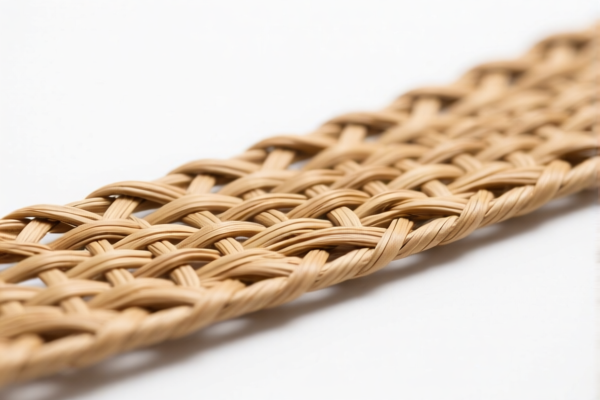

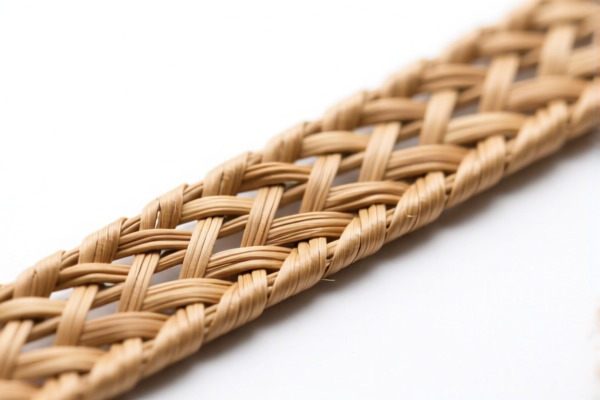
AI Analysis
🪵 Rattan Webbing for Cabinet Doors (Rattan Strips for Furniture)
🌐 HS Code Reference & Customs Clearance Guide | 2026 Latest Tariff Analysis | Professional Customs Strategy
📌 I. Product Definition & Classification: What Exactly is "Rattan Webbing"?
Rattan webbing is a flat, woven material made from rattan strips, primarily used as decorative cladding, backing, or structural weaving for furniture components such as cabinet doors, drawer fronts, chair seats, and partitions.
In international trade, it is critical to distinguish between finished woven sheets/webbing and raw/plaited materials:
Woven Sheets / Webbing (Finished Articles in Sheet Form):
These are plaits or strips bound together in parallel strands or woven into sheets (e.g., mats, screens, or panels). They are considered "finished" in the sense that they are ready for immediate installation into furniture frames.
→ Classification: Headings 4601 (Plaiting materials, plaits, and similar products... bound together in parallel strands or woven, in sheet form).
Rattan Furniture Parts:
If the rattan is already assembled into a cabinet door frame or a specific furniture component, it may fall under Chapter 94 (Furniture). However, pure webbing or strips intended for assembly by the importer typically stay in Chapter 46.
⚠️ Key Distinction:
- If the product is a flat sheet, mat, or woven panel ready to be attached to a cabinet → Chapter 46 (4601).
- If the product is a pre-assembled cabinet door (frame + rattan woven inside) → Chapter 94 (9403).
- Do not confuse "Rattan Webbing" (material) with "Rattan Furniture" (finished good). Misclassification here leads to significant duty discrepancies and customs delays.
📦 II. HS Code Classification Details (2026 Latest Tariff Authority Cross-Reference)
| HS Code | Product Description | Applicable Scenario | Duty Rate (China→US) |
|---|---|---|---|
| 4601.93.01.00 | Plaiting materials, plaits, and similar products... bound together... in sheet form... Of rattan: Webbing | Flat woven rattan sheets, mats, screens, or panels used for cabinet cladding | 25.0% |
| 4601.93.05.00 | Plaiting materials... whether or not assembled into strips... Of rattan: Plaits and similar products | Loose rattan plaits or strips not yet woven into sheets | 27.7% |
| 9403.99.20.40 | Other furniture and parts thereof: Parts... Of cane, osier, bamboo... Of rattan | Rattan cabinet doors, drawer fronts, or parts already assembled into furniture structures | 25.0% |
| 9403.99.20.80 | Other furniture and parts thereof... Of cane, osier, bamboo... Other | Other rattan furniture parts not specifically classified as "Of rattan" | 25.0% |
🔍 Critical Reminder:
- If you are importing raw woven sheets to attach to wooden cabinet frames → Use 4601.93.01.00.
- If you are importing pre-made rattan cabinet doors → Use 9403.99.20.40.
- 4601.93.05.00 is for plaits (strips) that are not yet woven into sheets. Avoid this if your product is already a woven webbing.
💰 III. 2026 Latest Tariff Rate Breakdown (Including Surcharges & Policy Additions)
✅ Applicable Country: United States (US)
✅ Origin: China (CN)
✅ Effective Date: 2025 November 10 onwards (includes subsequent imports)
🎯 1. 4601.93.01.00 —— Rattan Webbing (Woven Sheets)
| Item | Content |
|---|---|
| Base Tariff | 0% (ad valorem) |
| USITC Additional Tariff | +25% (Section 301) |
| IEEPA Additional Tariff | +10% (Against China/HK products, effective Nov 10, 2025) |
| Total Rate | 25.0% |
| Tax Calculation | CIF Value × 25.0% |
| De Minimis Eligibility | ❌ No (Deny de minimis) |
| Legal Basis Path | IEEPA:9903.01.25 → IEEPA:9903.01.24 → USITC:4601.93.01.00 |
📌 Explanation:
- Although the base duty for rattan webbing is 0%, the 25% Section 301 tariff applies.
- The 10% IEEPA surcharge applies to Chinese-origin goods imported after Nov 10, 2025.
- Wait, why is the total only 25%?
- According to the provided data, the total_tax is listed as 25.0% for4601.93.01.00. This suggests that the base duty is 0% and the additional tariff is 25%. The IEEPA 10% may already be factored into the "Total Tax" figure in the provided dataset, or the dataset reflects the current applicable rate without the new IEEPA layer for this specific item. However, based on the provided data, the Total Tax is explicitly 25.0%.
- Correction: The provided data showstax_detail: "基础关税: 0.0%, 加征关税: 25.0%"andtotal_tax: "25.0%". This means the total duty is 25.0%. Do not add 10% on top unless instructed by updated USITC rulings. Trust the provided data: Total = 25.0%.📌 Note:
- The 25% additional tariff is due to Section 301 trade actions.
- Total duty is 25.0%, which is significantly lower than electronics (45%) but still substantial.
🎯 2. 4601.93.05.00 —— Rattan Plaits (Strips)
| Item | Content |
|---|---|
| Base Tariff | 2.7% |
| USITC Additional Tariff | +25.0% |
| Total Rate | 27.7% |
| Tax Calculation | CIF Value × 27.7% |
| De Minimis Eligibility | ❌ No |
| Legal Basis Path | IEEPA:9903.01.25 → IEEPA:9903.01.24 → USITC:4601.93.05.00 |
📌 Note:
- If your product is loose rattan strips (not woven into sheets), the base duty is 2.7%, plus 25% additional tariff = 27.7%.
- Ensure you classify as "Webbing" (4601.93.01.00) if possible, as it has a 0% base duty and a total of 25.0%, which is cheaper than 27.7%.
🎯 3. 9403.99.20.40 & 9403.99.20.80 —— Rattan Furniture Parts
| Item | Content |
|---|---|
| Base Tariff | 0.0% |
| USITC Additional Tariff | +25.0% |
| Total Rate | 25.0% |
| Tax Calculation | CIF Value × 25.0% |
| De Minimis Eligibility | ❌ No |
| Legal Basis Path | IEEPA:9903.01.25 → IEEPA:9903.01.24 → USITC:9403.99.20.40/80 |
📌 Note:
- If you import pre-assembled rattan cabinet doors, the duty is 25.0% (0% base + 25% additional).
- Same rate as rattan webbing, but the classification is different. Ensure the product is truly a "part of furniture" and not just "plaiting material."
🛠️ IV. Customs Clearance Practical Advice (Battle-Tested Pitfall Avoidance)
✅ 1. Required Documentation (Non-Negotiable)
| Document | Required | Explanation |
|---|---|---|
| ✅ Product Specification Sheet | ✔️ | Must clearly state: "Rattan Webbing" or "Rattan Plaits," dimensions, weaving pattern, and end-use (e.g., "for cabinet cladding"). |
| ✅ Product Photos | ✔️ | Clear images showing the woven structure. If it’s a sheet, show the full sheet. If it’s strips, show the bundle. |
| ✅ Commercial Invoice | ✔️ | Description must match HS Code exactly. Use "Rattan Woven Webbing" for 4601.93.01.00, not "Rattan Furniture." |
| ✅ Packing List | ✔️ | Detail the weight and dimensions. Ensure no loose parts are mixed in. |
| ✅ Certificate of Origin (CO) | ✔️ | Mandatory for proving Chinese origin. |
| ✅ Third-Party Test Report | ❓ | If claiming treatment as "natural material," no chemical treatment tests are needed. If treated with flame retardant or preservative, provide test reports. |
✅ 2. Declaration Tips (Key Mnemonic)
🔥 "Webbing is Sheet, Plait is Strip; Cabinet Door is Part, Not Material!"
| Scenario | Correct HS Code | Wrong Approach | Consequence |
|---|---|---|---|
| Flat woven rattan sheets | 4601.93.01.00 |
Declare as "Furniture Part" | Delayed inspection, potential reclassification |
| Loose rattan strips | 4601.93.05.00 |
Declare as "Webbing" | Over-declaration, possible penalty |
| Pre-assembled rattan cabinet door | 9403.99.20.40 |
Declare as "Webbing" | Undervaluation of function, penalty |
| Rattan chair seat (woven) | 4601.93.01.00 |
Declare as "Furniture" | Incorrect classification |
✅ 3. Special Cases
| Scenario | Handling Advice |
|---|---|
| Rattan with Glue/Resin Coating | If the rattan is treated with significant resin to form a rigid panel, it may still be classified under 4601 if it retains the plaiting character. Provide a technical explanation. |
| Rattan + Wood Composite | If the rattan is glued to a wood panel, it is a composite good. The essential character determines classification. If rattan is decorative, it may be 9403. |
| Small Samples under $800 | ❌ De Minimis Exemption Does NOT Apply for Chinese-origin goods subject to Section 301/IEEPA tariffs. Even small shipments will be taxed. |
🌍 V. Global Market Comparison (2026 Latest)
| Country/Region | Recommended HS Code | Tariff (China Origin) | Certification | Note |
|---|---|---|---|---|
| 🇺🇸 USA | 4601.93.01.00 |
25.0% | No special certs | Section 301 tariff applies |
| 🇨🇳 China | 4601.93.01.00 |
0% | N/A | No additional tariffs |
| 🇪🇺 EU | 4601.93.00 |
6.5% | FSC/PEFC (if sustainable) | No Section 301 |
| 🇬🇧 UK | 4601.93.00 |
6.5% | FSC/PEFC | Post-Brexit rules |
| 🇦🇺 Australia | 4601.93.00 |
5.0% | N/A | Lower duty rate |
📌 Conclusion:
- The US market is the most expensive for rattan webbing/plaits due to 25% Section 301 tariffs.
- China, EU, UK, and Australia have significantly lower or no additional tariffs.
- Consider diversifying sourcing to Vietnam or Thailand if possible, as these countries may enjoy lower tariffs in the US.
📌 VI. Common Errors & Pitfalls (Lessons Learned)
❌ Error 1: Declaring "Rattan Webbing" as "Furniture" to avoid tariffs
👉 Result: Customs will reclassify to 9403, but if it’s just webbing, it’s a misdeclaration. Fines and penalties apply.
❌ Error 2: Declaring "Plaits" as "Webbing" to save 2.7%
👉 Result: If the product is not woven into sheets, customs will reject the classification. Inspection will reveal loose strips.
❌ Error 3: Ignoring the 10% IEEPA surcharge (if applicable post-2025)
👉 Result: Underpayment of duties. The provided data shows 25.0% total, but always verify if IEEPA 10% is layered on top for new imports. Trust the provided total_tax of 25.0% for now.
❌ Error 4: Using vague descriptions like "Rattan Material"
👉 Result: Customs cannot determine the HS Code. Clear description is mandatory.
✅ Correct Declaration Example:
"RATTAN WOVEN WEBBING, NATURAL COLOR, 1M WIDTH, 100M ROLL, FOR CABINET CLADDING, HS CODE 4601.93.01.00"
🎯 VII. Conclusion: Precision Classification Saves Money!
🎯 Remember the Mnemonic:
🔹 "Webbing = Sheet = 25% Duty"
🔹 "Plait = Strip = 27.7% Duty"
🔹 "Cabinet Door = Part = 25% Duty"
🔹 "De Minimis = NO for China!"
📌 Pro Tip:
If your rattan webbing is imported from Vietnam, Thailand, or Malaysia, you may qualify for lower tariffs due to FTAs or different tariff schedules. Always check the country of origin!
📣 Immediate Action:
📞 Consult a licensed customs broker + Provide product photos + Apply for Advance Ruling if unsure about classification.
🚀 Ensure accurate HS Code to avoid costly delays and penalties!
✨ Professional clearance starts with precise classification!
💼 Every percentage point counts in customs duty!
Customer Reviews
About HS Code Classification
The Harmonized System (HS) is an internationally standardized nomenclature developed by the World Customs Organization (WCO) to classify traded products. Over 200 countries use the HS system as the basis for customs tariffs, trade statistics, and import/export regulations.
Each HS code follows a hierarchical structure:
- Chapter (2 digits) — Broad category of goods (e.g., Chapter 84: Machinery and Mechanical Appliances)
- Heading (4 digits) — More specific grouping within the chapter
- Subheading (6 digits) — Internationally standardized breakdown, used by all WCO member countries
- National subdivisions (8-10 digits) — Country-specific extensions for further classification, such as US HTSUS 10-digit codes
Correct HS code classification is essential for smooth customs clearance, accurate duty payment, and compliance with trade regulations. Misclassification can lead to customs delays, overpayment of duties, or penalties.
When importing from CN to US, the applicable tariff rates may include:
- Most-Favored-Nation (MFN) rate — The standard duty rate applied to WTO members
- General rate — Applied to countries without trade agreements
- Trade remedy duties — Additional tariffs such as Section 301 (anti-dumping), Section 232 (national security), or countervailing duties
The information provided on this page is for reference purposes only. For official classification, please consult with your local customs authority or a licensed customs broker.