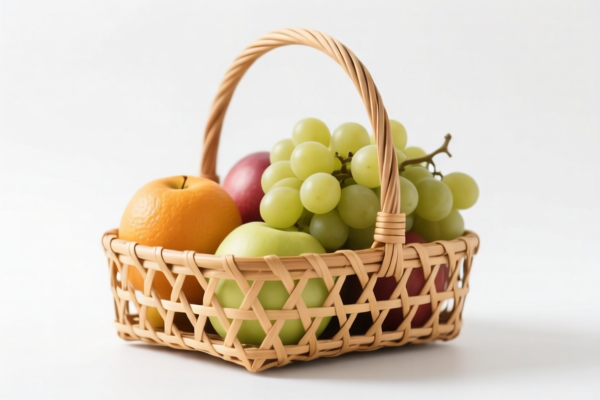
Rattan Woven Fruit Basket
CN → US| HS Code | Tariff Rate | Origin | Destination | Doc |
|---|---|---|---|---|
| 4602121600 | 40.0% | CN | US | Official Doc |
| 4601932000 | 41.6% | CN | US | Official Doc |
| 4602110700 | 35.0% | CN | US | Official Doc |
| 3923109000 | 38.0% | CN | US | Official Doc |
| 7323999030 | 88.4% | CN | US | Official Doc |
Product Images



AI Analysis
🧺 Rattan Woven Fruit Basket (藤柳编水果篮)
🌐 HS Code Reference & Customs Clearance Guide | 2026 Latest Tariff Analysis | Professional Clearance Strategy
📌 I. Product Definition & Classification: Do You Really Understand "Rattan Fruit Baskets"?
A Rattan Woven Fruit Basket is a container used for storing or displaying fruit, typically made from natural plant fibers such as rattan, willow, bamboo, or vines. In international trade, the classification depends heavily on the specific material composition and the exact shape/function.
Key Distinctions: * Natural Fiber Baskets (Chapter 46): If the basket is woven from rattan, willow, bamboo, etc., it falls under Heading 4602 (Wickerwork, basketweaving products). * Plastic Imitations: If it looks like rattan but is made of plastic, it falls under Chapter 39 (Plastics and Articles Thereof). * Metal Frameworks: If it has a metal frame with woven inlays, it may fall under Chapter 73 (Articles of Iron or Steel).
⚠️ Critical Classification Point:
- If the main material is rattan/willow/plant fiber → 4602.12 or 4601.93
- If the main material is plastic → 3923.10
- If the main material is metal (e.g., iron/steel frame) → 7323.99
📦 II. HS Code Classification Details (2026 Latest Tariff Authority Comparison)
Based on the provided data, here are the four possible classifications for a "Rattan Woven Fruit Basket" depending on its specific composition:
| HS Code | Product Description | Key Features | Estimated Total Tax Rate (US) |
|---|---|---|---|
4602.12.16.00 |
Rattan/Willow Woven Basket | Material: Rattan/Willow; Shape: Basket; Type: Wickerwork product | 40.0% |
4601.93.20.00 |
Other Woven Baskets (Plant Fiber) | Material: Rattan/Willow/Others; Type: Other woven products | 41.6% |
4602.11.07.00 |
Fruit Basket (Plant Fiber) | Material: Bamboo/Willow/Plant; Shape: Basket; Use: Fruit | 35.0% |
3923.10.90.00 |
Plastic Basket (Fruit Basket) | Material: Plastic; Shape: Basket/Container; Use: Packaging | 38.0% |
7323.99.90.30 |
Metal Fruit Basket | Material: Iron/Steel; Shape: Basket; Use: Tableware/Kitchen | 88.4% |
🔍 Key Reminder:
- Do not assume "Rattan" always means Chapter 46. If it is plastic molded to look like rattan, it is 3923.10.
- If it has a metal frame with woven inserts, it is 7323.99 (High Tax!).
- The difference between4602.12and4602.11lies in the specific weaving technique and sub-category of wickerwork.
💰 III. 2026 Latest Tariff Rate Breakdown (Including Surcharges & Policy Add-ons)
✅ Applicable Country: United States (US)
✅ Origin: China (CN)
✅ Effective Date: 2025/2026 Current Regulations
🎯 1. 4602.12.16.00 – Rattan/Willow Woven Basket
| Item | Detail |
|---|---|
| Base Duty | 5.0% |
| Section 301 Surcharge | 25.0% |
| Section 122 Tariff | 10.0% |
| Total Tax Rate | 40.0% |
| Calculation | CIF Value × 40% |
| De Minimis Exemption | ❌ Not Applicable (High total rate exceeds threshold) |
📌 Explanation:
- This is the standard classification for pure rattan/willow woven baskets.
- The 25% Section 301 tariff and 10% Section 122 tariff significantly increase the cost.
🎯 2. 4601.93.20.00 – Other Woven Plant Fiber Baskets
| Item | Detail |
|---|---|
| Base Duty | 6.6% |
| Section 301 Surcharge | 25.0% |
| Section 122 Tariff | 10.0% |
| Total Tax Rate | 41.6% |
| Calculation | CIF Value × 41.6% |
| De Minimis Exemption | ❌ Not Applicable |
📌 Note:
- Slightly higher base duty than4602.12, but similar surcharges.
- Used for woven products that do not fit the specific "wickerwork" definition of 4602.
🎯 3. 4602.11.07.00 – Fruit Basket (Plant Fiber)
| Item | Detail |
|---|---|
| Base Duty | 0.0% |
| Section 301 Surcharge | 25.0% |
| Section 122 Tariff | 10.0% |
| Total Tax Rate | 35.0% |
| Calculation | CIF Value × 35.0% |
| De Minimis Exemption | ❌ Not Applicable |
📌 Highlight:
- Lowest Tax Rate among natural fiber baskets!
- Base duty is 0%, making it the most cost-effective option for pure plant-fiber fruit baskets.
- Ensure the product description clearly states "Fruit Basket" and "Plant Fiber (Bamboo/Willow)" to qualify.
🎯 4. 3923.10.90.00 – Plastic Fruit Basket
| Item | Detail |
|---|---|
| Base Duty | 3.0% |
| Section 301 Surcharge | 25.0% |
| Section 122 Tariff | 10.0% |
| Total Tax Rate | 38.0% |
| Calculation | CIF Value × 38.0% |
| De Minimis Exemption | ❌ Not Applicable |
📌 Important:
- If your "rattan" basket is plastic, it falls here.
- Tax rate is 38%, which is higher than the best natural fiber rate (35%) but lower than metal (88.4%).
- Must declare as "Plastic Basket," not "Rattan," to avoid misclassification penalties.
🎯 5. 7323.99.90.30 – Metal Fruit Basket
| Item | Detail |
|---|---|
| Base Duty | 3.4% |
| Section 301 Surcharge | 25.0% |
| Section 122 Tariff | 10.0% |
| Steel/Aluminum/Copper Surcharge | +50% |
| Total Tax Rate | 88.4% |
| Calculation | CIF Value × 88.4% |
| De Minimis Exemption | ❌ Not Applicable |
📌 Critical Warning:
- Highest Tax Rate!
- If the basket has a metal frame (even if woven with rattan), it may be classified here.
- The additional 50% tariff on steel/aluminum products makes this category extremely expensive.
- Avoid this classification unless the product is predominantly metal.
🛠️ IV. Customs Clearance Practical Advice (Avoid Pitfalls)
✅ 1. Documentation Checklist (Required)
| Document | Required | Description |
|---|---|---|
| ✅ Product Specs | ✔️ | Material composition (e.g., "100% Natural Rattan" vs. "Plastic Molded to Look Like Rattan") |
| ✅ Material Certificate | ✔️ | Proof of natural fiber origin (if claiming 0% base duty) |
| ✅ Product Photos | ✔️ | Clear images of weave, handle, and base |
| ✅ Commercial Invoice | ✔️ | Must specify "Woven Fruit Basket" and material |
| ✅ Packing List | ✔️ | Weight and dimensions |
| ✅ Origin Certificate (CO) | ✔️ | Required for US import; check for preferential rates if applicable |
✅ 2. Declaration Tips (Key Mnemonics)
🔥 "Material First, Tax Follows: Natural 35%, Plastic 38%, Metal 88%!"
| Scenario | Correct HS Code | Wrong Approach | Consequence |
|---|---|---|---|
| Pure Rattan/Willow Basket | 4602.11.07.00 (Best) |
Misdeclare as Plastic | Risk of 3% fine + back taxes |
| Plastic "Rattan" Basket | 3923.10.90.00 |
Misdeclare as Natural Fiber | Severe Penalty (Fraud suspicion) |
| Metal Frame Basket | 7323.99.90.30 |
Try to claim 35% | 88.4% Tax + Audit |
| Mixed Material (e.g., Rattan + Metal Legs) | 7323.99.90.30 (If Metal is Essential) |
Misdeclare as 4602 |
Rejection/Reshipment |
✅ 3. Special Cases
| Case | Handling Advice |
|---|---|
| OEM Custom Baskets | Provide design drawings to prove material composition |
| Basket with Liner | If liner is integral, declare as basket; if removable, may need separate declaration |
| Gift Sets (Basket + Fruit) | Declare basket separately as "Empty Basket" to avoid produce restrictions |
| Plastic Imitation | Must declare as "Plastic Basket" to avoid fraud charges |
🌍 V. Global Market Comparison (2026 Latest)
| Country/Region | Recommended HS Code | Tariff (China Origin) | Notes |
|---|---|---|---|
| 🇺🇸 USA | 4602.11.07.00 |
35% | Best for natural fiber; 88.4% for metal |
| 🇪🇺 EU | 4602.11.00 |
~3-4% | No Section 301/122; much lower tax |
| 🇨🇳 China | 4602.11.00 |
~3-5% | Low import duty for foreign rattan baskets |
| 🇦🇺 Australia | 4602.11.00 |
~5% | No surcharges |
📌 Conclusion:
- USA has high tariffs due to Section 301 & 122.
- EU/Australia offer much lower rates for similar products.
- Consider supply chain adjustment (e.g., sourcing from Vietnam) to reduce US tariffs.
📌 VI. Common Mistakes & Pitfalls (Lessons Learned)
❌ Mistake 1: Declaring a plastic basket as "Rattan"
👉 Result: Customs inspection reveals plastic → Penalty + Back Taxes
❌ Mistake 2: Ignoring the metal frame in "rattan" baskets
👉 Result: Classified as 7323 → 88.4% Tax instead of 35%
❌ Mistake 3: Using vague terms like "Home Decor Basket"
👉 Result: Customs uncertainty → Delays + Additional Fees
✅ Correct Approach:
"Woven Fruit Basket, 100% Natural Rattan, Handwoven, Model XYZ, CIF $100"
🎯 VII. Conclusion: Smart Declaration, Save Costs!
🎯 Remember the Golden Rules:
🔹 "Natural Fiber: 35% is the Goal" (
4602.11.07.00)
🔹 "Plastic: 38% – Declare Honestly" (3923.10.90.00)
🔹 "Metal Frame: 88.4% – Avoid if Possible" (7323.99.90.30)🔹 "HS Code Determines Cost: Small Change, Big Difference!"
📌 Pro Tip:
If your product is plastic but you want lower taxes, consider:
1. Verifying Material: Ensure it is not mistakenly classified as metal.
2. Pre-Ruling: Apply for a Binding Tariff Information (BTI) or Advance Ruling from US CBP to confirm the correct HS code.
3. Supply Chain: For US market, consider sourcing from non-China countries to avoid Section 301/122 tariffs.
📣 Take Action Now:
📞 Contact a professional customs broker
📤 Provide detailed product specs
🚀 Clear Customs Smoothly, Maximize Profit!
✨ Professional Clearance Starts with Accurate Classification!
💼 Every Penny Saved is a Penny Earned!
Customer Reviews
About HS Code Classification
The Harmonized System (HS) is an internationally standardized nomenclature developed by the World Customs Organization (WCO) to classify traded products. Over 200 countries use the HS system as the basis for customs tariffs, trade statistics, and import/export regulations.
Each HS code follows a hierarchical structure:
- Chapter (2 digits) — Broad category of goods (e.g., Chapter 84: Machinery and Mechanical Appliances)
- Heading (4 digits) — More specific grouping within the chapter
- Subheading (6 digits) — Internationally standardized breakdown, used by all WCO member countries
- National subdivisions (8-10 digits) — Country-specific extensions for further classification, such as US HTSUS 10-digit codes
Correct HS code classification is essential for smooth customs clearance, accurate duty payment, and compliance with trade regulations. Misclassification can lead to customs delays, overpayment of duties, or penalties.
When importing from CN to US, the applicable tariff rates may include:
- Most-Favored-Nation (MFN) rate — The standard duty rate applied to WTO members
- General rate — Applied to countries without trade agreements
- Trade remedy duties — Additional tariffs such as Section 301 (anti-dumping), Section 232 (national security), or countervailing duties
The information provided on this page is for reference purposes only. For official classification, please consult with your local customs authority or a licensed customs broker.