Rattan Woven Organizer Basket
CN → US| HS Code | Tariff Rate | Origin | Destination | Doc |
|---|---|---|---|---|
| 4602191700 | 35.0% | CN | US | Official Doc |
| 4602196000 | 35.0% | CN | US | Official Doc |
| 4602121600 | 40.0% | CN | US | Official Doc |
| 4601932000 | 41.6% | CN | US | Official Doc |
| 4602110700 | 35.0% | CN | US | Official Doc |
Product Images
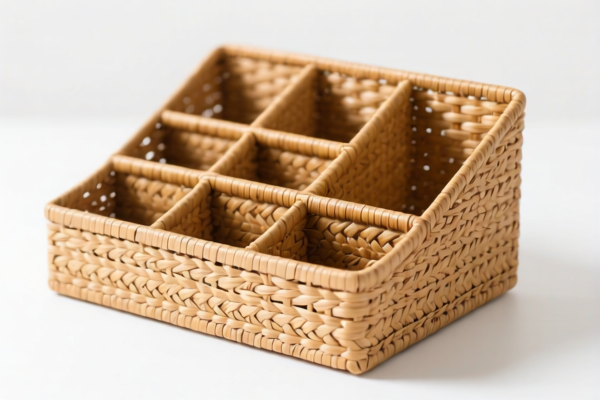
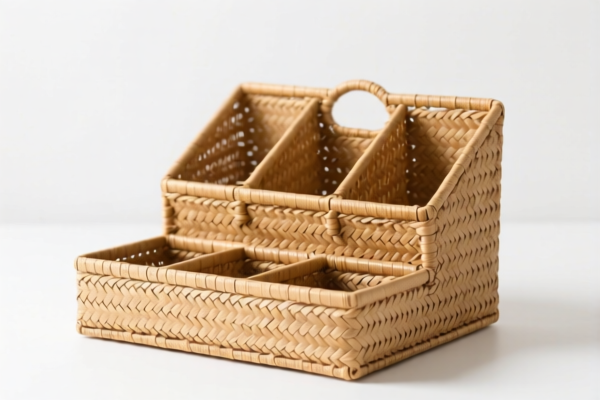
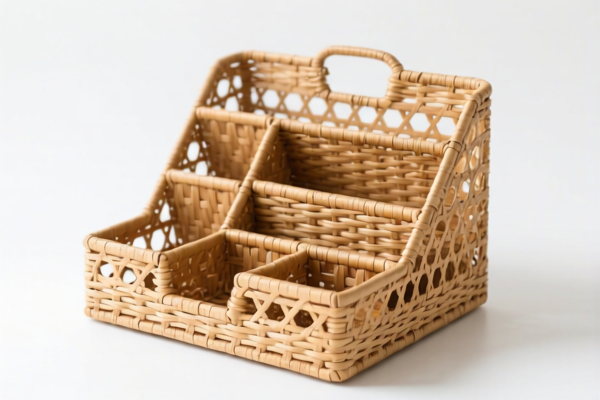
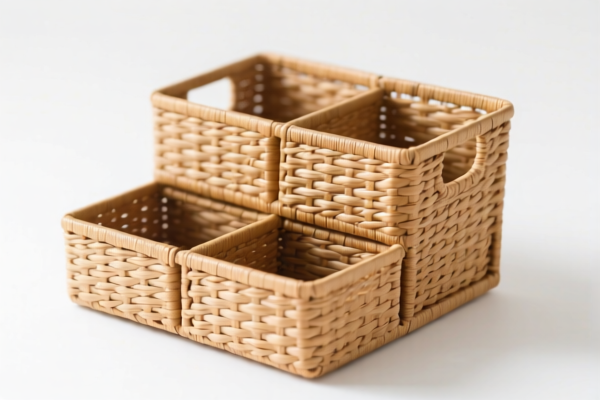
AI Analysis
🧺 Rattan Woven Organizer Basket (柳条编织收纳篮)
🌐 HS Code Reference & Customs Clearance Guide | 2026 Latest Tariff Analysis | Professional Clearance Strategy
📌 I. Product Definition & Classification: Do You Really Understand "Rattan"?
Rattan woven organizer baskets are home storage solutions made from natural plant fibers, primarily rattan, bamboo, or willow. In international trade, these items are classified under Chapter 46 (Wickerwork, Basketweaving, and Woven Materials).
The classification depends heavily on: 1. Material Composition: Is it pure willow, mixed plant fiber, or processed rattan? 2. Manufacturing Stage: Is it a finished article (Chapter 46) or a partially woven mat/fabric (Chapter 46 or 45)? 3. Function: Is it a "basket" (Chapter 46.02) or a "mat/woven material" (Chapter 46.01)?
⚠️ Key Distinction:
- If it is a finished basket/container (rigid, holds shape, used for storage) → Typically 4602.
- If it is a woven mat, sheet, or unfinished weave → Typically 4601.
- Willow (柳条) is often treated as a specific type of plant fiber under these headings.
📦 II. HS Code Classification Details (2026 Latest Tariff Authority Match)
| HS Code | Product Description | Application Scenario | Tax Rate (China Origin to US) |
|---|---|---|---|
4602.19.17.00 |
Willow Woven Organizer Basket | Fits the definition of willow woven products; finished storage baskets | 35.0% |
4602.19.60.00 |
Willow Woven Organizer Box | Woven form application of willow products; rigid boxes/containers | 35.0% |
4602.11.07.00 |
Willow Basket | Material is willow; form is basket-type article | 35.0% |
4601.94.20.00 |
Rattan Woven Basket (Woven Material) | Material and woven form match "other woven materials"; often semi-finished or mat-like | 41.6% |
4601.94.05.00 |
Rattan Basket (Other Plant Fiber) | Other plant material woven products; broader category for non-willow or mixed fibers | 37.7% |
🔍 Critical Insight:
- Finished Baskets (4602) generally attract 35% total tax.
- Woven Materials/Mats (4601) can trigger higher duties (37.7% - 41.6%) due to different base rates.
- Misclassification from4602(Basket) to4601(Woven Material) could increase your duty by ~10%.
💰 III. 2026 Latest Tariff Rate Breakdown (Including Surtaxes & Policy Add-ons)
✅ Applicable Country: United States (US)
✅ Origin: China (CN)
✅ Effective Time: Current rates include Section 301 and 122 Tariffs
🎯 1. 4602.19.17.00 / 4602.19.60.00 / 4602.11.07.00 —— Finished Willow Rattan Baskets
| Item | Content |
|---|---|
| Base Duty Rate | 0% (Ad Valorem) |
| Section 301 Surtax | +25% (List 3 / Chapter 46 specific exclusions often do not apply to basic woven goods) |
| Section 122 Tariff | +10% (Specific surtax for certain Chinese imports) |
| Total Tax Rate | 35.0% |
| Calculation | CIF Value × 35% |
| De Minimis Eligibility | ❌ No (Deny De Minimis) – High risk of seizure/audit for LDP shipments |
| Legal Basis Path | USITC:4602.19.17.00 → FOOTNOTE:Section301 → FOOTNOTE:Section122 |
📌 Explanation:
- "Base 0%": Woven baskets of plant materials have low base MFN rates.
- "Section 301 25%": Most goods from China are subject to this tariff under Trade Act of 1974.
- "Section 122 10%": Additional surtax applied to specific categories of Chinese goods.
- Total 35% is a high cost for low-value goods; margin compression is significant.
🎯 2. 4601.94.20.00 —— Rattan Woven Material (Higher Duty Scenario)
| Item | Content |
|---|---|
| Base Duty Rate | 6.6% |
| Section 301 Surtax | +25% |
| Section 122 Tariff | +10% |
| Total Tax Rate | 41.6% |
| Calculation | CIF Value × 41.6% |
| De Minimis Eligibility | ❌ No |
📌 Warning:
- If your product is classified as "woven material" (4601) rather than "basket" (4602), the base tax jumps to 6.6%, making the total 41.6%.
- Always argue for 4602 (Finished Article) to save 6.6% on base duty.
🎯 3. 4601.94.05.00 —— Other Plant Fiber Woven Products
| Item | Content |
|---|---|
| Base Duty Rate | 2.7% |
| Section 301 Surtax | +25% |
| Section 122 Tariff | +10% |
| Total Tax Rate | 37.7% |
| Calculation | CIF Value × 37.7% |
🛠️ IV. Customs Clearance Practical Advice (Pitfall Avoidance Guide)
✅ 1. Essential Documentation Checklist
| Document | Required? | Notes |
|---|---|---|
| ✅ Product Specification Sheet | ✔️ | Must specify material: "100% Willow," "Natural Rattan," or "Bamboo." |
| ✅ Product Photos (Inside/Outside) | ✔️ | Show weave pattern, rigidity, and handle structure to prove it's a "basket" (4602). |
| ✅ Commercial Invoice | ✔️ | Description: "Woven Willow Organizer Basket, Household Use." Avoid vague terms like "Woven Stuff." |
| ✅ Packing List | ✔️ | Clearly state quantity and net weight. |
| ✅ Origin Certificate | ✔️ | Confirm Country of Origin: China (CN) to apply correct surtaxes. |
✅ 2. Declaration Tips (Key Mnemonic)
🔥 “Finish it, Basket it, 4602 Save the Cost!”
| Scenario | Correct Declaration | Incorrect Practice |
|---|---|---|
| Finished Basket (Holds shape, has handles/lid) | 4602.19.17.00 (35%) | Declaring as 4601 (Woven Mat) → 41.6% |
| Flat Woven Mat/Sheet | 4601.94.20.00 (41.6%) | Declaring as "Basket" → Risk of penalty |
| Mixed Material (e.g., Rattan + Metal Handle) | Still 4602 if rattan is essential character | Avoid breaking down into parts |
| OEM Private Label | Same HS Code | Do not change HS based on brand |
✅ 3. Special Case Handling
| Situation | Handling Advice |
|---|---|
| Willow vs. Rattan | Use "Willow" for 4602.11/19 codes if possible; they have clearer definitions and often lower base rates than generic "other plant fibers." |
| Painted/Lacquered Baskets | Still classifiable under 4602 if paint is superficial. Do not let this push it to Chapter 39 (Plastics) or 73 (Iron). |
| Set of Baskets | If sold as a set, classify based on the essential character (usually the largest basket). |
| De Minimis (Section 321) | ❌ Do not use for high-value shipments. With 35% tax, brokers may scrutinize LDP entries heavily. Use traditional formal entry for large volumes. |
🌍 V. Global Market Comparison (2026 Latest)
| Country/Region | Recommended HS Code | Duty (China Origin) | Certification | Notes |
|---|---|---|---|---|
| 🇺🇸 USA | 4602.19.17.00 |
35% (Total) | No special certs | High surtaxes (25%+10%) apply. |
| 🇨🇳 China | 4602.19.17.00 |
0-5% (Import) | GB Standards | Domestic production is cheap. |
| 🇪🇺 EU | 4602.19.90 |
0-6.5% | FSC/PEFC (If sustainable) | No Section 301 equivalent. |
| 🇬🇧 UK | 4602.19.90 |
0-12% | UKCA (If applicable) | Post-Brexit tariffs may vary. |
| 🇯🇵 Japan | 4602.19.900 |
0-5% | Phytosanitary Cert (if raw wood) | Strict on wood pests. |
📌 Conclusion:
- The US market is the most expensive due to the叠加 of 25% (Section 301) and 10% (Section 122) tariffs on top of the base rate.
- Total cost impact: 35% is significant for low-margin home goods.
- EU/Asia offer much better duty advantages (0-6.5%).
📌 VI. Common Mistakes & Pitfall Guide (Lessons Learned)
❌ Mistake 1: Classifying a finished basket as woven material (4601).
👉 Consequence: Duty jumps from 35% to 41.6% or higher.
👉 Fix: Emphasize "Finished Article," "Storage Container," and "Rigid Structure" in description.
❌ Mistake 2: Ignoring the 10% Section 122 Tariff.
👉 Consequence: Underpayment of duty, leading to penalties and audit flags.
👉 Fix: Ensure your broker includes Section 122 in the calculation for China-origin woven goods.
❌ Mistake 3: Mislabeling material as "Plastic Rattan" when it's Natural Willow.
👉 Consequence: If it's synthetic, it might go to Chapter 39 (Plastics) with different rates (often higher base duty, ~5-7%).
👉 Fix: Be accurate. "Natural Rattan/Willow" = Chapter 46. "Synthetic Rattan" = Chapter 39.
✅ Correct Declaration Example:
"Household Storage Basket, Woven from Natural Willow, Finished Product, No Electrical Parts, Model ABC, Country of Origin: China."
🎯 VII. Conclusion: Precision Classifies, Profit Protects!
🎯 Key Takeaway:
🔹 "Finished Basket = 4602 (35% Total)"
🔹 "Woven Mat = 4601 (37.7%-41.6% Total)"
🔹 "Don't let a loose weave definition cost you 6.6% base duty!"
📌 Pro Tip:
- For large shipments, consider Advance Ruling from US CBP to lock in the 4602.19.17.00 classification and avoid disputes.
- If sourcing from Vietnam or Indonesia, verify if Section 301 still applies (usually no, if substantial transformation occurs), which could save you the 25% + 10% surtaxes entirely.
✨ Professional Clearance Starts with Accurate Classification!
💼 Every percentage point saved is pure profit!
Customer Reviews
About HS Code Classification
The Harmonized System (HS) is an internationally standardized nomenclature developed by the World Customs Organization (WCO) to classify traded products. Over 200 countries use the HS system as the basis for customs tariffs, trade statistics, and import/export regulations.
Each HS code follows a hierarchical structure:
- Chapter (2 digits) — Broad category of goods (e.g., Chapter 84: Machinery and Mechanical Appliances)
- Heading (4 digits) — More specific grouping within the chapter
- Subheading (6 digits) — Internationally standardized breakdown, used by all WCO member countries
- National subdivisions (8-10 digits) — Country-specific extensions for further classification, such as US HTSUS 10-digit codes
Correct HS code classification is essential for smooth customs clearance, accurate duty payment, and compliance with trade regulations. Misclassification can lead to customs delays, overpayment of duties, or penalties.
When importing from CN to US, the applicable tariff rates may include:
- Most-Favored-Nation (MFN) rate — The standard duty rate applied to WTO members
- General rate — Applied to countries without trade agreements
- Trade remedy duties — Additional tariffs such as Section 301 (anti-dumping), Section 232 (national security), or countervailing duties
The information provided on this page is for reference purposes only. For official classification, please consult with your local customs authority or a licensed customs broker.