Raw Bovine Hide for Leather Experiment
CN → US| HS Code | Tariff Rate | Origin | Destination | Doc |
|---|---|---|---|---|
| 4104195080 | 13.3% | CN | US | Official Doc |
| 4101201010 | 17.5% | CN | US | Official Doc |
| 4101901020 | 17.5% | CN | US | Official Doc |
| 4104115080 | 13.3% | CN | US | Official Doc |
Product Images
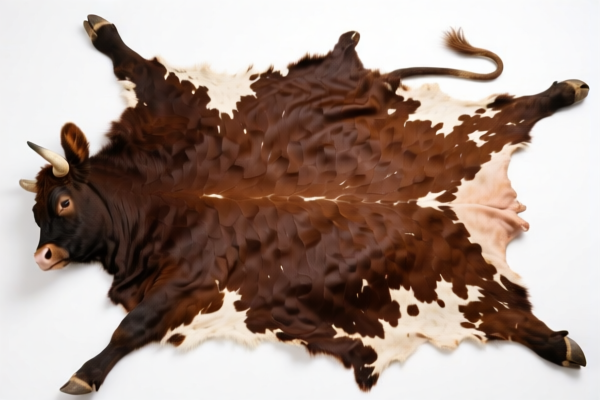
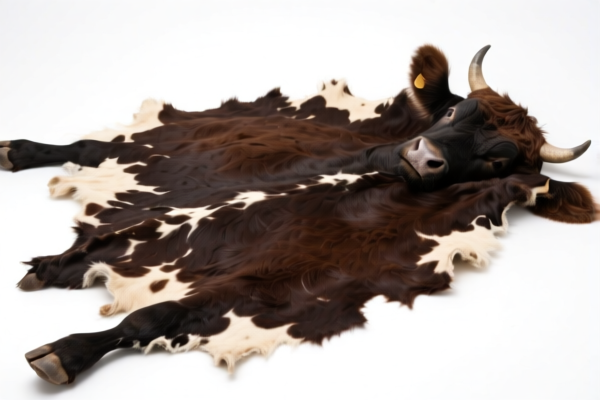
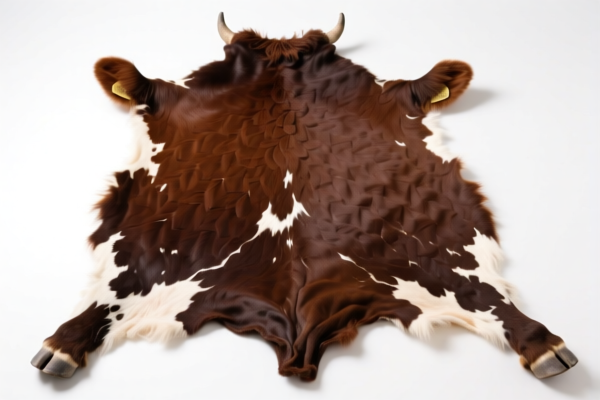
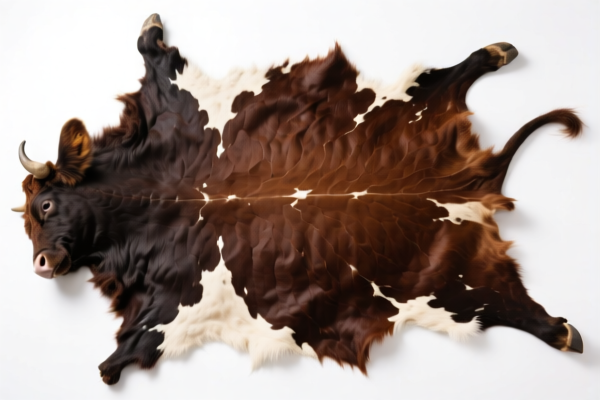
AI Analysis
🐄 Raw Bovine Hide for Leather Experiment (Raw Bovine Hide)
🌐 HS Code Reference & Customs Clearance Guide | 2026 Latest Tariff Analysis | Professional Entry Strategy
📌 1. Product Definition & Classification: Do You Truly Understand "Raw Bovine Hide"?
Raw Bovine Hide is the fundamental material in the leather industry, serving as the primary raw material for tanning and processing into leather products. In international trade, especially for scientific research purposes, its classification depends strictly on its physical state (salted, dried, fresh) and processing level (primary vs. further processed).
⚠️ Key Distinction:
- "Unmanufactured/Primary Form" (Salted/Dried/Fresh): Classified under Chapter 41 (Leather).
- "Further Processed" (Cut, Tanned, or Scientifically Altered beyond raw state): May fall under Chapter 41 but requires precise HS code matching.
- "Scientific Use": Does NOT exempt the product from standard leather tariffs. Customs classifies by physical attribute, not end-use.
📦 2. HS Code Classification Details (2026 Latest Tariff Authority Comparison)
Based on the provided data, here are the specific HS codes for Raw Bovine Hide for Leather Experiment:
| HS Code | Product Description | Key Attributes | Total Tax Rate |
|---|---|---|---|
| 4104.19.50.80 | Scientific Use Raw Bovine Hide, Material: Cowhide, Form: Unprocessed Primary Form | Salted/Dried Cowhide, Primary State | 13.3% |
| 4101.20.10.10 | Scientific Use Raw Bovine Hide, Material: Bovine, Form: Untanned Raw Skin | Raw Untanned Skin, Primary State | 17.5% |
| 4101.90.10.20 | Scientific Use Raw Bovine Hide, Material: Cowhide, Form: Raw Skin | Raw Skin, Un-tanned, Primary State | 17.5% |
| 4104.11.50.80 | Scientific Use Raw Bovine Hide, Material: Bovine, Form: Unprocessed Raw Hide | Salted/Dried Cowhide, Primary State | 13.3% |
🔍 Critical Insight:
- Chapter 4101 generally covers Raw Hides & Skins (Untanned, preserved by salting, drying, etc.).
- Chapter 4104 generally covers Processed Leather (But if described as "Unprocessed Primary Form" in the data, it may refer to specific sub-categories of salted/dried hides that customs allows under 4104 for certain trade contexts).
- Scientific Use Note: The summary explicitly states "Scientific use does not affect its essential attributes." This means you cannot claim exemption just because it’s for research. You must declare it as Raw Bovine Hide.
💰 3. 2026 Latest Tariff Rate Details (Including Additional Taxes & Policy Surcharges)
✅ Applicable Country: United States (US)
✅ Origin: China (CN)
✅ Effective Time: 2025/2026 (Current Trade Regulations)
🎯 1. 4104.19.50.80 & 4104.11.50.80 — Cowhide (Primary/Unprocessed Form)
| Item | Detail |
|---|---|
| Base Tariff | 3.3% (Ad Valorem) |
| Section 301 / Retaliatory Tariff | 0.0% |
| "Section 122" Surcharge | 10.0% |
| Total Tax Rate | 13.3% |
| Tax Calculation | CIF Value × 13.3% |
| De Minimis Exemption | ❌ Not Applicable (Leather goods >$800 are subject to duty; < $800 may qualify for de minimis but scientific imports often require formal entry) |
| Legal Basis | HTSUS 4104 → Section 122 Tariff |
📌 Explanation:
- The 10% "Section 122" tariff is a specific surcharge applied to certain agricultural and raw material imports.
- Base Rate 3.3% applies to the specific sub-category of cowhide.
- Total 13.3% is the effective duty rate for these codes.
🎯 2. 4101.20.10.10 & 4101.90.10.20 — Raw Bovine Skins/Hides (Untanned)
| Item | Detail |
|---|---|
| Base Tariff | 0.0% (Ad Valorem) |
| Section 301 / Retaliatory Tariff | 7.5% |
| "Section 122" Surcharge | 10.0% |
| Total Tax Rate | 17.5% |
| Tax Calculation | CIF Value × 17.5% |
| De Minimis Exemption | ❌ Not Applicable |
| Legal Basis | HTSUS 4101 → Section 301 + Section 122 |
📌 Explanation:
- Chapter 4101 (Raw Hides) has a 0% base tariff due to trade agreements or specific exemptions for raw materials.
- However, it incurs a 7.5% retaliatory tariff (Section 301) and a 10% Section 122 surcharge.
- Total 17.5% is higher than 4104 codes, making 4104.19.50.80 / 4104.11.50.80 more cost-effective if the hide qualifies.
🛠️ 4. Customs Clearance Practical Advice (Avoid Pitfalls)
✅ 1. Required Documentation Checklist
| Document | Required? | Notes |
|---|---|---|
| Commercial Invoice | ✅ Yes | Must clearly state "Raw Bovine Hide for Scientific Experiment" |
| Packing List | ✅ Yes | Detail weight, quantity, and preservation method (salted/dried) |
| Phytosanitary Certificate | ✅ Yes | Crucial for animal products to prove no disease (e.g., BSE, Foot-and-Mouth) |
| FDA Prior Notice | ✅ Yes | Required for food/animal-derived products entering the US |
| Scientific Use Statement | ✅ Optional but Recommended | Declare research purpose to ensure accurate classification, but do not expect tax exemption |
| Bill of Lading/Air Waybill | ✅ Yes | Standard shipping document |
✅ 2. Declaration Tips (Key Mnemonics)
🔥 "Declare State, Not Purpose! Raw vs. Processed is Key!"
| Scenario | Correct Declaration | Incorrect Action |
|---|---|---|
| Salted/Dried Cowhide | 4104.19.50.80 or 4104.11.50.80 (13.3%) |
Declare as "Raw Skin" (4101) → Higher tax (17.5%) |
| Fresh Untanned Skin | 4101.20.10.10 or 4101.90.10.20 (17.5%) |
Declare as "Leather" → Misclassification penalty |
| Scientific Experiment | Use standard HS Code, add "For Research Use" in remarks | Claim tax exemption → Customs will reject |
| Preserved with Salt | Clearly state "Salted" in description | Omit preservation method → Delayed inspection |
✅ 3. Special Case Handling
| Situation | Recommendation |
|---|---|
| BSE-Free Certification | Ensure the hide comes from regions BSE-free (e.g., Canada, Australia, or certified Chinese farms). Otherwise, entry denied. |
| Small Sample Quantity | If < $800, may qualify for De Minimis (Section 321), but animal products often still require FDA/APHIS inspection. |
| Mixed Shipments | If other scientific samples are included, separate declaration for hides to avoid contamination risks. |
| Temporary Import for Research | Consider ATA Carnet for re-export, but duties may still apply if not re-exported within time limit. |
🌍 5. Global Market Comparison (2026)
| Country/Region | Recommended HS Code | Tariff Rate | Certification Required | Notes |
|---|---|---|---|---|
| 🇺🇸 USA | 4104.19.50.80 |
13.3% | APHIS + FDA | High duty due to Section 122 |
| 🇺🇸 USA | 4101.20.10.10 |
17.5% | APHIS + FDA | Higher duty due to Section 301 |
| 🇨🇳 China | 4104.19.50.80 |
~10-15% | None (Export) | Check import country requirements |
| 🇪🇺 EU | 4104.19 |
~10-12% | REACH + Traceability | Strict animal product rules |
| 🇯🇵 Japan | 4104.19 |
~5-10% | Animal Quarantine | Strict BSE checks |
📌 Conclusion:
- USA imposes the highest effective duty (13.3%-17.5%) due to Section 122 and 301 tariffs.
- Chapter 4104 codes are cheaper (13.3%) than 4101 codes (17.5%) for processed/unprocessed cowhide.
- Scientific use does NOT reduce tariff. Always declare physical state accurately.
📌 6. Common Errors & Pitfalls (Lessons Learned)
❌ Error 1: Declaring "Scientific Use" to avoid duties
👉 Result: Customs may still classify as raw hide → 13.3%-17.5% duty applied + penalty for misdeclaration.
❌ Error 2: Missing Phytosanitary Certificate
👉 Result: Seizure or Return by APHIS due to disease risk.
❌ Error 3: Confusing "Raw Hide" (4101) with "Processed Leather" (4104)
👉 Result: If declared as 4101 (17.5%) but actually qualifies for 4104 (13.3%), you overpay. If declared as 4104 but actually raw, you underpay → Audit Risk.
❌ Error 4: Omitting Preservation Method (Salted/Dried)
👉 Result: Customs cannot verify if it’s "primary form" → Delay for Inspection.
✅ Correct Practice:
"Raw Bovine Hide, Salted, Dried, for Scientific Experiment, BSE-Free Certified, Model: RH-2026, HS Code: 4104.19.50.80"
🎯 7. Conclusion: Accurate Declaration, Smooth Clearance, Cost Efficiency!
🎯 Remember the Mnemonic:
🔹 "State is Key, Purpose is Secondary! 4104 is Cheaper than 4101!"
🔹 "Salted/Dried = 4104 (13.3%), Raw/Untanned = 4101 (17.5%)."
📌 Pro Tip:
If you are importing small quantities for research (< $800), check if De Minimis applies, but always get APHIS clearance for animal products. For larger shipments, pre-apply for an Advance Ruling from US Customs (CBP) to confirm the correct HS code and avoid surprises.
📣 Immediate Action:
📞 Contact your customs broker + Provide Phytosanitary Certificate + Accurate HS Code (4104.19.50.80 recommended)
🚀 Ensure smooth clearance, avoid delays, and minimize costs!
✨ Professional clearance starts with accurate classification!
💼 Every dollar of duty saved is a dollar of profit gained!
Customer Reviews
About HS Code Classification
The Harmonized System (HS) is an internationally standardized nomenclature developed by the World Customs Organization (WCO) to classify traded products. Over 200 countries use the HS system as the basis for customs tariffs, trade statistics, and import/export regulations.
Each HS code follows a hierarchical structure:
- Chapter (2 digits) — Broad category of goods (e.g., Chapter 84: Machinery and Mechanical Appliances)
- Heading (4 digits) — More specific grouping within the chapter
- Subheading (6 digits) — Internationally standardized breakdown, used by all WCO member countries
- National subdivisions (8-10 digits) — Country-specific extensions for further classification, such as US HTSUS 10-digit codes
Correct HS code classification is essential for smooth customs clearance, accurate duty payment, and compliance with trade regulations. Misclassification can lead to customs delays, overpayment of duties, or penalties.
When importing from CN to US, the applicable tariff rates may include:
- Most-Favored-Nation (MFN) rate — The standard duty rate applied to WTO members
- General rate — Applied to countries without trade agreements
- Trade remedy duties — Additional tariffs such as Section 301 (anti-dumping), Section 232 (national security), or countervailing duties
The information provided on this page is for reference purposes only. For official classification, please consult with your local customs authority or a licensed customs broker.