Raw Buffalo Leather
CN → US| HS Code | Tariff Rate | Origin | Destination | Doc |
|---|---|---|---|---|
| 4101203500 | 19.9% | CN | US | Official Doc |
| 4101503500 | 19.9% | CN | US | Official Doc |
Product Images
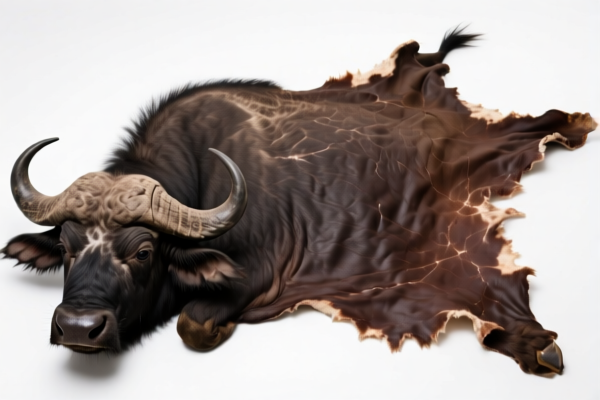
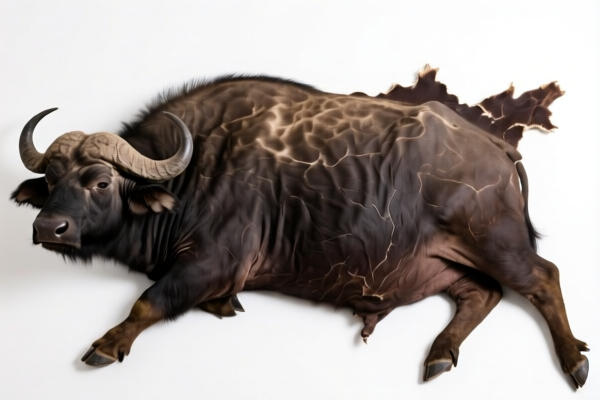
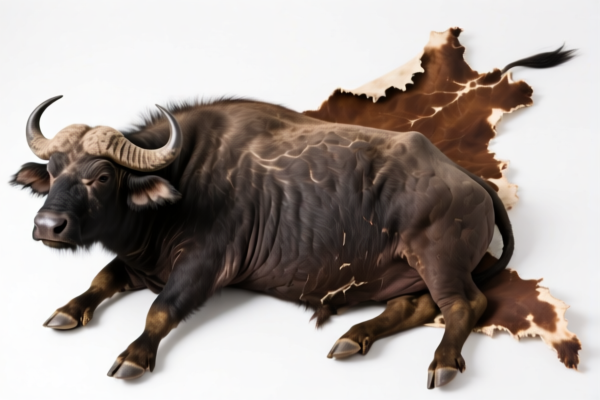
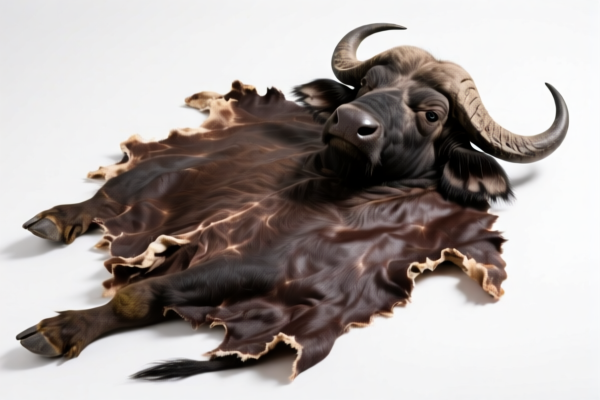
AI Analysis
🐃 Raw Buffalo Hides & Skins (Classified as Bovine Animals)
🌐 HS Code Reference & Customs Clearance Guide | 2026 Latest Tariff Analysis | Professional Clearance Strategy
📌 I. Product Definition & Classification: Do You Understand "Raw Buffalo Leather"?
"Raw Buffalo Leather" in international trade typically refers to fresh, salted, dried, limed, pickled, or preserved hides and skins that have not been tanned, parchment-dressed, or further prepared. According to the Harmonized System (HS), buffalo hides are classified under "Bovine Animals".
The classification depends strictly on the weight per skin and the preservation method:
⚠️ Key Distinction Points: - Small/Thin Hides: If the weight per skin does not exceed 8 kg (when simply dried), 10 kg (when dry-salted), or 16 kg (when fresh, wet-salted, or otherwise preserved) → Classified under 4101.20.35.00. - Large/Heavy Hides: If the weight per skin exceeds 16 kg regardless of preservation → Classified under 4101.50.35.00.
📦 II. HS Code Classification Details (2026 Latest Tariff Authority Comparison)
| HS Code | Product Description | Applicable Scenario | Weight/Preservation Criteria |
|---|---|---|---|
4101.20.35.00 |
Raw hides/skins of bovine animals (including buffalo), unsplit, weight ≤ 8kg (dry), ≤10kg (dry-salted), or ≤16kg (fresh/wet-salted/preserved) | Smaller buffalo hides, thinner skins, or properly preserved light hides | ✅ Weight ≤ 16 kg (depending on method) |
4101.50.35.00 |
Raw hides/skins of bovine animals (including buffalo), unsplit, weight > 16 kg | Large buffalo hides, heavy raw skins | ✅ Weight > 16 kg |
🔍 Key Reminder: - Both codes specifically refer to Buffalo hides under the "Bovine" category. - The critical differentiator is weight. If a hide is fresh and weighs 17 kg, it falls under
4101.50.35.00, not4101.20.35.00. - "Unsplit" means the hide has not been separated into layers (grain and flesh side).
💰 III. 2026 Latest Tariff Rate Details (Including Additional Taxes & Policy Additions)
✅ Applicable Country: China (CN)
✅ Origin: Various (Depending on Export Source)
✅ Note: The tax information provided in the data source indicates 0% total tax.
🎯 1. 4101.20.35.00 —— Small/Preserved Buffalo Hides
| Item | Content |
|---|---|
| Basic Tariff | 0.0% |
| Additional Tariff | 0.0% |
| Total Tax Rate | 0.0% |
| Tax Detail | "Basic Tariff: 0.0%, Additional Tariff: 0.0%" |
📌 Explanation: - Under the provided data source, this HS code has no additional tariffs applied in this specific context. - This is highly favorable for importers, as raw agricultural/animal products often face complex regulatory requirements, but the tariff cost is zero.
🎯 2. 4101.50.35.00 —— Large Buffalo Hides
| Item | Content |
|---|---|
| Basic Tariff | 0.0% |
| Additional Tariff | 0.0% |
| Total Tax Rate | 0.0% |
| Tax Detail | "Basic Tariff: 0.0%, Additional Tariff: 0.0%" |
📌 Explanation: - Similar to the smaller hides, large buffalo hides also enjoy a 0.0% tariff rate according to the provided data. - Caution: While the tariff is 0%, customs authorities may still require strict verification of the weight and preservation status to ensure correct classification. Misclassification (e.g., declaring a 20kg hide as <16kg) can lead to penalties.
🛠️ IV. Customs Clearance Practical Advice (Practical Pitfall Avoidance Guide)
✅ 1. Documentation Checklist (Cannot Be Omitted)
| Document | Must Provide | Explanation |
|---|---|---|
| ✅ Commercial Invoice | ✔️ | Must clearly state "Raw Buffalo Hides," preservation method (fresh/salted/dried), and weight per skin. |
| ✅ Packing List | ✔️ | Must list individual hide weights to prove compliance with the ≤16kg or >16kg threshold. |
| ✅ Health/Veterinary Certificate | ✔️ | Essential for animal products to prove disease-free status (e.g., BSE, Foot-and-Mouth). |
| ✅ Preservation Method Declaration | ✔️ | Specify if fresh, wet-salted, dry-salted, or dried, as this affects the weight limit for HS 4101.20. |
| ✅ Photo of Goods | ✔️ | Show the condition of the hides (no rot, proper salting) to avoid rejection for spoilage. |
✅ 2. Declaration Skills (Key Mantra)
🔥 "Weight is King, Preservation Matters, Fresh/Salted Distinction!"
| Scenario | Correct Declaration | Wrong Practice |
|---|---|---|
| Fresh Buffalo Hides, Avg Weight 15kg/skin | 4101.20.35.00 |
Declare as 4101.50.35.00 → Over-declare? No, but may trigger unnecessary inspection. |
| Fresh Buffalo Hides, Avg Weight 18kg/skin | 4101.50.35.00 |
Declare as 4101.20.35.00 → Classification Error, potential penalty. |
| Dry-Salted Buffalo Hides, Avg Weight 9kg/skin | 4101.20.35.00 (Limit is 10kg) |
Declare as 4101.50.35.00 → Incorrect. |
| Wet-Salted Buffalo Hides, Avg Weight 17kg/skin | 4101.50.35.00 (Limit is 16kg) |
Declare as 4101.20.35.00 → High Risk of Penalty. |
✅ 3. Special Situation Handling
| Situation | Handling Advice |
|---|---|
| Mixed Weights in Container | Calculate the average weight per skin or ensure all skins meet the criteria for the declared HS code. If mixed, best to declare the higher code if any exceed limits, or separate shipments. |
| Preservation Method Change | If hides are transported fresh but arrive wet-salted, ensure documentation matches the actual condition at time of declaration. |
| Disease Control | Ensure origin country is listed as free from Foot-and-Mouth Disease (FMD) if required by destination country regulations, even if tariff is 0%. |
| Split vs. Unsplit | The provided HS codes are for unsplit hides. If split, classification changes (e.g., to 4102). Ensure goods are not split before declaration. |
🌍 V. Global Market Comparison (2026 Latest)
| Country/Region | Recommended HS Code | Tariff | Certification Requirements | Notes |
|---|---|---|---|---|
| 🇨🇳 China | 4101.20.35.00 / 4101.50.35.00 |
0% | Veterinary Health Certificate | Zero tariff as per data source. |
| 🇺🇸 USA | 4101.20 / 4101.50 |
Varies | USDA Inspection, FMD Status | Higher tariffs may apply; check USITC. |
| 🇪🇺 EU | 4101.20 / 4101.50 |
Varies | EU Health Certificate | Strict animal health controls. |
| 🇯🇵 Japan | 4101.20 / 4101.50 |
Varies | Ministry of Agriculture Certificate | May have quota restrictions. |
📌 Conclusion: - China offers 0% tariff for these raw buffalo hides based on the provided data. - Other markets may have different tariffs and stricter health controls. - Tariff savings are significant, but compliance with health and weight documentation is critical.
📌 VI. Common Errors & Pitfall Avoidance (Lessons Learned)
❌ Error 1: Declaring heavy hides (>16kg) under 4101.20.35.00 to match a "lower" code (if any).
👉 Consequence: Customs inspection reveals weight discrepancy → Penalty + Delay.
❌ Error 2: Not specifying preservation method. 👉 Consequence: Confusion over which weight limit applies (10kg for dry-salted vs. 16kg for fresh) → Classification Error.
❌ Error 3: Ignoring Veterinary/Health Certificates. 👉 Consequence: Goods held at border or returned/destroyed due to health risks, even if tariff is 0%.
❌ Error 4: Assuming "Raw Leather" means Tanned Leather. 👉 Consequence: Wrong HS Code (Tanned leather is Chapter 41 Chapter 41, but under different subheadings, e.g., 4104/4105). This data is for RAW hides only.
✅ Correct Practice:
"Raw Buffalo Hides, Fresh, Unsplit, Average Weight 15kg per Skin, Preserved with Salt, Veterinary Certificate No. XXX, HS Code: 4101.20.35.00"
🎯 VII. Conclusion: Professional Declaration, Save Time and Cost!
🎯 Remember the Mantra:
🔹 "Weight defines the Code, Preservation sets the Limit, 0% Tax is Key!" 🔹 "HS 4101.20 for ≤16kg (Fresh/Wet), HS 4101.50 for >16kg, Keep it Raw!"
📌 Tips: - If your buffalo hides are tanned, they do not fall under these codes. They would fall under different headings (e.g., 4104 for bovine). - Always verify the average weight per skin with your supplier before shipment. - Ensure Veterinary Health Certificates are up-to-date and match the country of origin.
📣 Immediate Action:
📞 Contact your freight forwarder with weight data per skin and preservation method. 🚀 Ensure 0% Tariff benefit is claimed by declaring the correct HS Code based on weight.
✨ Professional Clearance Starts with Accurate Classification! 💼 Your Cost Efficiency Depends on Precise Declaration!
Customer Reviews
About HS Code Classification
The Harmonized System (HS) is an internationally standardized nomenclature developed by the World Customs Organization (WCO) to classify traded products. Over 200 countries use the HS system as the basis for customs tariffs, trade statistics, and import/export regulations.
Each HS code follows a hierarchical structure:
- Chapter (2 digits) — Broad category of goods (e.g., Chapter 84: Machinery and Mechanical Appliances)
- Heading (4 digits) — More specific grouping within the chapter
- Subheading (6 digits) — Internationally standardized breakdown, used by all WCO member countries
- National subdivisions (8-10 digits) — Country-specific extensions for further classification, such as US HTSUS 10-digit codes
Correct HS code classification is essential for smooth customs clearance, accurate duty payment, and compliance with trade regulations. Misclassification can lead to customs delays, overpayment of duties, or penalties.
When importing from CN to US, the applicable tariff rates may include:
- Most-Favored-Nation (MFN) rate — The standard duty rate applied to WTO members
- General rate — Applied to countries without trade agreements
- Trade remedy duties — Additional tariffs such as Section 301 (anti-dumping), Section 232 (national security), or countervailing duties
The information provided on this page is for reference purposes only. For official classification, please consult with your local customs authority or a licensed customs broker.