Raw Cowhide Belly Skin Untanned
CN → US| HS Code | Tariff Rate | Origin | Destination | Doc |
|---|---|---|---|---|
| 4101901010 | 17.5% | CN | US | Official Doc |
| 4101901020 | 17.5% | CN | US | Official Doc |
| 4101201010 | 17.5% | CN | US | Official Doc |
| 4101901020 | 17.5% | CN | US | Official Doc |
| 4101901020 | 17.5% | CN | US | Official Doc |
Product Images
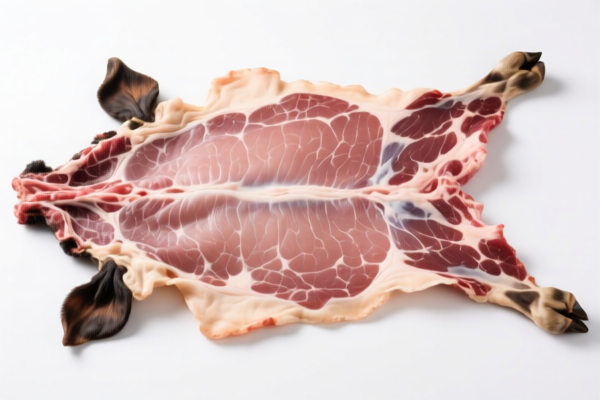
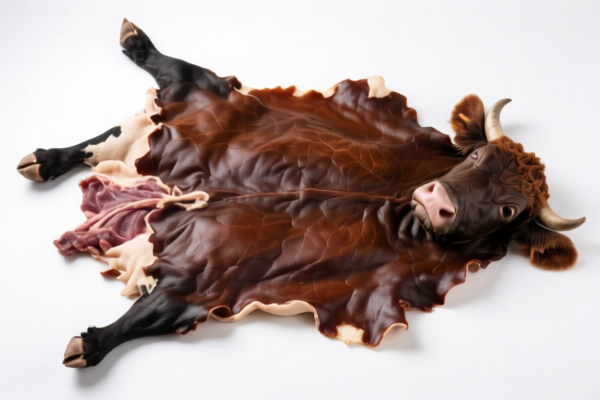
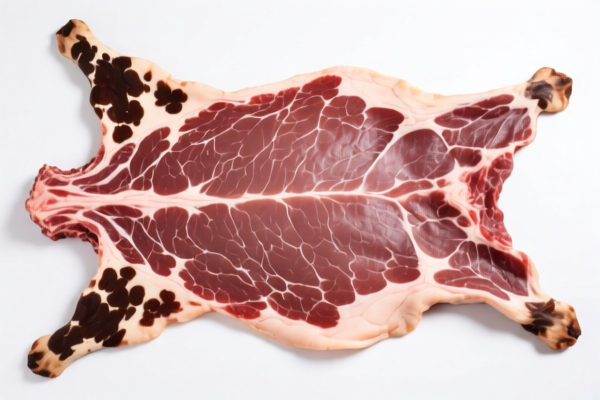
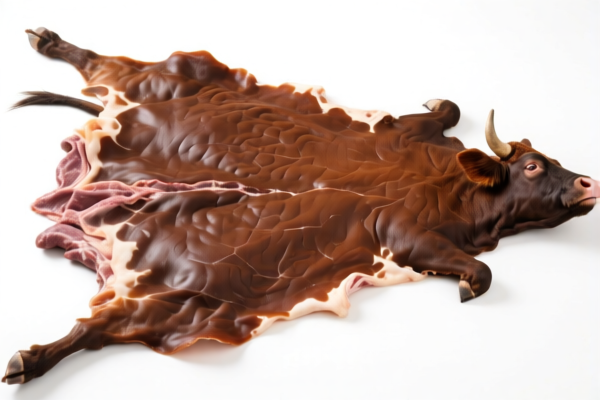
AI Analysis
🐄 Raw Cowhide Belly Skin (Untanned)
🌐 HS Code Reference & Customs Clearance Guide | 2026 Latest Tariff Analysis | Professional Entry Strategy
📌 I. Product Definition & Classification: Do You Really Understand "Raw Cowhide Belly Skin"?
Raw cowhide belly skin (untanned) is a primary leather raw material derived from cattle. In international trade, it is classified under Chapter 41 (Leather, furskin and articles thereof). The classification hinges on three key factors: 1. Material: Cattle hide (Cowhide). 2. State: Untanned (Unprocessed). 3. Part: Belly skin (Abdominal section).
⚠️ Key Distinction:
- If the skin is fresh or wet-salted, it falls under specific subheadings for preservation state.
- If the skin is dried, it may fall under different subheadings depending on the precise weight/thickness criteria, but generally, "dried raw cowhide" is distinct from "wet-salted."
- Crucial Note: The provided data specifies "Belly Skin" (Abdominal part). This is critical because hides are often graded by section (side, belly, neck, etc.), and belly skin has different characteristics and tariff treatments than full sides.
📦 II. HS Code Classification Details (2026 Latest Tariff Authority Comparison)
Based on the provided <DATA>, here are the precise HS codes and their descriptions. Note that while multiple codes are listed, they primarily cluster around 4101.90.10.20 and 4101.90.10.10, with 4101.20.10.10 also present for dried skins.
| HS Code | Product Description | State/Form | Key Characteristics |
|---|---|---|---|
4101.90.10.10 |
Raw Cowhide Belly Skin (Untanned) | Untanned | Specifically identified as Belly Skin. Matches definition of raw, untanned cattle hide abdominal section. |
4101.90.10.20 |
Raw Cowhide Belly Skin (Untanned) | Wet-Salted/Fresh | Fresh or Wet-Salted state. Material: Cowhide. Part: Belly. Most common for this specific description. |
4101.90.10.20 |
Raw Cowhide Belly Skin (Untanned) | Dried | Dried state. Material: Cowhide. Part: Belly. Fits classification for dried raw cattle hide. |
4101.20.10.10 |
Raw Cowhide (Untanned) | Dried | General Dried Raw Cowhide. Belongs to the category of un-tanned raw hides. Broader than "belly" but includes dried cowhide. |
4101.90.10.20 |
Raw Cowhide Belly Skin (Untanned) | Dried | Dried Raw Cowhide Belly. Explicitly matches "Dried," "Untanned," and "Belly" criteria. |
🔍 Important Reminder:
- State Matters: The same physical product (cowhide belly) may be classified under4101.90.10.10or4101.90.10.20depending on whether it is explicitly declared as fresh/wet-salted or dried.
- Part Matters: "Belly Skin" is a specific part. Do not misdeclare as "Full Side" unless it is actually a full side.
- Data Consistency: All listed codes share the same total tax rate (17.5%) and same tax structure in the provided data.
💰 III. 2026 Latest Tariff Rate Breakdown (Including Surtaxes, Policy Surcharges)
✅ Applicable Country: United States (US)
✅ Origin: China (CN)
✅ Effective Time: 2025-11-10 onwards (including subsequent imports)
🎯 1. All Listed HS Codes (4101.90.10.10, 4101.90.10.20, 4101.20.10.10)
| Item | Detail |
|---|---|
| Base Tariff | 0.0% (ad valorem) |
| Section 301 Surtax | +7.5% (Additional Tariff) |
| Section 122 Surtax | +10% (Specific to certain Chinese leather/raw materials under 122 clause) |
| Total Tariff Rate | 17.5% |
| Tax Calculation | CIF Value × 17.5% |
| De Minimis Exemption | ❌ Not Applicable (Deny de minimis for goods subject to Section 301/122) |
| Legal Basis Path | Section 301: 7.5% + Section 122: 10% = 17.5% |
📌 Explanation:
- "Base Tariff 0%": Raw leather hides generally have a low or zero base duty under HTSUS.
- "Section 301 Surtax 7.5%": This is the standard additional tariff for many Chinese-origin goods under the Trump/Biden-era trade measures.
- "Section 122 Surtax 10%": This is a critical and specific surcharge for certain raw materials, including raw hides/skins, under Section 122 of the Trade Expansion Act of 1962. Do not ignore this!
- Total 17.5%: This is a moderate-to-high effective rate for raw materials. It must be factored into landed cost calculations.
🛠️ IV. Customs Clearance Practical Advice (Real-World Pitfall Avoidance)
✅ 1. Documentation Checklist (Absolutely Required)
| Document | Mandatory? | Explanation |
|---|---|---|
| ✅ Commercial Invoice | ✔️ | Must clearly state: "Raw Cowhide Belly Skin, Untanned," specify state (Dried/Wet-Salted), and country of origin (China). |
| ✅ Packing List | ✔️ | Detail weight, quantity, and packaging type. Raw hides are often packed in salt or dried. |
| ✅ Bill of Lading/Air Waybill | ✔️ | Standard shipping document. |
| ✅ Certificate of Origin | ✔️ | Essential for confirming Chinese origin to apply the correct 17.5% rate. |
| ✅ Product Description/Spec Sheet | ✔️ | Specify: "Belly Skin" vs. "Side," and "Untanned." |
| ✅ Wet-Salt/Dry Status Proof | ✔️ | If wet-salted, ensure no prohibited preservatives are used. If dried, confirm moisture content. |
✅ 2. Declaration Tips (Key Mantra)
🔥 "State Clear, Part Specific, Origin Accurate, 17.5% No Surprise!"
| Situation | Correct Declaration | Incorrect Practice |
|---|---|---|
| Wet-Salted Belly Skin | 4101.90.10.20 (Raw Cowhide Belly Skin, Wet-Salted) |
Declare as "Dried" → Classification Error, Penalty |
| Dried Belly Skin | 4101.90.10.20 or 4101.20.10.10 (Raw Cowhide, Dried) |
Declare as "Tanned" → Major Misclassification, Heavy Penalty |
| Mixed States | Split declaration for Dried vs. Wet-Salted | Mixed declaration → Customs Hold, Inspection |
| Non-Chinese Origin | Declare correct origin (e.g., Brazil, Argentina) | Declare China → 17.5% Unjustified Overpayment (if origin is actually preferential/zero) |
✅ 3. Special Circumstances Handling
| Situation | Handling Advice |
|---|---|
| OEM Raw Materials for Leather Goods | Provide end-use information if applicable, but raw hides are typically classified by physical state. |
| Import for Tanning | Ensure the buyer is a registered tannery if any local incentives apply. |
| Pest Control Certification | Raw hides may require ISPM 15 compliance or veterinary health certificates to prevent disease spread. Check USDA-APHIS requirements. |
| Section 122 Specificity | Verify if your specific transaction qualifies for the 122 surcharge. Some raw materials may have exemptions, but belly skin is generally included. |
🌍 V. Global Main Market Clearance Comparison (2026 Latest)
| Country/Region | Recommended HS Code | Tariff (China Origin) | Certification Requirements | Notes |
|---|---|---|---|---|
| 🇺🇸 United States | 4101.90.10.20 / 4101.90.10.10 |
17.5% (0% Base + 7.5% S301 + 10% S122) | USDA-APHIS, FDA (if for human consumption-related, though rare for hides) | High Tariff Due to S122 & S301 |
| 🇨🇳 China | 4101.90.10.20 |
0% | N/A | Major importer of raw hides |
| 🇪🇺 European Union | 4101.90.10.20 |
0% (Most FTA partners) / 1.5% (MFN) | REACH, Ecolabel (if applicable) | No Section 301/122 |
| 🇬🇧 United Kingdom | 4101.90.10.20 |
0% (Post-Brexit FTA with China is limited, check UK-GC) | UKCA | |
| 🇦🇺 Australia | 4101.90.10.20 |
0% (ChAFTA) | Biosecurity Permit (DAFF) | Free Trade Agreement Applies |
📌 Conclusion:
- The US is the only major market in this list applying the 17.5% surcharge due to Section 301 and Section 122.
- If you are exporting to the US, budget for 17.5% duty.
- If you are exporting to Australia or other FTA partners, you may pay 0% duty. Consider supply chain optimization.
📌 VI. Common Mistakes & Pitfall Guide (Lessons Learned)
❌ Mistake 1: Declaring "Raw Hides" as "Tanned Leather"
👉 Consequence: Misclassification. Tanned leather has different duties and regulations (e.g., TSCA, REACH). Raw hides are subject to biosecurity checks. Penalties + Delay.
❌ Mistake 2: Ignoring Section 122 Surcharge
👉 Consequence: Underpayment. You might calculate only 7.5% (Section 301) and pay 7.5%. Customs will assess the additional 10% (Section 122) upon audit, plus interest. Total Underpayment Risk.
❌ Mistake 3: Failing to Specify "Belly" vs. "Side"
👉 Consequence: Customs Scrutiny. Belly skin is often lower quality/thinner. If declared as "Side" (higher value), it may trigger a valuation audit. If declared as "Side" but customs finds "Belly," it may be reclassified, though tariff might be similar, the record inconsistency is risky.
❌ Mistake 4: Not Providing Biosecurity Documentation
👉 Consequence: Import Ban/Return. Raw hides can carry pathogens. USDA-APHIS may require a Veterinary Health Certificate or proof of treatment. Without it, cargo is held or destroyed.
✅ Correct Practice:
"Raw Cowhide Belly Skin, Untanned, Dried/Wet-Salted, Origin: China, HS Code: 4101.90.10.20, Subject to 17.5% Total Duty (7.5% S301 + 10% S122)"
🎯 VII. Conclusion: Professional Declaration, Save Time, Reduce Cost!
🎯 Remember the Mantra:
🔹 "Raw Belly Skin, 17.5% is Real."
🔹 "S122 + S301 = 17.5%, Don't Forget the 10%."
🔹 "Biosecurity Docs are Key, Or You'll Get Blocked at the Port."
📌 Pro Tip:
If your raw cowhide belly skin is originating from Brazil, Argentina, or other countries with FTAs with the US, you can claim preferential tariff rates (0%) under those agreements. Ensure your Certificate of Origin is accurate and recognized by US Customs.
📣 Immediate Action:
📞 Contact a Professional Customs Broker + Provide Product Photos + Apply for ISPM 15/Veterinary Certification
🚀 Let your raw cowhide belly skin Clear Customs Smoothly, Avoid Penalties, and Maximize Profit!
✨ Professional Clearance Starts with Accurate Classification!
💼 Every Dollar of Duty is Worth Precise Calculation!
Customer Reviews
About HS Code Classification
The Harmonized System (HS) is an internationally standardized nomenclature developed by the World Customs Organization (WCO) to classify traded products. Over 200 countries use the HS system as the basis for customs tariffs, trade statistics, and import/export regulations.
Each HS code follows a hierarchical structure:
- Chapter (2 digits) — Broad category of goods (e.g., Chapter 84: Machinery and Mechanical Appliances)
- Heading (4 digits) — More specific grouping within the chapter
- Subheading (6 digits) — Internationally standardized breakdown, used by all WCO member countries
- National subdivisions (8-10 digits) — Country-specific extensions for further classification, such as US HTSUS 10-digit codes
Correct HS code classification is essential for smooth customs clearance, accurate duty payment, and compliance with trade regulations. Misclassification can lead to customs delays, overpayment of duties, or penalties.
When importing from CN to US, the applicable tariff rates may include:
- Most-Favored-Nation (MFN) rate — The standard duty rate applied to WTO members
- General rate — Applied to countries without trade agreements
- Trade remedy duties — Additional tariffs such as Section 301 (anti-dumping), Section 232 (national security), or countervailing duties
The information provided on this page is for reference purposes only. For official classification, please consult with your local customs authority or a licensed customs broker.