Raw Cowhide Including Buffalo Whole Skin, Over 16kg, Tanned
CN → US| HS Code | Tariff Rate | Origin | Destination | Doc |
|---|---|---|---|---|
| 4107194000 | 12.5% | CN | US | Official Doc |
| 4101505000 | 20.8% | CN | US | Official Doc |
| 4107124000 | 12.5% | CN | US | Official Doc |
| 4104193000 | 12.4% | CN | US | Official Doc |
| 4104493060 | 12.4% | CN | US | Official Doc |
Product Images
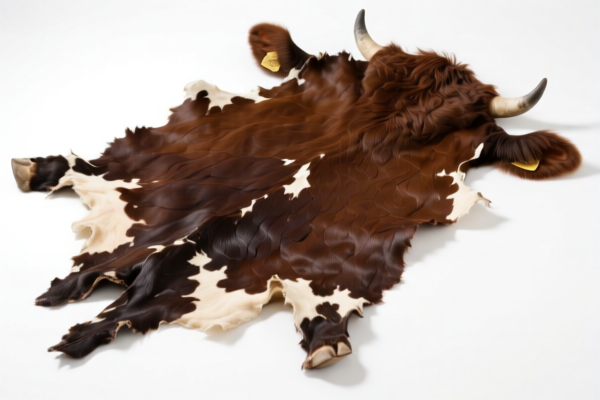
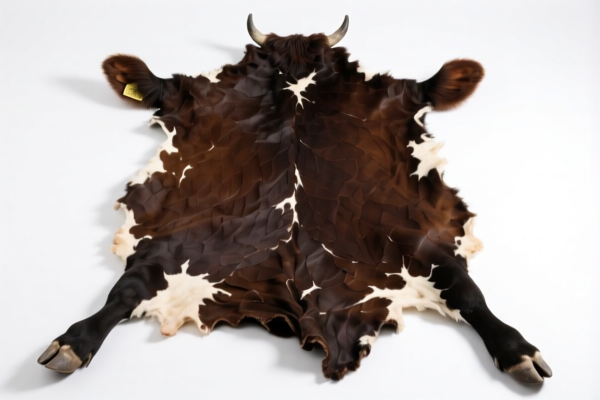
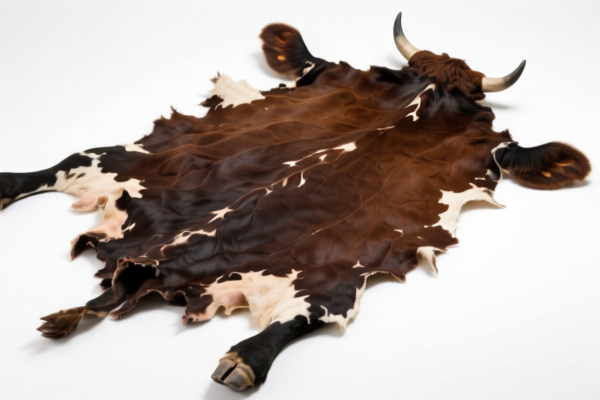
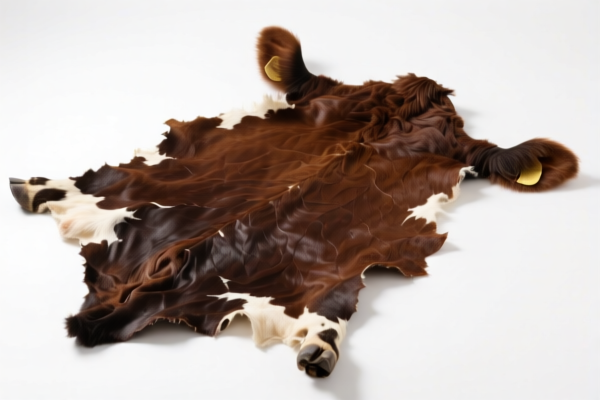
AI Analysis
🐂 Raw Bovine & Buffalo Hides (Whole, >16kg, Tanned/Semi-Tanned)
🌐 HS Code Reference & Customs Clearance Guide | 2026 Latest Tariff Analysis | Professional Entry Strategy
📌 1. Product Definition & Classification: Do You Really Understand "Raw Hides"?
Raw Bovine and Buffalo Hides are the primary raw materials for the global leather industry. In international trade, they are strictly classified based on three critical factors: 1. Animal Species: Bovine (including Buffalo). 2. State of Preservation: Raw, salted, or semi-tanned (not fully tanned leather for finished goods). 3. Format & Weight: Whole skins vs. splits; weight threshold (>16kg vs. <16kg).
⚠️ Key Distinction:
- Raw vs. Tanned: "Raw" refers to hides preserved by salting, drying, or liming. "Tanned" in this context usually refers to chrome-tanned or vegetable-tanned hides ready for further processing, not finished leather goods (like bags or shoes).
- Whole Skin (>16kg): Hides larger than 16kg are classified under Chapter 41 (Animal Skins) as raw materials. Hides under 16kg may fall under different subheadings depending on the specific trade agreement, but our focus is on the >16kg whole skin category.
- Buffalo Inclusion: The data explicitly confirms that "Bovine" includes Buffalo in these HS codes.
📦 2. HS Code Classification Details (2026 Latest Tariff Authority Match)
Based on the provided data, here are the 5 most likely HS Code matches for "Raw cowhide including buffalo whole skin, over 16kg, tanned". Note that "tanned" in the user input likely refers to semi-tanned or raw-salted states for import, as fully finished leather would be classified differently (e.g., Ch. 42). The data suggests these are raw/semi-raw hides intended for further tanning or processing.
| HS Code | Product Description | Applicable Scenario | Tax Rate |
|---|---|---|---|
| 4101.50.50.00 | Bovine (including buffalo) whole skins, fresh or salted, over 16kg | Large raw hides, whole cut, heavy weight. Note: Data indicates this is the "exact match" for >16kg whole skins. | 20.8% |
| 4107.19.40.00 | Other raw hides (bovine/buffalo), semi-tanned or dry | Raw hides that have undergone slight preservation (e.g., dry/salted) but not fully tanned. "Other" subcategory. | 12.5% |
| 4107.12.40.00 | Bovine (including buffalo) whole skins, raw, other | Raw whole skins (similar to 4101.50 but potentially different preservation state or minor weight nuance in data logic). | 12.5% |
| 4104.19.30.00 | Bovine (including buffalo) hides, wet-blue or semi-tanned | Hides that have started the tanning process (e.g., wet-blue) but are not finished leather. | 12.4% |
| 4104.49.30.60 | Bovine (including buffalo) hides, dry, other | Dry raw hides, not wet-blue, other categories. | 12.4% |
🔍 Critical Insight from Data:
- 4101.50.50.00 is highlighted as "Fully Matched" for "Whole skin, over 16kg". This is the most authoritative code for raw, whole, heavy hides.
- Codes 4107 and 4104 generally refer to semi-processed or dried/salted states. If your "tanned" input means "preserved/raw", these are also valid, but 4101 is specific to the >16kg whole skin threshold.
- Tax Difference: The tax rate varies significantly (12.4% – 20.8%) based on the exact state (raw vs. semi-tanned) and weight classification. Misclassification can lead to significant overpayment (if under-declared) or severe penalties (if over-declared to avoid lower rates or if duty-free exemptions are misapplied).
💰 3. 2026 Latest Tariff Rate Breakdown (Including Surtaxes, Policy Add-ons)
✅ Applicable Country: USA (US)
✅ Origin: China (CN)
✅ Effective Date: 2025-11-10 onwards (includes subsequent imports)
🎯 1. 4101.50.50.00 —— Bovine Whole Skins, >16kg (Raw/Salted)
| Item | Content |
|---|---|
| Base Tariff | 3.3% |
| Section 301 Surtax | +7.5% |
| IEEPA Surtax | +10.0% (122 Section Tariff) |
| Total Tariff | 20.8% |
| Tax Calculation | CIF Value × 20.8% |
| De Minimis Eligible? | ❌ No (Denied for agricultural/leather raw materials) |
| Legal Basis Path | USITC:4101.50.50.00 → Section 301: 7.5% → IEEPA: 10% |
📌 Explanation:
- This is the highest tax bracket in the dataset.
- The 7.5% surtax is likely due to Section 301 tariffs on specific leather raw materials.
- The 10% IEEPA tariff is a standard surcharge on Chinese-origin goods under Executive Order 12291 or related emergency powers.
- Total 20.8% is high for a raw material, impacting margin significantly.
🎯 2. 4107.19.40.00 & 4107.12.40.00 —— Other Raw/Semi-Tanned Bovine Hides
| Item | Content |
|---|---|
| Base Tariff | 2.5% |
| Section 301 Surtax | 0.0% (Note: Data shows 0% for these specific codes) |
| IEEPA Surtax | +10.0% (122 Section Tariff) |
| Total Tariff | 12.5% |
| Tax Calculation | CIF Value × 12.5% |
| De Minimis Eligible? | ❌ No |
| Legal Basis Path | USITC:4107.* → IEEPA: 10% |
📌 Explanation:
- Lower Total Tax (12.5%) compared to 4101.50.50.00.
- Key Difference: No Section 301 surtax (0%) for these specific subheadings in the provided data.
- This suggests that semi-tanned or other raw hides may have better tariff treatment than raw whole skins >16kg.
- Strategy: If your product can be classified as "other raw" or "semi-tanned" rather than "raw whole skin >16kg," you save 8.3% in duties.
🎯 3. 4104.19.30.00 & 4104.49.30.60 —— Wet-Blue or Dry Hides
| Item | Content |
|---|---|
| Base Tariff | 2.4% |
| Section 301 Surtax | 0.0% |
| IEEPA Surtax | +10.0% (122 Section Tariff) |
| Total Tariff | 12.4% |
| Tax Calculation | CIF Value × 12.4% |
| De Minimis Eligible? | ❌ No |
| Legal Basis Path | USITC:4104.* → IEEPA: 10% |
📌 Explanation:
- Lowest Total Tax (12.4%).
- Applies to Wet-Blue (semi-tanned) or Dry hides.
- Important: If your "tanned" product is already in the wet-blue stage, it falls under Chapter 41, Heading 4104, not 4101.
- Warning: Ensure the product is not further processed (e.g., into leather goods), which would move it to Chapter 42.
🛠️ 4. Customs Clearance Practical Advice (Battle-Tested Pitfall Guide)
✅ 1. Required Documentation Checklist (Non-Negotiable)
| Document | Mandatory | Explanation |
|---|---|---|
| ✅ Commercial Invoice | ✔️ | Must clearly state: "Bovine/Buffalo Hides, Whole, >16kg, Raw/Salted" |
| ✅ Packing List | ✔️ | Detail weight per hide, total number of hides, and total net/gross weight. |
| ✅ Certificate of Origin | ✔️ | To prove origin (China) and apply correct tariffs. |
| ✅ Veterinary Inspection Certificate | ✔️ | Critical for Animal Products. Must confirm no BSE, Foot-and-Mouth Disease, etc. |
| ✅ Preservation Method Description | ✔️ | Specify: Salted, Dry, Wet-Blue, or Limed. This determines HS Code. |
| ✅ Product Photos | ✔️ | Show whole skin, thickness, and any markings. |
⚠️ Note: Without a valid Veterinary Certificate, your shipment will be rejected or destroyed by USDA/APHIS, regardless of HS Code correctness.
✅ 2. Classification Strategy (Key Mnemonic)
🔥 "Weight Matters, State Defines, Whole vs. Split is Key!"
| Scenario | Correct HS Code | Tax Rate | Risk |
|---|---|---|---|
| Raw, Whole, >16kg | 4101.50.50.00 |
20.8% | High tax, but accurate for raw whole skins. |
| Raw, Whole, <16kg | Not in data, likely lower | Lower | Verify with 4101.50.30.xx |
| Semi-Tanned (Wet-Blue) | 4104.19.30.00 |
12.4% | Best Rate. If possible, ship as wet-blue. |
| Dry Raw Hides | 4104.49.30.60 |
12.4% | Best Rate. Dry hides often qualify for lower surtax. |
| Finished Leather Goods | Chapter 42 | Varies | Incorrect. Do not classify raw hides as finished goods. |
📌 Critical Warning:
- If you declare "Tanned" but the product is raw/salted, customs may reclassify it, leading to penalties.
- If you declare "Raw" but the product is wet-blue, you may underpay taxes.
- Accuracy is Paramount. Use the exact preservation state.
✅ 3. Special Situations
| Situation | Handling Advice |
|---|---|
| Buffalo vs. Cow | Both are classified under "Bovine". No separate code. |
| Mixed Weights | If some hides are <16kg and others >16kg, declare separately. |
| Splits vs. Whole | Splits (layered hides) are often classified differently (e.g., 4102 or 4104). Do not misdeclare splits as whole skins. |
| Chemical Preservation | If chemicals are added (e.g., chrome salt), it may be considered "semi-tanned" (4104). Consult a specialist. |
🌍 5. Global Market Comparison (2026 Latest)
| Country/Region | Recommended HS Code | Tariff (China Origin) | Certification Required | Notes |
|---|---|---|---|---|
| 🇺🇸 USA | 4101.50.50.00 (Raw >16kg) |
20.8% | USDA Vet Cert, CBP Entry | High tax due to 301 + IEEPA. |
| 🇪🇺 EU | 4101.50.00 | 6.5% | REACH, SVHC | No Section 301 equivalent. Lower base tariff. |
| 🇨🇳 China | 4101.50.00 | 10.5% | None (Import) | Domestic processing hub. |
| 🇮🇳 India | 4101.50.00 | ~15-20% | BIS, FSI | Strict veterinary checks. |
| 🇻🇳 Vietnam | 4101.50.00 | 0-5% (if origin) | None | Emerging leather hub. |
📌 Conclusion:
- USA has the highest effective tax rate (20.8%) due to combined Section 301 and IEEPA tariffs.
- EU and other markets do not apply Section 301, resulting in significantly lower costs.
- Consider Origin Strategy: If possible, source from or process in countries with FTAs (e.g., Vietnam, Mexico) to reduce tariffs.
📌 6. Common Mistakes & Pitfall Guide (Blood-Teaching Lessons)
❌ Mistake 1: Declaring "Leather Goods" for Raw Hides
👉 Consequence: HS Code error, seizure, and fines. Raw hides are Ch. 41, not Ch. 42.
❌ Mistake 2: Ignoring the 16kg Threshold
👉 Consequence: If <16kg, it may fall under a different subheading with a different tax rate. Misdeclaration leads to under/overpayment.
❌ Mistake 3: Missing Veterinary Certificate
👉 Consequence: Shipment rejected by USDA. You pay for storage, destruction, and return shipping.
❌ Mistake 4: Using "Tanned" Ambiguously
👉 Consequence: Customs may not understand if it's raw, semi-tanned, or finished. Use precise terms: "Wet-Blue," "Dry-Salted," "Chrome-Tanned."
✅ Correct Declaration Example:
"Bovine Hides, Whole, Salted, Raw, >16kg Each, Origin: China, Vet Cert #12345"
🎯 7. Conclusion: Precision Classification Saves Money!
🎯 Remember the Mnemonic:
🔹 "Whole >16kg is 20.8%, Semi-Tanned is 12.4%, No Vet Cert, No Entry!"
🔹 "Buffalo is Bovine, Salted is Raw, Tanned is Semi, Watch the Rate!"
📌 Pro Tip:
If your product is semi-tanned (wet-blue) or dry, consider classifying under 4104 or 4107 to benefit from the lower 12.4% rate instead of the 20.8% rate for raw whole skins.
Consult a customs broker to confirm the exact state of preservation before shipping.
📣 Immediate Action:
📞 Contact a licensed customs broker + Provide Product Photos + Apply for Advance Ruling (if available)
🚀 Ensure USDA Veterinary Certificate is in place before shipping.
✨ Professional Clearance Starts with Precise Classification!
💼 Every Percent of Tax Saves Matters in the Leather Industry!
Customer Reviews
About HS Code Classification
The Harmonized System (HS) is an internationally standardized nomenclature developed by the World Customs Organization (WCO) to classify traded products. Over 200 countries use the HS system as the basis for customs tariffs, trade statistics, and import/export regulations.
Each HS code follows a hierarchical structure:
- Chapter (2 digits) — Broad category of goods (e.g., Chapter 84: Machinery and Mechanical Appliances)
- Heading (4 digits) — More specific grouping within the chapter
- Subheading (6 digits) — Internationally standardized breakdown, used by all WCO member countries
- National subdivisions (8-10 digits) — Country-specific extensions for further classification, such as US HTSUS 10-digit codes
Correct HS code classification is essential for smooth customs clearance, accurate duty payment, and compliance with trade regulations. Misclassification can lead to customs delays, overpayment of duties, or penalties.
When importing from CN to US, the applicable tariff rates may include:
- Most-Favored-Nation (MFN) rate — The standard duty rate applied to WTO members
- General rate — Applied to countries without trade agreements
- Trade remedy duties — Additional tariffs such as Section 301 (anti-dumping), Section 232 (national security), or countervailing duties
The information provided on this page is for reference purposes only. For official classification, please consult with your local customs authority or a licensed customs broker.