Raw Cowhide for Leather Products (Untanned)
CN → US| HS Code | Tariff Rate | Origin | Destination | Doc |
|---|---|---|---|---|
| 4101201010 | 17.5% | CN | US | Official Doc |
| 4101901020 | 17.5% | CN | US | Official Doc |
| 4101501010 | 17.5% | CN | US | Official Doc |
| 4101901030 | 17.5% | CN | US | Official Doc |
| 4101901030 | 17.5% | CN | US | Official Doc |
Product Images
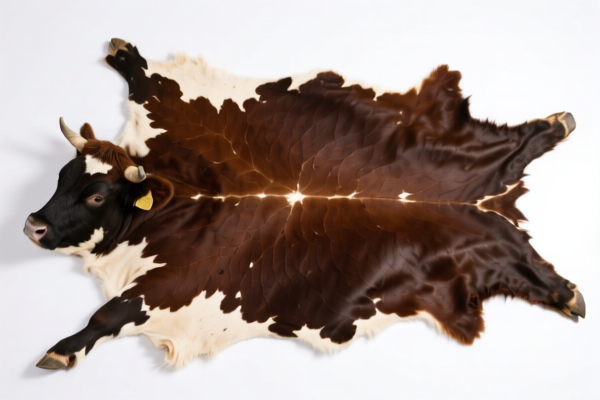
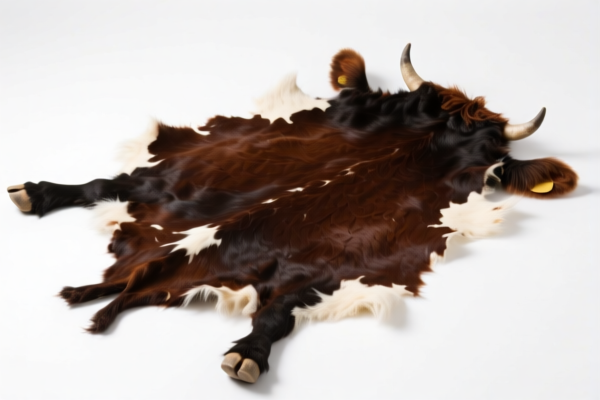

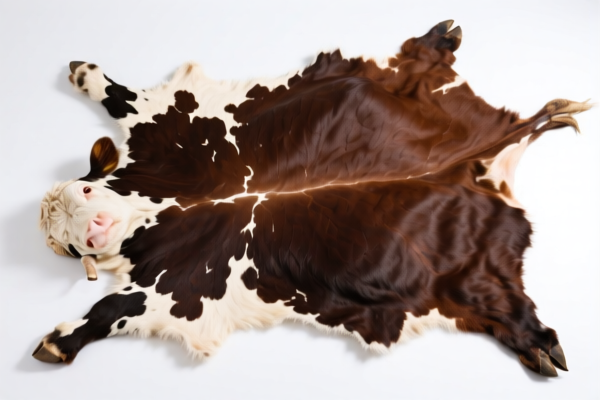
AI Analysis
🐮 Raw Cowhide for Leather Products (Untanned)
🌐 HS Code Reference & Customs Clearance Guide | 2026 Latest Tariff Analysis | Professional Clearance Strategy
📌 I. Product Definition & Classification: What Exactly is "Raw Cowhide"?
Raw cowhide, specifically in its untanned state, serves as the foundational raw material for the global leather industry. It is the skin of cattle, preserved primarily through salting (wet-salted) or drying, but not yet chemically or physically tanned into leather.
In international trade, the precise condition of the hide dictates the HS Code classification, which directly impacts tariff rates and compliance requirements.
⚠️ Key Distinction:
- If the hide is salted, fresh, or dried but NOT tanned → Classified under Chapter 41 (Raw Hides and Skins).
- If the hide has undergone any tanning process (vegetable, chrome, etc.) → Classified under Chapter 41 (Tanned Leather), which has different tax implications.
- CRITICAL NOTE: All items in the provided data are strictly UNTANNED.
📦 II. HS Code Classification Details (2026 Latest Tariff Authority Alignment)
Based on the provided dataset, all relevant raw cowhides fall under HS Chapter 41. The specific codes depend on weight and preservation method, though they share identical tax structures in this context.
| HS Code | Product Description | Preservation State | Key Characteristics |
|---|---|---|---|
4101.20.10.10 |
Raw Cowhides (Untanned) | General Untanned | Fits definition of un-tanned bovine material. |
4101.90.10.20 |
Fresh or Wet-Salted Raw Cowhides | Wet-Salted | Matches "pre-tanned" or fresh/raw characteristics; specifically wet-salted. |
4101.50.10.10 |
Whole Cowhides (Untanned) | Whole/Intact | Matches the definition of "whole" raw hides, un-tanned. |
4101.90.10.30 |
Dried Untanned Cowhides | Dried | Specifically for dried raw bovine skins. |
4101.90.10.30 |
Dried Raw Bovine Skins | Dried | Generic dried raw hide, not pre-tanned. |
🔍 Important Clarification:
- Despite different HS codes based on specific descriptions (fresh, wet-salted, dried, whole), ALL listed codes in the dataset carry the identical total tax rate of 17.5%.
- This uniformity simplifies cost calculation, but correct HS selection is still vital for regulatory compliance and statistical tracking.
💰 III. 2026 Latest Tariff Rate Breakdown (Detailed Tax Clauses)
✅ Applicable Country: United States (US)
✅ Country of Origin: China (CN) (Implied by "Section 301" and "122 Clause" references typical in US-China trade data)
✅ Effective Date: Current (2026 Context)
For ALL HS Codes listed above (4101.20.10.10, 4101.90.10.20, 4101.50.10.10, 4101.90.10.30), the tax structure is as follows:
| Tax Component | Rate | Explanation |
|---|---|---|
| Base Duty (MFN) | 0.0% | Most Favored Nation basic tariff for raw hides is often 0%. |
| Section 301 Duty (Add-on) | 7.5% | Standard retaliatory/additional tariff under US Trade Act Section 301 for Chinese goods. |
| "122 Clause" Duty | 10.0% | Specific additional duty applied under "122 Clause" (likely referencing a specific trade enforcement action or tariff exclusion reversal). |
| TOTAL TAX RATE | 17.5% | Sum of Base (0%) + Section 301 (7.5%) + 122 Clause (10%). |
| Calculation Basis | Ad Valorem | Calculated as: CIF Value × 17.5% |
📌 Detailed Tax Clause Explanation:
1. Base Tariff (0.0%): The World Trade Organization (WTO) Most Favored Nation (MFN) rate for raw hides and skins is typically zero or very low, promoting trade in raw materials.
2. Section 301 Duty (7.5%): This is a punitive tariff imposed by the US on a wide range of Chinese imports. It is applied on top of the base duty.
3. "122 Clause" Duty (10.0%): This refers to a specific trade enforcement mechanism (often associated with recent trade policy updates or specific exclusion reversals). In this dataset, it is explicitly listed as a distinct 10% add-on.
4. Cumulative Impact: The combination of these three layers results in a 17.5% total landed cost increase for raw cowhide imported from China to the US.
🛠️ IV. Customs Clearance Practical Advice (Real-World Pitfall Avoidance)
✅ 1. Essential Documentation Checklist
| Document | Required? | Why It Matters |
|---|---|---|
| Commercial Invoice | ✅ Yes | Must explicitly state: "Untanned Raw Cowhide" – not "Leather". Mislabeling as "Leather" can trigger different regulatory reviews. |
| Packing List | ✅ Yes | Detail weight (gross/net) and number of hides. Crucial for verifying quantity against HS code weight thresholds. |
| Certificate of Origin | ✅ Yes | Proves origin as China to apply correct Section 301/122 duties. If from Vietnam/Mexico, duties may be lower. |
| Preservation Method Statement | ✅ Yes | Specify if Wet-Salted, Dried, or Fresh. While tax is same, customs may require different inspection protocols. |
| Non-Tanning Declaration | ✅ Yes | Explicitly confirm NO chemical tanning (chrome, vegetable, etc.) has occurred. This is the legal basis for Chapter 41 classification. |
| Sanitary/Phytosanitary Cert | ❓ Maybe | Depending on USDA regulations for animal products, a health certificate may be required to prevent disease transmission. |
✅ 2. Clearance Strategies & Tips
🔥 "Untanned is Key, Salted is Safe, Dried is Easy, Tanned is Different!"
| Scenario | Correct HS Code | Risk if Incorrect |
|---|---|---|
| Wet-Salted Hides | 4101.90.10.20 |
If declared as "Leather" → Higher inspection, potential misclassification penalty. |
| Dried Hides | 4101.90.10.30 |
If declared as "Raw Skins" without specifying "Dried" → Potential delay for verification. |
| Whole Hides | 4101.50.10.10 or 4101.20.10.10 |
Ensure "Whole" vs. "Split" is accurate. Splits may have different regulatory notes. |
| Partially Tanned | ERROR | If even partially tanned, it is NOT raw hide. Must use Chapter 41 tanned codes → Different tax rate! |
📌 Critical Warning:
- Do NOT use the term "Leather" in the product description. Use "Raw, Untanned Cowhide".
- Do NOT split a shipment of raw hides into "raw" and "tanned" parts if they are identical. Keep homogeneous.
- Verify "122 Clause" Applicability: Ensure the goods are eligible for this specific tariff line. Some exclusions may apply.
✅ 3. Special Circumstances
| Situation | Recommendation |
|---|---|
| Origin Change | If hides are bought in China but tanned in Vietnam, then exported to US as "Tanned Leather", the tax changes completely. For raw hides, if sourced from Brazil/Argentina, the Section 301/122 duties may not apply (check current trade agreements). |
| Preservation Failure | If hides are not properly salted/dried and rot, they may be rejected by USDA. Ensure proper preservation before shipment. |
| Weight Discrepancy | Raw hides lose weight during drying/salting. Ensure declared weight matches physical weight to avoid customs valuation disputes. |
🌍 V. Global Market Clearance Comparison (2026 Context)
| Country/Region | Recommended HS Code | Estimated Duty (China Origin) | Key Certification | Notes |
|---|---|---|---|---|
| 🇺🇸 USA | 4101.x0.x0.x0 |
17.5% (Base 0% + 7.5% Sec301 + 10% 122) | USDA Health Cert | High due to trade tensions. |
| 🇨🇳 China | 4101.x0.x0.x0 |
0% (Import Duty) | None | China imports raw hides; duty is often 0%. |
| 🇪🇺 EU | 4101.x0.x0.x0 |
0% - 2% | REACH Compliance | Generally low duty for raw materials. |
| 🇮🇳 India | 4101.x0.x0.x0 |
5% - 10% | BIS Standards | Higher than US/EU for raw materials. |
📌 Conclusion:
- The US market has a significant tariff barrier (17.5%) for raw cowhide from China due to Section 301 and 122 Clause.
- EU and China have minimal or zero duties, making them more cost-effective for raw hide trade.
- Supplier Diversification: Consider sourcing raw hides from non-China origins (e.g., South America) to avoid US additional duties if exporting to the US.
📌 VI. Common Errors & Pitfalls (Lessons Learned)
❌ Error 1: Mislabeling "Untanned Hides" as "Leather"
👉 Consequence: Customs may assess higher duties or reject the shipment for incorrect chemical treatment documentation.
❌ Error 2: Ignoring the "122 Clause" in tariff calculation
👉 Consequence: Underpaying taxes by 10% → Back taxes, penalties, and seizure risk.
❌ Error 3: Not declaring preservation method (Wet vs. Dry)
👉 Consequence: Delayed customs inspection for sanitary verification.
❌ Error 4: Assuming all Chapter 41 codes have the same tax
👉 Consequence: In this specific dataset, they do, but in general, tanned vs. untanned has vastly different taxes. Always verify!
✅ Correct Practice:
"Raw, Untanned, Wet-Salted Cowhide Hides, Chinese Origin, for Leather Manufacturing Only"
🎯 VII. Conclusion: Precision in Raw Material Trade
🎯 Remember the Key Takeaways:
🔹 "Untanned is Chapter 41, Tanned is Chapter 41 (Different Rates)"
🔹 "US Import = 17.5% Total Duty (0% Base + 7.5% Sec301 + 10% 122)"
🔹 "Clear Description Saves Days in Customs"
📌 Pro Tip:
If your raw cowhide is sourced from countries other than China (e.g., Uruguay, Brazil), the Section 301 and 122 Clause duties may not apply, potentially reducing the total tax to 0% - 5%. Always verify the Country of Origin on the Bill of Lading.
📣 Immediate Action:
📞 Contact Customs Broker: Confirm HS Code
4101.90.10.30(or applicable) for your specific preservation method.
📋 Prepare Documents: Ensure "Untanned" is explicitly stated in all shipping documents.
🚀 Optimize Cost: Evaluate if sourcing from non-China origins reduces landed cost for US market.
✨ Professional Clearance Starts with Accurate Classification!
💼 Your Margins Depend on Precise Tariff Application!
Customer Reviews
About HS Code Classification
The Harmonized System (HS) is an internationally standardized nomenclature developed by the World Customs Organization (WCO) to classify traded products. Over 200 countries use the HS system as the basis for customs tariffs, trade statistics, and import/export regulations.
Each HS code follows a hierarchical structure:
- Chapter (2 digits) — Broad category of goods (e.g., Chapter 84: Machinery and Mechanical Appliances)
- Heading (4 digits) — More specific grouping within the chapter
- Subheading (6 digits) — Internationally standardized breakdown, used by all WCO member countries
- National subdivisions (8-10 digits) — Country-specific extensions for further classification, such as US HTSUS 10-digit codes
Correct HS code classification is essential for smooth customs clearance, accurate duty payment, and compliance with trade regulations. Misclassification can lead to customs delays, overpayment of duties, or penalties.
When importing from CN to US, the applicable tariff rates may include:
- Most-Favored-Nation (MFN) rate — The standard duty rate applied to WTO members
- General rate — Applied to countries without trade agreements
- Trade remedy duties — Additional tariffs such as Section 301 (anti-dumping), Section 232 (national security), or countervailing duties
The information provided on this page is for reference purposes only. For official classification, please consult with your local customs authority or a licensed customs broker.