Raw Cowhide for Scientific Research
CN → US| HS Code | Tariff Rate | Origin | Destination | Doc |
|---|---|---|---|---|
| 4101201010 | 17.5% | CN | US | Official Doc |
| 4101501010 | 17.5% | CN | US | Official Doc |
Product Images
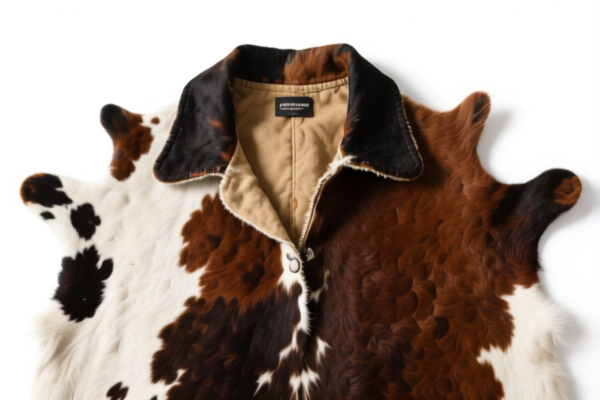
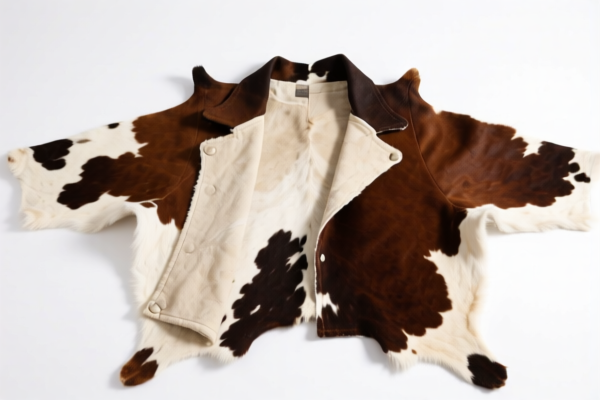
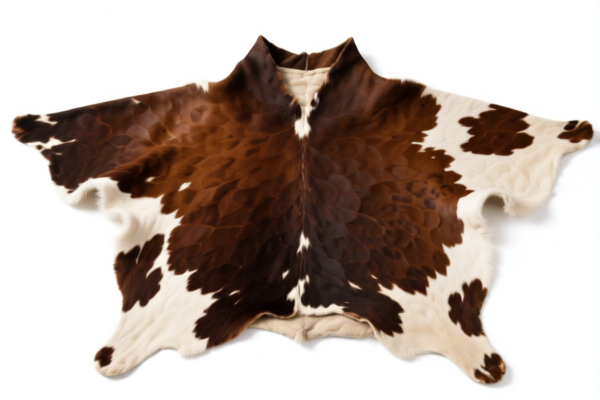
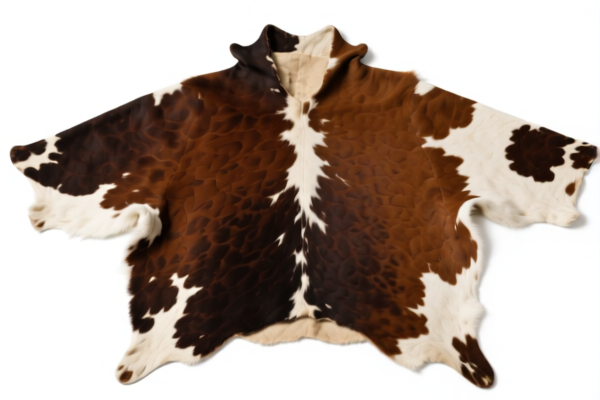
AI Analysis
🐄 Raw Cowhide for Scientific Research
🌐 HS Code Reference & Customs Clearance Guide | 2026 Latest Tariff Analysis | Professional Customs Strategy
📌 I. Product Definition and Classification: Do You Understand "Raw Cowhide" Truly?
Raw cowhide (specifically from bovine animals, including buffalo) is the fundamental raw material for the leather industry. In international trade, unlike processed leather or finished leather goods, raw hides are subject to specific weight and preservation criteria for classification. Even if intended for scientific research, the physical characteristics (weight, preservation method) dictate the HS Code, not the end-use intent.
Based on the provided data, these products fall under Chapter 41: Raw Hides and Skins. They are categorized by weight per skin and preservation status.
⚠️ Critical Distinction:
- Small Skins (≤ 8kg dry, ≤ 10kg dry-salted, ≤ 16kg fresh/wet-salted) → HS 4101.20.10.10
- Large Skins (> 16kg in any preserved state) → HS 4101.50.10.10
- Key Condition: Must be NOT pretanned (if pretanned, it moves to Chapter 41 heading 4102).
📦 II. HS Code Classification Details (Based on Provided Data)
| HS Code | Product Description | Applicable Scenario | Weight/Preservation Condition |
|---|---|---|---|
4101.20.10.10 |
Raw bovine hides, unsplit, Not pretanned | Small-sized raw hides for research samples or small-scale processing | 📉 Not exceeding 8 kg (Simply dried) 📉 Not exceeding 10 kg (Dry-salted) 📉 Not exceeding 16 kg (Fresh, wet-salted, or otherwise preserved) |
4101.50.10.10 |
Raw bovine hides, Not pretanned | Large-sized raw hides for bulk research or industrial sourcing | 📈 Exceeding 16 kg (Any preservation method: fresh, salted, dried, limed, etc.) |
🔍 Key Reminder:
- "Not Pretanned": This is crucial. If the hide has undergone any pretanning process, it is NOT classified here. The data provided explicitly states "Not pretanned." - "Bovine Animals": Includes cattle and buffalo. Equine hides are classified under different subheadings (not in the provided data). - Scientific Research: Using hides for "scientific research" does not automatically grant a different HS Code. The physical attributes (weight/type) still determine the code. However, this may qualify for duty exemptions or simplified clearance in some jurisdictions if proper documentation (research institute proof) is provided, but the HS Code itself remains based on physical specs.
💰 III. 2026 Latest Tariff Rate Breakdown (Detailed Tax Clauses)
✅ Applicable Countries: United States (US)
✅ Origin: China (CN) (Note: Tax rates provided in data are specific to US imports from China based on the 7.5% additional tax context)
✅ Effective Time: 2025-2026 Period
🎯 1. 4101.20.10.10 – Small Raw Bovine Hides (Not Pretanned)
| Item | Detail |
|---|---|
| Basic Duty (MFN) | 0.0% (Ad Valorem) |
| Additional Duty (Section 301/USITC) | +7.5% |
| Total Tax Rate | 7.5% |
| Tax Calculation | CIF Value × 7.5% |
| Legal Basis | Based on provided data: "Basic Tariff: 0.0%, Additional Tariff: 7.5%" |
📌 Explanation:
- The Base Tariff for raw hides of bovine animals under this subheading is 0%.
- However, an Additional Tariff of 7.5% is applied (likely under Section 301 or specific trade measures for certain Chinese-origin raw materials).
- Total Effective Rate: 7.5%.
🎯 2. 4101.50.10.10 – Large Raw Bovine Hides (Not Pretanned)
| Item | Detail |
|---|---|
| Basic Duty (MFN) | 0.0% (Ad Valorem) |
| Additional Duty (Section 301/USITC) | +7.5% |
| Total Tax Rate | 7.5% |
| Tax Calculation | CIF Value × 7.5% |
| Legal Basis | Based on provided data: "Basic Tariff: 0.0%, Additional Tariff: 7.5%" |
📌 Explanation:
- Similar to the small hides, the Base Tariff is 0%.
- The Additional Tariff of 7.5% applies uniformly to this category as well.
- Total Effective Rate: 7.5%.
🛠️ IV. Customs Clearance Practical Advice (Battle-Tested Pitfall Guide)
✅ 1. Required Documentation Checklist (Non-Negotiable)
| Document | Must Provide | Explanation |
|---|---|---|
| ✅ Commercial Invoice | ✔️ | Must clearly state: "Raw Bovine Hides, Not Pretanned, for Scientific Research." Include weight, preservation method (fresh/salted/dried), and country of origin. |
| ✅ Packing List | ✔️ | Detail the number of skins, average weight per skin, and total weight. Crucial for determining if it falls under ≤16kg or >16kg. |
| ✅ Product Description | ✔️ | Specify: "Untanned, Unsplit, Bovine Hide." Do not use vague terms like "Leather" or "Finished Skin." |
| ✅ Preservation Certificate | ✔️ | Confirm method: Fresh, Wet-Salted, Dry-Salted, or Dried. This affects weight limits. |
| ✅ Research Institute Proof | ✔️ | Letter from the recipient institution confirming the use for scientific research. May help with duty exemption applications (if eligible in destination country) or expedited clearance. |
| ✅ Veterinary Health Certificate | ✔️ | Many countries (including US, EU, China) require veterinary certification to ensure hides are free from diseases (e.g., Anthrax, Foot-and-Mouth). |
✅ 2. Declaration Tips (Key Mantras)
🔥 "Weight Determines Code, Preservation Matters, Research Justifies Purpose, But Code Is Physical!"
| Situation | Correct Declaration | Wrong Practice |
|---|---|---|
| Hides weighing 5 kg (dry) | 4101.20.10.10 |
Declaring as 4101.50.10.10 → Risk of penalty for misclassification |
| Hides weighing 20 kg (wet-salted) | 4101.50.10.10 |
Declaring as 4101.20.10.10 → Risk of penalty for misclassification |
| Pretanned hides | Not 4101.xx (Likely 4102.xx) | Declaring as Raw Hide → Severe Penalty |
| "Leather Samples" for fashion design | Not 4101.xx (Likely 4102.xx) | Declaring as Raw Hide → Severe Penalty |
✅ 3. Special Cases Handling
| Situation | Handling Advice |
|---|---|
| Mix of Sizes | If a shipment contains both small (<16kg) and large (>16kg) hides, separate them in documentation. Do not mix codes in one line item unless the customs authority allows aggregated declaration (rare for high-value differences). |
| Scientific Research Exemption | Some countries offer duty exemptions for goods imported by accredited research institutions. Check local laws! Even if exempt, the HS Code remains the same. Submit the exemption application alongside customs declaration. |
| Salting Method Matters | "Wet-salted" hides are heavier due to moisture. Ensure the weight declared is the actual weight at import. If a hide is 15 kg when fresh but weighs 10 kg after drying, it might shift from 4101.20.10.10 to 4101.50.10.10 if misdeclared. |
| Equine Hides | If the hide is from a horse/donkey, it is NOT covered in this data. It falls under different HS codes (e.g., 4101.20.90 or 4101.50.90). Ensure you classify correctly. |
🌍 V. Global Major Market Comparison (2026 Latest)
| Country/Region | Recommended HS Code | Tariff (China Origin) | Certification Requirements | Notes |
|---|---|---|---|---|
| 🇺🇸 USA | 4101.20.10.10 or 4101.50.10.10 |
7.5% (0% base + 7.5% add-on) | Veterinary Certificate, APHIS Form 7001 | Strict veterinary checks. Research exemption possible with proof. |
| 🇨🇳 China | 4101.20.10.10 or 4101.50.10.10 |
Varies (Often 0-5% base) | Animal Quarantine Certificate | Import of raw hides may require special license. |
| 🇪🇺 EU | 4101.20.10 or 4101.50.10 |
0% (Base) + Additional Duties | TSE Certificate, Veterinary Health Cert | High standards for animal by-products. |
| 🇬🇧 UK | 4101.20.10 or 4101.50.10 |
0% (Base) + Additional Duties | Veterinary Health Cert | Post-Brexit rules apply. |
📌 Conclusion:
- USA imposes a 7.5% additional tariff on these raw hides from China.
- Veterinary Certification is the most critical document for clearance in all major markets.
- Research Use does not change the HS Code but may help with duty exemptions or faster clearance in some jurisdictions.
📌 VI. Common Errors & Pitfalls (Lessons Learned)
❌ Error 1: Declaring "Leather" instead of "Raw Hide"
👉 Consequence: Wrong HS Code (likely Chapter 41 heading 4102 or 4104), leading to higher duties and clearance delays.
❌ Error 2: Ignoring Weight Limits
👉 Consequence: Misclassifying a 17 kg hide as ≤16 kg → Penalty for misdeclaration. Always measure actual weight.
❌ Error 3: Omitting "Not Pretanned" in Description
👉 Consequence: Customs may suspect pretanned goods → Inspection required → Delay.
❌ Error 4: No Veterinary Certificate
👉 Consequence: Confiscation or Return of Shipment due to animal health regulations.
✅ Correct Practice:
"Raw Bovine Hides, Untanned, Unsplit, Wet-Salted, for Scientific Research, Not Exceeding 16 kg per Skin, Origin: China, Vet Cert No. XXXXX"
🎯 VII. Conclusion: Precision in Classification, Efficiency in Clearance
🎯 Remember the Mantra:
🔹 "Weight Defines Code, Preservation Matters, Vet Cert is King, Research is Purpose!"
🔹 "7.5% Duty for China, 0% Base, Don't Pretend it's Tanned!"
📌 Pro Tip:
If your raw hides are not from China (e.g., from Brazil, India, or USA domestic), the additional 7.5% tariff may not apply. Check the Free Trade Agreement (FTA) status.
Always pre-clear with a licensed customs broker if the shipment value is high.
📣 Immediate Action:
📞 Contact your Customs Broker + Provide Vet Cert + Confirm Weight/Preservation
🚀 Ensure your scientific research exemption is properly documented to avoid unnecessary taxes if eligible!
✨ Professional Customs Clearance Starts with Accurate Classification!
💼 Every Gram of Weight, Every Drop of Salt, Counts!
Customer Reviews
About HS Code Classification
The Harmonized System (HS) is an internationally standardized nomenclature developed by the World Customs Organization (WCO) to classify traded products. Over 200 countries use the HS system as the basis for customs tariffs, trade statistics, and import/export regulations.
Each HS code follows a hierarchical structure:
- Chapter (2 digits) — Broad category of goods (e.g., Chapter 84: Machinery and Mechanical Appliances)
- Heading (4 digits) — More specific grouping within the chapter
- Subheading (6 digits) — Internationally standardized breakdown, used by all WCO member countries
- National subdivisions (8-10 digits) — Country-specific extensions for further classification, such as US HTSUS 10-digit codes
Correct HS code classification is essential for smooth customs clearance, accurate duty payment, and compliance with trade regulations. Misclassification can lead to customs delays, overpayment of duties, or penalties.
When importing from CN to US, the applicable tariff rates may include:
- Most-Favored-Nation (MFN) rate — The standard duty rate applied to WTO members
- General rate — Applied to countries without trade agreements
- Trade remedy duties — Additional tariffs such as Section 301 (anti-dumping), Section 232 (national security), or countervailing duties
The information provided on this page is for reference purposes only. For official classification, please consult with your local customs authority or a licensed customs broker.