Raw Deer Skin
CN → US| HS Code | Tariff Rate | Origin | Destination | Doc |
|---|---|---|---|---|
| 4103901130 | 17.5% | CN | US | Official Doc |
| 4301900000 | 10.0% | CN | US | Official Doc |
| 4103901190 | 17.5% | CN | US | Official Doc |
| 4301800202 | 17.5% | CN | US | Official Doc |
| 4101201010 | 17.5% | CN | US | Official Doc |
Product Images
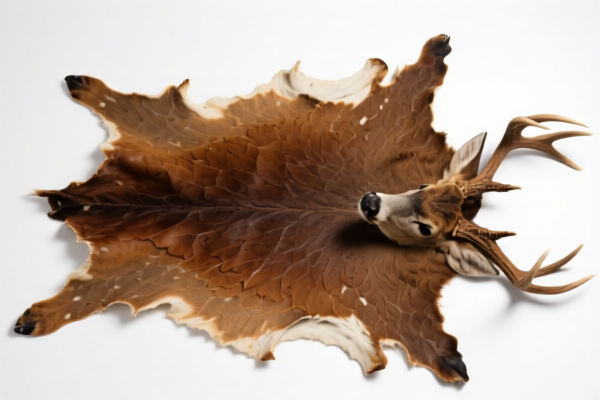
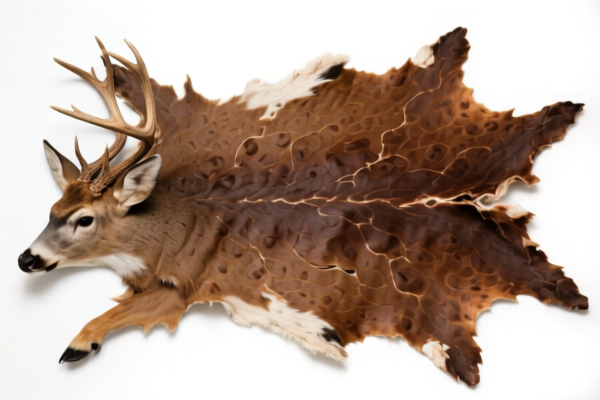
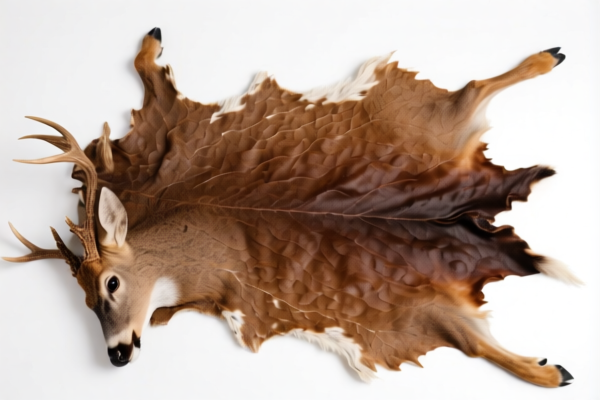
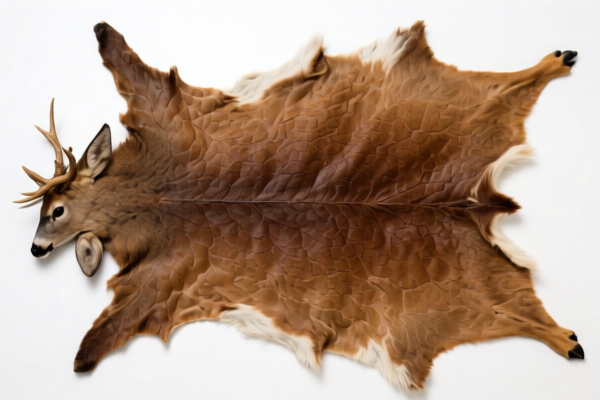
AI Analysis
🦌 Raw Deer Skin (鹿皮/生鹿皮)
🌐 HS Code Reference & Customs Clearance Guide | 2026 Latest Tariff Analysis | Professional Level Strategy
📌 I. Product Definition & Classification: What Exactly is "Raw Deer Skin"?
Raw Deer Skin, in international trade, refers to the untreated hide or skin of deer, preserved primarily through drying (salted or air-dried) without any preliminary tanning. It serves as the raw material for the leather goods industry. In customs classification, it is critical to distinguish between:
- Deer Leather Proper (Chapter 41): Skins from deer species (Cervidae) that meet the definition of "leather" (even if raw/untanned but preserved). These are generally classified under Heading 4103 ("Other footwear leather...").
- Furskins (Chapter 43): If the skin includes the hair/pelt and is considered a "furskin" rather than "leather," it falls under Heading 4301. However, specific definitions of "Deer" vs. "Rabbit" vs. "Other" dictate the exact code.
⚠️ Key Distinction Point:
- If the skin is strictly "Deer" and treated as leather hide (even raw): It typically falls under 4103.90.11.x0.
- If misclassified as "Rabbit" (a common error due to texture similarities or mixed shipments): It falls under 4301.90 or 4101.20 depending on interpretation.
- If classified as "Other Raw Skins" (non-deer/non-rabbit): It falls under 4103.90.11.90.
📦 II. HS Code Classification Details (Based on Provided Data 2026)
| HS Code | Product Description | Tax Rate | Tax Detail Breakdown |
|---|---|---|---|
4103.90.11.30 |
Raw Deer Skin (Specific Definition) | 17.5% | Base: 0% + Section 301 (7.5%) + Section 122 (10%) |
4301.90.00.00 |
Raw Rabbit Skin (Furskin Category) | 10.0% | Base: 0% + Section 301 (0%) + Section 122 (10%) |
4103.90.11.90 |
Raw Rabbit Skin (Other Raw Hides) | 17.5% | Base: 0% + Section 301 (7.5%) + Section 122 (10%) |
4301.80.02.02 |
Raw Rabbit Skin (Fully Qualified) | 17.5% | Base: 0% + Section 301 (7.5%) + Section 122 (10%) |
4101.20.10.10 |
Raw Cowhide (Non-Tanned) | 17.5% | Base: 0% + Section 301 (7.5%) + Section 122 (10%) |
🔍 Critical Note from Data:
- The system identifies4103.90.11.30specifically for Deer Skin ("Deer skin or dried deer skin...").
- There is a high risk of misclassification as Rabbit (4301.90.00.00or4103.90.11.90) or Cowhide (4101.20.10.10) due to visual similarities or generic labeling ("Raw Leather").
- Rabbit skins are treated differently:
- If classified as Furskin (4301.90.00.00), the total tax is lower (10%).
- If classified as Other Raw Skin (4103.90.11.90or4301.80.02.02), the total tax rises to 17.5%.
💰 III. 2026 Tariff Rate Breakdown (Detailed Tax Clauses)
✅ Applicable Country: United States (US)
✅ Origin: China (CN)
✅ Effective Date: Post-November 2025 (Current Policy)
🎯 1. 4103.90.11.30 — Raw Deer Skin (Correct Classification)
| Item | Content |
|---|---|
| Base Tariff | 0% (ad valorem) |
| Section 301 Tariff (Add-on) | +7.5% |
| Section 122 Tariff (Add-on) | +10.0% |
| Total Tariff | 17.5% |
| Tax Calculation | CIF Value × 17.5% |
| De Minimis Exemption | ❌ Not Eligible (Deny_de_minimis) |
| Legal Basis | HTSUS 4103.90.11.30 + Section 301 List 4 + Section 122 China Trade Action |
📌 Explanation:
- "Base 0%": Raw hides are often duty-free under standard USHTS.
- "Section 301 (7.5%)": This is part of the ongoing US-China trade tariffs on specific leather products.
- "Section 122 (10%)": Additional retaliatory or specific measure tariffs on Chinese raw materials.
- Total 17.5%: This is the final landed duty cost before any other fees.
🎯 2. 4301.90.00.00 — Raw Rabbit Skin (Furskin Category)
| Item | Content |
|---|---|
| Base Tariff | 0% |
| Section 301 Tariff | 0% |
| Section 122 Tariff | +10.0% |
| Total Tariff | 10.0% |
| Tax Calculation | CIF Value × 10.0% |
| De Minimis Exemption | ❌ Not Eligible |
📌 Why is this different?
- Rabbit skins classified as Furskins (Chapter 43) are often excluded from Section 301 tariffs (0% add-on), only subject to Section 122 (10%).
- However, if Customs determines the item is NOT a furskin but a raw hide (mislabeling), it may be reclassified to4103.90.11.90, triggering the 17.5% rate.
🎯 3. 4101.20.10.10 — Raw Cowhide (For Comparison)
| Item | Content |
|---|---|
| Base Tariff | 0% |
| Section 301 Tariff | +7.5% |
| Section 122 Tariff | +10.0% |
| Total Tariff | 17.5% |
| Note | Same rate as Deer Skin. Misclassifying Deer as Cowhide does not save money. |
🛠️ IV. Customs Clearance Practical Advice (Avoiding Pitfalls)
✅ 1. Required Documentation Checklist
| Document | Must Provide | Purpose |
|---|---|---|
| ✅ Commercial Invoice | ✔️ | Must explicitly state "Raw Deer Skin" and "Not Tanned". Avoid vague terms like "Animal Skin". |
| ✅ Packing List | ✔️ | Detail weight, count, and preservation method (e.g., "Air-dried, salted"). |
| ✅ Species Verification | ✔️ | Proof that the skin is from Deer (Cervidae) and not Rabbit/Cow. This is critical to avoid reclassification. |
| ✅ Photos of Goods | ✔️ | Show grain side, flesh side, and any brand/tags. |
| ✅ Certify Origin | ✔️ | Certificate of Origin (CO) to confirm China origin (triggers Section 301/122). |
✅ 2. Declaration Strategy
🔥 Golden Rule:
"Be Specific: 'Raw Deer Skin' ≠ 'Raw Rabbit Skin' ≠ 'Cowhide'!"
| Scenario | Correct Declaration | Risk of Incorrect Declaration |
|---|---|---|
| Actual Product | Deer Skin | |
| Correct HS Code | 4103.90.11.30 |
|
| Correct Tax | 17.5% | |
| Wrong Declaration | Claim as "Rabbit Skin" (4301.90.00.00) |
Audit Risk: Customs may inspect and reclassify to 4103.90.11.30 → Back Taxes + Penalty. |
| Wrong Declaration | Claim as "Cowhide" (4101.20.10.10) |
No Benefit: Tax is still 17.5%, but delays clearance due to species mismatch. |
| Wrong Declaration | Claim as "Processed Leather" | High Risk: If it's raw, this is fraud. Seizure likely. |
✅ 3. Special Case Handling
| Situation | Recommendation |
|---|---|
| Mixed Shipments (Deer + Rabbit) | Split the Declaration. Do not lump them together. Declare 4103.90.11.30 for Deer and 4301.90.00.00 for Rabbit separately. |
| "Deer-like" Rabbit Skins | If the skins are actually Rabbit but sold as "Deer", do not do this. Customs experts can identify skin texture. If caught, it's misdeclaration. |
| Dried vs. Salted | Both "Raw Deer Skins" are eligible for 4103.90.11.30 if they meet the "not pre-tanned" definition. Specify preservation method in notes. |
🌍 V. Global Market Comparison (2026)
| Country/Region | Recommended HS Code | Tariff Rate | Notes |
|---|---|---|---|
| 🇺🇸 USA | 4103.90.11.30 |
17.5% | Includes 301 (7.5%) + 122 (10%). High duty. |
| 🇨🇳 China | 4103.90.11.30 |
~5-10% | Import duties may be lower; check FTAs. |
| 🇪🇺 EU | 4103.90.10 |
0-6% | Often 0% for raw hides; no Section 301 equivalent. |
| 🇬🇧 UK | 4103.90.10 |
0-8% | Post-Brexit tariffs vary; generally lower than US. |
📌 Conclusion for US Importers:
The 17.5% total tariff is mandatory for Raw Deer Skin from China. There is no de minimis exemption. Plan for this cost in your FOB/CIF pricing.
📌 VI. Common Errors & Pitfalls (Blood Lessons)
❌ Error 1: Labeling as "Raw Leather" without specifying species.
👉 Consequence: Customs may default to the highest duty category or demand extensive testing → Clearance Delay.
❌ Error 2: Trying to classify Raw Deer Skin as "Rabbit Skin" (4301.90.00.00) to save 7.5%.
👉 Consequence: If detected as Deer, you owe the 7.5% difference + penalties. Risk > Reward.
❌ Error 3: Ignoring Section 122.
👉 Consequence: Even if Section 301 is waived (unlikely), Section 122 (10%) usually applies to Chinese raw animal products. Always budget for 17.5%.
✅ Correct Practice:
"Raw, Untanned, Dried Deer Skin, Cervidae Species, Preserved by Salt and Air-Drying, Model: DX-RAW-01"
🎯 VII. Conclusion: Professional Declaration, Cost Control!
🎯 Key Takeaway:
🔹 Deer Skin =
4103.90.11.30= 17.5% Total Duty.
🔹 Rabbit Skin (Furskin) =4301.90.00.00= 10% Total Duty.
🔹 Misclassification = Audit Risk + Back Taxes.
📌 Actionable Tip:
- Confirm Species: Ensure your supplier provides accurate species documentation.
- Pre-Arrangement: If volumes are high, consider applying for an Advance Ruling with CBP to lock in the
4103.90.11.30classification.- Cost Planning: Factor in 17.5% duty + merchandise processing fees (MPF) + harbor maintenance fees (HMF) into your landed cost.
📣 Immediate Action:
📞 Verify species with supplier → Use HS
4103.90.11.30→ Budget 17.5% Duty.
🚀 Clear Customs Smoothly, Protect Your Margins!
✨ Professional Classification Starts with Precision!
💼 Every Percentage Point Counts in Global Trade!
Customer Reviews
About HS Code Classification
The Harmonized System (HS) is an internationally standardized nomenclature developed by the World Customs Organization (WCO) to classify traded products. Over 200 countries use the HS system as the basis for customs tariffs, trade statistics, and import/export regulations.
Each HS code follows a hierarchical structure:
- Chapter (2 digits) — Broad category of goods (e.g., Chapter 84: Machinery and Mechanical Appliances)
- Heading (4 digits) — More specific grouping within the chapter
- Subheading (6 digits) — Internationally standardized breakdown, used by all WCO member countries
- National subdivisions (8-10 digits) — Country-specific extensions for further classification, such as US HTSUS 10-digit codes
Correct HS code classification is essential for smooth customs clearance, accurate duty payment, and compliance with trade regulations. Misclassification can lead to customs delays, overpayment of duties, or penalties.
When importing from CN to US, the applicable tariff rates may include:
- Most-Favored-Nation (MFN) rate — The standard duty rate applied to WTO members
- General rate — Applied to countries without trade agreements
- Trade remedy duties — Additional tariffs such as Section 301 (anti-dumping), Section 232 (national security), or countervailing duties
The information provided on this page is for reference purposes only. For official classification, please consult with your local customs authority or a licensed customs broker.