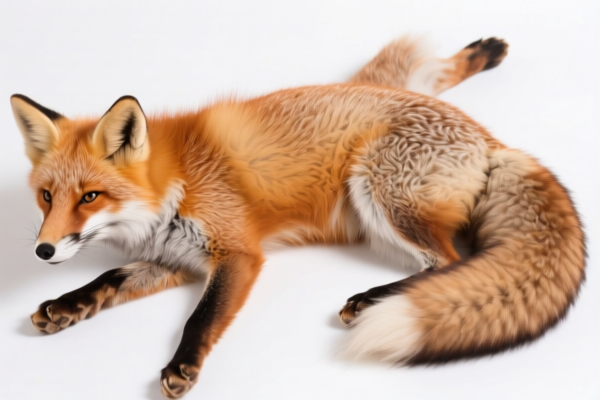
Raw Fox Fur Whole Skin with Tail
CN → US| HS Code | Tariff Rate | Origin | Destination | Doc |
|---|---|---|---|---|
| 4103901190 | 17.5% | CN | US | Official Doc |
| 4103901140 | 17.5% | CN | US | Official Doc |
Product Images



AI Analysis
🦊 Fox Fur Whole Skin with Tail (Raw, Preserved)
🌐 HS Code Reference & Clearance Guide | 2026 Latest Tariff Analysis | Professional Customs Strategy
📌 I. Product Definition & Classification: What Exactly Is "Raw Fox Fur"?
"Raw Fox Fur Whole Skin with Tail" refers to the pelt of a fox, harvested and preserved but not yet tanned, dressed, or processed into finished leather goods. In international trade, the state of preservation is critical for classification:
Preservation Methods: The skins may be fresh, salted, dried, limed, pickled, or otherwise preserved to prevent decay.
Exclusions: These are not tanned, parchment-dressed, or further prepared (which would fall under Chapter 41 heading 4104/4105).
Key Distinction: The presence of the tail does not change the primary classification but confirms it as a "whole skin." If the tail were removed and the skin split or further processed differently, classification might shift, but a whole raw skin remains under specific subheadings for "Other" raw hides and skins.
⚠️ Critical Classification Point:
- If the fox skin is raw, salted, or dried → It falls under Chapter 41 (Raw Hides and Skins).
- It is NOT classified under Chapter 43 (Furskins) because those apply to processed fur.
- Within Chapter 41, it is categorized under "Other" (not cattle, equine, or sheep/goat), specifically as "Other: Not pretanned."
📦 II. HS Code Classification Details (2026 Latest Tariff Authority)
Based on the provided data, the product falls under two potential HS Codes depending on the specific preservation or slight variations in "Other" categorization, but primarily under the 4103.90.11 series for "Other raw hides and skins... Not pretanned."
| HS Code | Product Description | Applicable Scenario | Preservation State |
|---|---|---|---|
4103.90.11.90 |
Other raw hides and skins (fresh, salted, dried, etc.), not pretanned | General Fox Fur Skins (non-goat/kid). Includes whole skins with tails, salted or dried fox pelts intended for further processing. | ✅ Raw/Salted/Dried |
4103.90.11.40 |
Other raw hides and skins... Of goats or kids | Note: This code is for Goat/Kid skins. Fox fur is NOT goat/kid. Therefore, this code is INCORRECT for fox fur. | ✅ Raw/Salted/Dried |
🔍 Correction & Focus:
- Fox fur is a wildlife skin, not livestock (goat/kid).
- Therefore,4103.90.11.40is NOT applicable.
- The correct classification for Raw Fox Fur Whole Skin with Tail is4103.90.11.90(Other: Not pretanned).
- Ensure the commercial invoice clearly states "Fox" and "Raw/Salted/Dried" to avoid confusion with processed fur (Ch. 43) or other raw hides.
💰 III. 2026 Latest Tariff Rate Breakdown (Including Surtaxes)
✅ Applicable Country: United States (US)
✅ Origin: China (CN) (Assuming China origin based on typical surtax queries; verify if other origins apply)
✅ Effective Time: Current rates apply as per provided data.
🎯 1. 4103.90.11.90 —— Other Raw Hides and Skins (Not Pretanned)
| Item | Content |
|---|---|
| Base Tariff Rate | 0.0% (Ad Valorem) |
| Surtax (Section 301/Other) | 7.5% |
| Total Tariff Rate | 7.5% |
| Tax Calculation | CIF Value × 7.5% |
| De Minimis Exemption | ❌ Not Applicable (Raw animal products often face strict quarantine and tariff scrutiny; typically not eligible for de minimis if commercial shipment). |
| Legal Basis Path | HS:4103.90.11.90 → Surcharge:7.5% |
📌 Explanation:
- The base rate for many raw hides and skins is often 0% under general MFN rates.
- However, a 7.5% surtax is applied (as per the provided data). This may reflect specific trade measures, anti-dumping duties, or country-specific surcharges.
- Total Duty: 7.5% is relatively low compared to processed goods, but compliance is strict due to wildlife and sanitary regulations.⚠️ Note on
4103.90.11.40(Goat/Kid):
- This code has a 0.0% total tax.
- Do NOT misclassify fox fur as goat skin to claim 0%. This is customs fraud. Misclassification can lead to severe penalties, seizure, and legal action.
🛠️ IV. Customs Clearance Practical Advice (Real-World Pitfall Avoidance)
✅ 1. Required Documentation Checklist (Mandatory)
| Document | Must Provide | Description |
|---|---|---|
| ✅ Commercial Invoice | ✔️ | Must clearly state: "Raw Fox Fur Whole Skin with Tail," "HS Code: 4103.90.11.90," "Value," "Origin." |
| ✅ Packing List | ✔️ | Detail number of skins, weight, and preservation method (e.g., "Salted," "Air-Dried"). |
| ✅ Health/Sanitary Certificate | ✔️ | CRITICAL: From the country of origin, certifying the skins are free from disease and properly preserved. |
| ✅ CITES Permit (If Applicable) | ✔️ | Fox species may be listed under CITES Appendix II. Verify if import/export permits are required. |
| ✅ Bill of Lading/Air Waybill | ✔️ | Standard shipping document. |
| ✅ Customs Bond | ✔️ | Required for commercial entry in the US. |
✅ 2. Declaration Tips (Key Phrases)
🔥 "Be Specific: State Species, State, and Process."
| Scenario | Correct Declaration | Incorrect Declaration |
|---|---|---|
| Raw Fox Skin | "Raw Fox Fur, Whole Skin, Salted, HS 4103.90.11.90" | "Fur Skin" (Too vague) |
| Preserved Skin | "Dried Fox Pelts, Preserved, No Tanning" | "Leather" (Incorrect; implies tanning) |
| With Tail | "Whole Skin Including Tail" | "Skin Only" (May trigger inspection for missing parts) |
✅ 3. Special Considerations
| Situation | Handling Advice |
|---|---|
| CITES Compliance | Check if the fox species (e.g., Red Fox, Arctic Fox) is listed. If yes, CITES Export Permit from origin and Import Permit from US may be required. |
| Sanitary Controls | Raw animal products are subject to USDA APHIS regulations. Ensure no risk of anthrax, brucellosis, etc. |
| Value Assessment | Customs may challenge low value. Use recent transaction values for similar raw skins. |
| Misclassification Risk | Declaring as "Goat Skin" to get 0% tax is illegal. Customs uses DNA testing or physical inspection to verify species. |
🌍 V. Global Market Clearance Comparison (2026 Latest)
| Country/Region | Recommended HS Code | Tariff | Certification Requirements | Notes |
|---|---|---|---|---|
| 🇺🇸 USA | 4103.90.11.90 |
7.5% | USDA APHIS, CITES (if applicable) | 7.5% surtax applies. Strict sanitary checks. |
| 🇨🇳 China | 4103.90.11.90 |
Varies | Import License, Quarantine Certificate | Check latest Chinese tariff schedules. |
| 🇪🇺 EU | 4103.90.00 |
0-10% | EU Health Certificate, CITES | Varies by member state. |
| 🇬🇧 UK | 4103.90.00 |
0-10% | UK Health Certificate, CITES | Post-Brexit rules apply. |
📌 Conclusion:
- USA: 7.5% Total Duty + Strict Sanitary/CITES Compliance.
- EU/UK: Generally lower base tariffs but strict environmental/CITES enforcement.
- China: Check current annual tariff updates.
📌 VI. Common Errors & Pitfall Guide (Lessons Learned)
❌ Error 1: Classifying as "Processed Fur" (Chapter 43)
👉 Consequence: Wrong HS Code (e.g., 4302). Treated as "not raw" → Potential duty evasion if 7.5% is avoided incorrectly, or rejection if process isn't complete.
👉 Fix: Clearly state "NOT TANNED" and "RAW."
❌ Error 2: Misclassifying Fox as "Goat" (4103.90.11.40)
👉 Consequence: Fraud. 0% vs 7.5% difference triggers audit. Penalties include fines, seizure, and loss of import privileges.
👉 Fix: Always use 4103.90.11.90 for non-livestock raw skins.
❌ Error 3: No CITES Permit for Protected Species
👉 Consequence: Seizure of goods by US Fish and Wildlife Service. Criminal charges possible.
👉 Fix: Verify CITES status for the specific fox species before shipment.
❌ Error 4: Incomplete Preservation (Fresh Skins)
👉 Consequence: Rejection by USDA APHIS due to disease risk (e.g., anthrax).
👉 Fix: Ensure skins are salted, dried, or chemically preserved as per regulations.
✅ Correct Practice:
"Raw Fox Fur, Whole Skin with Tail, Salted, HS Code 4103.90.11.90, Value: $XXX, Origin: [Country], CITES Permit No.: XXX"
🎯 VII. Conclusion: Professional Clearance for Raw Fur
🎯 Remember the Key Points:
🔹 "Raw = Chapter 41, Not Chapter 43."
🔹 "Fox is Not Goat: Use 4103.90.11.90, Not .40."
🔹 "7.5% Duty Applies: Do Not Evade by Misclassification."
🔹 "CITES & Sanitary Docs are Mandatory."
📌 Pro Tip:
If your fox fur is tanned or dressed, it moves to Chapter 43 (e.g., 4302.19). Ensure you are declaring the correct stage of processing. For raw skins, stick to 4103.90.11.90.
📣 Immediate Action:
📞 Consult a Customs Broker + Verify CITES Status + Prepare Sanitary Certificates
🚀 Ensure your raw fox fur clears customs smoothly with 7.5% duty and full compliance!
✨ Professional clearance starts with accurate classification!
💼 Every dollar saved on proper declaration is profit earned!
Customer Reviews
About HS Code Classification
The Harmonized System (HS) is an internationally standardized nomenclature developed by the World Customs Organization (WCO) to classify traded products. Over 200 countries use the HS system as the basis for customs tariffs, trade statistics, and import/export regulations.
Each HS code follows a hierarchical structure:
- Chapter (2 digits) — Broad category of goods (e.g., Chapter 84: Machinery and Mechanical Appliances)
- Heading (4 digits) — More specific grouping within the chapter
- Subheading (6 digits) — Internationally standardized breakdown, used by all WCO member countries
- National subdivisions (8-10 digits) — Country-specific extensions for further classification, such as US HTSUS 10-digit codes
Correct HS code classification is essential for smooth customs clearance, accurate duty payment, and compliance with trade regulations. Misclassification can lead to customs delays, overpayment of duties, or penalties.
When importing from CN to US, the applicable tariff rates may include:
- Most-Favored-Nation (MFN) rate — The standard duty rate applied to WTO members
- General rate — Applied to countries without trade agreements
- Trade remedy duties — Additional tariffs such as Section 301 (anti-dumping), Section 232 (national security), or countervailing duties
The information provided on this page is for reference purposes only. For official classification, please consult with your local customs authority or a licensed customs broker.