Raw Fur Skins Paws
CN → US| HS Code | Tariff Rate | Origin | Destination | Doc |
|---|---|---|---|---|
| 4302206000 | 38.5% | CN | US | Official Doc |
| 4302209000 | 36.7% | CN | US | Official Doc |
Product Images
AI Analysis
🐾 Raw Fur Skins, Heads, Tails & Paws (Tanned or Dressed, Unassembled/Assembled)
🌐 HS Code Reference & Customs Clearance Guide | 2026 Latest Tariff Analysis | Professional Compliance Strategy
📌 Part 1: Product Definition & Classification – Do You Know What "Raw Fur" Really Is?
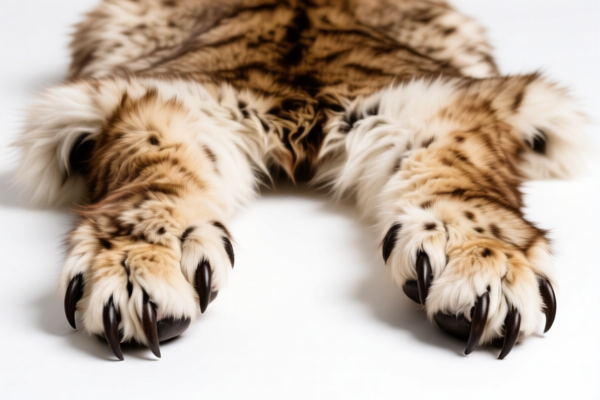
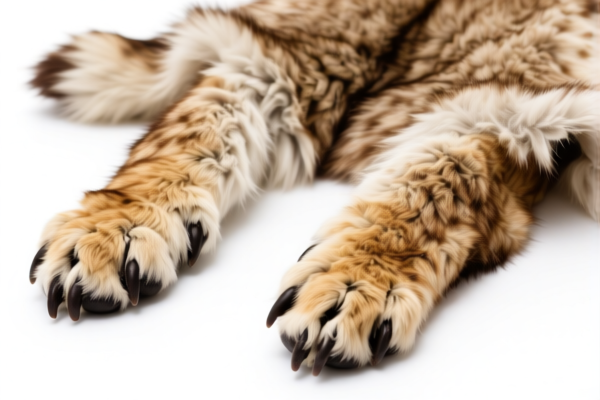
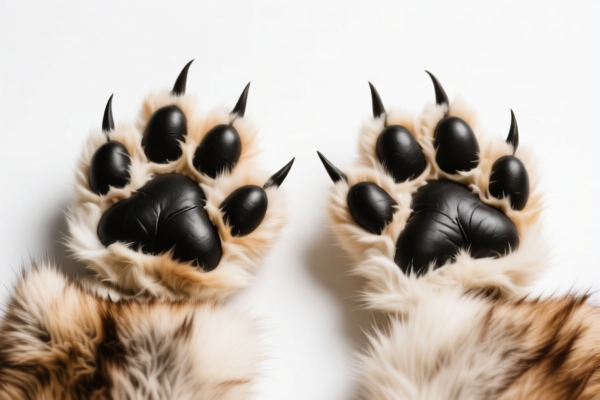
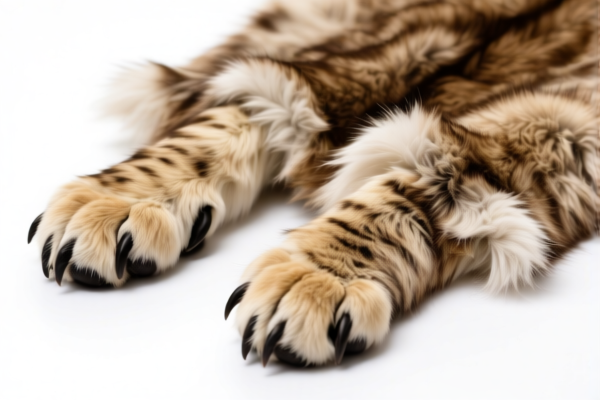
In international trade, "Raw Fur Skins" refers specifically to tanned or dressed furskins (including heads, tails, paws, and other pieces/cuttings) that are unassembled or assembled (without the addition of other materials). Crucially, this category excludes finished fur garments or articles (which fall under Heading 4303).
The classification hinges on one critical factor: Dyeing Status.
⚠️ Key Distinction:
- If the fur is natural/original color (undyed) → Falls under 4302.20.60.00
- If the fur has been chemically dyed/pigmented → Falls under 4302.20.90.00
📦 Part 2: HS Code Classification Details (2026 Latest Tariff Authority)
| HS Code | Product Description | Key Characteristics | Applicable Scenario |
|---|---|---|---|
4302.20.60.00 |
Heads, tails, paws, and other pieces/cuttings, not assembled: Other: Not dyed | Natural color, tanned/dressed, no artificial pigment | Natural pelts, undyed trimmings, raw material for manufacturing |
4302.20.90.00 |
Heads, tails, paws, and other pieces/cuttings, not assembled: Other: Dyed | Artificially colored, tanned/dressed, with added dye | Fashion-ready pieces, dyed trimmings, colored pelts |
🔍 Critical Reminder:
- "Tanned or Dressed" is mandatory: Raw, untreated salted skins may fall under different headings (e.g., 4301). These codes apply only to processed skins.
- "Assembled" vs. "Unassembled": Both codes cover assembled items (e.g., sewn together without other materials like leather or fabric) and unassembled pieces (heads, tails, paws).
- Exclude Finished Goods: Do not use these codes for coats, hats, or vests (Heading 4303).
💰 Part 3: 2026 Latest Tariff Rate Breakdown (Detailed Tax Clauses)
✅ Applicable Country: United States (US)
✅ Origin: China (CN)
✅ Effective Date: 2025/2026 (Current Trade Policy)
🎯 1. 4302.20.60.00 —— Undyed Fur Pieces (Heads, Tails, Paws)
| Item | Detail |
|---|---|
| Base Tariff Rate | 0.0% (Ad Valorem) |
| Additional Tariff (Section 301) | 0.0% |
| Total Tax Rate | 0.0% |
| Tax Calculation | CIF Value × 0.0% = $0 |
| De Minimis Eligibility | ❌ No (High-value luxury goods typically excluded) |
| Legal Basis | USITC Tariff Schedule 2026, Heading 4302 |
📌 Explanation:
- Undyed fur pieces are considered raw materials with lower strategic sensitivity.
- Zero tariff advantage makes this a cost-efficient option for suppliers and importers compared to dyed versions.
- No Section 301 or IEEPA surcharges apply in this specific subheading.
🎯 2. 4302.20.90.00 —— Dyed Fur Pieces (Heads, Tails, Paws)
| Item | Detail |
|---|---|
| Base Tariff Rate | 1.7% (Ad Valorem) |
| Additional Tariff (Section 301) | 25.0% |
| Total Tax Rate | 26.7% |
| Tax Calculation | CIF Value × 26.7% |
| De Minimis Eligibility | ❌ No (Value threshold not met for exemption) |
| Legal Basis | USITC Tariff Schedule 2026, Heading 4302 + Section 301 Footnote |
📌 Explanation:
- 1.7% Base Rate: Standard Most-Favored-Nation (MFN) rate for dyed fur pieces.
- 25.0% Section 301 Surcharge: Applied to Chinese-origin dyed fur products due to trade tensions.
- Total 26.7%: A significant cost increase. Importers must budget for this high tax burden.
- Why the difference? Dyed furs are often closer to finished consumer goods, attracting higher tariffs.
🛠️ Part 4: Customs Clearance Practical Advice (Pitfall Avoidance Guide)
✅ 1. Documentation Checklist (Mandatory)
| Document | Required | Notes |
|---|---|---|
| ✅ Product Specifications | ✔️ | Must state: Tanning method, dye status (DYED/UNDYED), species, size |
| ✅ Commercial Invoice | ✔️ | Clearly describe as "Tanned Fur Skins, Undyed" or "Dyed" |
| ✅ Packing List | ✔️ | Itemize heads, tails, paws separately if possible |
| ✅ Proof of Origin | ✔️ | COO (Certificate of Origin) for China origin |
| ✅ Photos | ✔️ | Show color/natural state to prove dye/undyed status |
| ✅ CITES Permits | ✔️ | If species are endangered (e.g., certain fox, sable, marten) |
🚨 Critical Warning:
- Misdeclaring "Dyed" as "Undyed" to avoid 25% tariff is fraud → Severe penalties, seizure, and blacklisting.
- Ensure tanning process is documented. Untreated skins may be reclassified under Heading 4301 (Base Raw Skins), which has different rules.
✅ 2. Classification Strategy (Key Tips)
| Scenario | Correct HS Code | Risk if Wrong |
|---|---|---|
| Natural color fur pieces | 4302.20.60.00 |
If misdeclared as dyed → Pay extra 26.7% unnecessarily |
| Artificially colored fur pieces | 4302.20.90.00 |
If misdeclared as undyed → Penalty + Back Taxes + Interest |
| Finished fur coats | None of these | Should be 4303 → Misclassification leads to shipment hold |
🔥 Pro Tip:
- If the dye is faint or natural-looking, provide lab test results to prove it's "undyed" for4302.20.60.00.
- For mixed shipments, separate undyed and dyed items in different lots to optimize tax clarity.
✅ 3. Special Cases & Compliance
| Case | Action |
|---|---|
| Endangered Species | Obtain CITES Permit + USFWS Form 3-200 |
| Mixed Origins | Declare origin per item; only China-origin items get 25% surcharge |
| Assembled Panels | Still falls under 4302 if no other materials (e.g., leather, fabric) added |
| Raw Untreated Skins | Check Heading 4301; do NOT use 4302 codes |
🌍 Part 5: Global Market Comparison (2026)
| Country/Region | Recommended HS Code | Base Duty | Additional Surcharge | Total | Notes |
|---|---|---|---|---|---|
| 🇺🇸 USA | 4302.20.60.00 |
0.0% | 0.0% | 0.0% | Best for undyed |
| 🇺🇸 USA | 4302.20.90.00 |
1.7% | 25.0% | 26.7% | High cost for dyed |
| 🇪🇺 EU | Varies (43.02) | 3.5%~4.7% | 0% | ~4% | No Section 301 |
| 🇨🇳 China | 4302.20 | 5%~10% | 0% | ~5-10% | Import duty for raw materials |
| 🇬🇧 UK | 4302.20 | 3.5%~4.7% | 0% | ~4% | Post-Brexit tariff |
📌 Conclusion:
- USA is the most punitive for dyed fur pieces from China (26.7%).
- Undyed fur pieces enjoy 0% duty in the US, making them a strategic choice for cost optimization.
- EU/UK markets have stable, moderate tariffs without US-style surcharges.
📌 Part 6: Common Mistakes & Pitfalls (Lessons Learned)
❌ Mistake 1: Declaring "Dyed" fur as "Undyed" to save 26.7%
👉 Result: Customs inspection reveals dye → Seizure + Fine + Legal Action
❌ Mistake 2: Including finished fur garments in raw skin shipments
👉 Result: Classification error → Shipment delayed, re-exported, or destroyed
❌ Mistake 3: Ignoring CITES for endangered species (e.g., sable, ermine)
👉 Result: Federal fines up to $25,000 per violation + criminal charges
✅ Correct Approach:
"Tanned Fox Fur Skins, Undyed, Cut into Panels, CITES Compliant, Origin: China"
🎯 Part 7: Conclusion – Precision Classification Saves Money!
🎯 Key Takeaway:
🔹 Undyed = 0% Duty
🔹 Dyed = 26.7% Duty (USA, China-origin)
🔹 Always prove dye status with documentation/photos/lab tests
🔹 CITES compliance is non-negotiable for endangered species
📌 Pro Tip:
If you are importing from non-China origins (e.g., Canada, Russia, Mongolia), the 25% Section 301 surcharge does not apply. Check MFN rates for those countries.
📣 Immediate Action:
📞 Consult a licensed customs broker + Provide dye test reports + Apply for CITES if needed
🚀 Clear customs smoothly, avoid tariffs, and maximize profit margins!
✨ Professional customs clearance starts with accurate classification!
💼 Every dollar saved in duties is pure profit!
Customer Reviews
About HS Code Classification
The Harmonized System (HS) is an internationally standardized nomenclature developed by the World Customs Organization (WCO) to classify traded products. Over 200 countries use the HS system as the basis for customs tariffs, trade statistics, and import/export regulations.
Each HS code follows a hierarchical structure:
- Chapter (2 digits) — Broad category of goods (e.g., Chapter 84: Machinery and Mechanical Appliances)
- Heading (4 digits) — More specific grouping within the chapter
- Subheading (6 digits) — Internationally standardized breakdown, used by all WCO member countries
- National subdivisions (8-10 digits) — Country-specific extensions for further classification, such as US HTSUS 10-digit codes
Correct HS code classification is essential for smooth customs clearance, accurate duty payment, and compliance with trade regulations. Misclassification can lead to customs delays, overpayment of duties, or penalties.
When importing from CN to US, the applicable tariff rates may include:
- Most-Favored-Nation (MFN) rate — The standard duty rate applied to WTO members
- General rate — Applied to countries without trade agreements
- Trade remedy duties — Additional tariffs such as Section 301 (anti-dumping), Section 232 (national security), or countervailing duties
The information provided on this page is for reference purposes only. For official classification, please consult with your local customs authority or a licensed customs broker.