Raw Furskins
CN → US| HS Code | Tariff Rate | Origin | Destination | Doc |
|---|---|---|---|---|
| 4301900000 | 10.0% | CN | US | Official Doc |
| 4301800290 | 17.5% | CN | US | Official Doc |
Product Images
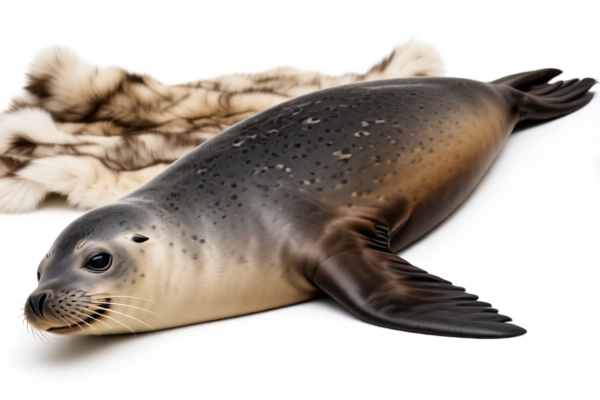
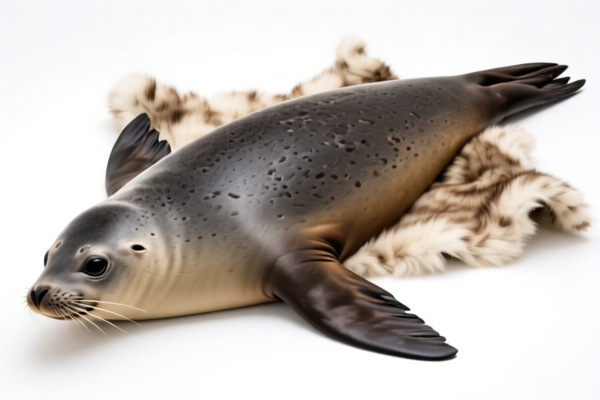
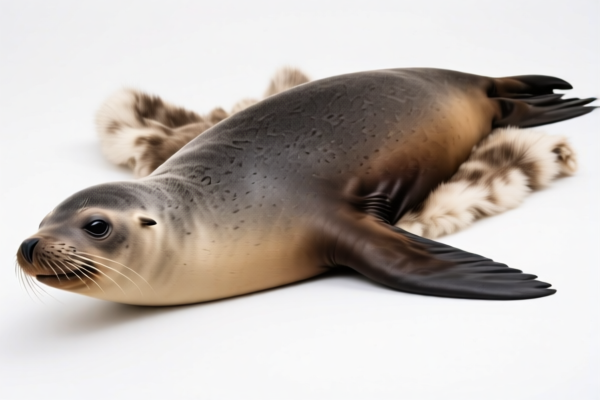
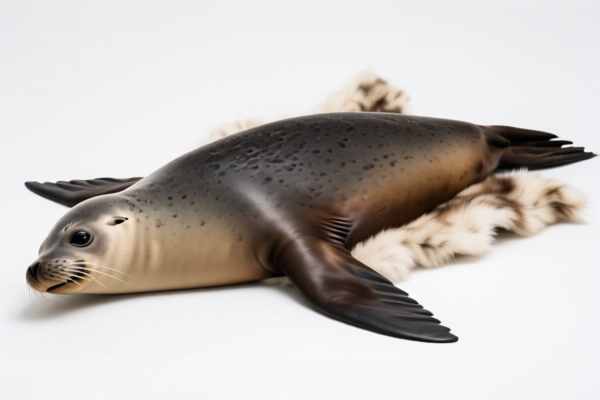
AI Analysis
🦊 Raw Furskins (Including Heads, Tails, Paws, and Cuttings)
🌐 HS Code Reference & Customs Clearance Guide | 2026 Latest Tariff Analysis | Professional Entry Strategies
📌 I. Product Definition & Classification: Do You Really Understand "Raw Furskins"?
Raw furskins represent the foundational material of the global fur industry. In international trade, they are not treated as generic leather goods but as specialized raw materials intended for furriers. The key distinction lies in the processing state and usability.
Raw Furskins Suitable for Furriers' Use:
This category includes whole skins (with or without heads, tails, or paws) that have been salted, dried, or otherwise preserved but not tanned into leather. Crucially, it also encompasses pieces, cuttings, heads, tails, and paws if they are suitable for furriers to use in manufacturing fur garments, accessories, or trimmings.
⚠️ Critical Distinction:
- If the material is a whole skin or usable pieces/cuttings specifically meant for furriers → It falls under Chapter 43.
- If the material is a raw hide/skin of heading 4101, 4102, or 4103 (e.g., large cattle, bovine, or equine hides not intended for fur processing) → It falls under Chapter 41.
- Note: The provided data excludes headings 4101, 4102, and 4103. We focus strictly on Chapter 43 items.
📦 II. HS Code Classification Details (2026 Latest Tariff Authority Comparison)
Based on the provided data, raw furskins are classified into two main categories under HS Code 4301.90 and 4301.80.
| HS Code | Product Description | Applicable Scenario | Includes Heads/Tails/Paws/Cuttings? |
|---|---|---|---|
4301.90.00.00 |
Other furskins: Heads, tails, paws, and other pieces or cuttings, suitable for furriers' use. | Raw fur pieces, trimmings, individual body parts (heads/paws) prepared for fur manufacturing. | ✅ Yes (Pieces/Cuttings/Parts) |
4301.80.02.90 |
Other furskins: Other furskins, whole, with or without head, tail, or paws. | Whole skins of non-standard fur animals (e.g., raccoon, fox, mink) that are not listed elsewhere in Chapter 43. | ✅ Yes (Whole Skins) |
🔍 Key Clarification:
-4301.90.00.00is for pieces/cuttings/parts. If you are importing raw fur trim, heads, or paws separated from the main body, use this code.
-4301.80.02.90is for whole skins of "other" animals (not dog, cat, rabbit, etc., which have specific sub-headings). This includes entire pelts with or without extremities.
💰 III. 2026 Latest Tariff Rate Details (Including Surtaxes & Policy Add-ons)
✅ Applicable Country: United States (US)
✅ Origin: China (CN)
✅ Effective Date: 2025/2026 Tariff Period
🎯 1. 4301.90.00.00 —— Other Furskins (Heads, Tails, Paws, Cuttings)
| Item | Content |
|---|---|
| Base Tariff Rate | 0.0% |
| Additional Surtax | 0.0% |
| Total Tax Rate | 0.0% |
| Tax Calculation | CIF Value × 0.0% = $0 |
| De Minimis Exemption | ✅ Yes (Generally eligible if value is under $800) |
| Legal Basis Path | HTSUS 4301.90.00.00 |
📌 Explanation:
- Raw furskins classified as pieces, cuttings, heads, or paws currently enjoy a 0% total tariff rate for Chinese origins under this specific subheading.
- This makes it a cost-effective classification for importing fur materials for manufacturing.
- No Section 301 or IEEPA surtax applies to this specific code in the provided data.
🎯 2. 4301.80.02.90 —— Other Furskins (Whole Skins)
| Item | Content |
|---|---|
| Base Tariff Rate | 0.0% |
| Additional Surtax | +7.5% |
| Total Tax Rate | 7.5% |
| Tax Calculation | CIF Value × 7.5% |
| De Minimis Exemption | ❌ No (If subject to surtax, often restricted; verify current enforcement) |
| Legal Basis Path | HTSUS 4301.80.02.90 |
📌 Explanation:
- Whole furskins (even if "other" types) are subject to a 7.5% additional surtax in the provided data.
- While the base tariff is 0%, the total effective rate is 7.5%.
- This surtax likely stems from recent trade policy adjustments or specific agricultural/raw material tariffs.
- Crucial: Do not assume 0% because the base is 0%. The 7.5% surtax must be paid.
🛠️ IV. Customs Clearance Practical Advice (Avoid Pitfalls)
✅ 1. Essential Documentation Checklist (Non-Negotiable)
| Document | Required? | Description |
|---|---|---|
| ✅ Commercial Invoice | ✔️ | Must clearly state: "Raw Furskins," "Not Tanned," "For Furriers' Use." |
| ✅ Packing List | ✔️ | Detail whether items are whole skins or pieces/cuttings. |
| ✅ Processing Certificate | ✔️ | Proof that skins are raw (salted/dried) and not tanned leather. |
| ✅ Species Identification | ✔️ | Scientific name of animal (e.g., Vulpes vulpes for Red Fox). |
| ✅ CITES Permit (If Applicable) | ✔️ | Required if species is endangered. Many fur animals are CITES-listed. |
| ✅ Country of Origin Certificate | ✔️ | To determine eligibility for surtax exemptions (if any). |
✅ 2. Declaration Tips (Key Mnemonics)
🔥 “Whole Skin = 7.5%, Pieces/Cuttings = 0% Name Precisely, Avoid Misclassification!”
| Scenario | Correct Declaration | Wrong Practice |
|---|---|---|
| Raw Fox Skins (Whole, with head) | 4301.80.02.90 → 7.5% |
Misdeclare as "Leather" → Chapter 41 (Higher risk) |
| Raw Mink Paws & Heads | 4301.90.00.00 → 0% |
Misdeclare as "Whole Skins" → 7.5% Surplus Tax! |
| Tanned Fur Leather | Chapter 41 or 4302 | Use 4301 codes → Rejection & Penalty |
| Synthetic Fur | Chapter 57 or 60 | Use 4301 codes → False Declaration |
✅ 3. Special Case Handling
| Situation | Handling Advice |
|---|---|
| Mixed Containers | Separate invoices for 4301.90 (0%) and 4301.80 (7.5%). Do not mix under one code to avoid audit. |
| CITES Listed Species | Even if tariff is 0%, CITES permits are mandatory. Failure = Seizure. |
| Smuggled/Illegal Wildlife | Strict enforcement under Lacey Act. Ensure legal sourcing documentation. |
| Used Furskins | May fall under 4302 (Prepared Furskins), not 4301. Verify processing status. |
🌍 V. Global Market Comparison (2026 Latest)
| Country/Region | Recommended HS Code | Tariff Rate | Certification | Notes |
|---|---|---|---|---|
| 🇺🇸 USA | 4301.90.00.00 |
0.0% | CITES + Lacey Act | Low cost for pieces/cuttings |
| 🇺🇸 USA | 4301.80.02.90 |
7.5% | CITES + Lacey Act | Surtax applies to whole skins |
| 🇨🇳 China | 4301.90.00.00 |
Varies | - | Domestic trade rules apply |
| 🇪🇺 EU | 4301.10 (Dog/Cat) |
Prohibited | CITES | EU bans dog/cat fur |
| 🇬🇧 UK | 4301.90.00.00 |
0% | UK CITES | Post-Brexit rules apply |
📌 Conclusion:
- USA offers 0% tariff for fur pieces/cuttings (4301.90.00.00), making it ideal for importing fur trim.
- Whole skins (4301.80.02.90) incur a 7.5% surtax, increasing costs.
- CITES compliance is non-negotiable globally for wild-caught fur animals.
📌 VI. Common Errors & Pitfalls (Blood Lessons)
❌ Error 1: Declaring whole skins as pieces/cuttings to avoid 7.5% surtax
👉 Consequence: Customs audit, penalty, and back-tariff of 7.5% + fines.
✅ Fix: Accurately describe product nature. If whole, use 4301.80.02.90.
❌ Error 2: Ignoring CITES permits for endangered species (e.g., certain foxes, beavers)
👉 Consequence: Goods seized, destroyed, and criminal liability.
✅ Fix: Always check CITES status before shipment.
❌ Error 3: Confusing raw furskins with prepared/tanned furskins
👉 Consequence: Misclassification under Chapter 4302 (Higher tariffs) or Chapter 41.
✅ Fix: Provide processing certificates to prove raw status.
❌ Error 4: Using vague descriptions like "Animal Skins"
👉 Consequence: Customs delays, requests for additional info, potential reclassification.
✅ Fix: Use precise terms: "Raw Mink Skins, Whole, Salted" or "Raw Fox Paws, Cuttings."
🎯 VII. Conclusion: Smart Classification, Cost Optimization!
🎯 Remember the Mnemonic:
🔹 “Pieces = 0%, Whole = 7.5%, CITES = Mandatory!”
🔹 “HS Code Determines Tax, Declaration Determines Speed!”
📌 Pro Tip:
If you are importing fur trimmings or cuttings, ensure your supplier clearly marks them as “Raw Furskins, Pieces/Cuttings” on the invoice and packing list to qualify for 0% tariff (4301.90.00.00).
For whole skins, budget for the 7.5% surtax and ensure CITES compliance.
📣 Immediate Action:
📞 Consult a licensed customs broker + Provide Species Identification + Apply for CITES Permits (if needed)
🚀 Ensure smooth clearance, avoid surtax surprises, and protect your supply chain!
✨ Professional Customs Clearance Starts with Accurate Classification!
💼 Every percentage point matters in raw material trade!
Customer Reviews
About HS Code Classification
The Harmonized System (HS) is an internationally standardized nomenclature developed by the World Customs Organization (WCO) to classify traded products. Over 200 countries use the HS system as the basis for customs tariffs, trade statistics, and import/export regulations.
Each HS code follows a hierarchical structure:
- Chapter (2 digits) — Broad category of goods (e.g., Chapter 84: Machinery and Mechanical Appliances)
- Heading (4 digits) — More specific grouping within the chapter
- Subheading (6 digits) — Internationally standardized breakdown, used by all WCO member countries
- National subdivisions (8-10 digits) — Country-specific extensions for further classification, such as US HTSUS 10-digit codes
Correct HS code classification is essential for smooth customs clearance, accurate duty payment, and compliance with trade regulations. Misclassification can lead to customs delays, overpayment of duties, or penalties.
When importing from CN to US, the applicable tariff rates may include:
- Most-Favored-Nation (MFN) rate — The standard duty rate applied to WTO members
- General rate — Applied to countries without trade agreements
- Trade remedy duties — Additional tariffs such as Section 301 (anti-dumping), Section 232 (national security), or countervailing duties
The information provided on this page is for reference purposes only. For official classification, please consult with your local customs authority or a licensed customs broker.