Raw Furskins (HS 4301800203)
CN → US| HS Code | Tariff Rate | Origin | Destination | Doc |
|---|---|---|---|---|
| 4301800203 | 17.5% | CN | US | Official Doc |
| 4301800200 | 0.0% | CN | US | Official Doc |
Product Images
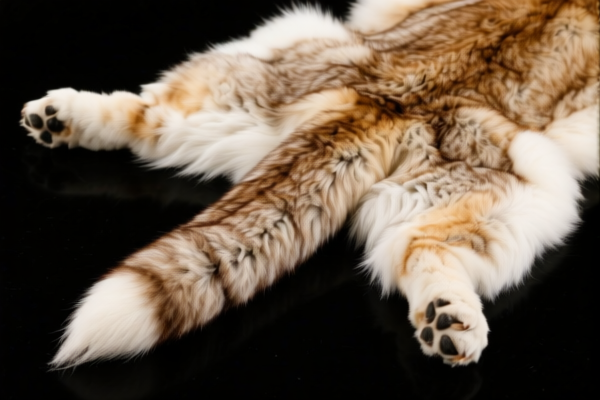
AI Analysis
🐾 Raw Furskins: Muskrat (HS Code 4301.80.02.03)
🌐 HS Code Reference & Customs Clearance Guide | 2026 Latest Tariff Analysis | Professional Clearance Strategy
📌 I. Product Definition & Classification: Do You Really Understand "Muskrat Furskins"?
Raw furskins, including heads, tails, paws, and other cuttings suitable for furriers' use, are classified under Chapter 43 of the Harmonized System (HS). Specifically, these are not raw hides and skins of heading 4101, 4102, or 4103 (which cover cattle, sheep, and goat skins). Instead, they fall under Heading 4301: "Raw furskins (including heads, tails, paws and other pieces or cuttings, suitable for furriers' use)."
Within this heading, the classification is further divided by animal species. The specific code 4301.80.02.03 refers specifically to Muskrat furskins.
⚠️ Key Distinction:
- If the fur is from cattle, sheep, or goats → Chapter 41 (Raw Hides/Skins).
- If the fur is from Muskrat → Chapter 43, Heading 4301.
- Critical Detail: The furskin must be in its raw state, suitable for furriers. Processed leather or finished garments are classified differently.
📦 II. HS Code Classification Details (2026 Latest Tariff Authority Comparison)
| HS Code | Product Description | Applicable Scenario | Key Characteristics |
|---|---|---|---|
4301.80.02.03 |
Raw furskins, whole, with or without head, tail or paws: Of Muskrat | Muskrat pelts (heads, tails, paws, or cuttings included) | ✅ Specifically Muskrat ✅ Suitable for furriers ✅ Raw state |
4301.80.02.00 |
Other furskins, whole, with or without head, tail or paws: Other | Non-muskrat wild furs (e.g., raccoon, fox, beaver) if not specified elsewhere | ✅ Not Muskrat ✅ "Other" wild furs |
🔍 Important Note:
- 4301.80.02.03 is exclusively for Muskrat.
- If the shipment contains mixed species (e.g., Muskrat + Raccoon), customs may require separation or classification based on the dominant species/value.
- "Whole" includes skins with heads, tails, and paws attached. If processed into specific shapes (e.g., just the back), it may still fall under this heading if "suitable for furriers."
💰 III. 2026 Latest Tariff Rate Details (Detailed Tax Clause Analysis)
✅ Applicable Jurisdiction: United States (US)
✅ Origin: China (CN) (Note: Tariff data is typically US-centric for HS 4301 queries unless specified otherwise)
✅ Effective Time: Current as of 2026 tariff schedule
🎯 1. 4301.80.02.03 —— Raw Furskins (Muskrat)
| Item | Content |
|---|---|
| Base Tariff Rate | 0.0% (Ad valorem) |
| Additional Tariff (Section 301 / IEEPA) | 0.0% |
| Total Tax Rate | 0.0% |
| Tax Calculation | CIF Value × 0.0% = $0 |
| De Minimis Eligibility | ✅ Yes (Subject to $800 threshold for de minimis, but note CITES restrictions) |
| Legal Basis Path | HTSUS: 4301.80.02.03 → USITC: General Duty → No Special Footnotes for Muskrat |
📌 Explanation:
- Base Duty: The general duty rate for raw muskrat furskins is 0%.
- Additional Duties: Unlike many Chinese-manufactured goods subject to 25% or 7.5% Section 301 tariffs, raw furskins under heading 4301 are not subject to additional tariffs as per the provided data.
- Total Cost: The tariff burden is zero, making it highly cost-effective from a duty perspective.⚠️ Critical Warning:
- While tariffs are 0%, non-tariff barriers are high. Muskrat is a wild animal.
- CITES Compliance: Ensure the muskrat is not endangered. Most farmed muskrats are exempt from CITES Appendix I/II restrictions, but documentation is crucial.
- Endangered Species Act (ESA): If the muskrat is wild-caught in the US, it may require ESA permits. For imported skins, verify origin legality.
🛠️ IV. Customs Clearance Practical Advice (Real-World Pitfall Guide)
✅ 1. Required Documentation Checklist (Non-Negotiable)
| Document | Mandatory? | Notes |
|---|---|---|
| ✅ Commercial Invoice | ✔️ | Must clearly state "Raw Muskrat Furskins," quantity, weight, and value. |
| ✅ Packing List | ✔️ | Detail heads, tails, paws if separated. |
| ✅ CITES Permit (if applicable) | ✔️ | If muskrat is listed in Appendix II in certain regions, or if origin requires proof of sustainability. |
| ✅ Certificate of Origin | ✔️ | To prove origin for potential free trade agreements (though duty is already 0%). |
| ✅ Wildlife Declaration | ✔️ | Explicitly state "Farmed Muskrat" vs. "Wild-Caught" to avoid ESA violations. |
| ✅ HS Code Confirmation | ✔️ | Pre-consult customs if mixed species are present. |
✅ 2. Declaration Tips (Key Mnemonics)
🔥 "Specify Species, Declare Raw, Avoid Mixed Bags!"
| Scenario | Correct Declaration | Incorrect Action |
|---|---|---|
| Pure Muskrat Skins | 4301.80.02.03 - Raw Muskrat Furskins |
Mislabel as "Other Furskins" → 4301.80.02.00 → Risk of audit |
| Mixed Wild Furs | Separate declarations per species | Combine all into one line → Customs may reject or reclassify |
| Processed Leather | Wrong HS Code! (Likely 4107) | Declare as "Raw Furskins" → Customs rejection |
| Finished Garments | Wrong HS Code! (Likely 4303) | Declare as "Raw Furskins" → Delay + Penalties |
📌 Advice:
- Always specify "Muskrat" in the description. Do not use generic "Furskins."
- Clearly state "Raw" to distinguish from processed leather or finished products.
- If skins include heads/tails, note "With Heads/Tails" to avoid disputes on "whole" vs. "pieces."
✅ 3. Special Cases Handling
| Case | Handling Advice |
|---|---|
| Mixed Species Shipment | Separate muskrat from other species. Muskrat gets 4301.80.02.03; others may get 4301.80.02.00. |
| Farmed vs. Wild | Farmed muskrats generally face fewer restrictions. Provide farm certificates if available. |
| US Origin Imported Back | If US-caught muskrat skins are exported and re-imported, ensure proper "Return of Goods" procedures to avoid double duty (though duty is 0%, paperwork is key). |
| CITES Appendix II Species | Some countries list muskrat in Appendix II. Check if import permit is needed in the destination country. |
🌍 V. Global Market Comparison (2026 Latest)
| Country/Region | Recommended HS Code | Tariff Rate | Certification Requirements | Notes |
|---|---|---|---|---|
| 🇺🇸 United States | 4301.80.02.03 |
0.0% | CITES (if applicable), ESA Compliance | No additional tariffs. Focus on wildlife laws. |
| 🇨🇳 China | 4301.80.02.03 |
Varies | CITES Import Permit | China is a major fur processing hub. Strict CITES enforcement. |
| 🇪🇺 European Union | 4301.80.02.03 |
0-2% (varies) | EU Wild Animal Plant Trade Reg. | EU has strict rules on wild animal products. |
| 🇨🇦 Canada | 4301.80.02.03 |
0% | CITES, Canadian Wildlife Act | Similar to US, strong wildlife protection laws. |
| 🇯🇵 Japan | 4301.80.02.03 |
0% | CITES | Generally low tariffs for raw furs. |
📌 Conclusion:
- Tariffs are globally low or zero for raw muskrat furskins.
- Non-tariff barriers (CITES, Wildlife Laws) are the main challenge.
- Documentation is more critical than tax calculation.
📌 VI. Common Mistakes & Pitfall Guide (Blood Lessons)
❌ Mistake 1: Declaring as "Other Furskins" (4301.80.02.00) instead of "Muskrat"
👉 Consequence: Incorrect classification, potential audit, delays in clearance.
👉 Solution: Always specify species.
❌ Mistake 2: Ignoring CITES or Wildlife Declarations
👉 Consequence: Seizure of goods, fines, legal action under wildlife protection laws.
👉 Solution: Verify CITES status of muskrat in origin and destination countries.
❌ Mistake 3: Mixing Raw Furskins with Processed Leather
👉 Consequence: Misclassification, penalties.
👉 Solution: Clearly separate raw materials from processed goods.
❌ Mistake 4: Not declaring "With Heads/Tails"
👉 Consequence: Customs may reclassify as "pieces" instead of "whole," affecting value and regulation.
👉 Solution: Be precise in description.
✅ Correct Declaration Example:
"Raw Muskrat Furskins, Whole, With Heads and Tails, Farmed Origin, Suitable for Furriers, HS Code 4301.80.02.03"
🎯 VII. Conclusion: Professional Declaration, Smooth Clearance, Cost Efficiency!
🎯 Key Takeaways:
🔹 "Muskrat Furskins = 0% Tariff, But High Compliance."
🔹 "Specify Species: Muskrat ≠ Other Furskins."
🔹 "CITES is King: Documentation is Everything."
📌 Pro Tip:
- If your muskrat furskins are farmed, provide farm certificates to ease customs scrutiny.
- If wild-caught, ensure full CITES compliance and wildlife permits.
- Pre-clearance consultation is highly recommended for mixed shipments.
📣 Immediate Action:
📞 Contact a licensed customs broker + Provide species-specific details + Verify CITES status
🚀 Ensure your raw furskins clear customs smoothly, legally, and tax-efficiently!
✨ Professional Clearance Starts with Accurate Classification!
💼 Your Every Dollar of Cost, Worth Precise Calculation!
Customer Reviews
About HS Code Classification
The Harmonized System (HS) is an internationally standardized nomenclature developed by the World Customs Organization (WCO) to classify traded products. Over 200 countries use the HS system as the basis for customs tariffs, trade statistics, and import/export regulations.
Each HS code follows a hierarchical structure:
- Chapter (2 digits) — Broad category of goods (e.g., Chapter 84: Machinery and Mechanical Appliances)
- Heading (4 digits) — More specific grouping within the chapter
- Subheading (6 digits) — Internationally standardized breakdown, used by all WCO member countries
- National subdivisions (8-10 digits) — Country-specific extensions for further classification, such as US HTSUS 10-digit codes
Correct HS code classification is essential for smooth customs clearance, accurate duty payment, and compliance with trade regulations. Misclassification can lead to customs delays, overpayment of duties, or penalties.
When importing from CN to US, the applicable tariff rates may include:
- Most-Favored-Nation (MFN) rate — The standard duty rate applied to WTO members
- General rate — Applied to countries without trade agreements
- Trade remedy duties — Additional tariffs such as Section 301 (anti-dumping), Section 232 (national security), or countervailing duties
The information provided on this page is for reference purposes only. For official classification, please consult with your local customs authority or a licensed customs broker.