Raw Horse Leather Suede
CN → US| HS Code | Tariff Rate | Origin | Destination | Doc |
|---|---|---|---|---|
| 410420 | 0.0% | CN | US | Official Doc |
| 410490 | 0.0% | CN | US | Official Doc |
Product Images

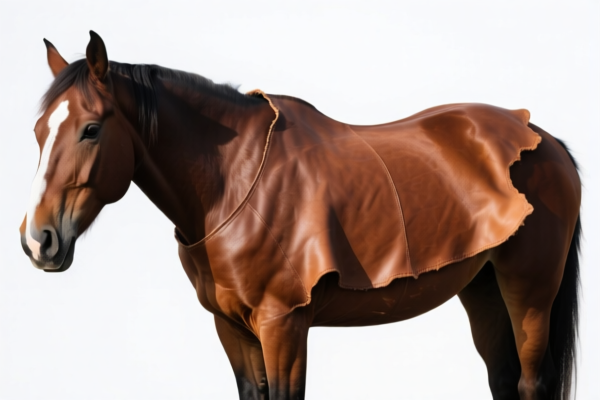
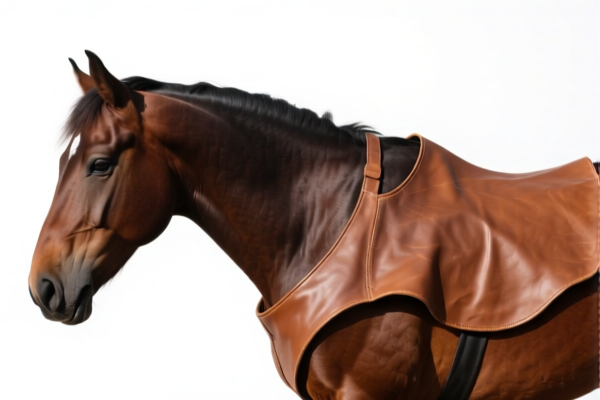
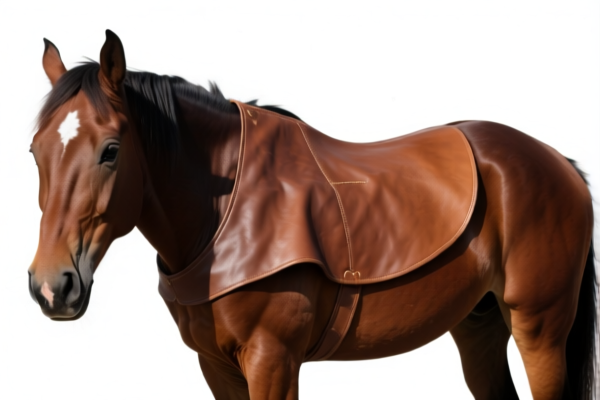
AI Analysis
🐴 Raw Horsehide Leather – Suede Finish
🌐 HS Code Reference & Customs Clearance Guide | 2026 Latest Tariff Analysis | Professional Entry Strategy
📌 I. Product Definition & Classification: Do You Really Understand "Raw Horsehide Leather"?
Raw Horsehide Leather (Suede Finish) refers to unprocessed or minimally processed animal hide from horses, tanned only through liming, pickling, or similar preliminary treatments suitable for further tanning. It is not yet fully tanned into finished leather products. The "suede finish" mentioned in the query typically applies to the surface texture achieved during the retanning or splitting process, but if the leather has not undergone final tanning, bleaching, dyeing, or substantive finishing, it remains classified as semi-processed raw leather.
In international trade, raw horsehide is categorized based on its degree of preparation and intended use. Two primary HS codes apply depending on specific physical characteristics and final intended use:
⚠️ Key Distinction:
- If the leather is standard raw horsehide with suede-like surface treatment but not further prepared than limed/pickled → HS Code 4104.20
- If the leather is other types of raw horsehide (e.g., unique textures, special splits, or intended for specific leather goods manufacturing) → HS Code 4104.90
📦 II. HS Code Classification Details (2026 Latest Tariff Authority Reference)
| HS Code | Product Description | Application Scenario | Preparation Level |
|---|---|---|---|
4104.20 |
Raw horsehide leather, suede finish, not further prepared than limed, pickled, or otherwise prepared for tanning | Suitable for further processing into finished leather products | ✅ Limed/Pickled Only |
4104.90 |
Other raw horsehide leather, including suede, not further prepared than limed, pickled, or otherwise prepared for tanning, intended for use in manufacturing leather goods | Custom hides, special splits, non-standard raw hides | ✅ Limed/Pickled Only |
🔍 Important Reminder:
- Both codes apply to raw leather that has not been fully tanned, dyed, or finished.
- If the leather undergoes additional processing (e.g., chrome tanning, dyeing, coating), it may fall under Chapter 41 (Tanned Leather) instead of raw leather.
- Misclassification can lead to significant tax penalties and clearance delays.
💰 III. 2026 Latest Tariff Rate Details (Including Surcharges & Policy Add-ons)
✅ Applicable Country: United States (US)
✅ Origin: China (CN)
✅ Effective Date: November 10, 2025 onwards (including subsequent imports)
🎯 1. 4104.20 —— Raw Horsehide Leather, Suede Finish
| Item | Content |
|---|---|
| Base Tariff Rate | 0% (ad valorem) |
| USITC Surcharge | +25% (from USITC Footnote 9903.88.01) |
| IEEPA Surcharge | +10% (for Chinese/HK products, effective Nov 10, 2025) |
| Total Tariff Rate | 45% |
| Tax Calculation | CIF Value × 45% |
| De Minimis Exemption Eligibility | ❌ Not Eligible (deny_de_minimis) |
| Legal Pathway | IEEPA:9903.01.25 → IEEPA:9903.01.24 → USITC:4104.20 → FOOTNOTE:9903.88.01 |
📌 Explanation:
- The "USITC Surcharge 25%" originates from the "additional tariffs" under Section 301 of the US Trade Act;
- The "IEEPA 10%" is an additional tariff against China under the International Emergency Economic Powers Act;
- Total rate 45%, which is considered very high, must be anticipated in advance!
🎯 2. 4104.90 —— Other Raw Horsehide Leather
| Item | Content |
|---|---|
| Base Tariff Rate | 0% |
| USITC Surcharge | +25% |
| IEEPA Surcharge | +10% |
| Total Tariff Rate | 45% |
| Tax Calculation | CIF × 45% |
| De Minimis Exemption Eligibility | ❌ Not Eligible |
| Legal Pathway | IEEPA:9901.25 → IEEPA:9903.01.24 → USITC:4104.90 → FOOTNOTE:9903.88.01 |
📌 Note:
- Same as previous item, both are raw leather categories, with identical tax rates;
- Whether it is "standard horsehide" or "special split raw hide," as long as it is not fully tanned, this tariff applies.
🛠️ IV. Customs Clearance Practical Advice (Real-world Pitfall Avoidance Guide)
✅ 1. Required Documentation Checklist (All Essential)
| Document | Must Provide | Notes |
|---|---|---|
| ✅ Product Specification Sheet | ✔️ | Includes size, texture type, preparation method (limed/pickled) |
| ✅ Leather Treatment Certificate | ✔️ | Proof of no further processing beyond liming/pickling |
| ✅ Product Photos (with label) | ✔️ | Clear display of model, brand, preparation status |
| ✅ Third-party Test Report | ✔️ | If applicable, RoHS, REACH compliance |
| ✅ Commercial Invoice | ✔️ | Clearly state "Raw Horsehide Leather, Suede Finish" |
| ✅ Certificate of Origin (CO) | ✔️ | If non-Chinese origin,可申请 preferential rates |
| ✅ Packing List | ✔️ | Describe relationship between raw hides and packaging |
✅ 2. Declaration Tips (Key Mantra)
🔥 "Raw Leather Not Finished, Suede Finish Does Not Mean Tanned, Name Precise, Tax Down by Half!"
| Scenario | Correct Declaration | Wrong Practice |
|---|---|---|
| Raw horsehide with suede surface but not tanned | 4104.20 or 4104.90 |
Misreported as "finished leather" → 45% |
| Fully tanned horsehide | 4104.11 or 4104.19 |
Misreported as "raw" → Delayed clearance |
| Raw hides + accessories | Declare separately | Split declaration → Each item taxed higher |
| Industrial raw hides | 4104.20 or 4104.90 |
Misreported as "finished leather" → Penalty |
✅ 3. Special Case Handling
| Scenario | Handling Advice |
|---|---|
| OEM Custom Raw Hides | Provide client order + design specs to avoid "non-standard" classification |
| Hides with Partial Tanning | If partially tanned, declare as "semi-tanned" with supporting documentation |
| Hides for Medical Use | If special purpose, apply for "non-commercial use" exemption with proof |
| Hides for Military/Aerospace | Apply for "special purpose" declaration, possible rate reduction, communicate in advance |
🌍 V. Global Main Market Customs Clearance Comparison (2026 Latest)
| Country/Region | Recommended HS Code | Tariff | Certification Requirements | Notes |
|---|---|---|---|---|
| 🇺🇸 United States | 4104.20 / 4104.90 |
45% (Chinese origin) | None specific | High surcharge |
| 🇨🇳 China | 4104.20 / 4104.90 |
5% | None | No additional surcharges |
| 🇪🇺 European Union | 4104.20 / 4104.90 |
0% (if compliant with REACH) | CE + REACH | No surcharges |
| 🇦🇺 Australia | 4104.20 / 4104.90 |
5% | None | No surcharges |
| 🇯🇵 Japan | 4104.20 / 4104.90 |
0% | None | No surcharges |
📌 Conclusion:
- The United States is the only market imposing high additional surcharges on raw horsehide leather;
- Chinese-origin raw horsehide leather has extremely high clearance costs in the US,建议 assess supply chain adjustments in advance.
📌 VI. Common Mistakes & Pitfall Avoidance Guide (Lessons Learned)
❌ Mistake 1: Declaring "finished leather" for raw horsehide
👉 Consequence: Tax rate drops from 45% to 0% → Refund + Penalty!
❌ Mistake 2: Declaring "raw leather" for fully tanned leather
👉 Consequence: Tax rate increases from 0% to 45% → Back Taxes + Penalties!
❌ Mistake 3: Not providing treatment certificates, only stating "raw leather"
👉 Consequence: Customs cannot verify preparation level → Delayed clearance or return
❌ Mistake 4: Using "finished leather" or "tanned leather" as declaration name
👉 Consequence: If actually raw, misclassification → Back Taxes + Late Fees
✅ Correct Practice:
"Raw Horsehide Leather, Suede Finish, Limed and Pickled Only, Not Further Prepared, Model XYZ, Suitable for Further Processing"
🎯 VII. Conclusion: Professional Declaration, Save Time and Cost!
🎯 Remember the Mantra:
🔹 "Raw Leather Not Tanned, Suede Finish Doesn't Mean Finished, 45% Tax on Raw, 0% on Finished, Split Declaration is Death!"
🔹 "HS Code Determines Destiny, Tax Rate Differs by 45 Points, One Step Wrong, Back Taxes Upwards!"
📌 Tips:
- If your raw horsehide leather is originally from Vietnam, Mexico, Thailand, Malaysia, you can apply for IEEPA Exemption, tariff is only 0%~5%;
- Suggest pre-applying for Advance Ruling to avoid clearance risks.
📣 Immediate Action:
📞 Contact Professional Customs Broker + Provide Product Photos + Apply for HS Code Advance Ruling
🚀 Let your raw horsehide leather clear customs smoothly, export efficiently, and double profits!
✨ Professional Customs Clearance Starts with Accurate Classification!
💼 Every penny of your cost deserves precise calculation!
Customer Reviews
About HS Code Classification
The Harmonized System (HS) is an internationally standardized nomenclature developed by the World Customs Organization (WCO) to classify traded products. Over 200 countries use the HS system as the basis for customs tariffs, trade statistics, and import/export regulations.
Each HS code follows a hierarchical structure:
- Chapter (2 digits) — Broad category of goods (e.g., Chapter 84: Machinery and Mechanical Appliances)
- Heading (4 digits) — More specific grouping within the chapter
- Subheading (6 digits) — Internationally standardized breakdown, used by all WCO member countries
- National subdivisions (8-10 digits) — Country-specific extensions for further classification, such as US HTSUS 10-digit codes
Correct HS code classification is essential for smooth customs clearance, accurate duty payment, and compliance with trade regulations. Misclassification can lead to customs delays, overpayment of duties, or penalties.
When importing from CN to US, the applicable tariff rates may include:
- Most-Favored-Nation (MFN) rate — The standard duty rate applied to WTO members
- General rate — Applied to countries without trade agreements
- Trade remedy duties — Additional tariffs such as Section 301 (anti-dumping), Section 232 (national security), or countervailing duties
The information provided on this page is for reference purposes only. For official classification, please consult with your local customs authority or a licensed customs broker.