Raw Leather (4102210065)
CN → US| HS Code | Tariff Rate | Origin | Destination | Doc |
|---|---|---|---|---|
| 4101503000 | 19.9% | CN | US | Official Doc |
| 4102210065 | 17.5% | CN | US | Official Doc |
| 4101502000 | 17.5% | CN | US | Official Doc |
| 4101504000 | 22.5% | CN | US | Official Doc |
Product Images
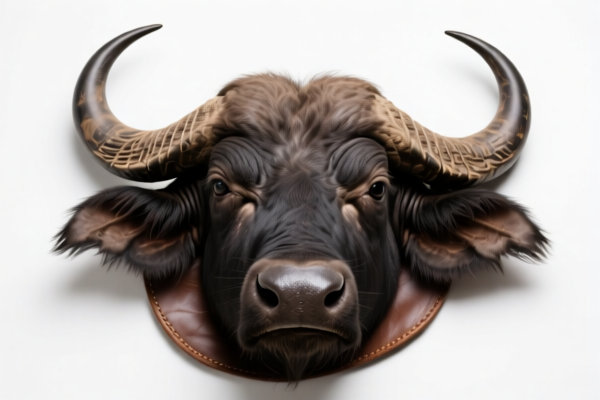
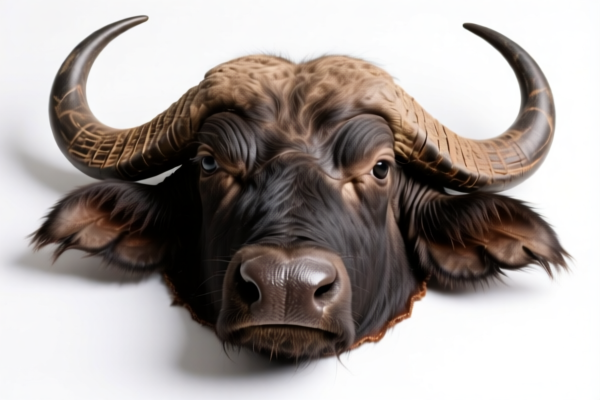
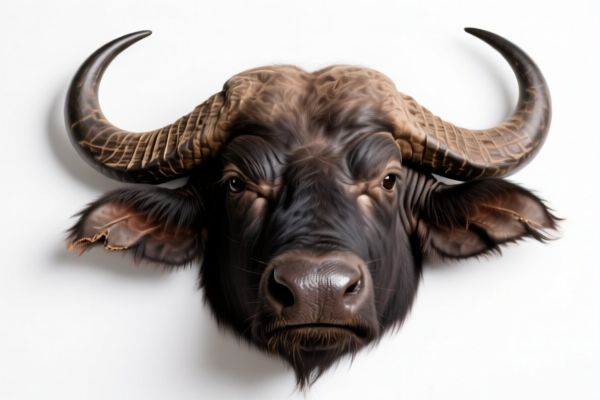
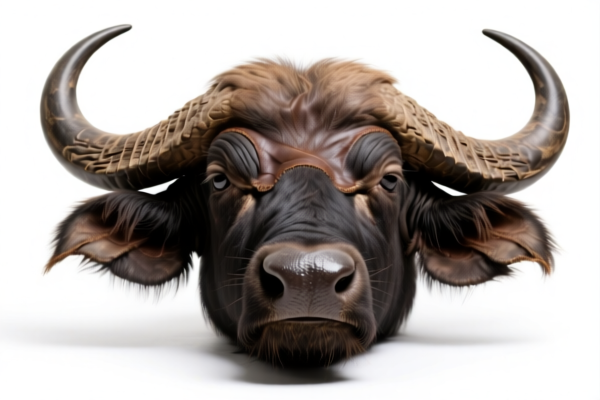
AI Analysis
🐑 Raw Sheepskins (Raw Leather, 4102210065)
🌐 HS Code Reference & Customs Clearance Guide | 2026 Latest Tariff Analysis | Professional Customs Strategy
📌 I. Product Definition & Classification: Do You Really Understand "Raw Sheepskins"?
Raw sheepskins refer to the skins of sheep that have been removed from the carcass but have not undergone any tanning, curing, or further processing beyond simple cleaning or salting. In international trade, they are classified strictly as "Raw Hides and Skins, Other than Furskins."
For HS Code 4102.21.00.65, the specific attributes are: * Type: Sheepskins (not hides from bovine animals like cows/horses). * State: Raw, unwashed, not tanned. * Form: Whole skins (整皮).
⚠️ Key Distinction:
- If the skin is tanned (leather) or crust (partially tanned), it does NOT fall under 4102. It moves to Chapters 41.15 or 41.07.
- If the skin is fur-bearing (with wool intact and valuable for fur), it may fall under 4301 (Furskins). However, if the wool is removed or the skin is processed for leather making, it stays in 4102.
- 4102.21.00.65 specifically targets raw, whole sheepskins intended for leather production.
📦 II. HS Code Classification Detail (2026 Latest Tariff Authority Mapping)
| HS Code | Product Description | Application Scenario | Processing State |
|---|---|---|---|
4102.21.00.65 |
Raw sheepskins, whole, unwashed, untanned | Leather manufacturing, fur trimming, upholstery raw material | ✅ Raw (Unprocessed) |
4101.50.30.00 |
Raw bovine/horse skins, whole | Cattle/Horse leather production | ✅ Raw (Bovine/Horse) |
4101.50.20.00 |
Raw bovine/horse skins, whole | Cattle/Horse leather production | ✅ Raw (Bovine/Horse) |
4101.50.40.00 |
Raw bovine/horse skins, whole | Cattle/Horse leather production | ✅ Raw (Bovine/Horse) |
🔍 Critical Reminder:
- 4102.21.00.65 is exclusive to Sheep. Do not misclassify cow/horse skins (which are under 4101) under this code.
- If the sheepskin is tanned, it must be declared under 4107 or 4115, not 4102.
- "Whole skin" (整皮) means the skin is intact. If cut into pieces or scraps, it may fall under different subheadings.
💰 III. 2026 Latest Tariff Rate Breakdown (Including Surtaxes & Policy Add-ons)
✅ Applicable Country: USA (US)
✅ Country of Origin: China (CN)
✅ Effective Time: 2025 Nov 10 onwards (including subsequent imports)
🎯 1. 4102.21.00.65 —— Raw Sheepskins, Whole, Unwashed
| Item | Content |
|---|---|
| Base Tariff Rate | 0.0% (ad valorem) Note: Raw hides/skins often have low base duties due to being raw materials. |
| USITC Surcharge (Section 301) | +7.5% Additional tariffs imposed on Chinese goods under Section 301. |
| IEEPA Surcharge (Section 122/EO) | +10% Tariff under International Emergency Economic Powers Act for specific Chinese products. |
| Total Tariff Rate | 17.5% |
| Tax Calculation | CIF Value × 17.5% |
| De Minimis Eligibility | ❌ Not Applicable (Goods are subject to strict scrutiny due to raw material status and surcharges) |
| Legal Basis Path | HTSUS: 4102.21.00.65 → USITC Footnote: Section 301 (7.5%) → IEEPA: Section 122/EO (10%) |
📌 Explanation:
- While the base tariff is 0%, the combined surcharges total 17.5%.
- Section 301 (7.5%) is a fixed additional duty on most Chinese-origin goods.
- IEEPA (10%) is an additional surcharge targeting specific categories, often including raw agricultural or leather materials in recent policy updates.
- Total 17.5% is significantly lower than bovine hides (22.5%) but still substantial for raw materials.📌 Contrast with Bovine Hides:
- Bovine Hides (4101 series): Base 0–5% + 7.5% + 10% = 17.5% – 22.5%
- Sheepskins (4102.21.00.65): Base 0% + 7.5% + 10% = 17.5%
- Advantage: Sheepskins have a slightly lower total tariff compared to some bovine hide categories (e.g., 4101.50.40.00 at 22.5%).
🛠️ IV. Customs Clearance Practical Advice (实战避坑指南)
✅ 1. Document Checklist (Non-negotiable)
| Document | Required | Explanation |
|---|---|---|
| ✅ Commercial Invoice | ✔️ | Must clearly state "Raw Sheepskins, Whole, Unwashed" and HS Code 4102.21.00.65. |
| ✅ Packing List | ✔️ | Detail weight (gross/net), number of skins, and packaging type (e.g., salted, dried). |
| ✅ Species Certificate | ✔️ | Proof that the skins are from Sheep, not other animals. Misclassification leads to fines. |
| ✅ Health/Veterinary Certificate | ✔️ | Required to prove the skins are free from diseases (e.g., Brucellosis, Anthrax). |
| ✅ Phytosanitary Certificate | ✔️ | If treated with preservatives, proof of treatment may be required. |
| ✅ Country of Origin Certificate | ✔️ | Critical for applying surcharges accurately. |
✅ 2. Declaration Tips (Key Mnemonics)
🔥 "Raw & Whole, Sheep & Not Cow, 17.5% Tariff, Docs Must Flawless!"
| Scenario | Correct Declaration | Wrong Practice |
|---|---|---|
| Raw Sheepskins (Whole) | 4102.21.00.65 |
Misdeclare as "Leather" → 4107/4115 → Different tax & regulations |
| Tanned Sheepskins | 4107.21 or 4115.10 |
Declare as Raw → Smuggling Risk / Heavy Fines |
| Fur Pelts (with wool) | 4301.10 |
Declare as Raw Leather → Wrong Chapter, Delay |
| Bovine Hides | 4101.50.xx |
Declare as Sheepskins → Classification Error, Penalty |
✅ 3. Special Case Handling
| Situation | Handling Advice |
|---|---|
| Salted Skins | Ensure invoice states "Salted" to prove preservation method. Unsalted skins may rot and be rejected. |
| Wool-Left Skins | If wool is left on, clarify if intended for fur or leather. If for leather, wool may be removed later. Declare accordingly. |
| Mixed Batches | If a shipment contains both sheep and cow hides, must be separated and declared under respective HS codes. Mixed declaration is prohibited. |
| Sample Shipments | Even for samples, declare properly. Raw hides are subject to biosecurity checks. |
🌍 V. Global Market Clearance Comparison (2026 Latest)
| Country/Region | Recommended HS Code | Tariff Rate | Certification Requirements | Notes |
|---|---|---|---|---|
| 🇺🇸 USA | 4102.21.00.65 |
17.5% (100% China) | Veterinary Cert + Phyto | 17.5% includes 7.5% Sec 301 + 10% IEEPA |
| 🇨🇳 China | 4102.21.00.65 |
0% | None | Zero tariff for imports into China |
| 🇪🇺 EU | 4102.21 |
0% | REACH (if treated) | No additional surcharges for raw hides |
| 🇦🇺 Australia | 4102.21 |
5% | None | Low tariff, but strict biosecurity |
| 🇯🇵 Japan | 4102.21 |
0% | None | Free trade agreement benefits may apply |
📌 Conclusion:
- USA is the most expensive market due to 17.5% combined tariffs.
- China, EU, and Japan offer 0% tariffs, making them ideal destinations for raw sheepskin imports.
- For US-bound shipments, cost calculation must include the 17.5% surcharge.
📌 VI. Common Mistakes & Pitfalls (Blood & Tears Lessons)
❌ Mistake 1: Declaring Tanned Leather as Raw Skins
👉 Consequence: Customs inspection reveals tanning process → Heavy Fines, Retaxation, and Possible Seizure.
❌ Mistake 2: Confusing Sheepskins with Bovine Hides
👉 Consequence: Wrong HS code → 17.5% vs 22.5% difference → Overpayment or Underpayment penalties.
❌ Mistake 3: Missing Veterinary Certificate
👉 Consequence: Shipment Held at Port for testing → Storage fees + delays → Delivery Failure.
❌ Mistake 4: Not Separating Wool-Left vs Wool-Removed
👉 Consequence: Misclassification under 4301 (Furs) vs 4102 (Leather) → Customs Rejection.
✅ Correct Practice:
"Raw Sheepskins, Whole, Unwashed, Salted, HS Code 4102.21.00.65, Country of Origin: China, Veterinary Cert Attached."
🎯 VII. Conclusion: Precision in Classification Saves Money!
🎯 Remember the Mnemonic:
🔹 "Sheep is 4102, Cow is 4101, Raw is 0% base, Surcharge 17.5%!"
🔹 "Docs must be clean, Vet cert is key, 17.5% tariff, plan ahead, don't be shy!"
📌 Pro Tip:
If your sheepskins are originating from Vietnam, Mexico, or Thailand, you may qualify for lower or zero USITC surcharges.
Recommend Advance Ruling from CBP to confirm the 17.5% rate and ensure biosecurity compliance.
📣 Immediate Action:
📞 Contact a Licensed Customs Broker + Provide Product Photos + Apply for Advance Ruling
🚀 Let your raw sheepskins pass customs smoothly, avoid delays, and maximize profit!
✨ Professional Customs Clearance Starts with Accurate Classification!
💼 Every percentage point of tariff matters!
Customer Reviews
About HS Code Classification
The Harmonized System (HS) is an internationally standardized nomenclature developed by the World Customs Organization (WCO) to classify traded products. Over 200 countries use the HS system as the basis for customs tariffs, trade statistics, and import/export regulations.
Each HS code follows a hierarchical structure:
- Chapter (2 digits) — Broad category of goods (e.g., Chapter 84: Machinery and Mechanical Appliances)
- Heading (4 digits) — More specific grouping within the chapter
- Subheading (6 digits) — Internationally standardized breakdown, used by all WCO member countries
- National subdivisions (8-10 digits) — Country-specific extensions for further classification, such as US HTSUS 10-digit codes
Correct HS code classification is essential for smooth customs clearance, accurate duty payment, and compliance with trade regulations. Misclassification can lead to customs delays, overpayment of duties, or penalties.
When importing from CN to US, the applicable tariff rates may include:
- Most-Favored-Nation (MFN) rate — The standard duty rate applied to WTO members
- General rate — Applied to countries without trade agreements
- Trade remedy duties — Additional tariffs such as Section 301 (anti-dumping), Section 232 (national security), or countervailing duties
The information provided on this page is for reference purposes only. For official classification, please consult with your local customs authority or a licensed customs broker.