Raw Leather (HS Code 4106219000)
CN → US| HS Code | Tariff Rate | Origin | Destination | Doc |
|---|---|---|---|---|
| 4102101000 | 17.5% | CN | US | Official Doc |
| 4102291090 | 17.5% | CN | US | Official Doc |
| 4101503000 | 19.9% | CN | US | Official Doc |
| 4101503500 | 19.9% | CN | US | Official Doc |
| 4101503000 | 19.9% | CN | US | Official Doc |
Product Images
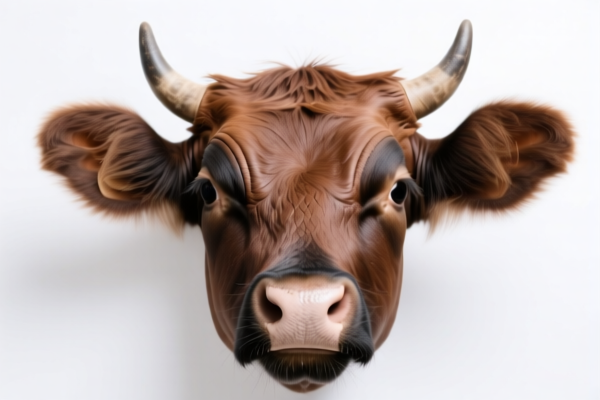
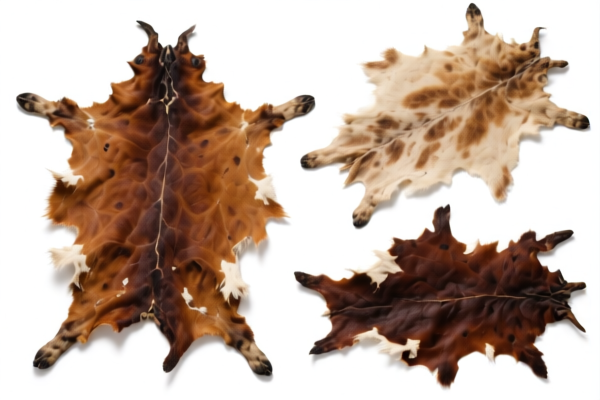
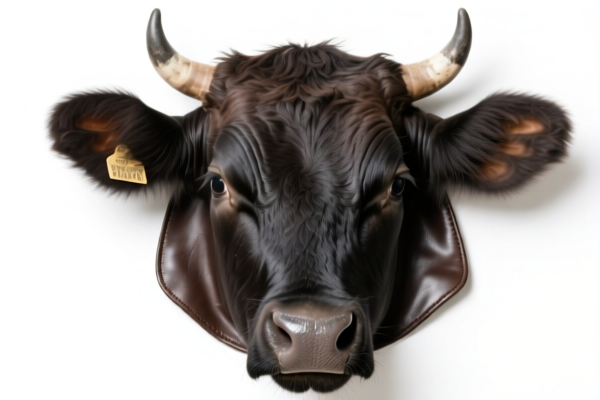

AI Analysis
🐂 Raw Leather (HS Code 4106.21.90.00)
🌐 HS Code Reference & Customs Clearance Guide | 2026 Latest Tariff Analysis | Professional Clearance Strategy
📌 I. Product Definition & Classification: What Exactly is "Raw Leather"?
Raw Leather refers to skins or hides of animals (primarily cattle, horses, sheep, or goats) that have undergone no tanning, curing, or preservation processes beyond simple salting, liming, or pickling. In international trade, the classification heavily depends on:
1. State of preservation: Un-tanned, raw, or "green."
2. Species: Cattle, horse, sheep, etc.
3. Processing level: Not further prepared for tanning.
⚠️ Key Distinction:
- If the leather is tanned, dyed, or crusted → It falls under Chapter 41 (Tanned Leather) codes like4104or4105.
- If the leather is still raw (even if salted) → It falls under Chapter 41 (Raw Hides/Skins) codes like4101,4102, or4106.
- HS 4106.21.90.00 specifically targets Sheep or Lamb Skins, in raw state, other than those of lambs with wool on.
📦 II. HS Code Classification Details (2026 Latest Tariff Authority Comparison)
| HS Code | Product Description | Applicable Scenario | Tax Rate (US Import from CN) |
|---|---|---|---|
4106.21.90.00 |
Sheep or lamb skins, raw, other than those of lambs with wool on | Raw sheep/lamb pelts, salted, no wool | 17.5% |
4102.10.10.00 |
Cattle hides, raw, salted, unsplit, weight ≤ 45kg | Large cattle hides, un-tanned | 17.5% |
4102.29.10.90 |
Other animal skins, raw, not covered elsewhere | Goat, pig, exotic raw skins | 17.5% |
4101.50.30.00 |
Cattle hides, raw, weight > 45kg, other | Heavy cattle hides, un-tanned | 19.9% |
4101.50.35.00 |
Cattle hides, raw, other specifications | Alternative cattle raw hides | 19.9% |
4101503000 |
Cattle hides, raw, general category | General raw cattle hides | 19.9% |
🔍 Critical Note:
-4106.21.90.00is specifically for Sheep/Lamb skins.
- If your product is Cattle hides, do NOT use this code; use4101.xxxxcodes instead.
- If the skin is with wool on (e.g., lamb pelts), it may fall under a different subheading or be excluded from this specific code.
💰 III. 2026 Latest Tariff Rate Breakdown (Including Surcharges & Policy Add-ons)
✅ Applicable Country: United States (US)
✅ Origin: China (CN)
✅ Effective Date: November 10, 2025 (including subsequent imports)
🎯 1. 4106.21.90.00 —— Sheep or Lamb Skins, Raw (Other Than Wool-On Lambs)
| Item | Content |
|---|---|
| Base Duty Rate | 0% (ad valorem) |
| USITC Surcharge | +7.5% (Section 301 Additional Duty) |
| IEEPA Surcharge | +10% (China-specific tariff under International Emergency Economic Powers Act) |
| Total Duty Rate | 17.5% |
| Duty Calculation | CIF Value × 17.5% |
| De Minimis Eligibility | ❌ Not Eligible (deny_de_minimis) |
| Legal Basis Path | IEEPA:9903.01.25 → USITC:4106.21.90.00 → FOOTNOTE:301.01.02 |
📌 Explanation:
- "USITC Surcharge 7.5%" comes from Section 301 of the Trade Act, applied to specific Chinese-origin goods.
- "IEEPA 10%" is the additional tariff imposed on Chinese products under executive order.
- Total 17.5% is considered moderate-high for raw materials.
- No de minimis exemption: All shipments must declare full value; small packages do not bypass duties.
🛠️ IV. Customs Clearance Practical Advice (Battle-Tested Pitfall Avoidance)
✅ 1. Documentation Checklist (All Required)
| Document | Must Provide | Notes |
|---|---|---|
| ✅ Product Specification Sheet | ✔️ | Species (Sheep/Lamb), Preservation Method (Salted/Dried), Weight per Skin |
| ✅ Photos of Raw Skins | ✔️ | Clear images showing no tanning, no dye, no wool (if applicable) |
| ✅ Commercial Invoice | ✔️ | Must clearly state "Raw Sheep/Lamb Skins" and HS Code 4106.21.90.00 |
| ✅ Packing List | ✔️ | Detailed count, gross/net weight, package dimensions |
| ✅ Phytosanitary Certificate | ✔️ | If required by USDA for animal origin goods |
| ✅ Certificate of Origin | ✔️ | Proves Chinese origin to apply correct surcharges |
✅ 2. Declaration Tips (Key Mnemonics)
🔥 "Raw means No Tanning, Species Must Be Clear, Salt is OK, Wool is Not!"
| Scenario | Correct Declaration | Wrong Action |
|---|---|---|
| Sheep Skins, Salted, No Wool | 4106.21.90.00 |
Misdeclare as Cattle → Wrong code |
| Lamb Skins with Wool On | Different HS Code (e.g., 4106.22) |
Use 4106.21.90.00 → Audit Risk |
| Tanned Sheep Leather | 4104.41 or 4105 |
Use 4106.21.90.00 → Major Misclassification |
| Mixed Hides (Cattle + Sheep) | Declare separately by species | Lump together → Penalties |
✅ 3. Special Cases Handling
| Situation | Handling Advice |
|---|---|
| OEM Raw Skins for Tanners | Provide end-user info; raw skins are often for further processing |
| Skinned with Residual Flesh | Ensure it meets "raw" definition; excessive decomposition may trigger health inspections |
| High-Value Exotic Raw Skins | May require additional permits (e.g., CITES if endangered species) |
| Small Samples | Still subject to 17.5% duty; no de minimis exemption |
🌍 V. Global Market Comparison for Raw Leather (2026 Latest)
| Country/Region | Recommended HS Code | Duty Rate | Certification Requirements | Notes |
|---|---|---|---|---|
| 🇺🇸 USA | 4106.21.90.00 |
17.5% | USDA Inspection + COO | High duty due to Section 301 & IEEPA |
| 🇨🇳 China | 4106.21.90.00 |
5% | N/A | Lower import duty if re-exporting later |
| 🇪🇺 EU | 4106.21.00 |
6.5% | REACH Compliance | No Section 301 equivalent |
| 🇬🇧 UK | 4106.21.00 |
6.5% | Post-Brexit Rules | Similar to EU but separate system |
| 🇦🇺 Australia | 4106.21.00 |
5% | Biosecurity Clearance | Strict animal product controls |
📌 Conclusion:
- USA has the highest effective duty (17.5%) due to additional tariffs.
- EU/UK/Australia have lower base rates but may require stricter biosecurity/REACH checks.
- China as a destination has low import duty but may have different export controls.
📌 VI. Common Errors & Pitfall Guide (Blood-Learned Lessons)
❌ Error 1: Declaring Tanned Leather as Raw Leather
👉 Consequence: Incorrect HS Code → Potential penalty + reclassification delay
❌ Error 2: Missing Species Specification (Sheep vs. Cattle)
👉 Consequence: Customs may detain shipment for verification → Delays & Storage Fees
❌ Error 3: Not specifying "No Wool" for sheep skins
👉 Consequence: Incorrect subheading → Wrong Duty Rate
❌ Error 4: Ignoring USDA Inspection Requirements
👉 Consequence: Entry refused → Return or Destruction
✅ Correct Approach:
“Raw Sheep Skins, Salted, No Wool, Un-tanned, Species: Ovis aries, HS Code 4106.21.90.00, Origin: China”
🎯 VII. Conclusion: Precision Matters for Raw Materials
🎯 Remember the Mnemonic:
🔹 "Raw = No Tanning, Sheep = 4106.21, Total Duty = 17.5%, No De Minimis!"
🔹 "HS Code Determines Duty, Species Matters, Wool Changes Everything!"
📌 Pro Tip:
- If your raw leather is from a different species (e.g., Cattle), use 4101.xxxx codes with 19.9% duty.
- Always provide clear photos and species verification to avoid customs queries.
- Consider Advance Ruling from CBP if unsure about classification.
📣 Immediate Action:
📞 Contact a licensed customs broker + Provide Product Photos + Apply for CBP Advance Ruling
🚀 Ensure Smooth Customs Clearance, Avoid Penalties, Optimize Costs!
✨ Professional Clearance Starts with Accurate Classification!
💼 Every Dollar Saved is a Dollar Earned!
Customer Reviews
About HS Code Classification
The Harmonized System (HS) is an internationally standardized nomenclature developed by the World Customs Organization (WCO) to classify traded products. Over 200 countries use the HS system as the basis for customs tariffs, trade statistics, and import/export regulations.
Each HS code follows a hierarchical structure:
- Chapter (2 digits) — Broad category of goods (e.g., Chapter 84: Machinery and Mechanical Appliances)
- Heading (4 digits) — More specific grouping within the chapter
- Subheading (6 digits) — Internationally standardized breakdown, used by all WCO member countries
- National subdivisions (8-10 digits) — Country-specific extensions for further classification, such as US HTSUS 10-digit codes
Correct HS code classification is essential for smooth customs clearance, accurate duty payment, and compliance with trade regulations. Misclassification can lead to customs delays, overpayment of duties, or penalties.
When importing from CN to US, the applicable tariff rates may include:
- Most-Favored-Nation (MFN) rate — The standard duty rate applied to WTO members
- General rate — Applied to countries without trade agreements
- Trade remedy duties — Additional tariffs such as Section 301 (anti-dumping), Section 232 (national security), or countervailing duties
The information provided on this page is for reference purposes only. For official classification, please consult with your local customs authority or a licensed customs broker.