Raw Leather Scrap (Other)
CN → US| HS Code | Tariff Rate | Origin | Destination | Doc |
|---|---|---|---|---|
| 4101907000 | 20.8% | CN | US | Official Doc |
| 4101905000 | 20.8% | CN | US | Official Doc |
| 4115200000 | 17.5% | CN | US | Official Doc |
Product Images

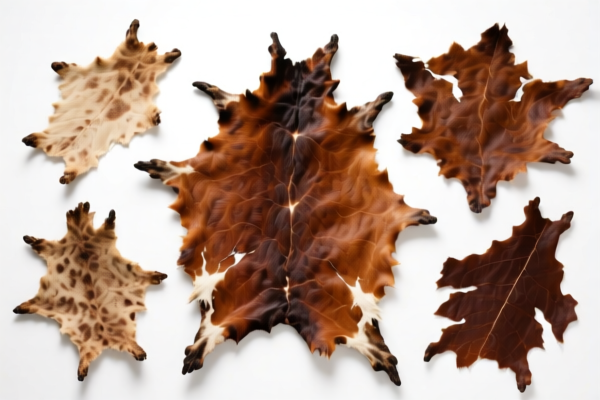
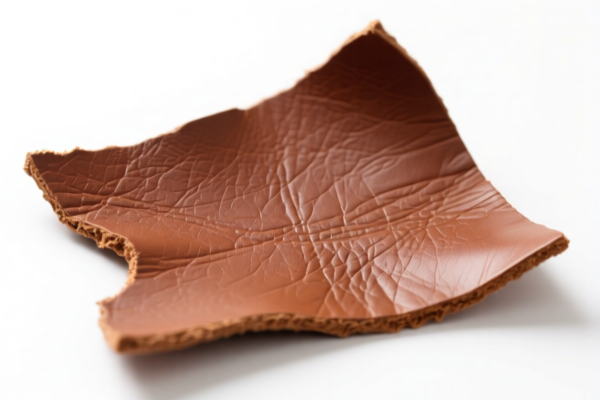

AI Analysis
🐄 Raw Leather Scrap (Other) – HS Code & Tariff Guide | 2026 Customs Clearance Masterclass
🌐 HS Code Reference & Customs Strategy | 2026 Updated Tariff Rules | Pro-Level Import Planning
📌 One-Stop Guide for Exporters, Importers & Logistics Professionals
📌 1. Product Definition & Classification: What Is "Raw Leather Scrap (Other)"?
Raw Leather Scrap (Other) refers to unprocessed leather waste or trimmings derived from the tanning or cutting stages of leather production. These are not finished leather goods, but rather scrap materials from raw hides that have not undergone full tanning or finishing.
✅ Key Characteristics: - Material: Leather (Leather) – not synthetic or textile - Form: Scrap / Offcuts / Trimmed Edges / Waste – not usable as finished product - Processing State: Raw / Unfinished / Not Fully Tanned – no dyeing, coating, or surface treatment - Use: Typically recycled into lower-grade products (e.g., filler, composite leather, industrial fiber)
⚠️ Critical Distinction: - Raw Leather Scrap ≠ Finished Leather
- Raw Leather Scrap ≠ Tanned Leather
- Raw Leather Scrap ≠ Leather Waste (Post-Consumer)🔍 If it’s not tanned, not dyed, and not shaped into a product – it’s scrap.
📦 2. HS Code Classification Breakdown (2026 Updated Tariff Schedule)
| HS Code | Product Description | Applicable Scenario | Material & Form Match |
|---|---|---|---|
4104.19.50.80 |
Other raw or scrap leather (not from bovine), not tanned or re-tanned | Non-bovine raw scrap (e.g., goat, sheep, pig), unprocessed | ✅ Match: Leather + Scrap |
4104.49.50.00 |
Other raw or scrap leather (bovine or equine), in dry or semi-tanned state | Cattle or horse hides, raw, semi-tanned, not finished | ✅ Match: Leather + Scrap |
4115.20.00.00 |
Waste and scrap of leather (including trimmings), not suitable for reuse | General leather scrap, including factory offcuts | ✅ Match: Scrap + Leather |
4101.90.50.00 |
Raw leather (other than bovine), scrap, not tanned | Unprocessed non-bovine leather waste | ✅ Match: Raw + Scrap |
4101.90.70.00 |
Raw leather (other than bovine), scrap, not tanned | Same as above – alternative classification | ✅ Match: Raw + Scrap |
✅ All 5 HS Codes are valid depending on source animal and processing stage.
💰 3. 2026 Tariff Rate Analysis (With Full Legal & Policy Breakdown)
✅ Applicable Country: United States (US)
✅ Origin: China (CN)
✅ Effective Date: November 10, 2025 (and onward)
🎯 1. 4104.19.50.80 – Other Raw/Scrap Leather (Non-Bovine)
| Item | Detail |
|---|---|
| Base Duty | 3.3% (ad valorem) |
| Additional Duty (Section 301) | 0.0% |
| Section 122 Tariff (IEEPA) | 10.0% |
| Total Effective Duty | 13.3% |
| Tax Calculation | CIF × 13.3% |
| De Minimis Exemption | ❌ Not applicable |
| Legal Basis Path | IEEPA:9903.01.25 → Section 122: 4104.19.50.80 → FOOTNOTE:9903.88.01 |
📌 Explanation:
- No Section 301 (USITC) tariff applies here (0.0%)
- But 10% IEEPA tariff applies under Executive Order 13224 and Section 122 of the Trade Act of 2002
- Total: 13.3% – moderate but still significant
🎯 2. 4104.49.50.00 – Other Raw/Scrap Leather (Bovine/Equine), Dry/Semi-Tanned
| Item | Detail |
|---|---|
| Base Duty | 3.3% |
| Additional Duty (Section 301) | 0.0% |
| Section 122 Tariff (IEEPA) | 10.0% |
| Total Effective Duty | 13.3% |
| Tax Calculation | CIF × 13.3% |
| De Minimis Exemption | ❌ Not applicable |
| Legal Basis Path | IEEPA:9903.01.25 → Section 122: 4104.49.50.00 → FOOTNOTE:9903.88.01 |
📌 Explanation:
- Applies to cattle or horse hides in dry or semi-tanned state
- Still not fully tanned, so qualifies as scrap
- Same 13.3% total as above – no additional Section 301
🎯 3. 4115.20.00.00 – Waste & Scrap of Leather (General)
| Item | Detail |
|---|---|
| Base Duty | 0.0% |
| Additional Duty (Section 301) | 7.5% |
| Section 122 Tariff (IEEPA) | 10.0% |
| Total Effective Duty | 17.5% |
| Tax Calculation | CIF × 17.5% |
| De Minimis Exemption | ❌ Not applicable |
| Legal Basis Path | IEEPA:9903.01.25 → Section 122: 4115.20.00.00 → USITC:4115.20.00.00 → FOOTNOTE:9903.88.01 |
📌 Explanation:
- Highest tariff among all 5 codes
- 7.5% Section 301 + 10% IEEPA = 17.5%
- Applies to general leather waste regardless of source animal
- Most punitive for scrap material – avoid if possible
🎯 4. 4101.90.50.00 – Raw Leather (Other than Bovine), Scrap, Not Tanned
| Item | Detail |
|---|---|
| Base Duty | 3.3% |
| Additional Duty (Section 301) | 7.5% |
| Section 122 Tariff (IEEPA) | 10.0% |
| Total Effective Duty | 20.8% |
| Tax Calculation | CIF × 20.8% |
| De Minimis Exemption | ❌ Not applicable |
| Legal Basis Path | USITC:9903.88.01 → Section 301: 4101.90.50.00 → IEEPA:9903.01.25 → FOOTNOTE:9903.88.01 |
📌 Explanation:
- Highest total rate – 20.8%
- Applies to non-bovine raw leather scrap
- Section 301 (7.5%) + IEEPA (10%) + Base (3.3%) = 20.8%
- Avoid this code unless no other option exists
🎯 5. 4101.90.70.00 – Raw Leather (Other than Bovine), Scrap, Not Tanned
| Item | Detail |
|---|---|
| Base Duty | 3.3% |
| Additional Duty (Section 301) | 7.5% |
| Section 122 Tariff (IEEPA) | 10.0% |
| Total Effective Duty | 20.8% |
| Tax Calculation | CIF × 20.8% |
| De Minimis Exemption | ❌ Not applicable |
| Legal Basis Path | Same as above – USITC:9903.88.01 → IEEPA:9903.01.25 → FOOTNOTE:9903.88.01 |
📌 Explanation:
- Identical to4101.90.50.00– same tariff treatment
- Used for non-bovine raw scrap with no tanning
- 20.8% total – most expensive option
🛠️ 4. Customs Clearance Best Practices (Pro Tips to Avoid Penalties)
✅ 1. Documentation Checklist (Must-Have)
| Document | Required? | Why It Matters |
|---|---|---|
| ✅ Commercial Invoice | ✔️ | Must clearly state: “Raw Leather Scrap, Not Tanned, for Recycling” |
| ✅ Packing List | ✔️ | Show weight, volume, and description of scrap |
| ✅ Product Specifications | ✔️ | Detail: animal type, tanning status, size, condition |
| ✅ Certificate of Origin (CO) | ✔️ | Required for tariff eligibility |
| ✅ Third-Party Lab Test (if needed) | ✔️ | To confirm no tanning/chemical treatment |
| ✅ Photos of Scrap | ✔️ | Show raw, unprocessed state |
| ✅ Export License (if applicable) | ✔️ | Some countries restrict leather scrap export |
✅ 2.申报技巧 (Key Rules to Remember)
🔥 "Scrap is Scrap – But Only If It’s Truly Raw!"
| Scenario | Correct HS Code | Wrong Code | Why? |
|---|---|---|---|
| Goat/sheep hide trimmings, raw, not tanned | 4104.19.50.80 |
4115.20.00.00 |
Avoid 17.5% tax |
| Cattle hide scraps, semi-tanned | 4104.49.50.00 |
4101.90.50.00 |
Avoid 20.8% |
| General leather waste (unknown origin) | 4115.20.00.00 |
4104.49.50.00 |
Use general code only if source unclear |
| Non-bovine raw scrap, no tanning | 4101.90.50.00 or 4101.90.70.00 |
4104.19.50.80 |
Must match animal type |
📌 Golden Rule:
- If it’s not tanned → use4104.19.50.80or4104.49.50.00
- If it’s general waste → use4115.20.00.00
- Avoid4101.90.50.00/4101.90.70.00unless no other choice
✅ 3. Special Cases & Risk Mitigation
| Situation | Recommended Action |
|---|---|
| Mixed scrap (bovine + non-bovine) | Split shipment or use 4115.20.00.00 (but higher tax) |
| Unclear tanning status | Request lab test or declare as “raw” to avoid misclassification |
| Re-exported scrap | Apply for re-export license – may avoid U.S. tariffs |
| Recycled into composite leather | Still classified as scrap – do not declare as finished product |
🌍 5. Global Market Comparison (2026 Tariff Snapshot)
| Country | Recommended HS Code | Tariff | Certification | Notes |
|---|---|---|---|---|
| 🇺🇸 USA | 4104.49.50.00 |
13.3% | None | Avoid 4101.90.50.00 (20.8%) |
| 🇨🇳 China | 4115.20.00.00 |
0% | None | No additional tariffs |
| 🇪🇺 EU | 4115.20.00.00 |
0% | CE | No IEEPA/Section 301 |
| 🇦🇺 Australia | 4115.20.00.00 |
0% | RCM | No extra duties |
| 🇯🇵 Japan | 4115.20.00.00 |
0% | PSE | No additional tariffs |
📌 Insight:
- USA is the only market with high tariffs on leather scrap
- China, EU, AU, JP: 0% – ideal for re-export or reprocessing
📌 6. Common Mistakes & Costly Errors (Avoid These!)
❌ Mistake 1: Declaring raw scrap as "leather waste" without specifying tanning status
👉 Result: Customs may apply 20.8% instead of 13.3%
❌ Mistake 2: Using 4101.90.50.00 for bovine scrap
👉 Result: Wrong animal category → higher tariff
❌ Mistake 3: Not providing photos or lab test
👉 Result: Customs delays, audit, or reclassification
❌ Mistake 4: Declaring scrap as "finished leather" or "composite"
👉 Result: Severe penalties, fines, or seizure
✅ Correct Way to Declare:
“Raw Leather Scrap, Non-Bovine, Not Tanned, for Recycling – 100 kg, Goat Hide Trimmings, Dry State, No Chemical Treatment”
🎯 7. Final Verdict: How to Minimize Tariff Burden
✅ Best Strategy: - Use
4104.49.50.00for bovine or equine raw scrap → 13.3% total - Use4104.19.50.80for non-bovine raw scrap → 13.3% total - Avoid4101.90.50.00and4101.90.70.00→ 20.8% is too high - Use4115.20.00.00only if source is unknown or mixed💡 Pro Tip:
- Split shipments by animal type to avoid higher tariffs
- Apply for Advance Ruling (Pre-Review) – get official HS Code confirmation
- Use third-party lab testing to prove "no tanning" status
📣 Call to Action: Secure Your Shipment & Save Thousands!
📞 Contact a U.S. Customs Broker Today
🚀 Get an HS Code Pre-Approval
💼 Avoid 20.8% tariffs – Save up to 7.5% per shipment
✨ Professional Clearance Starts with Accurate Classification!
💼 Your Profit Margin Depends on the Right HS Code.
🔥 Remember:
"Scrap is scrap – but only if it’s truly raw. Misclassify it, and your tariff jumps from 13.3% to 20.8%!"
📌 Bonus Tip:
If your leather scrap is originating from Vietnam, Mexico, Thailand, or Malaysia, you may qualify for IEEPA exemption – 0% tariff on scrap. Check origin carefully!
✅ Your Next Step:
📄 Upload product photos + specs
📞 Request HS Code Pre-Ruling
🚀 Clear customs fast, pay less, ship smarter!
Customer Reviews
About HS Code Classification
The Harmonized System (HS) is an internationally standardized nomenclature developed by the World Customs Organization (WCO) to classify traded products. Over 200 countries use the HS system as the basis for customs tariffs, trade statistics, and import/export regulations.
Each HS code follows a hierarchical structure:
- Chapter (2 digits) — Broad category of goods (e.g., Chapter 84: Machinery and Mechanical Appliances)
- Heading (4 digits) — More specific grouping within the chapter
- Subheading (6 digits) — Internationally standardized breakdown, used by all WCO member countries
- National subdivisions (8-10 digits) — Country-specific extensions for further classification, such as US HTSUS 10-digit codes
Correct HS code classification is essential for smooth customs clearance, accurate duty payment, and compliance with trade regulations. Misclassification can lead to customs delays, overpayment of duties, or penalties.
When importing from CN to US, the applicable tariff rates may include:
- Most-Favored-Nation (MFN) rate — The standard duty rate applied to WTO members
- General rate — Applied to countries without trade agreements
- Trade remedy duties — Additional tariffs such as Section 301 (anti-dumping), Section 232 (national security), or countervailing duties
The information provided on this page is for reference purposes only. For official classification, please consult with your local customs authority or a licensed customs broker.