Raw Mink Fur
CN → US| HS Code | Tariff Rate | Origin | Destination | Doc |
|---|---|---|---|---|
| 4301100020 | 17.5% | CN | US | Official Doc |
| 4303100030 | 39.0% | CN | US | Official Doc |
| 4302110010 | 37.1% | CN | US | Official Doc |
| 4302110020 | 37.1% | CN | US | Official Doc |
Product Images
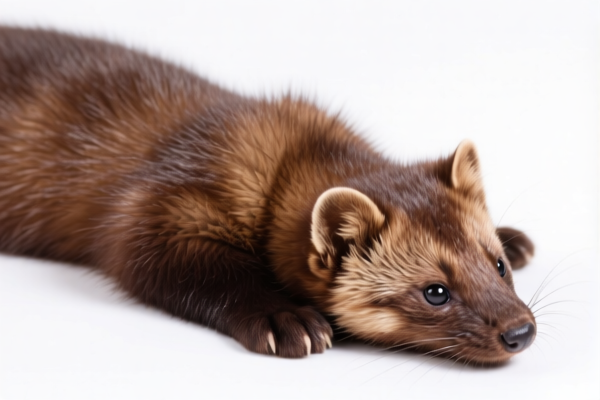
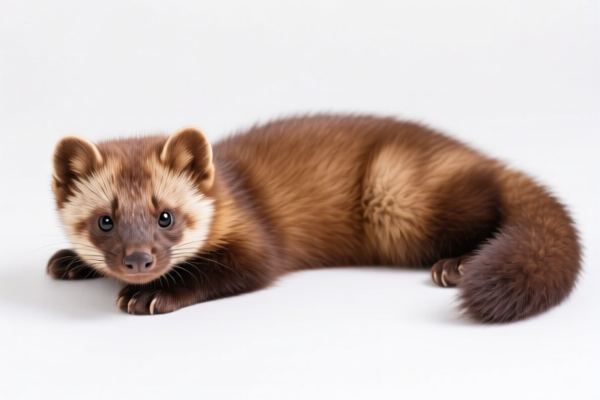
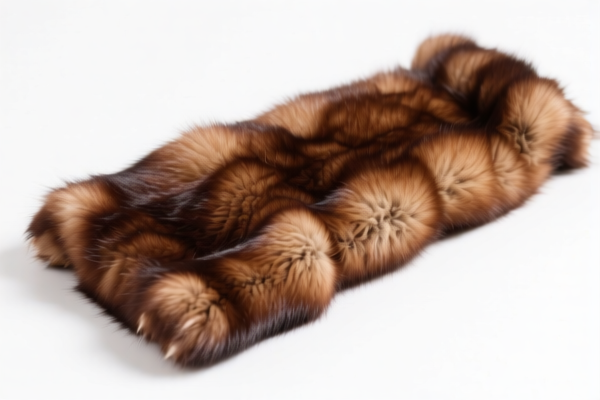
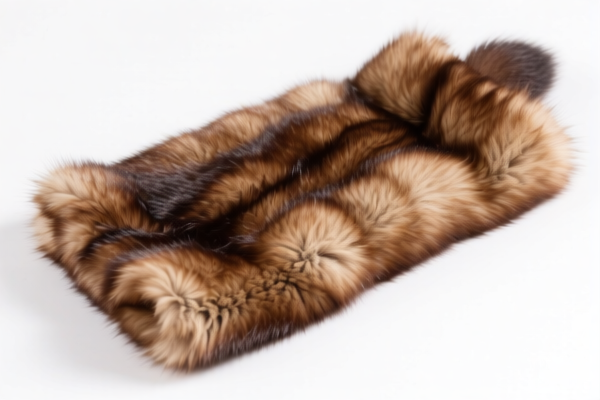
AI Analysis
🦦 Mink Fur (Raw & Processed) | HS Code Classification & Tax Strategy 2026
🌐 HS Code Reference & Customs Clearance Guide | 2026 Latest Tariff Analysis | Professional Level Customs Strategy
📌 I. Product Definition & Classification: What Exactly is "Mink Fur"?
Mink fur is one of the most valuable commodities in the global luxury textile trade. However, in international trade, "Raw Mink Fur" (Raw Skins) and "Processed Mink Fur" (Manufactures of Fur) are treated as entirely different goods with drastically different tax implications.
The Critical Distinction: * Raw Skins (Chapter 4301): Unprocessed or simply dried/tanned pelts, intended for further processing. * Processed/Fur Articles (Chapter 4302/4303): Skins that have been fully tanned, dyed, cut, and assembled into garments, collars, or other specific forms.
⚠️ Key Classification Point:
- If the product is raw, undyed, or minimally treated skins (even if stitched into panels), it typically falls under Chapter 4301.
- If the product is fully manufactured into a specific article (like a coat) or fully processed pelts ready for direct use in high-end fashion, it falls under Chapter 4302 or 4303.
📦 II. HS Code Classification Matrix (2026 Latest Tariff Authority)
Based on the provided data for Mink Fur, here is the breakdown of HS Codes, descriptions, and tax rates.
| HS Code | Product Description | Summary from Data | Total Tax Rate |
|---|---|---|---|
4301.10.00.20 |
Mink Skins, Raw/Partial | Mink fur skins, classified under raw skins category. Form fits complete skins or fragments/slices. Source unspecified, fits "other" source classification. | 17.5% |
4302.11.00.10 |
Mink Skins, Processed | Mink fur skins, material and classification match. Form is processed fur (tanned/dyed but not yet manufactured into articles). | 37.1% |
4302.11.00.20 |
Mink Skins, Other/Processed | Mink fur skins, falls under "Other Mink" category, fits fur form. Likely fully processed pelts. | 37.1% |
4303.10.00.30 |
Mink Fur Articles | Mink fur skins, material strictly limited to Mink Fur Manufactures (articles). Form belongs to the category of fur articles (e.g., coats, vests). | 39.0% |
🔍 Key Insight:
- Raw vs. Processed: The jump from 17.5% (HS4301) to 37.1-39.0% (HS4302/4303) is massive.
- Article vs. Skin: If the item is a finished garment (like a coat), it goes to4303. If it is just the tanned skin, it goes to4302. If it is raw, it goes to4301.
💰 III. 2026 Latest Tariff Rate Breakdown (Including Additional Taxes)
✅ Applicable Country: United States (US)
✅ Origin: China (CN)
✅ Effective Date: Post-2025 Policies (including 122 Clauses)
🎯 1. 4301.10.00.20 —— Raw Mink Skins (Lowest Tax Bracket)
| Item | Detail |
|---|---|
| Base Tariff | 0.0% |
| Section 301 Surcharge | +7.5% |
| Section 122 Tariff | +10.0% |
| Total Tax Rate | 17.5% |
| Tax Calculation | CIF Value × 17.5% |
| Legal Basis Path | USITC:4301.10.00.20 → Section 301: 7.5% → Section 122: 10% |
📌 Explanation:
- This code applies to raw or minimally processed skins.
- The 122 Clause (often related to specific trade actions or anti-dumping measures on certain animal products) adds 10%.
- Section 301 adds 7.5%.
- Base duty is 0%, making this the most cost-effective entry point IF the goods are truly raw.
🎯 2. 4302.11.00.10 & 4302.11.00.20 —— Processed Mink Skins (Mid-Range Tax)
| Item | Detail |
|---|---|
| Base Tariff | 2.1% |
| Section 301 Surcharge | +25.0% |
| Section 122 Tariff | +10.0% |
| Total Tax Rate | 37.1% |
| Tax Calculation | CIF Value × 37.1% |
| Legal Basis Path | USITC:4302.11.00.10/20 → Section 301: 25% → Section 122: 10% |
📌 Explanation:
- These codes apply to fully tanned and dyed pelts (ready for manufacturing but not yet cut into garments).
- The Section 301 Surcharge jumps to 25% (standard for many processed animal products).
- Base duty is 2.1%.
- 122 Clause adds another 10%.
- Total: 37.1%. This is a significant cost increase over raw skins.
🎯 3. 4303.10.00.30 —— Mink Fur Articles (Highest Tax Bracket)
| Item | Detail |
|---|---|
| Base Tariff | 4.0% |
| Section 301 Surcharge | +25.0% |
| Section 122 Tariff | +10.0% |
| Total Tax Rate | 39.0% |
| Tax Calculation | CIF Value × 39.0% |
| Legal Basis Path | USITC:4303.10.00.30 → Section 301: 25% → Section 122: 10% |
📌 Explanation:
- This code applies to finished fur articles (e.g., mink coats, jackets, collars).
- Base duty is 4.0%.
- Section 301 Surcharge is 25%.
- 122 Clause adds 10%.
- Total: 39.0%. This is the highest rate, applying to luxury finished goods.
🛠️ IV. Customs Clearance Practical Advice (Real-World Pitfall Guide)
✅ 1. Documentation Checklist (Non-Negotiable)
| Document | Required | Notes |
|---|---|---|
| ✅ Commercial Invoice | ✔️ | Must clearly state: "Raw Mink Skins" OR "Processed Mink Pelts" vs. "Mink Fur Garments". |
| ✅ Packing List | ✔️ | Detail weight, number of skins, and form (whole, slices, articles). |
| ✅ Species Certificate | ✔️ | CITES Certificate (if applicable) proving species and origin. |
| ✅ Material Description | ✔️ | Crucial: Must specify if "Raw," "Tanned," "Dyed," or "Finished." |
| ✅ Country of Origin | ✔️ | Required for Section 301 and 122 calculations. |
✅ 2. Classification Strategy (Key Mantras)
🔥 "Raw is 17.5%, Processed is 37.1%, Articles are 39%!"
| Scenario | Correct HS Code | Risk of Misclassification |
|---|---|---|
| Raw, Dried Skins (un-tanned or lightly salted) | 4301.10.00.20 |
✅ Correct |
| Tanned & Dyed Pelts (ready for cutters) | 4302.11.00.10 or .20 |
✅ Correct |
| Finished Coat/Jacket | 4303.10.00.30 |
✅ Correct |
| Raw Skins Labeled as "Articles" | 4303.10.00.30 |
❌ Wrong |
| Finished Coat Labeled as "Raw Skins" | 4301.10.00.20 |
❌ Wrong |
📌 Critical Warning:
- Do NOT declare finished garments as "raw skins" to save on taxes. U.S. Customs and Border Protection (CBP) is extremely strict on fur products.
- Do NOT declare raw skins as "processed" if they are indeed raw. You will overpay 19.6% (37.1% - 17.5%).
✅ 3. Special Considerations
| Situation | Handling Advice |
|---|---|
| CITES Compliance | Mink is a farmed animal, but ensure CITES documents are ready if species are protected. Most commercial mink is Neovison vison (farmed). |
| Section 122 Tariff | The 10% is a specific surcharge. Ensure your customs broker applies it correctly to avoid underpayment. |
| Origin Marking | Clearly mark "Made in China" or "Product of [Country]" on all packaging to avoid origin fraud issues. |
| Fragmented Skins | If skins are cut into slices/panels, ensure they are classified under 4301 only if they remain "raw skins." If processed, they may fall under 4302. |
🌍 V. Global Market Comparison (2026)
| Market | Recommended HS Code | Estimated Total Tax (China Origin) | Notes |
|---|---|---|---|
| 🇺🇸 USA | 4301.10.00.20 (Raw) |
17.5% | Includes 301 (7.5%) + 122 (10%). |
| 🇺🇸 USA | 4302.11.00.10 (Processed) |
37.1% | Includes 301 (25%) + 122 (10%). |
| 🇺🇸 USA | 4303.10.00.30 (Articles) |
39.0% | Includes 301 (25%) + 122 (10%). |
| 🇪🇺 EU | 4301 / 4302 |
Varies (0-12%) | No Section 122. Check EU-specific duties. |
| 🇨🇳 China | 4301 / 4302 |
Varies (5-10%) | Lower duties for import into China. |
📌 Conclusion:
- USA is the highest-tariff market due to Section 301 and Section 122.
- Classification Accuracy is the single most important factor in cost control.
📌 VI. Common Errors & Pitfalls (Lessons Learned)
❌ Error 1: Declaring finished mink coats as "raw mink skins"
👉 Consequence: CBP reclassifies to 4303.10.00.30. You owe the difference (21.5%) + interest + potential penalties.
❌ Error 2: Declaring tanned pelts as "raw skins"
👉 Consequence: CBP may accept if documentation is vague, but if audited, you face back taxes for the 19.6% difference.
❌ Error 3: Ignoring Section 122 Tariff
👉 Consequence: Underpayment of 10% on all mink fur imports. CBP will demand payment + interest.
❌ Error 4: Not specifying form (whole vs. slices) in description
👉 Consequence: Customs may delay shipment for clarification, causing storage fees at port.
✅ Correct Approach:
"Mink Fur Skins, Raw, Dried, Whole, Neovison vison, Country of Origin: China"
OR
"Mink Fur Garment, Coat, Tanned and Dyed, Country of Origin: China"
🎯 VII. Conclusion: Precision Classification for Profit Protection
🎯 Remember the Golden Rules:
🔹 "Raw = 17.5% | Processed = 37.1% | Articles = 39.0%"
🔹 "Section 301 + 122 = High Cost. Be Precise."
🔹 "Documentation must match Physical Product. No Exceptions."
📌 Pro Tip:
If you are importing raw skins to manufacture goods in the US (e.g., under a bonded warehouse or FTZ), ensure you file the correct 122 Clause documentation.
For finished goods, consider supply chain diversification (e.g., manufacturing in Vietnam or Turkey) if possible, to mitigate Section 301 tariffs (though 122 may still apply depending on specific trade rules).
📣 Immediate Action:
📞 Consult a Licensed Customs Broker before shipping.
📋 Provide Detailed Product Photos & Specifications.
🚀 Apply for Advance Ruling (CBP) if uncertain about classification.
💼 Your Profit Margin Depends on Your HS Code Accuracy!
✨ Professional Customs Clearance Starts with Accurate Classification!
💼 Every Percent Counts in the Luxury Fur Trade!
Customer Reviews
About HS Code Classification
The Harmonized System (HS) is an internationally standardized nomenclature developed by the World Customs Organization (WCO) to classify traded products. Over 200 countries use the HS system as the basis for customs tariffs, trade statistics, and import/export regulations.
Each HS code follows a hierarchical structure:
- Chapter (2 digits) — Broad category of goods (e.g., Chapter 84: Machinery and Mechanical Appliances)
- Heading (4 digits) — More specific grouping within the chapter
- Subheading (6 digits) — Internationally standardized breakdown, used by all WCO member countries
- National subdivisions (8-10 digits) — Country-specific extensions for further classification, such as US HTSUS 10-digit codes
Correct HS code classification is essential for smooth customs clearance, accurate duty payment, and compliance with trade regulations. Misclassification can lead to customs delays, overpayment of duties, or penalties.
When importing from CN to US, the applicable tariff rates may include:
- Most-Favored-Nation (MFN) rate — The standard duty rate applied to WTO members
- General rate — Applied to countries without trade agreements
- Trade remedy duties — Additional tariffs such as Section 301 (anti-dumping), Section 232 (national security), or countervailing duties
The information provided on this page is for reference purposes only. For official classification, please consult with your local customs authority or a licensed customs broker.