Raw Mink Skin and Tail
CN → US| HS Code | Tariff Rate | Origin | Destination | Doc |
|---|---|---|---|---|
| 4103901190 | 17.5% | CN | US | Official Doc |
| 4103901200 | 17.5% | CN | US | Official Doc |
| 4103902000 | 20.8% | CN | US | Official Doc |
| 4103901190 | 17.5% | CN | US | Official Doc |
| 4103901190 | 17.5% | CN | US | Official Doc |
Product Images
AI Analysis
🦨 Raw Mink Skin and Tail (生皮及尾巴)
🌐 HS Code Reference & Customs Clearance Guide | 2026 Latest Tariff Analysis | Professional Clearance Strategy
📌 I. Product Definition & Classification: Do You Really Understand "Raw Mink Skin"?
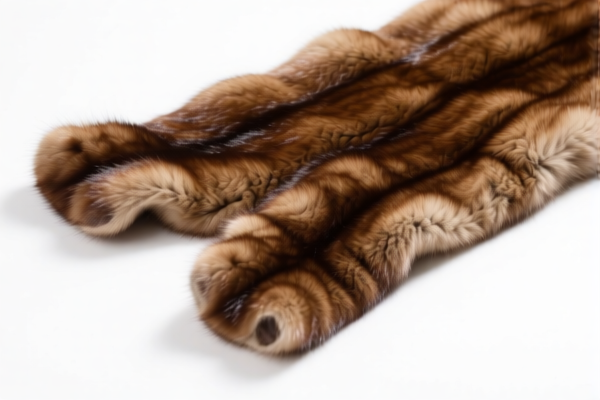
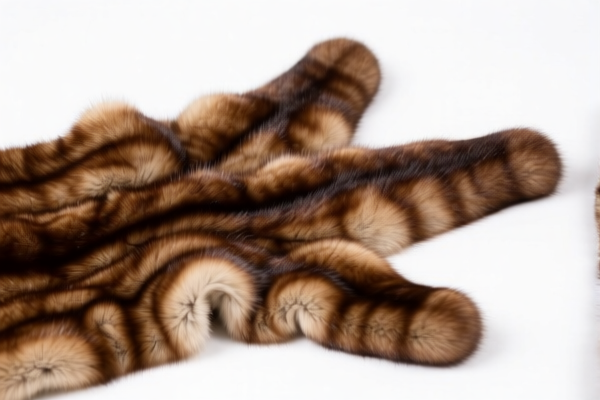
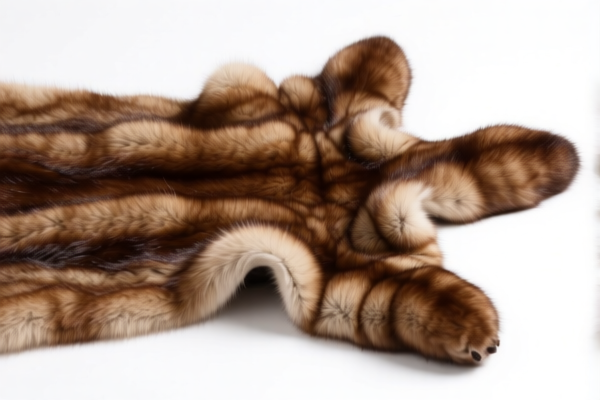
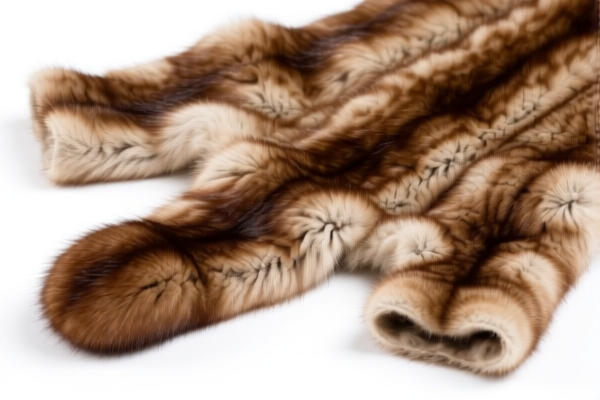
Raw mink skin, with or without head, tail, or claws, is a key raw material in the luxury fur industry. In international trade, it is classified under Chapter 41 (Raw hides and skins). The specific classification depends heavily on whether the mink is domesticated (farmed) or wild, and whether it is pre-tanned or still in its raw state.
⚠️ Key Distinction Point:
- Farmed Mink Skins: Generally fall under subheading4103.90.11or4103.90.12with 0% Base Duty.
- Wild Mink Skins: Fall under subheading4103.90.20with a 3.3% Base Duty.
- State: Must be "Raw" (unpreserved or simply salted/dried, not pre-tanned).
📦 II. HS Code Classification Details (2026 Latest Tariff Authority Comparison)
| HS Code | Product Description | Applicable Scenario | Origin Type |
|---|---|---|---|
4103.90.11.90 |
Other raw hides and skins (Farmed Mink) | Whole skin with/without tail/claws, farmed origin | 🐾 Farmed |
4103.90.12.00 |
Other raw hides and skins (Farmed Mink) | Other forms of farmed mink raw skins | 🐾 Farmed |
4103.90.20.00 |
Wild mink raw hides/skins (whole) | Wild-caught mink skins, whole form | 🌲 Wild |
🔍 Important Reminder:
-4103.90.11.90covers farmed mink skins, often including those with heads, tails, and claws attached. This is the most common code for commercial fur trade.
-4103.90.12.00is a catch-all for other farmed raw skins not specified elsewhere.
-4103.90.20.00is strictly for wild mink. Misdeclaring wild skins as farmed can lead to significant penalties due to different base duty rates and wildlife trade regulations (CITES).
💰 III. 2026 Latest Tariff Rate Breakdown (Including Surcharges & Policy Add-ons)
✅ Applicable Country: United States (US)
✅ Origin: China (CN)
✅ Effective Date: From November 10, 2025 (including subsequent imports)
🎯 1. 4103.90.11.90 & 4103.90.12.00 —— Farmed Mink Raw Skins
| Item | Content |
|---|---|
| Base Duty Rate | 0% (Ad valorem) |
| USITC Surcharge | +7.5% (Section 301 / Additional Duty) |
| Section 122 Duty | +10% (Specific US Trade Provision) |
| Total Tariff Rate | 17.5% |
| Tax Calculation | CIF Value × 17.5% |
| De Minimis Exemption Eligibility | ❌ Not Eligible |
| Legal Basis Path | Base: 0% → 301: +7.5% → Sec 122: +10% |
📌 Explanation:
- Although the base duty is 0%, the addition of 7.5% under Section 301 and 10% under Section 122 results in a substantial 17.5% total tariff.
- This applies to standard farmed mink skins imported from China.
🎯 2. 4103.90.20.00 —— Wild Mink Raw Skins (Whole)
| Item | Content |
|---|---|
| Base Duty Rate | 3.3% (Ad valorem) |
| USITC Surcharge | +7.5% (Section 301 / Additional Duty) |
| Section 122 Duty | +10% (Specific US Trade Provision) |
| Total Tariff Rate | 20.8% |
| Tax Calculation | CIF Value × 20.8% |
| De Minimis Exemption Eligibility | ❌ Not Eligible |
| Legal Basis Path | Base: 3.3% → 301: +7.5% → Sec 122: +10% |
📌 Note:
- Wild mink skins incur a higher total tariff (20.8%) due to the 3.3% base duty.
- Critical Compliance Issue: Wild mink may be subject to CITES (Convention on International Trade in Endangered Species) regulations. Ensure you have the necessary export/import permits from wildlife authorities in addition to customs clearance. Misclassification here can lead to severe legal consequences beyond just tariffs.
🛠️ IV. Customs Clearance Practical Advice (Combat Pitfalls Guide)
✅ 1. Document Checklist (Nothing is Missing)
| Document | Required | Description |
|---|---|---|
| ✅ Commercial Invoice | ✔️ | Must clearly state "Raw Mink Skin," HS Code, and Value. |
| ✅ Packing List | ✔️ | Detail weight, count, and dimensions of skins. |
| ✅ Species Declaration | ✔️ | Explicitly state Farmed vs. Wild. Crucial for 4103.90.11/12 vs. 4103.90.20. |
| ✅ CITES Permits | ✔️ | Mandatory for Wild Mink. Also required for certain farmed mink depending on species origin. |
| ✅ Processing Status Certificate | ✔️ | Confirm skins are raw (un-tanned). If tanned, HS Code changes to Chapter 43. |
| ✅ Product Photos | ✔️ | Show texture, condition, and whether heads/tails/claws are attached. |
✅ 2. Declaration Tips (Key Mantras)
🔥 “Know Farmed from Wild, Raw is Key, Declare Clearly, Avoid Penalties!”
| Scenario | Correct Declaration | Incorrect Action |
|---|---|---|
| Farmed Mink Skin (with/without tail) | 4103.90.11.90 or 4103.90.12.00 |
Declare as "Fur Garment" → Wrong Chapter |
| Wild Mink Skin (whole) | 4103.90.20.00 |
Declare as Farmed → Higher Base Duty Risk + CITES Violation |
| Pre-tanned Mink Leather | Chapter 43 (e.g., 4302.xx) |
Declare as Raw Skin (4103.xx) → Wrong Classification |
| Mink Heads/Claws Alone | Check Specific HS | Lump into skin value incorrectly |
✅ 3. Special Cases Handling
| Case | Handling Advice |
|---|---|
| Mixed Lots (Farmed & Wild) | Strictly Separate. Different HS Codes, different duties, different permits. Mixing leads to rejection. |
| Skins with Head/Tail/Claws | Declare as "Raw Mink Skin, with Head, Tail, and Claws." Ensure it falls under 4103.90.11.90 for farmed. |
| Salted/Dried Skins | Still considered "Raw" if not chemically tanned. Declare as Raw. |
| CITES Compliance | Verify if the specific mink species (e.g., Neovison vison) requires CITES documents. Even farmed mink may need permits depending on the country of origin and specific farm certification. |
🌍 V. Global Main Market Clearance Comparison (2026 Latest)
| Country/Region | Recommended HS Code | Tariff (China Origin) | Certification Requirements | Notes |
|---|---|---|---|---|
| 🇺🇸 USA | 4103.90.11.90 (Farmed) / 4103.90.20.00 (Wild) |
17.5% (Farmed) / 20.8% (Wild) | CITES Permit (if applicable) | High additional duties (301 + Sec 122). |
| 🇨🇳 China | 4103.90.11.90 / 4103.90.20.00 |
Varies (Check Local Tariff) | CITES Permit | Major import market for fur. |
| 🇪🇺 EU | 4103.90.11 / 4103.90.20 |
0% - 6% (Check Specific) | CITES + EU Wildlife Trade Regs | Stricter CITES enforcement in EU. |
| 🇨🇦 Canada | 4103.90.11 / 4103.90.20 |
0% - 5% | CITES | Free Trade Agreement (CUSMA) may apply if originating from US/Mexico. |
📌 Conclusion:
- The US imposes significant additional duties on raw mink skins from China, totaling 17.5%-20.8%.
- CITES compliance is non-negotiable, especially for wild-sourced skins.
- Ensure accurate distinction between Farmed and Wild to avoid misclassification penalties.
📌 VI. Common Errors & Pitfalls (Blood & Tears Lessons)
❌ Error 1: Declaring Wild Mink as Farmed
👉 Consequence: Avoids 3.3% base duty but risks CITES violation and fines for false declaration.
👉 Penalty: Severe legal action + forfeiture of goods.
❌ Error 2: Declaring Tanned Mink as Raw
👉 Consequence: Wrong HS Code (Chapter 41 vs. 43).
👉 Penalty: Customs reclassification, back taxes, and delays.
❌ Error 3: Ignoring Section 122 Duty
👉 Consequence: Underestimating total landed cost.
👉 Impact: Profit margin erosion due to the additional 10% tax.
❌ Error 4: Missing CITES Permits for Farmed Mink
👉 Consequence: Even farmed mink may require permits depending on species and origin.
👉 Impact: Goods held at customs, delayed shipment, potential destruction.
✅ Correct Practice:
"Raw Mink Skins, Farmed, Whole, with Head/Tail/Claws, Salted, HS 4103.90.11.90, CITES Permit Attached"
🎯 VII. Conclusion: Professional Declaration, Save Time, Save Money!
🎯 Remember the Mantra:
🔹 "Farmed vs. Wild, Check CITES Daily."
🔹 "Raw is Chapter 41, Tanned is Chapter 43."
🔹 "17.5% or 20.8%, Know Your Duty, Avoid the Stress!"
📌 Tips:
- If your raw mink skins are originating from Vietnam, Mexico, or other countries with favorable trade agreements, check for 0% duty possibilities under CUSMA or other FTAs.
- Apply for Advance Rulings if unsure about CITES requirements or specific skin classification.
📣 Act Now:
📞 Consult a professional customs broker + Provide Product Specs + Secure CITES Permits
🚀 Let your mink skins pass smoothly, clear efficiently, and boost profits!
✨ Professional Customs Clearance Starts with Accurate Classification!
💼 Every dollar of tax you save is a dollar of profit you keep!
Customer Reviews
About HS Code Classification
The Harmonized System (HS) is an internationally standardized nomenclature developed by the World Customs Organization (WCO) to classify traded products. Over 200 countries use the HS system as the basis for customs tariffs, trade statistics, and import/export regulations.
Each HS code follows a hierarchical structure:
- Chapter (2 digits) — Broad category of goods (e.g., Chapter 84: Machinery and Mechanical Appliances)
- Heading (4 digits) — More specific grouping within the chapter
- Subheading (6 digits) — Internationally standardized breakdown, used by all WCO member countries
- National subdivisions (8-10 digits) — Country-specific extensions for further classification, such as US HTSUS 10-digit codes
Correct HS code classification is essential for smooth customs clearance, accurate duty payment, and compliance with trade regulations. Misclassification can lead to customs delays, overpayment of duties, or penalties.
When importing from CN to US, the applicable tariff rates may include:
- Most-Favored-Nation (MFN) rate — The standard duty rate applied to WTO members
- General rate — Applied to countries without trade agreements
- Trade remedy duties — Additional tariffs such as Section 301 (anti-dumping), Section 232 (national security), or countervailing duties
The information provided on this page is for reference purposes only. For official classification, please consult with your local customs authority or a licensed customs broker.