Raw Nutria Furskins
CN → US| HS Code | Tariff Rate | Origin | Destination | Doc |
|---|---|---|---|---|
| 4302193070 | 36.5% | CN | US | Official Doc |
| 4302206000 | 38.5% | CN | US | Official Doc |
Product Images
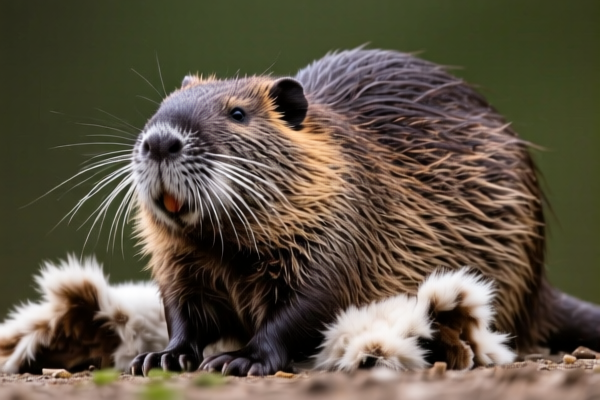
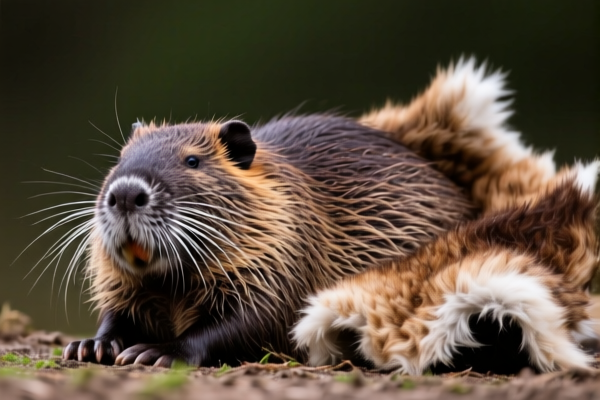
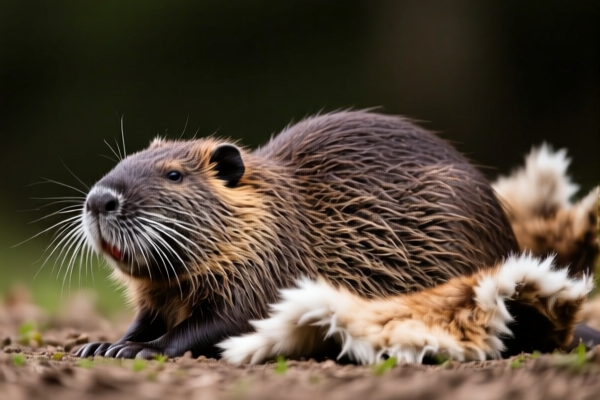
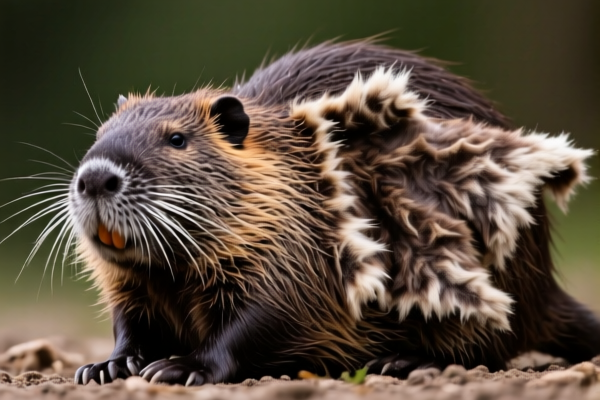
AI Analysis
🦫 Nutria Furskins (Raw/Undyed) | 4302.19 & 4302.20
🌐 HS Code Reference & Customs Clearance Guide | 2026 Latest Tariff Analysis | Professional Clearance Strategy
📌 I. Product Definition: Are You Importing Whole Skins or Parts?
Nutria furskins are highly valued in the luxury fashion industry. However, customs authorities strictly distinguish between whole assembled skins and disassembled pieces (heads, tails, paws). Misclassification here is the most common cause of delays and penalties.
Two Main Categories in : 1. Whole Skins (Assembled/Unassembled): The pelt is intact, including head, tail, and paws (if attached), but not sewn into garments. * Key Feature: The skin is a single unit. * HS Code Family: 4302.19 2. Pieces/Cuttings (Disassembled): Heads, tails, paws, or cuttings that are not part of a whole skin. * Key Feature: Separate anatomical parts or scraps. * HS Code Family: 4302.20
⚠️ Critical Distinction:
- If the nutria is skinned, and the skin is kept whole with head/tail attached → 4302.19.30.70
- If the head, tail, or paws are removed and imported separately → 4302.20.60.00
- Condition: Both codes in specify "Not dyed". If dyed, classification changes entirely (not covered in ).
📦 II. HS Code Classification Details (Based on Provided Data)
| HS Code | Product Description | Key Characteristics | Tax Rate |
|---|---|---|---|
4302.19.30.70 |
Whole skins, with or without head, tail or paws, not assembled | • Of beaver, chinchilla, ermine, fisher, fitch, fox, leopard, lynx, marten, nutria, ocelot, otter, pony, racoon, sable, wolf. • Not dyed. • Assembled (pelt intact) or unassembled (loose pelt). |
0.0% (Base: 0% Add-on: 0%) |
4302.20.60.00 |
Heads, tails, paws and other pieces or cuttings, not assembled | • Not dyed. • Includes anatomical parts separated from the skin. • Includes scraps/cuttings. |
0.0% (Base: 0% Add-on: 0%) |
🔍 Focus on "Not Dyed":
The description explicitly states "Other: Not dyed".
- ✅ Untreated/Dried Skins: Apply these codes.
- ❌ Dyed/Tanned in Color: These codes DO NOT APPLY. Dyed furs often fall under different subheadings (e.g., 4302.41 or similar, depending on the specific tariff book). Always verify if the skin has undergone any color treatment.
💰 III. 2026 Tariff Rate Detailed Analysis
✅ Applicable Country: United States (US)
✅ Product: Raw/Undyed Nutria Furskins
✅ Origin: Not specified in , but tax structure is based on the provided data.
🎯 1. 4302.19.30.70 — Whole Nutria Skins (Not Dyed)
| Item | Content |
|---|---|
| Base Tariff | 0.0% |
| Additional Tariffs (Section 301/Other) | 0.0% |
| Total Effective Tax Rate | 0.0% |
| Tax Calculation | CIF Value × 0.0% = $0.00 Duty |
| De Minimis Eligibility | ❓ Depends on shipment value, but duty is 0% anyway. |
📌 Explanation:
- Base Tariff: Furskins of nutria (under specific subheading 4302.19.30.70) have a 0% base rate.
- No Additional Taxes: The data explicitly states "加征关税: 0.0%" (Additional Tariffs: 0.0%). This is rare for animal products from certain origins, suggesting either a specific trade agreement, an exemption, or that this code is currently exempt from retaliatory tariffs.
- Result: Duty-Free Entry for undyed whole nutria skins.
🎯 2. 4302.20.60.00 — Nutria Parts/Cuttings (Not Dyed)
| Item | Content |
|---|---|
| Base Tariff | 0.0% |
| Additional Tariffs (Section 301/Other) | 0.0% |
| Total Effective Tax Rate | 0.0% |
| Tax Calculation | CIF Value × 0.0% = $0.00 Duty |
| De Minimis Eligibility | ❓ Depends on shipment value, but duty is 0% anyway. |
📌 Explanation:
- Similar to whole skins, disassembled parts (heads, tails, paws) of undyed nutria are also taxed at 0.0%.
- Key Takeaway: Whether you import whole skins or separate parts, the duty cost is ZERO as per the provided data.
🛠️ IV. Customs Clearance Practical Advice (Pitfall Avoidance Guide)
✅ 1. Required Documentation (Non-Negotiable)
| Document | Must Provide? | Description |
|---|---|---|
| ✅ Commercial Invoice | ✔️ | Must clearly state "Nutria Furskin" and specify "Undyed" or "Natural Color". |
| ✅ Packing List | ✔️ | Detail if items are "Whole Skins" or "Parts" (e.g., "100x Nutria Heads, Undyed"). |
| ✅ Scientific Name | ✔️ | Include Myocastor coypus to avoid confusion with other rodent furs. |
| ✅ Permits (CITES/USFWS) | ✔️ | CRITICAL: Nutria is often protected or regulated. Ensure you have the necessary wildlife import permits. Duty-free status does NOT exempt you from biological/environmental regulations. |
| ✅ Product Photos | ✔️ | Show the skins to prove they are "Not Dyed" (natural brownish-gray color). |
✅ 2. Classification Strategy (Key Mnemonics)
🔥 “Whole vs. Parts, Dyed vs. Undyed!”
| Scenario | Correct HS Code | Reason |
|---|---|---|
| Whole skin, head & tail attached, natural color | 4302.19.30.70 |
It is a "Whole skin". |
| Whole skin, head/tail removed, natural color | 4302.19.30.70 |
Still a "Whole skin" (unassembled/pieces cut from it but sold as skin). Note: If only the head is imported, use 4302.20. |
| Only Heads or Tails imported separately | 4302.20.60.00 |
These are "Pieces" not forming a whole skin. |
| Skins are Bleached, Dyed Black, or Tanned | ❌ NOT COVERED | Data only covers "Not dyed". Dyed skins require different classification (likely 4302.41 or similar). |
✅ 3. Special Handling & Compliance
| Issue | Handling Advice |
|---|---|
| CITES Compliance | Nutria is not currently listed in CITES Appendices I or II globally, but check local regulations (e.g., some US states or countries may have restrictions). Always declare species accurately. |
| Pest Control Status | In some regions (like the US), Nutria is an invasive species. Importing them may be prohibited or require special permits for disposal/use. Check USDA/USFWS rules! |
| Proving "Undyed" | If the customs officer suspects dyeing, they may require a lab test. Keep batch records showing natural tanning/drying process only. |
| Odor & Hygiene | Furskins may trigger odor inspections. Ensure they are cleaned and treated with approved preservatives to prevent pest infestation during transit. |
🌍 V. Global Market Comparison (2026 Latest)
| Country/Region | Recommended HS Code | Tariff | Certification | Remarks |
|---|---|---|---|---|
| 🇺🇸 USA | 4302.19.30.70 / 4302.20.60.00 |
0.0% | USFWS Permit (if required) | Duty-free, but regulatory barriers may exist. |
| 🇨🇳 China | 4302.19.30 / 4302.20.60 | Varies | None typically | Check if China allows import of wild furs. |
| 🇪🇺 EU | 4302 19 / 4302 20 | 0% - 4% | EIC (Export Import Control) | EU has strict fur regulations; check if wild-sourced furs are banned. |
| 🇬🇧 UK | 4302 19 / 4302 20 | 0% - 4% | CITES (if applicable) | Post-Brexit rules apply. |
📌 Conclusion:
- USA offers 0% duty for undyed nutria furskins (whole or parts) per the provided data.
- Regulatory Compliance is More Critical Than Duty: The main risk is not tax, but wildlife import permits and biosecurity.
📌 VI. Common Errors & Pitfalls (Lessons Learned)
❌ Error 1: Importing dyed nuts skins but declaring as "Not Dyed"
👉 Consequence: Misclassification, potential fraud charges, and higher retroactive duties.
👉 Solution: Be honest. If dyed, find the correct HS code for dyed furs.
❌ Error 2: Confusing "Whole Skin" with "Parts"
👉 Consequence: If you ship heads separately but declare as whole skins, it may be flagged.
👉 Solution: Clearly label shipments: "Whole Skins" vs. "Heads/Tails Only".
❌ Error 3: Ignoring Wildlife Permits
👉 Consequence: Seizure and Deportation of goods.
👉 Solution: Apply for USFWS or relevant wildlife permits before shipping.
❌ Error 4: Assuming "Duty-Free" Means "Regulation-Free"
👉 Consequence: Goods held at border for inspection.
👉 Solution: Prepare all biological/environmental documentation.
✅ Correct Practice:
“Undyed Nutria Furskins (Myocastor coypus), Whole Skins, Natural Color, No Dyes, Permitted by USFWS.”
🎯 VII. Conclusion: Professional Clearance, Cost-Effective & Compliant!
🎯 Remember the Mnemonic:
🔹 “Undyed is Key, Whole vs Parts Matter.”
🔹 “0% Duty, But Permits are Mandatory.”
🔹 “Dyed Skins Need Different Codes!”
📌 Pro Tip:
If your nutria furskins are sourced from captive breeding vs. wild hunting, declare this clearly. Some jurisdictions prefer captive-sourced products due to conservation concerns.
📣 Immediate Action:
📞 Verify Wildlife Permits (USFWS/CITES) BEFORE shipment.
📄 Document "Undyed" Status with photos and supplier declarations.
🚀 Clearance is smooth when duty is 0% AND permits are valid!
✨ Professional Customs Clearance Starts with Accurate Classification!
💼 Your Product: Nutria Furskin | Your Duty: 0.0% | Your Risk: Regulatory Compliance!
Customer Reviews
About HS Code Classification
The Harmonized System (HS) is an internationally standardized nomenclature developed by the World Customs Organization (WCO) to classify traded products. Over 200 countries use the HS system as the basis for customs tariffs, trade statistics, and import/export regulations.
Each HS code follows a hierarchical structure:
- Chapter (2 digits) — Broad category of goods (e.g., Chapter 84: Machinery and Mechanical Appliances)
- Heading (4 digits) — More specific grouping within the chapter
- Subheading (6 digits) — Internationally standardized breakdown, used by all WCO member countries
- National subdivisions (8-10 digits) — Country-specific extensions for further classification, such as US HTSUS 10-digit codes
Correct HS code classification is essential for smooth customs clearance, accurate duty payment, and compliance with trade regulations. Misclassification can lead to customs delays, overpayment of duties, or penalties.
When importing from CN to US, the applicable tariff rates may include:
- Most-Favored-Nation (MFN) rate — The standard duty rate applied to WTO members
- General rate — Applied to countries without trade agreements
- Trade remedy duties — Additional tariffs such as Section 301 (anti-dumping), Section 232 (national security), or countervailing duties
The information provided on this page is for reference purposes only. For official classification, please consult with your local customs authority or a licensed customs broker.