Raw Preserved Lamb Skin for Scientific Research
CN → US| HS Code | Tariff Rate | Origin | Destination | Doc |
|---|---|---|---|---|
| 9705290000 | 10.0% | CN | US | Official Doc |
| 9705220000 | 10.0% | CN | US | Official Doc |
Product Images
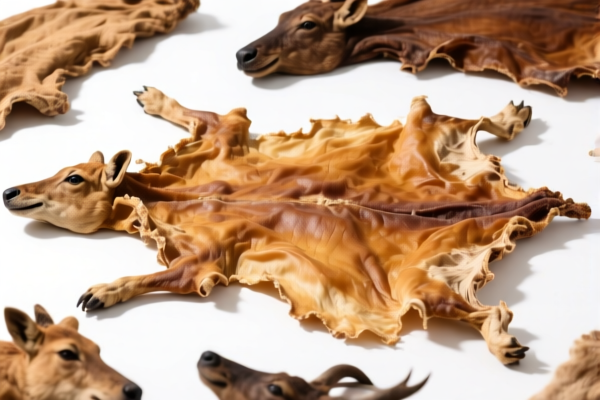
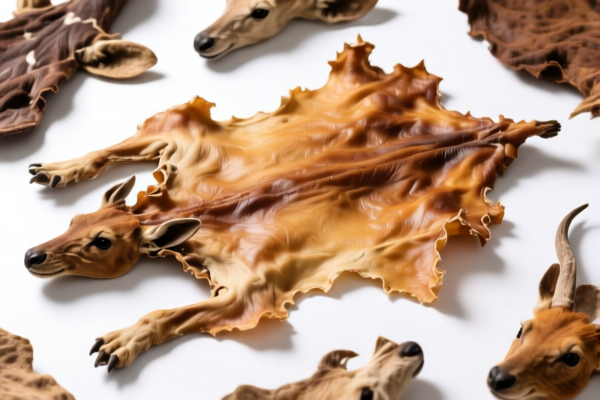
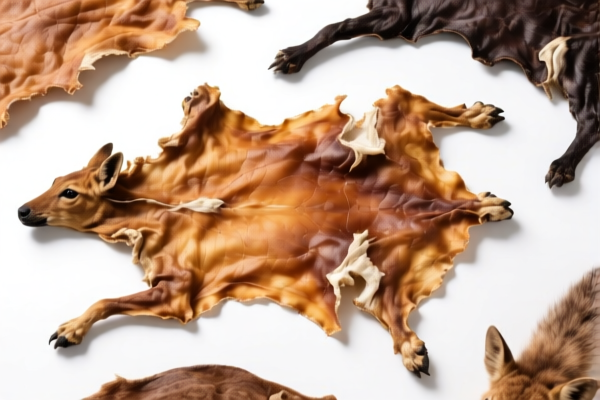
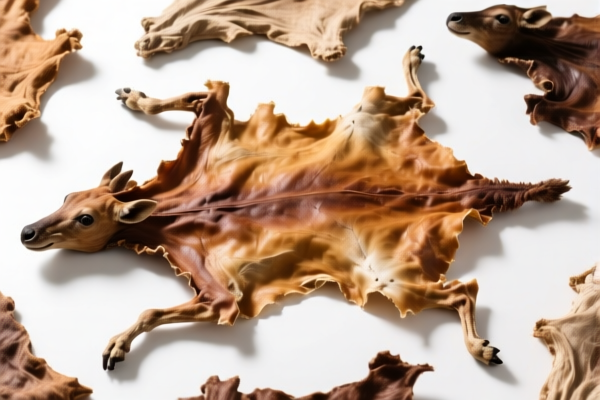
AI Analysis
🐑 Raw Preserved Lamb Skin for Scientific Research
🌐 HS Code Reference & Customs Clearance Guide | 2026 Latest Tariff Analysis | Professional Compliance Strategy
📌 I. Product Definition and Classification: Is It Just "Leather" or a "Collection"?
"Raw Preserved Lamb Skin for Scientific Research" is a specialized commodity with a dual nature. In international trade, it is not classified as general leather (Chapter 41) or scientific instruments (Chapter 90). Instead, it falls under Chapter 97: Works of Art, Collectors' Pieces and Antiques.
Why? Because when biological specimens (zoological interests) are preserved and marketed for scientific research, educational, or collection purposes, they are treated as collectors' pieces.
Key Distinction:
- Raw Leather (Leather goods): Processed for fashion, upholstery, or industrial use → Chapter 41.
- Preserved Specimens: Intended for display, study, collection, or scientific archives → Chapter 97.
⚠️ Critical Compliance Point:
- If the skin is merely "tanned for use" (e.g., for rugs or jackets), it is NOT Chapter 97.
- If it is "preserved for scientific research/collection" (anatomical, zoological, or paleontological interest), it IS Chapter 97.
- Documentation is Key: You must prove the "scientific/collectible" intent via invoices, catalog descriptions, or purchase orders.
📦 II. HS Code Classification Details (2026 Tariff Authority Match)
Based on the provided <DATA>, there are two potential HS codes within 9705 (Collections and collectors’ pieces of zoological, botanical, mineralogical, anatomical or paleontological interest).
| HS Code | Product Description | Applicability Scenario | Tax Rate (CN→US) |
|---|---|---|---|
9705.29.00.00 |
Other collections and collectors’ pieces of zoological, botanical, mineralogical, anatomical or paleontological interest | General Scientific Specimens: Lamb skins preserved for anatomical study, general zoological archives, or educational collections where the species is NOT extinct or endangered. | 0.0% |
9705.22.00.00 |
Extinct or endangered species and parts thereof | Endangered/Protected Species: If the lamb skin originates from a breed or species listed as extinct or endangered under CITES or local wildlife protection laws (e.g., specific wild sheep subspecies). | 0.0% |
🔍 Important Note on "Lamb Skin":
- Most domestic sheep (Ovis aries) are NOT endangered. Therefore,9705.29.00.00is the most likely applicable code.
- If the "lamb" is actually a wild species (e.g., Bighorn Sheep, Mouflon) protected under CITES, you MUST use9705.22.00.00and provide CITES permits.
- Tax Rate: Both codes listed in<DATA>have a total tax of 0.0% (0% Basic + 0% Additional).
💰 III. 2026 Latest Tariff Rate Explanation (Detailed Tax Breakdown)
✅ Applicable Country: United States (US)
✅ Origin: China (CN) (Assumed based on typical trade context; adjust if origin differs)
✅ Effective Date: 2026 Tariff Year
🎯 1. 9705.29.00.00 — Other Zoological/Anatomical Collectors' Pieces
| Item | Content |
|---|---|
| Basic Tariff | 0% (ad valorem) |
| Section 301 Tariff | 0% (Not applicable to Chapter 97 items in the provided data) |
| IEEPA Additional Tariff | 0% |
| Total Effective Tax Rate | 0.0% |
| Tax Calculation | CIF Value × 0% = $0 |
| De Minimis Eligibility | ✅ Yes (If value ≤ $800, generally duty-free and low scrutiny) |
| Legal Basis Path | HTSUS:9705.29.00.00 → Chapter 97 Exemption |
📌 Interpretation:
- Unlike electronics or textiles, scientific and collectors' items (Chapter 97) often enjoy duty-free entry to promote education and science.
- The provided<DATA>explicitly states 0.0% total tax. This is a significant advantage over other biological imports (like fresh meat, which is banned, or processed leather, which has duties).
🎯 2. 9705.22.00.00 — Extinct/Endangered Species Parts
| Item | Content |
|---|---|
| Basic Tariff | 0% (ad valorem) |
| Section 301 Tariff | 0% |
| IEEPA Additional Tariff | 0% |
| Total Effective Tax Rate | 0.0% |
| Special Requirements | ❌ CITES Permit Required (Even if tax is 0%, import is illegal without permits) |
📌 Warning:
- If you misclassify an endangered species as "general lamb" (9705.29), you face criminal penalties for wildlife trafficking, not just customs fines.
- Always verify the species against the CITES Appendix before shipping.
🛠️ IV. Customs Clearance Practical Advice (Step-by-Step Guide)
✅ 1. Required Documentation (Non-Negotiable)
| Document | Must Provide | Purpose |
|---|---|---|
| ✅ Commercial Invoice | ✔️ | Must clearly state: "Preserved Lamb Skin for Scientific Research / Anatomical Collection", NOT "Raw Leather" or "Garment Material". |
| ✅ Scientific/Research Agreement | ✔️ | Contract or letter from the university/research institute explaining the scientific purpose. This proves it’s a "collector's piece," not a commercial good. |
| ✅ CITES Permit | ⚠️ If Applicable | Only if the sheep breed is endangered/wild. If domestic sheep, include a statement: "Domestic Ovis aries, not CITES-listed." |
| ✅ Sanitary/Health Certificate | ✔️ | Issued by the country of origin’s agricultural authority, confirming the skin is preserved (not fresh) and free from pathogens. |
| ✅ Product Photos | ✔️ | Show the preservation method (e.g., formaldehyde, tanned for display) to prove it’s not fresh meat. |
| ✅ Packing List | ✔️ | Detail the number of skins, weight, and preservation medium. |
✅ 2. Declaration Strategy (Key Tips)
🔥 “Declare as Collection, Not Leather; Prove Science, Not Trade!”
| Scenario | Correct Declaration | Incorrect Declaration |
|---|---|---|
| Domestic Sheep Skin | 9705.29.00.00 |
4101.20.00.00 (Raw Hides) |
| Endangered Wild Sheep | 9705.22.00.00 + CITES Permit |
9705.29.00.00 |
| Fresh Meat Skin | BANNED | Any Chapter 97 Code |
| Leather Jacket Material | Chapter 41 Code | Chapter 97 Code |
📌 Why not Chapter 41 (Leather)?
- Chapter 41 is for commercial leather. If you declare as leather, you may face import quotas, anti-dumping duties, or sanitary inspections.
- Chapter 97 is for scientific/educational items, which are duty-free and often less regulated (except for wildlife protections).
✅ 3. Special Handling for "Scientific Research"
| Situation | Handling Advice |
|---|---|
| Chemical Preservation | If soaked in formaldehyde or ethanol, declare as "Hazardous Material" (Hazmat) if required by IATA/IMO for transport. Customs may require MSDS (Material Safety Data Sheet). |
| Small Samples (≤ $800) | Can often enter under De Minimis (Section 321). Still declare correctly as 9705.29.00.00. |
| Large Academic Shipments | Use Non-Commercial or Educational Exemption if possible. Provide a letter from the university confirming non-commercial use. |
| Mixed Containers | Do not mix with commercial leather goods. Keep scientific specimens in separate, labeled boxes. |
🌍 V. Global Market Comparison (2026)
| Country/Region | Recommended HS Code | Tariff | Key Requirement | Notes |
|---|---|---|---|---|
| 🇺🇸 USA | 9705.29.00.00 |
0% | CITES (if wild), Health Cert | Duty-free for science. |
| 🇨🇳 China | 0511.99.90.90* |
Varies | Import License | Often classified under animal products, not collections. |
| 🇪🇺 EU | 9705 00 00 |
0% | CITES (if wild) | Strict on wildlife, but duty-free for scientific collections. |
| 🇬🇧 UK | 9705 00 00 |
0% | CITES (if wild) | Post-Brexit rules align closely with EU for wildlife. |
📌 Note:
- USA and EU are favorable for scientific collections (0% duty).
- CITES compliance is the biggest hurdle, not tax.
- Never ship "fresh" animal parts; only preserved/dried/tanned for display.
📌 VI. Common Mistakes & Pitfalls (Learn from Others' Errors)
❌ Mistake 1: Declaring as "Raw Leather" (4101)
👉 Result: Higher duties, potential anti-dumping duties, unnecessary sanitary inspections.
👉 Fix: Always declare as Chapter 97 (Collectors' Items) for scientific use.
❌ Mistake 2: Ignoring CITES for Wild Sheep
👉 Result: Seizure, fines, and criminal charges for wildlife trafficking.
👉 Fix: Verify species. If wild (e.g., Argali, Bighorn), get CITES permit. If domestic, add "Domestic Breed" statement.
❌ Mistake 3: Packing in Fresh Ice/Water
👉 Result: Banned as perishable waste or disease vector.
👉 Fix: Use chemical preservation (formaldehyde) and declare as hazardous if liquids are present.
❌ Mistake 4: Vague Invoice Description ("Lamb Skin")
👉 Result: Customs holds package for classification review → Delays.
👉 Fix: Use precise wording: "Preserved Ovis aries Skin for Anatomical Research, Scientific Collection."
✅ Correct Declaration Example:
"Preserved Lamb Skin (Ovis aries), processed for scientific anatomical research, part of a zoological collection. Not for commercial leather use."
🎯 VII. Conclusion: Zero Duty, Zero Risk, Full Compliance
🎯 Key Takeaway:
🔹 Tax: 0% for both
9705.29.00.00and9705.22.00.00.
🔹 Risk: Low tax, but high regulatory risk if CITES or health laws are violated.
🔹 Strategy: Document the science, not the trade.
📌 Pro Tip:
If you are shipping to the US, use Section 321 (De Minimis) for small academic samples. For large shipments, secure a pre-ruling from CBP if the scientific nature is questionable.
📣 Immediate Action:
📞 Verify Species: Is it domestic or wild?
📄 Get CITES Permit (if wild).
📦 Label Clearly: "SCIENTIFIC COLLECTION – NOT FOR SALE."
🚀 Ship with Confidence: You’re paying $0 in duties, but compliance is mandatory.
✨ Accurate Classification Saves Money and Saves Time!
💼 Science Moves Fast; Don’t Let Customs Slow You Down!
Customer Reviews
About HS Code Classification
The Harmonized System (HS) is an internationally standardized nomenclature developed by the World Customs Organization (WCO) to classify traded products. Over 200 countries use the HS system as the basis for customs tariffs, trade statistics, and import/export regulations.
Each HS code follows a hierarchical structure:
- Chapter (2 digits) — Broad category of goods (e.g., Chapter 84: Machinery and Mechanical Appliances)
- Heading (4 digits) — More specific grouping within the chapter
- Subheading (6 digits) — Internationally standardized breakdown, used by all WCO member countries
- National subdivisions (8-10 digits) — Country-specific extensions for further classification, such as US HTSUS 10-digit codes
Correct HS code classification is essential for smooth customs clearance, accurate duty payment, and compliance with trade regulations. Misclassification can lead to customs delays, overpayment of duties, or penalties.
When importing from CN to US, the applicable tariff rates may include:
- Most-Favored-Nation (MFN) rate — The standard duty rate applied to WTO members
- General rate — Applied to countries without trade agreements
- Trade remedy duties — Additional tariffs such as Section 301 (anti-dumping), Section 232 (national security), or countervailing duties
The information provided on this page is for reference purposes only. For official classification, please consult with your local customs authority or a licensed customs broker.