Raw Seal Skin with Claws
CN → US| HS Code | Tariff Rate | Origin | Destination | Doc |
|---|---|---|---|---|
| 4303100060 | 39.0% | CN | US | Official Doc |
| 4301800280 | 17.5% | CN | US | Official Doc |
| 4301900000 | 10.0% | CN | US | Official Doc |
| 4302194570 | 37.2% | CN | US | Official Doc |
| 4303900000 | 35.0% | CN | US | Official Doc |
Product Images
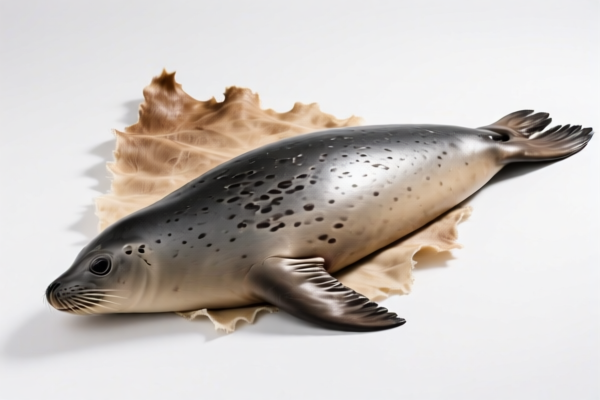
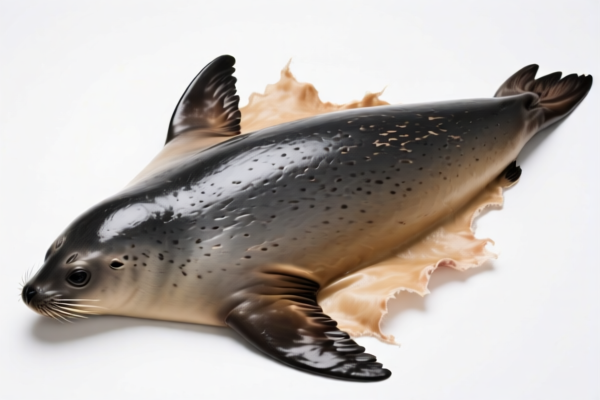
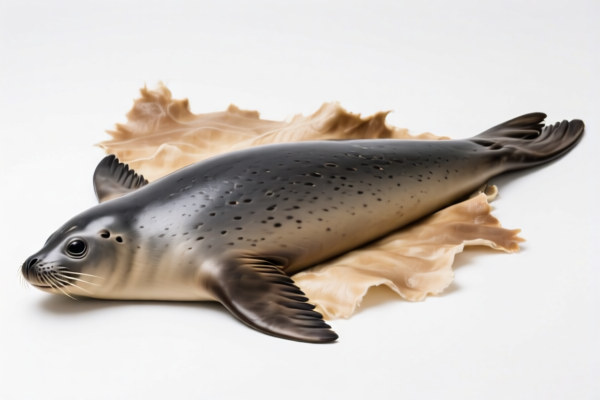
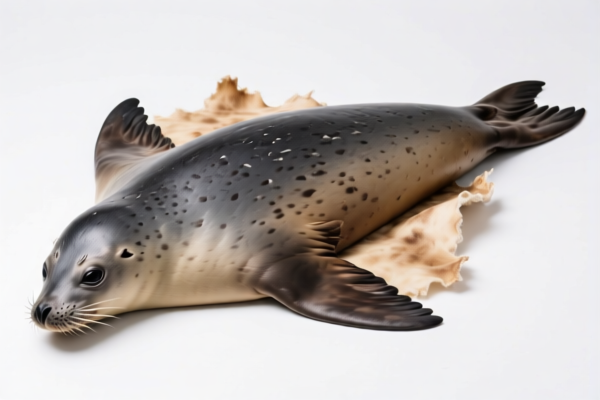
AI Analysis
🦭 Raw Seal Skin with Claws (Raw Seal Skin with Claws)
🌐 HS Code Reference & Customs Clearance Guide | 2026 Latest Tariff Analysis | Professional Clearance Strategy
📌 I. Product Definition & Classification: What Exactly is "Raw Seal Skin with Claws"?
"Raw Seal Skin with Claws" refers to the untreated, tanned, or semi-processed skins of seals, retaining natural features such as claws, fur, and tails. In international trade, these goods are strictly regulated under Chapter 43 (Furskins and Artificial Fur) of the Harmonized System (HS).
The classification depends heavily on the degree of processing and the specific physical characteristics retained (e.g., presence of tail, claws, or being assembled into garments):
Unprocessed/Semi-Processed Skins (Raw):
Skins that have been removed from the animal but not yet tanned or further processed into articles. If they retain their natural shape and features (like tails or claws), they fall under specific subheadings in Chapter 43.
⚠️ Key Distinction Points:
- If the skin is raw, unprocessed, and retains its natural form (including tail/claws) → It is classified as a Furskin under Heading 4301.
- If the skin is tanned/dressed but not assembled into garments → It may fall under 4302.
- If the skin is manufactured into an article (e.g., a coat, hat, or accessory) → It falls under 4303.
- Crucial Note: Many jurisdictions restrict or ban the import of seal products. Always verify local wildlife protection laws (e.g., EU Seal Regime, US Marine Mammal Protection Act) in addition to tariff codes.
📦 II. HS Code Classification Details (2026 Latest Tariff Authoritative Comparison)
Based on the provided data, here is the precise mapping for "Raw Seal Skin with Claws" depending on its exact state:
| HS Code | Product Description | Applicable Scenario | Processing State |
|---|---|---|---|
4301.80.02.80 |
Seal skins with tail, meeting the definition of furskins with tails | Raw/semi-raw seal skins retaining their tail | ✅ Raw/Semi-Processed |
4301.90.00.00 |
Seal skins, including tail, fitting the description of furskin fragments/offcuts | Raw seal skin pieces or smaller sections with tail | ✅ Raw/Fragments |
4302.19.45.70 |
Dyed seal skins, with tail, unassembled pieces | Tanned/Dyed but not yet made into garments | ⚠️ Tanned/Dressed |
4303.10.00.60 |
Seal skin articles, with tail, belonging to other material furskin articles | Finished goods (e.g., lined coats, hats) with tail | ❌ Finished Article |
4303.90.00.00 |
Seal fur articles, falling within the category of fur articles | Other finished seal fur products | ❌ Finished Article |
🔍 Critical Reminder:
- For "Raw Seal Skin with Claws", the most accurate initial classification is likely4301.80.02.80if it is a whole skin with a tail, or4301.90.00.00if it is fragmented.
- Do NOT classify raw skins as finished articles (4303) to avoid penalties for misdeclaration.
- If the skin is dyed or tanned, use4302.19.45.70.
💰 III. 2026 Latest Tariff Rate Breakdown (Including Surtaxes, Policy Add-ons)
✅ Applicable Country: United States (US)
✅ Origin: China (CN)
✅ Effective Date: November 10, 2025 onwards (for subsequent imports)
🎯 1. 4301.80.02.80 – Seal Skins with Tail (Raw/Semi-Processed)
| Item | Content |
|---|---|
| Basic Tariff | 0.0% (ad valorem) |
| USITC Surtax (Section 301) | +7.5% |
| IEEPA Surtax | +10% (Targeting China/HK products, effective Nov 10, 2025) |
| Total Tax Rate | 17.5% |
| Tax Calculation | CIF Value × 17.5% |
| De Minimis Exemption Eligible | ❌ No (deny_de_minimis) |
| Legal Basis Path | IEEPA:9903.01.24 → USITC:4301.80.02.80 → FOOTNOTE:9903.88.01 |
📌 Explanation:
- "USITC Surtax 7.5%" comes from Section 301 tariffs applicable to certain Chinese furskins.
- "IEEPA 10%" is the additional surcharge under the International Emergency Economic Powers Act for Chinese-origin goods.
- Total 17.5% applies to raw seal skins with tails.
🎯 2. 4301.90.00.00 – Seal Skins/Fragments (Raw)
| Item | Content |
|---|---|
| Basic Tariff | 0.0% |
| USITC Surtax | 0.0% |
| IEEPA Surtax | +10% |
| Total Tax Rate | 10.0% |
| Tax Calculation | CIF Value × 10.0% |
| De Minimis Exemption Eligible | ❌ No (deny_de_minimis) |
| Legal Basis Path | IEEPA:9903.01.24 → USITC:4301.90.00.00 → FOOTNOTE:9903.88.01 |
📌 Note:
- Fragmented raw skins or offcuts with tails attract only the IEEPA surcharge (10%), making them cheaper than whole skins with tails (17.5%).
🎯 3. 4302.19.45.70 – Dyed/Processed Seal Skins with Tail
| Item | Content |
|---|---|
| Basic Tariff | 2.2% |
| USITC Surtax | +25.0% |
| IEEPA Surtax | +10% |
| Total Tax Rate | 37.2% |
| Tax Calculation | CIF Value × 37.2% |
| De Minimis Exemption Eligible | ❌ No (deny_de_minimis) |
| Legal Basis Path | IEEPA:9903.01.24 → USITC:4302.19.45.70 → FOOTNOTE:9903.88.01 |
📌 Warning:
- Processed (dyed/tanned) skins face significantly higher tariffs (37.2%) due to the 25% Section 301 surtax on processed furs.
🎯 4. 4303.10.00.60 & 4303.90.00.00 – Finished Seal Skin Articles
| Item | Content |
|---|---|
| Basic Tariff | 0.0% - 4.0% |
| USITC Surtax | +25.0% |
| IEEPA Surtax | +10% |
| Total Tax Rate | 35.0% - 39.0% |
| Tax Calculation | CIF Value × Total Rate |
| De Minimis Exemption Eligible | ❌ No (deny_de_minimis) |
| Legal Basis Path | IEEPA:9903.01.24 → USITC:4303.* → FOOTNOTE:9903.88.01 |
📌 Details:
-4303.10.00.60: Finished articles with tail → 39.0% (Basic 4% + 25% Surtax + 10% IEEPA).
-4303.90.00.00: Other finished articles → 35.0% (Basic 0% + 25% Surtax + 10% IEEPA).
- These rates apply if the "claws" are part of a manufactured item (e.g., a decorative pouch or lined glove).
🛠️ IV. Customs Clearance Practical Advice (Avoid Pitfalls)
✅ 1. Documentation Checklist (Mandatory)
| Document | Required | Explanation |
|---|---|---|
| ✅ Commercial Invoice | ✔️ | Must clearly state "Seal Skin, Raw/Tanned, with Tail/Claws" and HS Code. |
| ✅ Bill of Lading/Air Waybill | ✔️ | Match description with invoice. |
| ✅ Proof of Origin | ✔️ | If non-Chinese, may affect tariff eligibility (though US seal import is heavily restricted). |
| ✅ US Fish & Wildlife Service (USFWS) Permit | ✔️ | CRITICAL: Import of seal products is often prohibited or requires strict permits under the MMPA or CITES. |
| ✅ Packaging List | ✔️ | Detail number of skins, dimensions, and condition (raw/dyed). |
| ✅ Third-Party Inspection Report | ✔️ | Confirms species, condition, and processing level. |
✅ 2. Declaration Tips (Key Mnemonics)
🔥 "Raw is 4301, Tanned is 4302, Made is 4303. Claws/Tail matter for subheading!"
| Scenario | Correct Declaration | Error to Avoid |
|---|---|---|
| Whole raw skin with tail/claws | 4301.80.02.80 |
Misdeclaring as "fabric" or "leather" → Seizure/Fine |
| Fragmented raw skin with tail | 4301.90.00.00 |
Misdeclaring as "garment" → 35-39% tariff instead of 10% |
| Dyed/tanned skin with tail | 4302.19.45.70 |
Ignoring IEEPA/301 surtaxes → Underpayment |
| Finished coat with tail | 4303.10.00.60 |
Underdeclaring as "parts" → 39% penalty |
✅ 3. Special Cases & Compliance
| Scenario | Handling Advice |
|---|---|
| CITES Listed Species | If the seal is a protected species (e.g., Harp Seal in some contexts), CITES permits are mandatory. Non-compliance leads to confiscation. |
| US Marine Mammal Protection Act (MMPA) | The US generally bans import of seal products. Exceptions are rare (e.g., scientific, Indigenous subsistence). Verify legality before shipping. |
| De Minimis Threshold (Section 321) | ❌ Not Applicable: Fur products are explicitly excluded from de minimis exemptions for Chinese-origin goods. |
| Hygiene/Sanitation | Ensure skins are properly preserved (salted/dried) to prevent pest/biohazard issues. |
🌍 V. Global Market Customs Comparison (2026 Latest)
| Country/Region | Recommended HS Code | Tariff (China Origin) | Certification Requirements | Notes |
|---|---|---|---|---|
| 🇺🇸 USA | 4301.80.02.80 |
17.5% (Raw) 37.2% (Tanned) |
USFWS Permit, CITES (if applicable) | Highly Restricted. Import may be banned. |
| 🇨🇳 China | 4301.80.02.80 |
Varies (Check Local Tariff) | CITES Export Permit (if exporting) | Major processing hub. |
| 🇪🇺 EU | 4301.80 |
Varies | Ban on Seal Products (with few exceptions) | Strict Ban. Import is largely prohibited. |
| 🇬🇧 UK | 4301.80 |
Varies | Ban on Seal Products | Post-Brexit regulations mirror EU bans. |
| 🇨🇦 Canada | 4301.80 |
0-5% (MFN) | Aboriginal Communal Licensing Program (ACLP) | Canada produces seal fur; strict regulatory framework. |
📌 Conclusion:
- USA: Tariff applies, but legal import is the bigger hurdle.
- EU/UK: Import is largely banned. Do not ship without explicit legal exemption.
- Canada: Legal but highly regulated.
- Risk Alert: Misdeclaring seal skins as "dog fur" or "faux fur" to bypass bans is illegal and carries severe penalties.
📌 VI. Common Errors & Pitfalls Guide (Lessons Learned)
❌ Error 1: Declaring "Raw Seal Skin" as "Leather Goods" to avoid Chapter 43 scrutiny.
👉 Consequence: Seizure, fines, and blacklisting by CBP.
❌ Error 2: Ignoring IEEPA 10% surtax for Chinese-origin seal skins.
👉 Consequence: Underpayment of duties, penalties, and interest.
❌ Error 3: Assuming De Minimis ($800) applies.
👉 Consequence: Denied. Fur products from China are excluded from de minimis exemptions.
❌ Error 4: Failing to obtain USFWS/CITES permits.
👉 Consequence: Confiscation of goods and potential criminal charges.
✅ Correct Approach:
"Seal Skin, Raw, Retaining Tail and Claws, Species: [Scientific Name], Origin: [Country], HS Code: 4301.80.02.80, USFWS Permit #[Number]"
🎯 VII. Conclusion: Professional Declaration, Risk-Free Clearance!
🎯 Remember the Mantra:
🔹 "Raw = 4301, Tanned = 4303? No, Tanned = 4302! Check Species, Check Permits!"
🔹 "Tariff is only part of the cost; Legal Compliance is the gatekeeper!"
📌 Pro Tip:
If your seal skins are originally from Canada or Norway, check if they qualify for USMCA/CETA benefits (though seal import bans in EU still apply).
For US imports, consult a licensed customs broker and wildlife expert before shipping.
Consider applying for an Advance Ruling to confirm HS Code and legality.
📣 Immediate Action:
📞 Contact a Customs Broker + Wildlife Import Specialist
📜 Verify USFWS/CITES Permit Requirements
🚀 Ensure 100% Legal Compliance to Avoid Seizure!
✨ Professional Clearance Starts with Accurate Classification and Legal Due Diligence!
💼 Your Product's Value is Protected by Precision and Compliance!
Customer Reviews
About HS Code Classification
The Harmonized System (HS) is an internationally standardized nomenclature developed by the World Customs Organization (WCO) to classify traded products. Over 200 countries use the HS system as the basis for customs tariffs, trade statistics, and import/export regulations.
Each HS code follows a hierarchical structure:
- Chapter (2 digits) — Broad category of goods (e.g., Chapter 84: Machinery and Mechanical Appliances)
- Heading (4 digits) — More specific grouping within the chapter
- Subheading (6 digits) — Internationally standardized breakdown, used by all WCO member countries
- National subdivisions (8-10 digits) — Country-specific extensions for further classification, such as US HTSUS 10-digit codes
Correct HS code classification is essential for smooth customs clearance, accurate duty payment, and compliance with trade regulations. Misclassification can lead to customs delays, overpayment of duties, or penalties.
When importing from CN to US, the applicable tariff rates may include:
- Most-Favored-Nation (MFN) rate — The standard duty rate applied to WTO members
- General rate — Applied to countries without trade agreements
- Trade remedy duties — Additional tariffs such as Section 301 (anti-dumping), Section 232 (national security), or countervailing duties
The information provided on this page is for reference purposes only. For official classification, please consult with your local customs authority or a licensed customs broker.