Raw Sheepskin (Untanned)
CN → US| HS Code | Tariff Rate | Origin | Destination | Doc |
|---|---|---|---|---|
| 4102291090 | 17.5% | CN | US | Official Doc |
| 4102101000 | 17.5% | CN | US | Official Doc |
| 4103901190 | 17.5% | CN | US | Official Doc |
| 4103901130 | 17.5% | CN | US | Official Doc |
| 4102293000 | 19.5% | CN | US | Official Doc |
Product Images
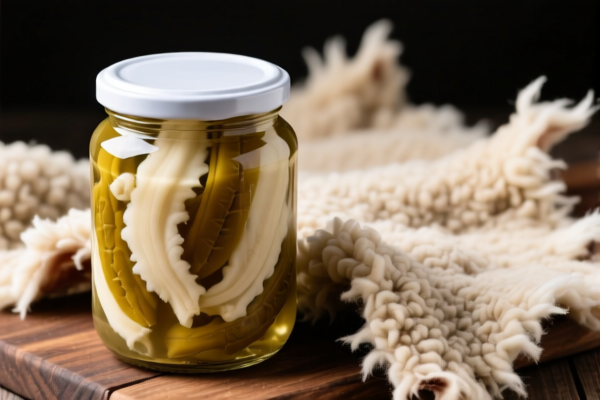
AI Analysis
🐑 Raw Sheepskin (Untanned) | Unprocessed Skins for Leather Manufacturing
🌐 HS Code Reference & Customs Clearance Guide | 2026 Latest Tariff Analysis | Professional Entry Strategy 📌 I. Product Definition & Classification: What is "Raw Sheepskin"?
Raw sheepskin refers to sheep or lamb skins that have been removed from the animal but have not undergone any tanning, pickling, or preservation process other than simple drying, salting, or liming to prevent decomposition. In international trade, these are considered "raw hides and skins."
Key Characteristics: * State: Dried, salted, or fresh (wet-salted), but not tanned. * Condition: Can be with wool (pelt) or without wool (de-haired/skin), depending on the specific subtype. * Purpose: Raw material for the leather industry to produce finished leather products.
⚠️ Critical Distinction:
- If the skin has been tanned (even briefly) or preserved beyond basic anti-rot measures, it is classified as "leather" or "semi-processed leather," falling under different HS codes (e.g., Chapter 41 subheadings 4104/4105).
- Raw Sheepskin must remain in its natural state, merely preserved for transport.
📦 II. HS Code Classification Details (Based on Provided Data)
The following HS Codes are derived strictly from the provided dataset. They cover various forms of unprocessed sheepskins, including dried, wet-salted, and wool-on/wool-off variations.
| HS Code | Product Description (Based on DATA) | Key Characteristics | Total Tax Rate | Tax Breakdown |
|---|---|---|---|---|
| 4102.29.10.90 | Other unclassified raw sheepskins, dried, without wool | Dried, wool-less sheepskin; general category | 17.5% | Base: 0%, Add-on: 7.5%, Sec 301: 10% |
| 4102.10.10.00 | Raw sheepskins, fresh or preserved | Fits the definition of raw skin; general raw material | 17.5% | Base: 0%, Add-on: 7.5%, Sec 301: 10% |
| 4103.90.11.90 | Other raw skins, material is sheepskin | Generic classification for other unpre-tanned sheepskins | 17.5% | Base: 0%, Add-on: 7.5%, Sec 301: 10% |
| 4103.90.11.30 | Other unpre-tanned raw skins, similar category | Matches physical/chemical properties even if species spec is less precise | 17.5% | Base: 0%, Add-on: 7.5%, Sec 301: 10% |
| 4102.29.30.00 | Dried, un-tanned, wool-less sheepskin (Specific Class) | Specific sub-category for dried, de-haired sheepskin | 19.5% | Base: 2%, Add-on: 7.5%, Sec 301: 10% |
🔍 Key Insight:
- Most classifications under 4102.29 and 4103.90 share the same 17.5% total tax rate (0% base + 7.5% add-on + 10% Section 301).
- 4102.29.30.00 is unique with a 19.5% rate due to a 2% Base Tariff in addition to the other taxes.
- All codes indicate Section 301 tariffs (122 clauses) apply, which is critical for US imports from China.
💰 III. 2026 Latest Tariff Rate Breakdown (Including Additional Taxes)
✅ Applicable Country: United States (US)
✅ Origin: China (CN)
✅ Effective Date: 2025/2026 (Current Tariff Regime)
🎯 1. Standard Raw Sheepskin Classifications (4102.29.10.90, 4102.10.10.00, 4103.90.11.90, 4103.90.11.30)
| Item | Content |
|---|---|
| Base Tariff | 0.0% |
| USITC Additional Tariff | +7.5% (Section 301/122 Clause) |
| IEEPA Additional Tariff | +10% (Targeting China origin) |
| Total Tax Rate | 17.5% |
| Tax Calculation | CIF Value × 17.5% |
| De Minimis Exemption | ❌ Not Applicable (Value threshold not met for agricultural/leather raw materials in most cases, or explicitly excluded) |
| Legal Basis | Section 301: 122 Clause → IEEPA: 10% → USITC: 4102/4103 |
📌 Explanation:
- The 0% base rate reflects the WTO most-favored-nation (MFN) rate for raw hides.
- However, due to Section 301 tariffs (7.5%) and IEEPA measures (10%), the effective burden is 17.5%.
- Crucial Note: Even though the base is 0%, the additional tariffs are mandatory for Chinese-origin goods.
🎯 2. Specific Dried Wool-less Sheepskin (4102.29.30.00)
| Item | Content |
|---|---|
| Base Tariff | 2.0% |
| USITC Additional Tariff | +7.5% |
| IEEPA Additional Tariff | +10% |
| Total Tax Rate | 19.5% |
| Tax Calculation | CIF Value × 19.5% |
| De Minimis Exemption | ❌ Not Applicable |
| Legal Basis | Section 301: 122 Clause → IEEPA: 10% → USITC: 4102.29.30.00 |
📌 Explanation:
- This specific subheading carries a higher base duty (2%), likely due to specific US domestic industry protections for processed or specific dried skins.
- The additional taxes remain the same, pushing the total to 19.5%.
🛠️ IV. Customs Clearance Practical Advice (Pitfall Avoidance Guide)
✅ 1. Required Documentation Checklist (Essential)
| Document | Mandatory | Description |
|---|---|---|
| ✅ Commercial Invoice | ✔️ | Must clearly state "Raw Sheepskin," species (Ovis aries), condition (dried/wet-salted), and origin. |
| ✅ Packing List | ✔️ | Detail weight, number of skins, and packaging type (e.g., wooden pallets, plastic-wrapped). |
| ✅ Certificate of Origin | ✔️ | Critical for proving Chinese origin to apply/verify Section 301 tariffs. |
| ✅ Treatment Certificate | ✔️ | Confirm no tanning, pickling, or chemical preservation beyond standard salting/drying. |
| ✅ Phytosanitary Certificate | ✔️ | Required for animal products to confirm no disease (e.g., Foot-and-Mouth, Brucellosis). |
| ✅ Supplier Declaration | ✔️ | Explicitly state "NOT TANNED" to avoid misclassification under Chapter 41 leather codes. |
✅ 2. Declaration Tips (Key Mnemonic)
🔥 "Raw vs. Tanned: Know the State! Wrong Code = Delay or Fine!"
| Situation | Correct Declaration | Incorrect Action | Consequence |
|---|---|---|---|
| Fresh/Wet-Salted Skin | 4102.10.10.00 (17.5%) |
Declare as "Leather" | Misclassification → Higher duty + Penalty |
| Dried, No Wool | 4102.29.30.00 (19.5%) or 4102.29.10.90 (17.5%) |
Declare as "Fur" | Incorrect HS → Audit & Back Taxes |
| Dried, With Wool | 4102.29.10.90 (17.5%) |
Declare as "Textile" | Chapter error → 2-5 years delay |
| Partially Tanned | Do NOT declare as Raw | Declare as Raw to save tax | Fraud Alert → Seizure + Fine |
📌 Warning:
- Do not use terms like "Leather" or "Finished Skin" in the description. Use "Raw Sheepskin" or "Untanned Sheep Pelt."
- If the skin has been chemically preserved (e.g., with borax or specialized tanning agents), it may no longer be "raw" and could fall under 4104 or 4105, which have different rates. Confirm with supplier.
✅ 3. Special Circumstances Handling
| Situation | Handling Advice |
|---|---|
| Mixed Origin (e.g., China + Argentina) | Split shipment or clarify country of origin per skin. Chinese skins face 17.5-19.5%; Argentine may face 0-2% (verify FTA status). |
| Damaged or Graded Skins | Declare actual condition. Lower grade = lower declared value = lower tax, but must be truthful. |
| Small Sample Shipments | Even small samples of raw animal products require Phytosanitary Certificate. No "gift" exemption for animal parts. |
| Transshipment via Third Country | Must prove Substantial Transformation did not occur. Simple repackaging does not change origin. |
🌍 V. Global Market Comparison (2026)
| Country/Region | Recommended HS Code | Estimated Duty | Certification Required | Notes |
|---|---|---|---|---|
| 🇺🇸 USA | 4102.29.10.90 / 4102.29.30.00 |
17.5% - 19.5% | Phytosanitary + CO | High barrier due to Section 301 |
| 🇨🇳 China | 4102.29.10.90 |
~0% - 5% | No Phytosanitary (Export) | Major importer of raw skins |
| 🇪🇺 EU | 4102.29 |
0% (if no trade barriers) | EURL (European Union Reference Laboratory) test for animal by-products | Strict hygiene rules |
| 🇹🇷 Turkey | 4102.29 |
0% - 2% | Veterinary Certificate | Large leather industry hub |
📌 Conclusion:
- USA imposes the highest effective duty (17.5-19.5%) due to political tariffs.
- EU and Turkey are more favorable for raw material import, but have strict animal health regulations.
- China is a major exporter of such skins; if exporting to China, duties are low. If importing from China to the US, expect the full tariff burden.
📌 VI. Common Mistakes & Pitfalls (Lessons Learned)
❌ Mistake 1: Declaring "Tanned Sheepskin" as "Raw Sheepskin"
👉 Consequence: Severe penalty for customs fraud. Tanned leather has different HS codes (e.g., 4104/4105) and potentially different duties.
❌ Mistake 2: Ignoring the Phytosanitary Certificate
👉 Consequence: Shipment held at border, contaminated, or destroyed. Animal products are high-risk for biosecurity.
❌ Mistake 3: Confusing Wool-on vs. Wool-off
👉 Consequence: Incorrect HS subheading. Wool-on skins may fall under different subheadings with different base rates. Verify with supplier specs.
❌ Mistake 4: Assuming De Minimis applies
👉 Consequence: For raw animal products, de minimis (under $800) often does not apply or requires full declaration. Check current CBP rules.
✅ Correct Practice:
"Raw Sheepskins, Untanned, Dried, Wool-on, Origin: China, Phytosanitary Cert Attached, HS: 4102.29.10.90"
🎯 VII. Conclusion: Precise Classification, Smooth Clearance!
🎯 Remember:
🔹 "Raw is Raw: Untanned, Not Tanned!"
🔹 "17.5% to 19.5%: The US Section 301 Tax is Real!"
🔹 "Phytosanitary Cert: The Golden Ticket for Animal Products!"
📌 Pro Tip:
If your raw sheepskin is not from China (e.g., from Australia, New Zealand, or Argentina), you may qualify for lower or zero Section 301 tariffs. Ensure your Certificate of Origin is accurate to leverage any Free Trade Agreements (FTAs) or MFN benefits.
📣 Immediate Action:
📞 Contact your customs broker with product photos and supplier declarations.
🚀 Apply for a Pre-Ruling if unsure about the exact HS code to avoid post-import audits.
✨ Professional clearance starts with accurate classification!
💼 Every percent saved in duty is profit earned!
Customer Reviews
About HS Code Classification
The Harmonized System (HS) is an internationally standardized nomenclature developed by the World Customs Organization (WCO) to classify traded products. Over 200 countries use the HS system as the basis for customs tariffs, trade statistics, and import/export regulations.
Each HS code follows a hierarchical structure:
- Chapter (2 digits) — Broad category of goods (e.g., Chapter 84: Machinery and Mechanical Appliances)
- Heading (4 digits) — More specific grouping within the chapter
- Subheading (6 digits) — Internationally standardized breakdown, used by all WCO member countries
- National subdivisions (8-10 digits) — Country-specific extensions for further classification, such as US HTSUS 10-digit codes
Correct HS code classification is essential for smooth customs clearance, accurate duty payment, and compliance with trade regulations. Misclassification can lead to customs delays, overpayment of duties, or penalties.
When importing from CN to US, the applicable tariff rates may include:
- Most-Favored-Nation (MFN) rate — The standard duty rate applied to WTO members
- General rate — Applied to countries without trade agreements
- Trade remedy duties — Additional tariffs such as Section 301 (anti-dumping), Section 232 (national security), or countervailing duties
The information provided on this page is for reference purposes only. For official classification, please consult with your local customs authority or a licensed customs broker.