Raw Sheepskin with Wool
CN → US| HS Code | Tariff Rate | Origin | Destination | Doc |
|---|---|---|---|---|
| 5101112000 | 35.0% | CN | US | Official Doc |
| 4301300000 | 10.0% | CN | US | Official Doc |
| 4301900000 | 10.0% | CN | US | Official Doc |
| 4102101000 | 17.5% | CN | US | Official Doc |
| 5101111000 | 35.0% | CN | US | Official Doc |
Product Images
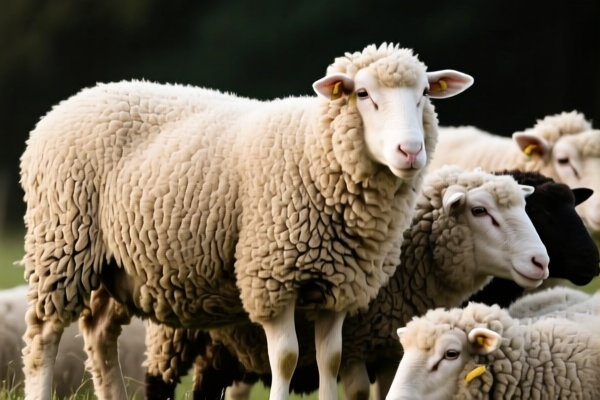
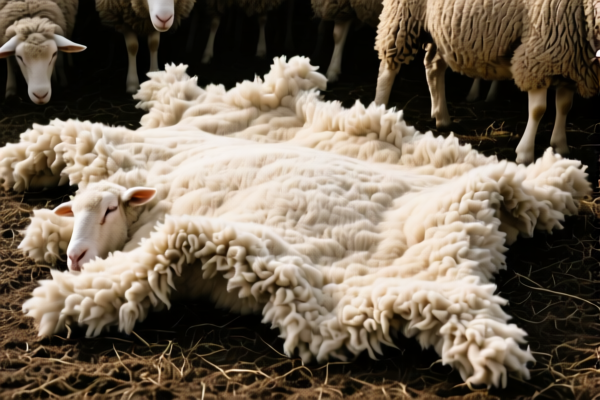
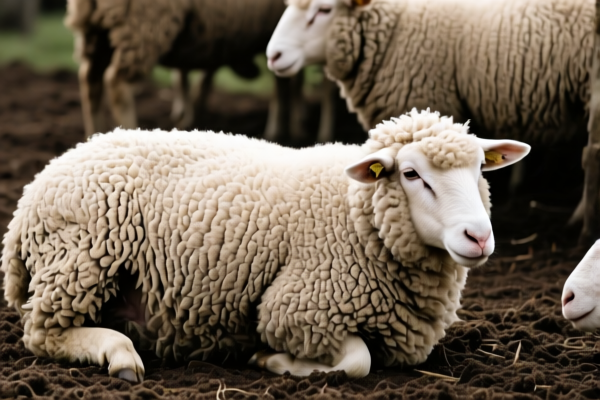
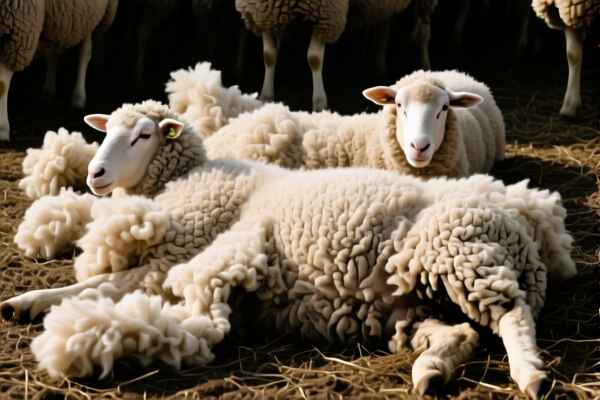
AI Analysis
🐑 Raw Sheepskin with Wool (Raw Sheepskin with Wool)
🌐 HS Code Reference & Customs Clearance Guide | 2026 Latest Tariff Analysis | Professional Clearance Strategy
📌 I. Product Definition and Classification: What Exactly Is "Raw Sheepskin with Wool"?
"Raw Sheepskin with Wool" refers to the skins of sheep or lambs, including their wool, which have not undergone any preservation process (such as salting, liming, or tanning) other than possibly chilling or salting to prevent decay during transport. They are in a raw, unprocessed state.
In international trade, these skins are categorized based on their primary characteristics: 1. Wool Yield vs. Skin Quality: If the value lies primarily in the wool (fiber), it may be classified under Chapter 51 (Animal Hair). 2. Fur/Skin Quality: If the value lies primarily in the leather or fur potential, it falls under Chapter 41 (Leather) or Chapter 43 (Furs). 3. Processing State: "Raw" means no tanning or further preparation has been done.
⚠️ Critical Distinction:
- If the wool is the main product and the skin is secondary → Chapter 51 (Wool/Hair).
- If the skin/fur is the main product (e.g., for making coats, rugs, or leather) → Chapter 41 (Leather) or Chapter 43 (Furs).
- Never classify as processed leather (Chapter 41 ex-4103) or finished fur (Chapter 43 ex-4302/4303) unless explicitly processed.
📦 II. HS Code Classification Details (2026 Latest Tariff Authority Comparison)
| HS Code | Product Description | Applicable Scenario | Key Characteristics |
|---|---|---|---|
5101.11.20.00 |
Raw sheepskin/wolf hair, uncombed/unsheared | Wool-heavy skins; primary value in fiber | Wool-focused; unprocessed, uncombed wool still on skin |
4301.30.00.00 |
Raw fur skins of lambs and similar | Lamb skins (e.g., Mongolian lamb, Persian lamb) | Fur-focused; high-value fur skins, often for luxury goods |
4301.90.00.00 |
Raw fur skins, other (general raw skins) | General raw sheepskins intended for fur processing | Fur-focused; standard raw skins for furriers |
4102.10.10.00 |
Raw sheep/lamb skins, with wool | General raw sheepskins for leather production | Leather/Fur hybrid; common industrial raw sheepskin |
5101.11.10.00 |
Raw sheep/lamb hair, uncombed | Low-grade skins where wool is the only valuable part | Wool-focused; minimal skin value, wool for spinning |
4102.10.30.00 |
Raw sheep/lamb skins, without wool (or lightly cleaned) | Skins where wool has been removed or is minimal | Leather-focused; prepared for tanning into leather |
🔍 Key Reminder:
- "With Wool" implies the wool is still attached. If the wool is removed, it may shift to4102.10.30.00.
- Lamb skins (young sheep) with high-quality fur often go to Chapter 43 (4301.30.00.00or4301.90.00.00).
- Adult sheep skins with coarse wool for leather or carpet backing often go to Chapter 41 (4102.10.10.00) or Chapter 51 (5101.11.20.00) depending on wool quality.
💰 III. 2026 Latest Tariff Rate Breakdown (Including Surtaxes & Policy Add-ons)
✅ Applicable Country: United States (US)
✅ Origin: China (CN)
✅ Effective Date: November 10, 2025 onwards (including subsequent imports)
🎯 1. 5101.11.20.00 —— Raw Sheep/Wool, Uncombed (Wool-Focused)
| Item | Content |
|---|---|
| Base Rate | 0.0% (ad valorem) |
| Section 301 Surtax | +25.0% (USITC Footnote 9903.88.01) |
| IEEPA Surtax | +10.0% (China/HK products, effective Nov 10, 2025) |
| Total Rate | 35.0% |
| Tax Calculation | CIF Value × 35% |
| De Minimis Eligibility | ❌ No (deny_de_minimis) |
| Legal Basis Path | IEEPA:9903.01.25 → IEEPA:9903.01.24 → USITC:5101.11.20.00 → FOOTNOTE:9903.88.01 |
📌 Explanation:
- 25% Section 301: Applied to most animal hair/wool products from China.
- 10% IEEPA: Additional surcharge under International Emergency Economic Powers Act.
- Total 35%: High tariff burden. Consider if wool value justifies the cost.
🎯 2. 4301.30.00.00 —— Raw Fur Skins of Lambs (Fur-Focused)
| Item | Content |
|---|---|
| Base Rate | 0.0% (ad valorem) |
| Section 301 Surtax | 0.0% (Exempt from 301 surtax) |
| IEEPA Surtax | +10.0% (China/HK products) |
| Total Rate | 10.0% |
| Tax Calculation | CIF Value × 10% |
| De Minimis Eligibility | ❌ No (deny_de_minimis) |
| Legal Basis Path | IEEPA:9901.25 → IEEPA:9903.01.24 → USITC:4301.30.00.00 |
📌 Note:
- Lower tax burden (10%) compared to wool-focused codes.
- Applicable to high-value lamb furs (e.g., Mongolian lamb, Persian lamb).
- Ensure product description emphasizes "fur quality" and "lamb skin" to qualify for this lower rate.
🎯 3. 4301.90.00.00 —— Other Raw Fur Skins (General Fur-Focused)
| Item | Content |
|---|---|
| Base Rate | 0.0% (ad valorem) |
| Section 301 Surtax | 0.0% (Exempt from 301 surtax) |
| IEEPA Surtax | +10.0% (China/HK products) |
| Total Rate | 10.0% |
| Tax Calculation | CIF Value × 10% |
| De Minimis Eligibility | ❌ No (deny_de_minimis) |
| Legal Basis Path | IEEPA:9901.25 → IEEPA:9903.01.24 → USITC:4301.90.00.00 |
📌 Note:
- Also 10% total.
- Used for general raw sheepskins intended for fur processing, not specifically "lamb" but still fur-oriented.
🎯 4. 4102.10.10.00 —— Raw Sheepskins with Wool (Leather/Fur Hybrid)
| Item | Content |
|---|---|
| Base Rate | 0.0% (ad valorem) |
| Section 301 Surtax | +7.5% (USITC Footnote 9903.88.01) |
| IEEPA Surtax | +10.0% (China/HK products) |
| Total Rate | 17.5% |
| Tax Calculation | CIF Value × 17.5% |
| De Minimis Eligibility | ❌ No (deny_de_minimis) |
| Legal Basis Path | IEEPA:9903.01.25 → IEEPA:9903.01.24 → USITC:4102.10.10.00 → FOOTNOTE:9903.88.01 |
📌 Explanation:
- 17.5% total. Lower than wool-only (35%) but higher than fur-only (10%).
- Commonly used for standard raw sheepskins destined for leather production or general tanning.
🎯 5. 5101.11.10.00 —— Raw Sheep/Lamb Hair, Uncombed (Low-Value Wool)
| Item | Content |
|---|---|
| Base Rate | 0.0% (ad valorem) |
| Section 301 Surtax | +25.0% (USITC Footnote 9903.88.01) |
| IEEPA Surtax | +10.0% (China/HK products) |
| Total Rate | 35.0% |
| Tax Calculation | CIF Value × 35% |
| De Minimis Eligibility | ❌ No (deny_de_minimis) |
| Legal Basis Path | IEEPA:9903.01.25 → IEEPA:9903.01.24 → USITC:5101.11.10.00 → FOOTNOTE:9903.88.01 |
📌 Note:
- 35% total. Same as5101.11.20.00.
- Use when wool is the primary value driver and skin is minimal or low-grade.
🎯 6. 4102.10.30.00 —— Raw Sheep/Lamb Skins, Without Wool (Leather-Focused)
| Item | Content |
|---|---|
| Base Rate | 2.0% (ad valorem) |
| Section 301 Surtax | 0.0% (Exempt from 301 surtax) |
| IEEPA Surtax | +10.0% (China/HK products) |
| Total Rate | 12.0% |
| Tax Calculation | CIF Value × 12.0% |
| De Minimis Eligibility | ❌ No (deny_de_minimis) |
| Legal Basis Path | IEEPA:9901.25 → IEEPA:9903.01.24 → USITC:4102.10.30.00 |
📌 Note:
- 12% total.
- Applies if wool is removed or skin is declared as "without wool" or "cleaned."
- If you have raw sheepskins with wool, do NOT use this code unless you remove the wool before export.
🛠️ IV. Customs Clearance Practical Advice (Real-World Pitfall Avoidance)
✅ 1. Required Documentation Checklist (None Can Be Missing)
| Document | Required | Explanation |
|---|---|---|
| ✅ Product Specifications | ✔️ | Must state: "Raw," "With Wool," "Un-tanned," "Origin: China" |
| ✅ Photos of Skins | ✔️ | Clear images showing wool attachment, skin condition, no tanning marks |
| ✅ Commercial Invoice | ✔️ | Clearly describe as "Raw Sheepskins with Wool" – avoid vague terms like "Animal Products" |
| ✅ Packing List | ✔️ | Detail weight, count, and packaging (e.g., salted, chilled) |
| ✅ Origin Certificate (CO) | ✔️ | If non-China origin, may qualify for preferential rates |
| ✅ Third-Party Inspection Report | ✔️ | If applicable, confirm "raw" status and wool presence |
| ✅ Declaration of Non-Tanning | ✔️ | Explicitly state no chemical tanning or curing beyond salting/chilling |
✅ 2. Declaration Tips (Key Mnemonics)
🔥 "Wool On = Wool Code, Fur High = Fur Code, Leather Ready = Leather Code!"
| Scenario | Correct HS Code | Common Mistake |
|---|---|---|
| Raw skins with wool, wool is valuable | 5101.11.20.00 or 5101.11.10.00 |
Declaring as leather → 17.5% or 12% |
| High-value lamb furs (luxury) | 4301.30.00.00 |
Declaring as generic sheepskin → 10% vs 35% |
| Standard raw skins for leather | 4102.10.10.00 |
Declaring as fur → 10% vs 17.5% |
| Wool removed, skin for tanning | 4102.10.30.00 |
Declaring as "with wool" → Incorrect description |
| Mixed/ambiguous | Pre-Ruling Required | Guessing code → Delays, penalties, or re-export |
📌 Critical Tip:
- If the wool is not removed, you cannot declare as4102.10.30.00(without wool).
- If the wool is removed, you cannot declare as4102.10.10.00(with wool).
- Misclassification leads to 10-25% tax differences!
✅ 3. Special Cases Handling
| Scenario | Handling Advice |
|---|---|
| Mixed Lots (Some with wool, some without) | Split shipment or declare with highest tax rate if mixed |
| Salted vs. Chilled | Both are "raw." Specify preservation method in invoice |
| Lamb vs. Sheep | "Lamb" (young) → Chapter 43. "Sheep" (adult) → Chapter 41 or 51 |
| OEM Custom Skins | Provide design specs, but keep raw status clear |
| Sample Shipments | Still subject to same tariffs; no de minimis exemption |
🌍 V. Global Market Clearance Comparison (2026 Latest)
| Country/Region | Recommended HS Code | Tariff | Certification | Notes |
|---|---|---|---|---|
| 🇺🇸 USA | 4301.30.00.00 or 4102.10.10.00 |
10%–17.5% | USDA Inspection (if animal product) | High surcharges on wool codes |
| 🇨🇳 China | 4301.30.00.00 or 4102.10.10.00 |
2%–10% | None (if domestic) | No surtaxes |
| 🇪🇺 EU | 4301.30.00.00 or 4102.10.10.00 |
0%–5% | CE (if processed) | No surtaxes |
| 🇬🇧 UK | 4301.30.00.00 or 4102.10.10.00 |
0%–5% | None | Post-Brexit rules apply |
| 🇦🇺 Australia | 4301.30.00.00 or 4102.10.10.00 |
5% | Biosecurity Check | Strict animal product controls |
📌 Conclusion:
- USA is the most expensive due to 301/IEEPA surtaxes.
- EU/UK/China have no surtaxes, making raw sheepskin exports cheaper.
- Biosecurity is a key concern in Australia/USA – ensure proper salting/chilling documentation.
📌 VI. Common Errors & Pitfall Guide (Blood & Tears Lessons)
❌ Mistake 1: Declaring "Raw Sheepskin with Wool" as 4102.10.30.00 (Without Wool)
👉 Consequence: 12% vs 17.5%/35% → Underpayment of taxes, penalties, or seizure!
❌ Mistake 2: Failing to specify "With Wool" in description
👉 Consequence: Customs may classify as generic leather → Delay or re-evaluation
❌ Mistake 3: Mixing lamb furs (4301) with sheep skins (4102) in one shipment
👉 Consequence: Complex clearance, potential misclassification → Higher audit risk
❌ Mistake 4: Not declaring "Raw" status
👉 Consequence: May be classified as processed leather → Different HS code, different tax
✅ Correct Approach:
"Raw Sheepskins with Wool, Un-tanned, Chilled, HS Code 4102.10.10.00, Origin: China"
🎯 VII. Conclusion: Professional Declaration, Save Time, Cut Costs!
🎯 Remember the Mnemonic:
🔹 "Wool On = Wool Code, Fur High = Fur Code, Leather Ready = Leather Code!"
🔹 "HS Code Determines Fate, Tax Differs by 25%, Declaration Off by One Step, Penalty by Thousands!"
📌 Pro Tip:
If your raw sheepskins are originating from Vietnam, Mexico, or Thailand, you may apply for IEEPA Exemption, reducing tariffs to 0%–5%.
Recommend pre-clearance ruling (Advance Ruling) to avoid clearance risks.
📣 Take Action Now:
📞 Contact a professional customs broker + Provide product photos + Apply for HS Code pre-ruling
🚀 Ensure your raw sheepskins clear customs smoothly, export efficiently, and maximize profits!
✨ Professional clearance starts with accurate classification!
💼 Every cent of your cost deserves precise calculation!
Customer Reviews
About HS Code Classification
The Harmonized System (HS) is an internationally standardized nomenclature developed by the World Customs Organization (WCO) to classify traded products. Over 200 countries use the HS system as the basis for customs tariffs, trade statistics, and import/export regulations.
Each HS code follows a hierarchical structure:
- Chapter (2 digits) — Broad category of goods (e.g., Chapter 84: Machinery and Mechanical Appliances)
- Heading (4 digits) — More specific grouping within the chapter
- Subheading (6 digits) — Internationally standardized breakdown, used by all WCO member countries
- National subdivisions (8-10 digits) — Country-specific extensions for further classification, such as US HTSUS 10-digit codes
Correct HS code classification is essential for smooth customs clearance, accurate duty payment, and compliance with trade regulations. Misclassification can lead to customs delays, overpayment of duties, or penalties.
When importing from CN to US, the applicable tariff rates may include:
- Most-Favored-Nation (MFN) rate — The standard duty rate applied to WTO members
- General rate — Applied to countries without trade agreements
- Trade remedy duties — Additional tariffs such as Section 301 (anti-dumping), Section 232 (national security), or countervailing duties
The information provided on this page is for reference purposes only. For official classification, please consult with your local customs authority or a licensed customs broker.