Raw Silk (Horsehair Silk)
CN → US| HS Code | Tariff Rate | Origin | Destination | Doc |
|---|---|---|---|---|
| 5004000000 | 35.0% | CN | US | Official Doc |
Product Images
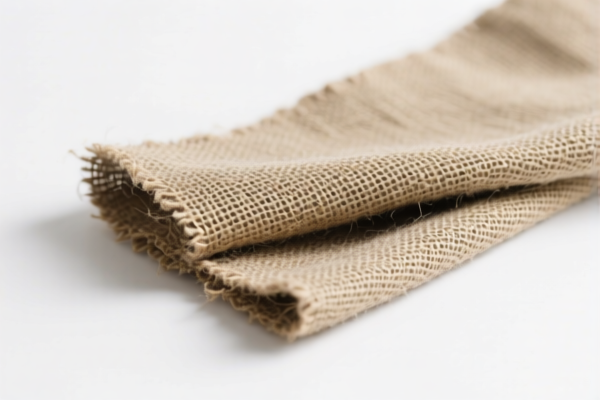
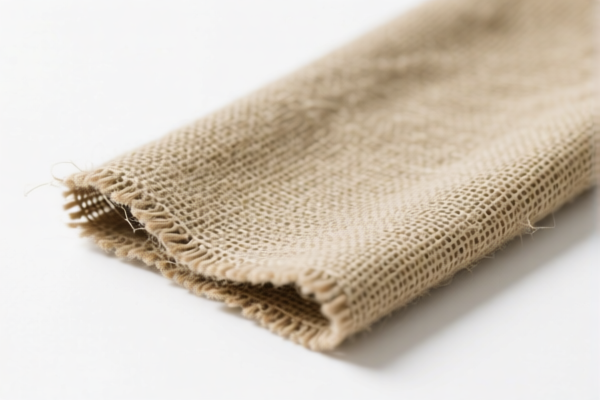
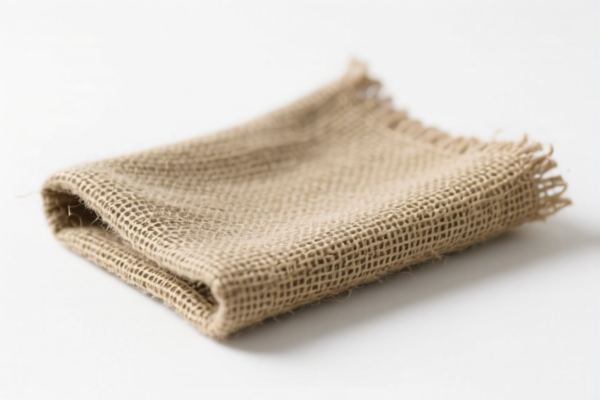
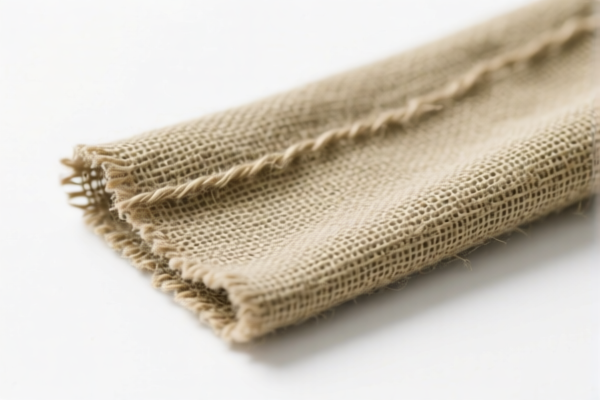
AI Analysis
🧵 Raw Silk (Horsehair Silk)
🌐 HS Code Reference & Customs Clearance Guide | 2026 Latest Tariff Analysis | Professional Clearance Strategy
📌 1. Product Definition and Classification: What is "Raw Silk (Horsehair Silk)"?
"Raw Silk (Horsehair Silk)" is a specific type of textile raw material derived from silkworms. In international trade, it refers to silk yarn that has not been spun from silk waste and is not put up for retail sale. It is essentially the foundational fiber material for high-end weaving, characterized by its natural luster, strength, and smoothness.
⚠️ Key Distinction:
- Not Waste Silk: It excludes "silk waste" (broken fibers, cocoons unfit for reeling), which falls under different HS codes (e.g., Chapter 50 waste headings).
- Not Retail Packaged: It is imported in bulk cones, hanks, or reels, not in small skeins for direct consumer use. If put up for retail sale, it would likely fall under HS 5006.
- Not Spun from Waste: The description explicitly states "other than yarn spun from silk waste," ensuring it is classified as high-grade raw silk yarn.
📦 2. HS Code Classification Details (2026 Latest Tariff Reference)
| HS Code | Product Description | Applicable Scenario | Retail Packaging? |
|---|---|---|---|
| 5004.00.00.00 | Silk yarn (other than yarn spun from silk waste) not put up for retail sale | Industrial-grade raw silk yarn, bulk cones/reels, high-luster fiber for weaving | ❌ No |
🔍 Critical Note:
- Only one HS Code applies based on the provided data: 5004.00.00.00.
- This code specifically targets raw silk yarn that is not made from waste and not for retail.
- Do not confuse with 5005 (Yarn spun from silk waste) or 5006 (Silk yarn put up for retail sale).
💰 3. 2026 Latest Tariff Rate Breakdown (Detailed Tax Clauses)
✅ Applicable Country: United States (US)
✅ Origin: China (CN)
✅ Effective Time: As per latest trade policy (2025–2026)
🎯 HS Code: 5004.00.00.00 – Raw Silk Yarn (Non-Retail, Non-Waste)
| Item | Content |
|---|---|
| Base Tariff Rate | 0.0% (ad valorem) |
| Additional Tariff (Section 301) | +25.0% |
| Total Tariff Rate | 25.0% |
| Tax Calculation | CIF Value × 25% |
| De Minimis Exemption | ❌ Not Eligible (Deny de minimis) |
| Legal Basis | USITC: 5004.00.00.00 → FOOTNOTE: 9903.88.01 (Section 301) |
📌 Explanation:
- The base tariff for raw silk yarn is 0%, reflecting the low duty on raw materials.
- However, due to Section 301 tariffs on Chinese-origin goods, an additional 25% is applied.
- Total landed cost impact: 25% tariff on top of CIF value.
- This is a high-cost classification for importers, so accurate declaration is critical to avoid misclassification penalties.
🛠️ 4. Customs Clearance Practical Advice (Battle-Tested Pitfall Avoidance)
✅ 1. Required Documentation Checklist (Non-Negotiable)
| Document | Required | Purpose |
|---|---|---|
| ✅ Commercial Invoice | ✔️ | Must clearly state: "Raw Silk Yarn, not put up for retail sale, not from silk waste" |
| ✅ Packing List | ✔️ | Detail weight, length, and packaging type (bulk cones/reels) |
| ✅ Product Specification Sheet | ✔️ | Include fiber content (100% raw silk), denier, twist, and origin |
| ✅ Certificate of Origin (CO) | ✔️ | To verify Chinese origin and apply Section 301 tariffs |
| ✅ Bill of Lading/Air Waybill | ✔️ | Proof of shipment and carrier details |
✅ 2. Declaration Tips (Key Mnemonics)
🔥 "Specify 'Non-Retail' & 'Non-Waste' or Pay 25% Penalty!"
| Scenario | Correct Declaration | Incorrect Declaration | Risk |
|---|---|---|---|
| Raw silk yarn in bulk cones | 5004.00.00.00 "Raw silk yarn, not put up for retail sale, not from waste" |
Misclassified as retail yarn (5006) | Higher tariff + audit |
| Silk waste yarn | 5005.xx.xx.xx | Misclassified as raw silk (5004) | Wrong tax + penalty |
| Retail-packaged silk skeins | 5006.xx.xx.xx | Misclassified as bulk raw silk (5004) | Misdeclaration fine |
✅ 3. Special Cases & Mitigation
| Case | Handling Advice |
|---|---|
| OEM Raw Silk for Fabric Mill | Provide purchase order from fabric manufacturer to prove industrial use |
| Mixed Shipments (Silk + Waste) | Separate declarations! Do not combine. Waste silk has different rates. |
| Transshipment via Third Country | Must provide original Certificate of Origin from China. Transshipment does not erase origin. |
| Partial Retail Packaging | If any portion is for retail, entire shipment may be reclassified to 5006 → higher tariff |
🌍 5. Global Market Comparison (2026 Latest)
| Country/Region | Recommended HS Code | Tariff (China Origin) | Certification | Notes |
|---|---|---|---|---|
| 🇺🇸 USA | 5004.00.00.00 |
25% (Total) | None | Section 301 applies |
| 🇨🇳 China | 5004.00.00.00 |
0% | None | Import duty free |
| 🇪🇺 EU | 5004.00.00.00 |
0% | None | No additional tariffs |
| 🇬🇧 UK | 5004.00.00.00 |
0% | None | Post-Brexit tariff aligns with EU |
| 🇯🇵 Japan | 5004.00.00.00 |
0% | None | Free trade agreement benefits may apply |
📌 Conclusion:
- USA is the only major market imposing a 25% tariff on raw silk yarn from China.
- EU, UK, Japan, and China impose 0% tariff, making them more cost-effective destinations.
- Strategic Recommendation: Consider routing through non-China origins (e.g., Vietnam, India) to avoid Section 301 tariffs, if feasible.
📌 6. Common Mistakes & Pitfalls (Lessons Learned)
❌ Mistake 1: Declaring as "Silk Yarn" without specifying "not put up for retail sale"
👉 Consequence: Customs may reclassify to 5006 → higher tariff + penalty
❌ Mistake 2: Claiming it is "from silk waste"
👉 Consequence: Wrong HS code (5005) → misdeclaration fine + seizure risk
❌ Mistake 3: Combining raw silk with silk waste in one shipment
👉 Consequence: Separate declarations required. Mixed shipment → audit + delay
❌ Mistake 4: Ignoring Section 301 tariffs
👉 Consequence: 25% unexpected cost → profit margin erosion
✅ Correct Practice:
"Raw Silk Yarn, 100% Mulberry Silk, Not Put Up for Retail Sale, Not from Silk Waste, Bulk Cones, Origin: China"
🎯 7. Conclusion: Precision in Classification Saves Money!
🎯 Remember the Rules:
🔹 "Non-Retail + Non-Waste = 5004.00.00.00"
🔹 "Section 301 = +25% Tariff (US Only)"
🔹 "Retail or Waste = Different HS Code = Different Tax"
📌 Pro Tip:
If your raw silk yarn is originating from India, Vietnam, or Thailand, you may avoid Section 301 tariffs entirely, reducing the total tax to 0% in the US.
Consider supply chain diversification to mitigate tariff risks.
📣 Immediate Action:
📞 Consult a licensed customs broker + Verify product specifications + Apply for Advance Ruling (if eligible)
🚀 Ensure precise declaration, avoid penalties, and protect your margins!
✨ Professional clearance starts with accurate classification!
💼 Every percentage point counts in global trade!
Customer Reviews
About HS Code Classification
The Harmonized System (HS) is an internationally standardized nomenclature developed by the World Customs Organization (WCO) to classify traded products. Over 200 countries use the HS system as the basis for customs tariffs, trade statistics, and import/export regulations.
Each HS code follows a hierarchical structure:
- Chapter (2 digits) — Broad category of goods (e.g., Chapter 84: Machinery and Mechanical Appliances)
- Heading (4 digits) — More specific grouping within the chapter
- Subheading (6 digits) — Internationally standardized breakdown, used by all WCO member countries
- National subdivisions (8-10 digits) — Country-specific extensions for further classification, such as US HTSUS 10-digit codes
Correct HS code classification is essential for smooth customs clearance, accurate duty payment, and compliance with trade regulations. Misclassification can lead to customs delays, overpayment of duties, or penalties.
When importing from CN to US, the applicable tariff rates may include:
- Most-Favored-Nation (MFN) rate — The standard duty rate applied to WTO members
- General rate — Applied to countries without trade agreements
- Trade remedy duties — Additional tariffs such as Section 301 (anti-dumping), Section 232 (national security), or countervailing duties
The information provided on this page is for reference purposes only. For official classification, please consult with your local customs authority or a licensed customs broker.