Raw Timber (Coniferous)
CN → US| HS Code | Tariff Rate | Origin | Destination | Doc |
|---|---|---|---|---|
| 4403210112 | 35.0% | CN | US | Official Doc |
| 4403240104 | 35.0% | CN | US | Official Doc |
Product Images
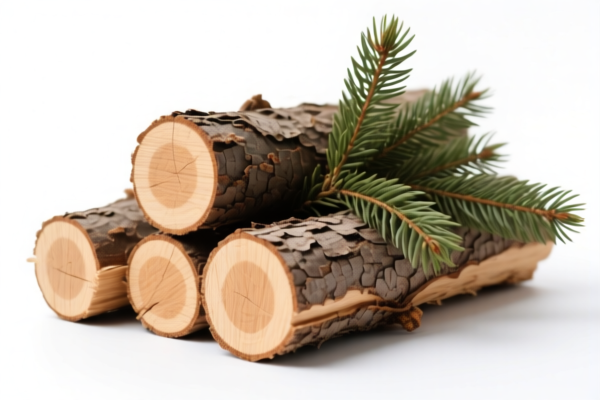
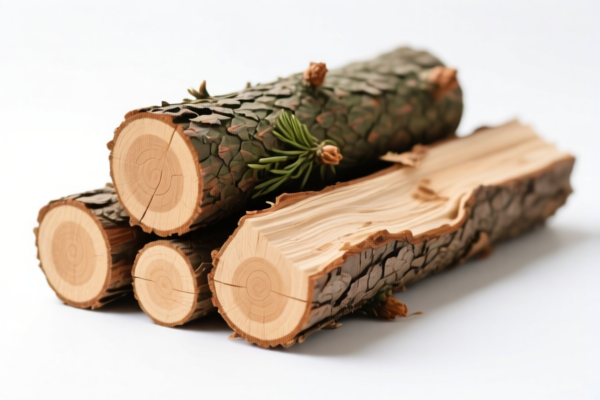
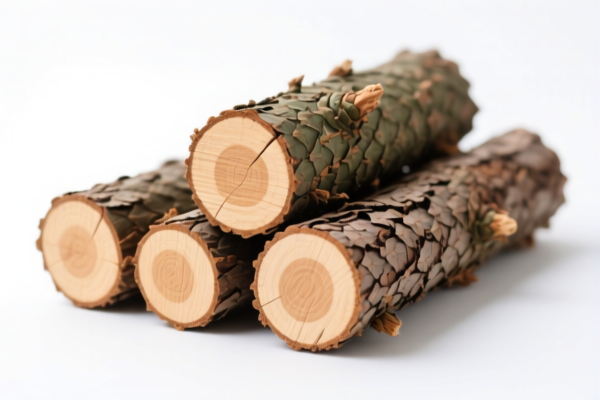
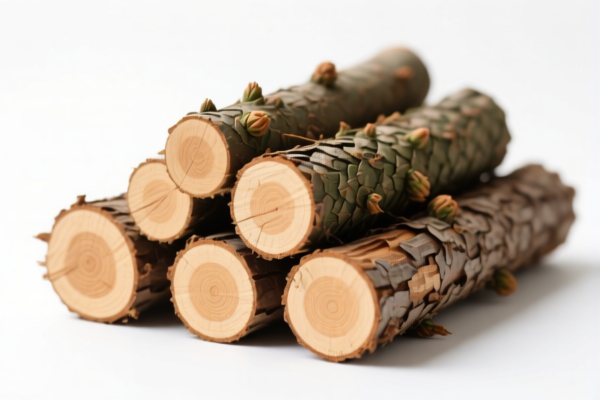
AI Analysis
🌲 Raw Timber: Coniferous (Unprocessed Wood)
🌐 HS Code Reference & Customs Clearance Guide | 2026 Latest Tariff Analysis | Professional Clearance Strategy
📌 I. Product Definition & Classification: What Exactly is "Raw Timber"?
"Wood in the rough," whether stripped of bark or sapwood, or roughly squared, refers to wood that has not been planed, tongued, grooved, finger-jointed, chamfered, headed, or otherwise worked beyond simple sawing or cross-cutting. In international trade, specifically for Coniferous species, the classification hinges heavily on the species and the physical dimensions (smallest cross-sectional dimension).
Key Distinctions: 1. Roughly Squared: If the wood is squared on at least two opposite sides, the smallest cross-sectional dimension is measured from the middle of the rough side. 2. Non-Squared: If not squared, the dimension is measured diagonally across the center. 3. Specific Uses: Special categories exist for poles and posts (e.g., telephone poles), which often have stricter dimension requirements.
⚠️ Critical Identification Point:
- If the wood is Pine (Pinus spp.) and the smallest cross-section is ≥ 15 cm AND it is specifically a pole/post (like telephone poles) → It falls under 4403.21.01.12.
- If the wood is Fir (Abies spp.) or Spruce (Picea spp.) and is intended for pulpwood (raw material for paper/pulp production) → It falls under 4403.24.01.04.
📦 II. HS Code Classification Details (2026 Latest Tariff Authority Comparison)
| HS Code | Product Description | Applicable Scenario | Key Characteristics |
|---|---|---|---|
4403.21.01.12 |
Pine Poles, Piles, and Posts (Telephone, Telegraph, Power) | Utility infrastructure, construction posts | - Species: Pinus spp. (Pine) - Smallest cross-section ≥ 15 cm - Form: Poles/Posts (roughly squared or cylindrical) |
4403.24.01.04 |
Fir and Spruce Pulpwood | Paper and pulp manufacturing, industrial raw material | - Species: Abies (Fir) or Picea (Spruce) - Form: Raw logs suitable for chipping into pulp - NOT classified as structural lumber |
🔍 Important Reminder:
- Do not confuse "Pulpwood" with "Lumber": Pulpwood is raw, often smaller diameter or cut specifically for breaking down into fibers. If the same Spruce logs are cut into dimensional lumber (>6mm thickness), they may fall under different headings (e.g., 4407). - Pine Poles vs. Regular Pine Timber: Regular pine logs that are not poles/posts (e.g., general construction logs) might fall under different sub-headings within 4403.21. The specific code4403.21.01.12is strictly for poles/posts meeting the 15cm threshold.
💰 III. 2026 Latest Tariff Rate Breakdown (Including Additional Taxes & Policy Surcharges)
✅ Applicable Country: United States (US)
✅ Country of Origin: China (CN)
✅ Effective Date: 2025-11-10 onwards (for subsequent imports)
🎯 1. 4403.21.01.12 —— Pine Poles, Piles, and Posts (≥15cm)
| Item | Details |
|---|---|
| Base Tariff | 0.0% (ad valorem) |
| Section 301 / Additional Tariff | +25.0% |
| Total Tax Rate | 25.0% |
| Tax Calculation | CIF Value × 25% |
| De Minimis Eligibility | ❌ Not Eligible (High value commodity, typically entered via formal entry) |
| Legal Basis Path | HTSUS:4403.21.01.12 → USITC:Section 301 Footnote → USTR List 4A |
📌 Explanation:
- The 0% base rate reflects standard Most Favored Nation (MFN) treatment for rough timber. - The 25% additional tariff is imposed under Section 301 of the Trade Act of 1974, targeting specific Chinese imports. - Total Liability: You pay exactly 25% of the customs value (CIF). There are no other surcharges listed for this specific code in the provided data.
🎯 2. 4403.24.01.04 —— Fir and Spruce Pulpwood
| Item | Details |
|---|---|
| Base Tariff | 0.0% (ad valorem) |
| Section 301 / Additional Tariff | +25.0% |
| Total Tax Rate | 25.0% |
| Tax Calculation | CIF Value × 25% |
| De Minimis Eligibility | ❌ Not Eligible |
| Legal Basis Path | HTSUS:4403.24.01.04 → USITC:Section 301 Footnote → USTR List 4A |
📌 Note:
- Similar to Pine Poles, Fir/Spruce pulpwood carries a 25% total tax burden. - Even though the base rate is 0%, the effective cost to import is significantly increased by the 25% punitive tariff. - This applies to logs destined for pulp production, not necessarily high-grade lumber.
🛠️ IV. Customs Clearance Practical Advice (Real-World Pitfall Avoidance)
✅ 1. Documentation Checklist (Non-Negotiable)
| Document | Required | Explanation |
|---|---|---|
| ✅ Phytosanitary Certificate | ✔️ | CRITICAL: All raw wood requires this from the country of origin to prevent pest/disease entry (ISPM 15 standards often apply, though raw timber may have specific exemptions depending on bark status). |
| ✅ Commercial Invoice | ✔️ | Must clearly state: "Raw Timber, Coniferous, Pine/Fir/Spruce," value, and HS Code. |
| ✅ Packing List | ✔️ | Detail quantity, volume (CBM), and weight. Specify if bark is retained. |
| ✅ Bill of Lading / Airway Bill | ✔️ | Standard shipping document. |
| ✅ Proof of Origin | ✔️ | Certificate of Origin (CO) from Chinese supplier. |
| ✅ Species Declaration | ✔️ | Explicitly state the botanical name (e.g., Pinus sylvestris, Picea abies) to avoid misclassification. |
✅ 2. Declaration Tips (Key Mnemonics)
🔥 "Species Clear, Dimensions Exact, Bark Status Known, Tax at 25%!"
| Scenario | Correct Declaration | Incorrect Practice |
|---|---|---|
| Pine Logs as Power Poles | Use 4403.21.01.12. Ensure smallest dim ≥ 15cm. |
Declaring as general lumber (4403.20) → Wrong classification, potential audit. |
| Spruce Logs for Pulp | Use 4403.24.01.04. State "Pulpwood." |
Declaring as "Construction Timber" → May face different inspection regimes. |
| Bark Status | Explicitly state "Stripped" or "With Bark." | Ambiguous description → Customs may detain for physical inspection. |
| Dimension Measurement | Provide diagonal measurement if not squared. | Providing only length → Rejected by CBP for dimension verification. |
✅ 3. Special Situation Handling
| Situation | Handling Advice |
|---|---|
| Mixed Species Loads | Separate shipments if possible. If mixed, declare the highest-risk/most specific code or split lines in the manifest. |
| Bark Retention | If bark is retained, ensure the Phytosanitary Certificate specifically mentions "bark retained" and confirms freedom from quarantine pests. |
| Value Fluctuation | Since tax is 25% of CIF, any increase in freight/insurance directly increases tax liability. Optimize shipping costs. |
| Pre-Ruling | For large volume imports, apply for a Binding Tariff Information (BTI) or US CBP Ruling to confirm the 4403.21.01.12 vs. 4403.24.01.04 classification. |
🌍 V. Global Market Comparison (2026 Latest)
| Country/Region | Recommended HS Code | Tariff Rate (China Origin) | Key Certification | Notes |
|---|---|---|---|---|
| 🇺🇸 USA | 4403.21.01.12 / 4403.24.01.04 |
25% (Total) | Phytosanitary Cert. | High tariff under Section 301. |
| 🇨🇳 China | 4403.21.01.12 / 4403.24.01.04 |
0% - 5% (Import Duty) | N/A | Domestic trade or re-export. |
| 🇪🇺 EU | 4403.21.00 / 4403.24.00 |
0% (Most cases) | FLEGT / EUTR | Strict due diligence on legality. |
| 🇬🇧 UK | 4403.21.00 / 4403.24.00 |
0% | UK EUTR compliance | Post-Brexit rules apply. |
📌 Conclusion:
- The USA is the most critical market for tariff planning due to the 25% additional tariff. - EU/UK focus more on legality and sustainability (EUTR/FLEGT) rather than high tariffs, but compliance costs can be high. - Always verify the smallest cross-sectional dimension for Pine poles, as this is the key differentiator for4403.21.01.12.
📌 VI. Common Errors & Pitfall Guide (Lessons Learned)
❌ Error 1: Misidentifying "Pine Poles" as "General Pine Logs"
👉 Consequence: Using a general code may lead to rejection if dimensions don't match, or miss the specific pole classification.
Fix: Measure the smallest cross-section carefully. If ≥15cm and used as a pole, use 4403.21.01.12.
❌ Error 2: Confusing "Pulpwood" with "Lumber"
👉 Consequence: If Fir/Spruce logs are declared as pulpwood but arrive as dimensional lumber, customs may reclassify and assess different duties or inspection requirements.
Fix: Declare based on actual intent and product state at time of import.
❌ Error 3: Ignoring the "Roughly Squared" Definition
👉 Consequence: Incorrect dimension reporting leads to delays.
Fix: If roughly squared, measure from the middle of the rough side. If not, measure the diagonal.
❌ Error 4: Lack of Phytosanitary Certificate
👉 Consequence: Cargo held at port, destroyed, or re-exported.
Fix: Ensure the exporter provides a valid, government-issued Phytosanitary Certificate before shipment.
✅ Correct Approach:
"Coniferous Wood, Roughly Squared, Pine (Pinus spp.), Smallest Cross-Section: 18cm, Stripped of Bark, Intended for Telephone Poles, HS: 4403.21.01.12"
🎯 VII. Conclusion: Professional Declaration, Cost Control, Efficiency!
🎯 Remember the Mantra:
🔹 "Pine Poles ≥15cm go to .12, Fir/Spruce Pulp goes to .04."
🔹 "Base is 0%, but US Tariff is 25% flat."
🔹 "Phytosanitary is King, no cert, no entry!"
📌 Pro Tip:
If you are importing large volumes, consider pre-classification rulings from US CBP. Given the 25% tariff impact, even a minor classification error can result in significant financial loss or penalties.
📣 Immediate Action:
📞 Engage a licensed Customs Broker + Provide Product Specs + Secure Phytosanitary Cert
🚀 Ensure smooth clearance, accurate duty payment, and timely delivery!
✨ Professional Customs Clearance Starts with Precise Classification!
💼 Every percentage point of tariff matters!
Customer Reviews
About HS Code Classification
The Harmonized System (HS) is an internationally standardized nomenclature developed by the World Customs Organization (WCO) to classify traded products. Over 200 countries use the HS system as the basis for customs tariffs, trade statistics, and import/export regulations.
Each HS code follows a hierarchical structure:
- Chapter (2 digits) — Broad category of goods (e.g., Chapter 84: Machinery and Mechanical Appliances)
- Heading (4 digits) — More specific grouping within the chapter
- Subheading (6 digits) — Internationally standardized breakdown, used by all WCO member countries
- National subdivisions (8-10 digits) — Country-specific extensions for further classification, such as US HTSUS 10-digit codes
Correct HS code classification is essential for smooth customs clearance, accurate duty payment, and compliance with trade regulations. Misclassification can lead to customs delays, overpayment of duties, or penalties.
When importing from CN to US, the applicable tariff rates may include:
- Most-Favored-Nation (MFN) rate — The standard duty rate applied to WTO members
- General rate — Applied to countries without trade agreements
- Trade remedy duties — Additional tariffs such as Section 301 (anti-dumping), Section 232 (national security), or countervailing duties
The information provided on this page is for reference purposes only. For official classification, please consult with your local customs authority or a licensed customs broker.