Raw Timber (Sawn or Roughly Trimmed Coniferous Wood)
CN → US| HS Code | Tariff Rate | Origin | Destination | Doc |
|---|---|---|---|---|
| 4407120017 | 35.0% | CN | US | Official Doc |
| 4407190092 | 35.0% | CN | US | Official Doc |
| 4403240104 | 35.0% | CN | US | Official Doc |
| 4403210112 | 35.0% | CN | US | Official Doc |
| 4407190055 | 35.0% | CN | US | Official Doc |
Product Images
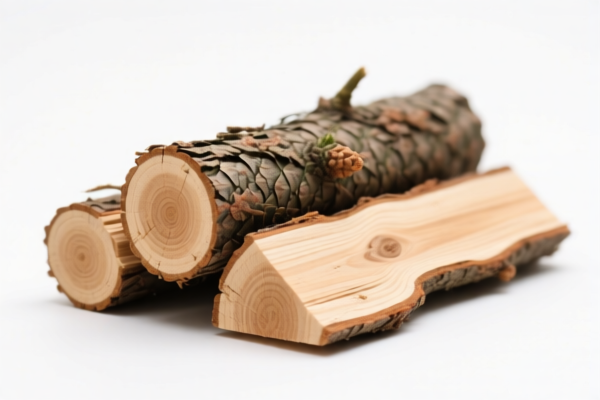
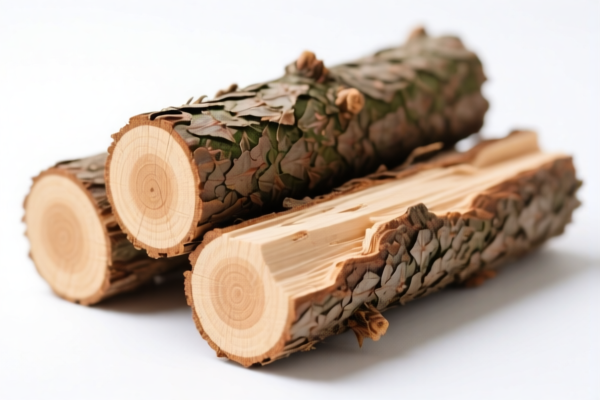
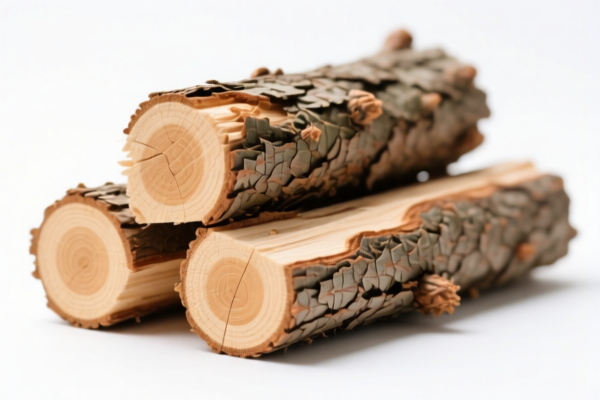
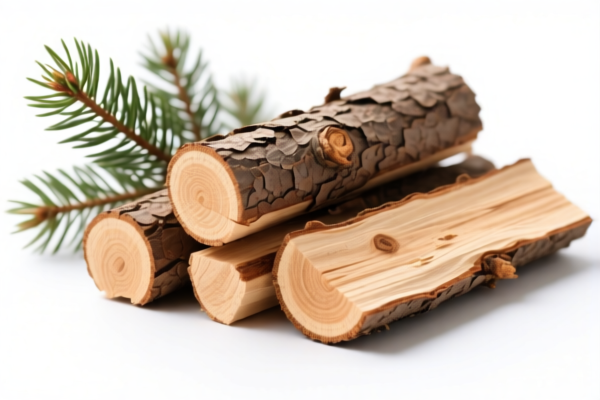
AI Analysis
🌲 Raw Timber: Sawn or Roughly Trimmed Coniferous Wood
🌐 HS Code Reference & Customs Clearance Guide | 2026 Latest Tariff Analysis | Professional-Level Strategy for U.S. Imports
📌 I. Product Definition & Classification: What Exactly is "Raw Timber" for Conifers?
"Raw Timber" in the context of international trade refers to unprocessed or minimally processed wood in its natural state. Specifically for Coniferous Wood (softwoods like Pine, Spruce, Fir, etc.), the classification depends heavily on two factors:
1. Physical State: Is it an Log (Round Wood), Sawn/Chopped, or Roughly Trimmed?
2. Processing Level: Is it merely peeled, sliced, or sawn longitudinally, or is it further planed/treated?
In U.S. Customs terminology, this category spans Chapter 44 (Wood and Articles of Wood). The key distinction lies between Chapter 4403 (Wood in the rough, whether or not debarked, chipped or roughly squared) and Chapter 4407 (Wood sawn or chipped lengthwise, sliced or peeled, veneer sheets, etc.).
⚠ Critical Distinction:
- If the wood is unprocessed logs or roughly squared trunks → HS 4403
- If the wood is sawn longitudinally (planks, beams) or roughly trimmed but clearly processed into a specific shape → HS 4407
📦 II. Detailed HSCodes & Tariff Analysis (Based on Provided Data)
According to the provided data, all listed HSCodes for Coniferous Raw Timber carry a Total Tax Rate of 35.0%. Below is the detailed mapping:
| HSCode | Product Description & Key Characteristics | Application Scenario | Tax Breakdown (Total: 35%) |
|---|---|---|---|
| 4407.12.00.17 | Sawn/Chopped Coniferous Wood Matches Raw Timber in an unprocessed state with longitudinal sawing or slicing. Suitable for coniferous timber. |
Sawn planks, beams, or sliced timber products where the grain direction is parallel to the surface. | Base Duty: 0.0% Section 301 Duty: 25.0% Section 122 Duty: 10% Total: 35.0% |
| 4407.19.00.92 | Roughly Trimmed Coniferous Wood (>6mm Thickness) Matches Raw Timber in an unprocessed state with rough shape. For coniferous timber thicker than 6mm. |
Rough-cut lumber, beams, or logs that have been trimmed but not finely finished. | Base Duty: 0.0% Section 301 Duty: 25.0% Section 122 Duty: 10% Total: 35.0% |
| 4403.24.01.04 | Coniferous Log (Rough Wood) Matches Raw Timber or Raw Wood of coniferous material in log form. Fits the definition of rough timber. |
Unprocessed logs, round wood, or roughly squared trunks before sawing. | Base Duty: 0.0% Section 301 Duty: 25.0% Section 122 Duty: 10% Total: 35.0% |
| 4403.21.01.12 | Coniferous Log (Rough Wood) Matches coniferous material in log form. Fits the definition of rough timber. |
Similar to above; covers various types of coniferous logs in their natural or rough-squared state. | Base Duty: 0.0% Section 301 Duty: 25.0% Section 122 Duty: 10% Total: 35.0% |
| 4407.19.00.55 | Roughly Shaped Coniferous Wood Matches Raw Timber in an unprocessed state with rough shape. Suitable for longitudinally sawn or sliced timber. |
Similar to 4407.19.00.92 but may apply to slightly different dimensional criteria or rough-sawn products. | Base Duty: 0.0% Section 301 Duty: 25.0% Section 122 Duty: 10% Total: 35.0% |
🔍 Key Insight:
- All these codes apply to Chinese-origin coniferous wood imported into the U.S.
- The 35% total duty is composed of 0% Base Duty + 25% Section 301 Tariff + 10% Section 122 Tariff.
- No de minimis exemption applies to these high-value raw materials.
💰 III. 2026 Latest Tariff Rate Breakdown (Including Surtarges & Policy Add-ons)
✅ Applicable Country: United States (US)
✅ Origin: China (CN)
✅ Effective Date: Includes imports from Nov 10, 2025 onwards
🎯 1. Common Tax Structure for All Listed HSCodes
| Item | Content |
|---|---|
| Base Duty (Most Favored Nation - MFN) | 0.0% |
| Section 301 Additional Duty | +25.0% (Under U.S. Trade Law Section 301, targeting specific Chinese goods) |
| Section 122 Additional Duty | +10.0% (Under U.S. Trade Law Section 122, additional safeguard tariffs on Chinese imports) |
| Total Effective Duty Rate | 35.0% |
| Calculation Basis | CIF Value (Cost, Insurance, Freight) × 35% |
| De Minimis Exempt? | ❌ No (Not eligible for Section 321 de minimis exemption) |
| Legal Authority Path | USTR Section 301 → Section 122 Tariff → Chapter 44 (Wood) |
📌 Explanation:
- The 25% Section 301 tariff is the primary additional duty applied to a wide range of Chinese-manufactured goods, including wood products.
- The 10% Section 122 tariff is an additional layer targeting specific sectors, further increasing the cost.
- Total 35% is a high-cost barrier, requiring careful cost calculation and supply chain planning.
🛠 IV. Customs Clearance Practical Advice (Real-World Pitfall Avoidance)
✅ 1. Required Documentation Checklist (All Mandatory)
| Document | Mandatory? | Notes |
|---|---|---|
| ✅ Commercial Invoice | ✔ | Must clearly state "Raw Timber – Coniferous Wood" and specify if it is "Sawn" or "Log". |
| ✅ Packing List | ✔ | Detail dimensions, thickness, and number of pieces/units. |
| ✅ Phytosanitary Certificates | ✔ | Crucial! Issued by the country of origin, confirming no pests/diseases. Without this, shipment will be rejected or fumigated. |
| ✅ Fumigation/Heat-Treatment Mark (ISPM 15) | ✔ | If packaged in wood pallets/crates, they must comply with ISPM 15 standards. |
| ✅ Bill of Lading / Air Waybill | ✔ | Standard shipping documents. |
| ✅ Product Specification Sheet | ✔ | Include species name (e.g., Pine, Spruce), dimensions, and treatment status. |
✅ 2. Declaration Tips (Key Mantra)
🔥 “Specify Species, State Shape, Certify Pest-Free, Avoid Errors!”
| Scenario | Correct Declaration | Incorrect Practice |
|---|---|---|
| Sawn Planks/Beams | 4407.12.00.17 or 4407.19.00.92 |
Declare as "Logs" → Wrong classification, potential penalty |
| Rough Logs/Trunks | 4403.24.01.04 or 4403.21.01.12 |
Declare as "Sawn Timber" → Incorrect processing level |
| Wood Pallets/Crates | Must be ISPM 15 compliant | Use untreated wood without markings → Rejected/Fumigated |
| Mixed Shipments | Separate logs from sawn timber in declaration | Mix logs and sawn timber in one line item → Customs scrutiny |
✅ 3. Special Case Handling
| Situation | Advice |
|---|---|
| High Moisture Content | Ensure wood is properly treated to meet phytosanitary standards; excessive water may cause rejection. |
| Unidentified Species | Provide detailed botanical names; vague terms like "Wood" may lead to reclassification and higher duties. |
| Origin Documentation | If not from China, provide valid Country of Origin Certificates to avoid Section 301/122 tariffs. |
| Pre-Arrival Processing | Consider applying for a Binding Ruling if classification is uncertain to avoid post-clearance audits. |
🌍 V. Global Market Comparison (2026)
| Country/Region | Recommended HSCode | Duty Rate (China Origin) | Certification | Notes |
|---|---|---|---|---|
| 🇺🇸 USA | 4403 or 4407 |
35% (25% Sec 301 + 10% Sec 122) | Phytosanitary, ISPM 15 | High tariff barrier |
| 🇨🇳 China | 4403 or 4407 |
~2% - 5% | Phytosanitary | Lower duty, but import restrictions may apply |
| 🇪🇺 EU | 4403 or 4407 |
~0% - 2% | FLEGT/EUTR Compliance | Strict legality verification |
| 🇦🇺 Australia | 4403 or 4407 |
~5% | Biosecurity Clearance | Strict biosecurity |
| 🇯🇵 Japan | 4403 or 4407 |
~0% - 5% | Phytosanitary | Standard requirements |
📌 Conclusion:
- USA imposes the highest tariff burden (35%) on Chinese coniferous raw timber.
- Other major markets have significantly lower duties, but stricter phytosanitary and legality checks (e.g., EU FLEGT, Australia Biosecurity).
- Supply chain diversification (e.g., sourcing from Russia, Canada, or Southeast Asia) may reduce tariff exposure.
📌 VI. Common Mistakes & Pitfall Guide (Lessons Learned)
❌ Mistake 1: Failing to specify wood species or processing state
👉 Consequence: Customs may misclassify, leading to incorrect duty calculation or delays.
❌ Mistake 2: Missing Phytosanitary Certificates
👉 Consequence: Shipment rejected, destroyed, or heavily fumigated at own expense.
❌ Mistake 3: Using non-compliant wood packaging
👉 Consequence: Rejection of entire container if ISPM 15 marks are missing.
❌ Mistake 4: Under-declaring CIF Value
👉 Consequence: Penalties, fines, and potential seizure due to tariff evasion.
✅ Best Practice:
“Coniferous Raw Timber – Sawn Planks, Pine Species, ISPM 15 Packaged, Phytosanitary Certified, CIF $10,000”
🎯 VII. Conclusion: Precision in Classification, Cost Efficiency, and Smooth Clearance
🎯 Remember the Mantra:
🔹 “Logs vs. Sawn: Choose Right, Tax is 35%!”
🔹 “Phytosanitary is Key, No Cert = No Entry!”
🔹 “Origin Matters, Non-China Sources Save 35%!”
📌 Pro Tip:
If your timber is originated from countries other than China (e.g., Canada, Russia, ASEAN), you may avoid the 35% additional tariffs.
Recommend pre-arrival customs ruling if the product’s exact classification is ambiguous.
📣 Take Action Now:
📞 Engage a licensed customs broker + Provide species details + phytosanitary certs + Apply for Advance Ruling
🚀 Ensure your raw timber clears smoothly, minimizes costs, and reaches market efficiently!
✨ Professional customs clearance starts with accurate classification!
💼 Every dollar of duty saved is pure profit!
Customer Reviews
About HS Code Classification
The Harmonized System (HS) is an internationally standardized nomenclature developed by the World Customs Organization (WCO) to classify traded products. Over 200 countries use the HS system as the basis for customs tariffs, trade statistics, and import/export regulations.
Each HS code follows a hierarchical structure:
- Chapter (2 digits) — Broad category of goods (e.g., Chapter 84: Machinery and Mechanical Appliances)
- Heading (4 digits) — More specific grouping within the chapter
- Subheading (6 digits) — Internationally standardized breakdown, used by all WCO member countries
- National subdivisions (8-10 digits) — Country-specific extensions for further classification, such as US HTSUS 10-digit codes
Correct HS code classification is essential for smooth customs clearance, accurate duty payment, and compliance with trade regulations. Misclassification can lead to customs delays, overpayment of duties, or penalties.
When importing from CN to US, the applicable tariff rates may include:
- Most-Favored-Nation (MFN) rate — The standard duty rate applied to WTO members
- General rate — Applied to countries without trade agreements
- Trade remedy duties — Additional tariffs such as Section 301 (anti-dumping), Section 232 (national security), or countervailing duties
The information provided on this page is for reference purposes only. For official classification, please consult with your local customs authority or a licensed customs broker.