Raw Untanned Cowhide, Hairless, Other
CN → US| HS Code | Tariff Rate | Origin | Destination | Doc |
|---|---|---|---|---|
| 4101503500 | 19.9% | CN | US | Official Doc |
| 4101203500 | 19.9% | CN | US | Official Doc |
| 4107194000 | 12.5% | CN | US | Official Doc |
| 4107124000 | 12.5% | CN | US | Official Doc |
| 4104113060 | 12.4% | CN | US | Official Doc |
Product Images
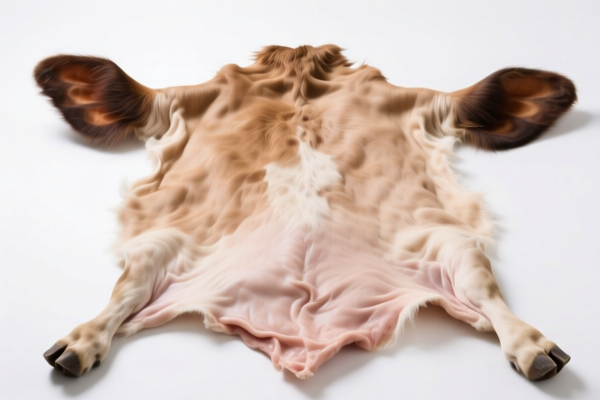
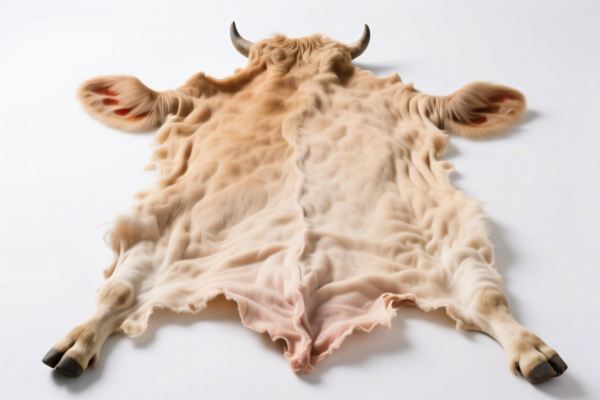
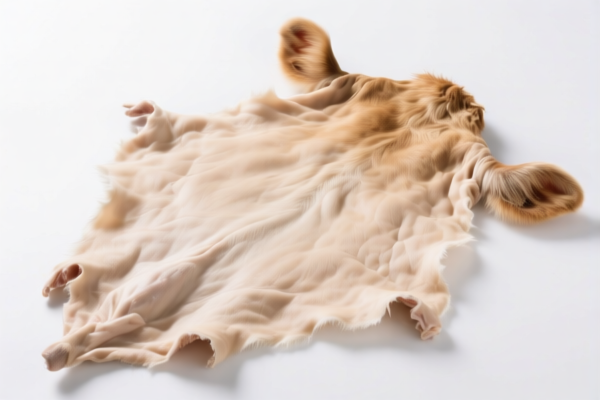
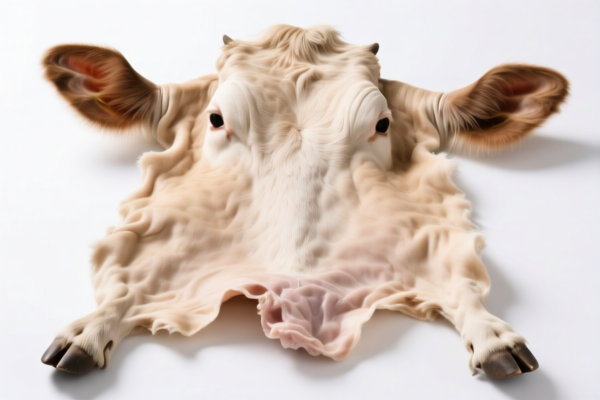
AI Analysis
🐂 Raw Untanned Cowhide, Hairless, Other
🌐 HS Code Reference & Clearance Guide | 2026 Latest Tariff Analysis | Professional Customs Strategy
📌 I. Product Definition & Classification: Do You Really Understand "Hairless Raw Cowhide"?
Raw Untanned Cowhide, Hairless refers to animal skins that have undergone initial processing (scraping, liming, or deliming) to remove hair but have not been preserved against decay (tanned, leathered, or cured). In international trade, the presence or absence of hair and the degree of processing are the key determinants for HS Code classification.
⚠️ Key Distinction Points:
- Raw/Preserved (Chapters 41-01/41-02/41-03): Treated with salt or other preservatives to prevent decomposition, but not tanned. Hair status determines the subheading. - Tanned/Leathered (Chapter 41-07/41-08/41-09): Processed with tanning agents to become permanent leather. - Hair Status: "Hairless" (de-haired) vs. "With Hair" (raw/hairy). This significantly affects the tariff rate due to trade restrictions (Section 301 & Section 122).
📦 II. HS Code Classification Details (2026 Latest Tariff Authority Comparison)
| HS Code | Product Description | Applicable Scenario | Hair Status | Taxation Level |
|---|---|---|---|---|
4101.50.35.00 |
Raw hides of bovine animals, with hair removed, weighing 4.5 kg or more but less than 16 kg per skin (excl. wet blue) | Semi-finished raw hide, ready for tanning, de-haired | ✅ Hairless | 🔴 High (19.9%) |
4101.20.35.00 |
Raw hides of bovine animals, whole, weighing 4.5 kg or more but less than 16 kg per skin (excl. wet blue) | Whole raw hide, de-haired, same weight range | ✅ Hairless | 🔴 High (19.9%) |
4107.19.40.00 |
Tanned or crust leather of bovine animals, full grain, other (incl. hairless, de-haired) | Tanned leather, fully processed | ✅ Hairless | 🟡 Medium (12.5%) |
4107.12.40.00 |
Tanned or crust leather of bovine animals, full grain, side, other | Tanned side leather, fully processed | ✅ Hairless | 🟡 Medium (12.5%) |
4104.11.30.60 |
Leather of bovine animals, full grain, other, without hair (incl. split leather, but excl. suede) | Tanned/Processed leather, hairless | ✅ Hairless | 🟢 Low (12.4%) |
🔍 Important Reminder:
-4101.xx.xxCodes: Apply to RAW hides (preserved but not tanned). Even if hairless, they are considered "raw" and face higher tariffs (19.9%). -4107.xx.xx&4104.xx.xxCodes: Apply to TANNED/LEATHERED products. These are finished or semi-finished leather goods. Note that4104usually refers to thin split leather or specific processed leathers, while4107refers to heavy crust/full grain leathers. - Misclassification Risk: Declaring tanned leather as raw hides (or vice versa) leads to severe penalties. The key is whether the protein structure has been stabilized by tanning agents.
💰 III. 2026 Latest Tariff Rate Breakdown (Including Additional Taxes & Policy Surcharges)
✅ Applicable Country: United States (US)
✅ Country of Origin: China (CN)
✅ Effective Date: From November 10, 2025 (and subsequent imports)
🎯 1. 4101.50.35.00 & 4101.20.35.00 —— Raw Hides, Hairless (High Tariff Category)
| Item | Content |
|---|---|
| Base Tariff Rate | 2.4% (Ad Valorem) |
| Section 301 Additional Tariff | +7.5% (From USITC Footnote 9903.88.01) |
| Section 122 Additional Tariff | +10% (Specific surcharge on certain raw hides/leathers from China) |
| Total Tariff Rate | 19.9% |
| Tax Calculation | CIF Value × 19.9% |
| De Minimis Exemption | ❌ Not Available |
| Legal Basis Path | Section 122 → Section 301 → USITC:4101.50.35.00 / 4101.20.35.00 |
📌 Explanation:
- The 2.4% base rate is the standard MFN rate for raw bovine hides. - The 7.5% Section 301 tariff applies to most Chinese-origin industrial goods, including raw hides. - The 10% Section 122 tariff is a specific additional duty imposed on certain agricultural and raw material imports from China, effectively raising the barrier for raw hides. - Total of 19.9% is significantly higher than tanned leather categories. This is designed to protect domestic tanning industries.
🎯 2. 4107.19.40.00 & 4107.12.40.00 —— Tanned Leather, Hairless (Medium Tariff Category)
| Item | Content |
|---|---|
| Base Tariff Rate | 2.5% (Ad Valorem) |
| Section 301 Additional Tariff | 0.0% (Exempt or not applicable under current footnotes for these specific subheadings) |
| Section 122 Additional Tariff | +10% (Applies to these tanned leather categories) |
| Total Tariff Rate | 12.5% |
| Tax Calculation | CIF Value × 12.5% |
| De Minimis Exemption | ❌ Not Available |
| Legal Basis Path | Section 122 → USITC:4107.19.40.00 / 4107.12.40.00 |
📌 Explanation:
- The 2.5% base rate is standard for tanned leather. - Unlike raw hides, Section 301 (7.5%) does NOT apply to these specific tanned leather subheadings, likely due to complex footnote exemptions or trade agreements. - However, the 10% Section 122 tariff still applies, keeping the total at 12.5%. - This is 7.4% cheaper than raw hairless hides, incentivizing the import of semi-finished/tanned leather rather than raw materials.
🎯 3. 4104.11.30.60 —— Tanned Leather, Hairless (Lowest Tariff Category)
| Item | Content |
|---|---|
| Base Tariff Rate | 2.4% (Ad Valorem) |
| Section 301 Additional Tariff | 0.0% (Exempt) |
| Section 122 Additional Tariff | +10% |
| Total Tariff Rate | 12.4% |
| Tax Calculation | CIF Value × 12.4% |
| De Minimis Exemption | ❌ Not Available |
| Legal Basis Path | Section 122 → USITC:4104.11.30.60 |
📌 Explanation:
- Similar to4107, Section 301 does not apply. - The base rate is slightly lower (2.4% vs 2.5%), resulting in a total of 12.4%. - This category often applies to thinner leathers or specific split leathers. If your product fits this description, it offers the lowest duty burden.
🛠️ IV. Clearance Practical Advice (Battle-Tested Pitfall Guide)
✅ 1. Required Documentation Checklist (Non-Negotiable)
| Document | Mandatory | Explanation |
|---|---|---|
| ✅ Product Specification Sheet | ✔️ | Must specify: Weight per skin, dimensions, hair status (de-haired), preservation method (salt-dried/fresh), and whether it is raw or tanned. |
| ✅ Processing Description | ✔️ | Detail the entire process: Scraping → Liming → Deliming → Hair Removal → Preservation/Tanning. Crucial for distinguishing 4101 (Raw) vs 4107 (Tanned). |
| ✅ Photographs | ✔️ | Clear images of the skin surface (no hair), cross-section, and labels. Must show "Hairless" condition. |
| ✅ Certificate of Origin (CO) | ✔️ | Required for verifying China origin to apply/avoid Section 301 & 122 tariffs. |
| ✅ Commercial Invoice | ✔️ | Must explicitly state "Raw BoHide, Hairless" or "Tanned Bovine Leather, Hairless". Do not use generic terms like "Cowhide". |
| ✅ Packing List | ✔️ | Specify net weight and gross weight per skin and total. Weight brackets (e.g., 4.5-16 kg) affect classification. |
✅ 2. Declaration Tips (Key Mantra)
🔥 "Raw vs. Tanned is the Line; Hairless Changes the Code; Section 122 Hits All; Section 301 Misses Tanned!"
| Situation | Correct Declaration | Error to Avoid |
|---|---|---|
| Raw Hide, De-haired, Salted | 4101.50.35.00 or 4101.20.35.00 |
Declaring as "Tanned Leather" → Customs Rejection & Penalty |
| Tanned Leather, Full Grain, Hairless | 4107.19.40.00 or 4107.12.40.00 |
Declaring as "Raw Hide" → Overpayment (19.9% vs 12.5%) |
| Thin Tanned Leather, Hairless | 4104.11.30.60 |
Declaring as "Raw Hide" → Overpayment |
| Wet Blue (Semi-Tanned) | Different Subheading (e.g., 4102...) |
Misclassifying as Raw or Finished Leather → Complex Dispute |
✅ 3. Special Case Handling
| Situation | Handling Advice |
|---|---|
| OEM Custom Hides | Provide customer design specs. If hair removal is standard, clearly state "Pre-dehaired" to avoid confusion with "With Hair" codes. |
| Mixed Weights | Ensure invoice separates weights. If a batch contains hides both under and over 4.5 kg, you may need multiple HS Codes. |
| Import from Non-China Origins | If origin is Vietnam, Mexico, etc., Section 122 and 301 may not apply. Check for FTAs (USMCA, etc.) for potential 0% duty. |
| Wet Blue/Half-Tanned | If partially tanned (e.g., chrome-tanned), it may fall under different codes (4102 or 4106). Consult a customs broker for "Wet Blue" classification. |
🌍 V. Global Main Market Clearance Comparison (2026 Latest)
| Country/Region | Recommended HS Code (Example) | Tariff (China Origin) | Certification Requirements | Remarks |
|---|---|---|---|---|
| 🇺🇸 USA | 4101.50.35.00 (Raw) |
19.9% | None specific, but CO required | Highest duty due to S301 + S122 |
| 🇨🇳 China | 4101.50.35.00 |
2.5% - 5% (Varies) | None | Low import duty |
| 🇪🇺 EU | 4101.20 (Raw) |
4.5% (Base) | REACH (Chemicals) | No Section 122 equivalent, but anti-dumping may apply |
| 🇦🇺 Australia | 4101.20 |
5% | None | Moderate duty |
| 🇯🇵 Japan | 4101.20 |
3.5% | JIS Standards | Low duty, strict hygiene checks |
📌 Conclusion:
- USA is the most expensive market for raw hairless cowhides due to dual tariffs (Section 301 + Section 122). - Tanned leather (4107,4104) is significantly cheaper in the US (12.5% vs 19.9%) because Section 301 does not apply. - If you are exporting to the US, consider processing the hides in a third country (if allowed by rules of origin) or importing tanned leather instead of raw hides to save 7.4% duty.
📌 VI. Common Errors & Pitfall Guide (Blood & Tears Lessons)
❌ Error 1: Declaring Tanned Leather as Raw Hides
👉 Consequence: You pay 19.9% instead of 12.5%. Overpayment by 7.4%.
❌ Error 2: Declaring Raw Hides as Tanned Leather
👉 Consequence: Customs will reject the declaration, demand re-classification, impose fines, and delay clearance. Potential seizure.
❌ Error 3: Ignoring Section 122
👉 Consequence: Both raw and tanned categories face this 10% surcharge. Forgetting to declare it leads to underpayment and penalties.
❌ Error 4: Not specifying "Hairless"
👉 Consequence: Customs may classify as "With Hair" (higher weight/base rate) or require additional testing to determine hair status, causing delays.
✅ Correct Approach:
"Raw Bovine Hides, Hairless, Salt-Dried, Full Grain, Weight 10kg, Origin China, HTS: 4101.50.35.00"
🎯 VII. Conclusion: Professional Declaration, Save Time, Reduce Costs!
🎯 Remember the Mantra:
🔹 "Raw Hides: 19.9% (S301+S122)"
🔹 "Tanned Leather: 12.5% (S122 Only)"
🔹 "Hairless Status: Critical for Code Selection"
🔹 "Never Guess: Verify Tanning Process First!"
📌 Pro Tip:
If your hides are tanned or semi-tanned, explore
4107or4104codes. Even though they are "Hairless," the 7.4% duty saving (19.9% vs 12.5%) is substantial for large volumes.
Apply for a Binding Tariff Ruling (Advance Ruling) with US Customs and Border Protection (CBP) if you are unsure about the raw vs. tanned status. This provides legal certainty.
📣 Immediate Action:
📞 Contact a Licensed Customs Broker
📤 Submit Product Photos & Processing Details
📑 Request an Advance Ruling for HTS Classification
🚀 Optimize Your Supply Chain: Import Tanned Leather Instead of Raw Hides to Save Costs!
✨ Professional Clearance Starts with Accurate Classification!
💼 Every Percent of Duty Counts – Calculate Precisely!
Customer Reviews
About HS Code Classification
The Harmonized System (HS) is an internationally standardized nomenclature developed by the World Customs Organization (WCO) to classify traded products. Over 200 countries use the HS system as the basis for customs tariffs, trade statistics, and import/export regulations.
Each HS code follows a hierarchical structure:
- Chapter (2 digits) — Broad category of goods (e.g., Chapter 84: Machinery and Mechanical Appliances)
- Heading (4 digits) — More specific grouping within the chapter
- Subheading (6 digits) — Internationally standardized breakdown, used by all WCO member countries
- National subdivisions (8-10 digits) — Country-specific extensions for further classification, such as US HTSUS 10-digit codes
Correct HS code classification is essential for smooth customs clearance, accurate duty payment, and compliance with trade regulations. Misclassification can lead to customs delays, overpayment of duties, or penalties.
When importing from CN to US, the applicable tariff rates may include:
- Most-Favored-Nation (MFN) rate — The standard duty rate applied to WTO members
- General rate — Applied to countries without trade agreements
- Trade remedy duties — Additional tariffs such as Section 301 (anti-dumping), Section 232 (national security), or countervailing duties
The information provided on this page is for reference purposes only. For official classification, please consult with your local customs authority or a licensed customs broker.