Raw Wool (Grease Wool)
CN → US| HS Code | Tariff Rate | Origin | Destination | Doc |
|---|---|---|---|---|
| 5101112000 | 35.0% | CN | US | Official Doc |
| 5101114000 | 35.0% | CN | US | Official Doc |
| 5101112000 | 35.0% | CN | US | Official Doc |
| 5101114000 | 35.0% | CN | US | Official Doc |
| 5101112000 | 35.0% | CN | US | Official Doc |
Product Images
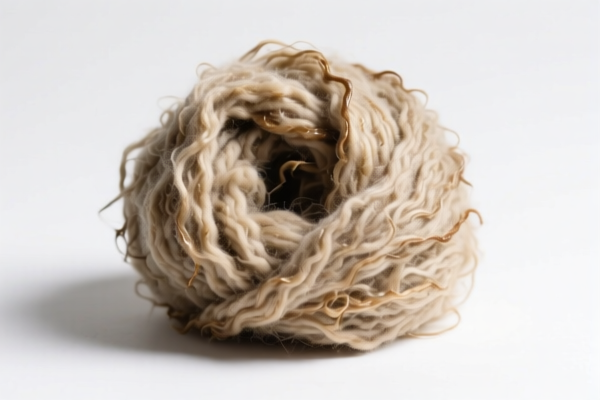
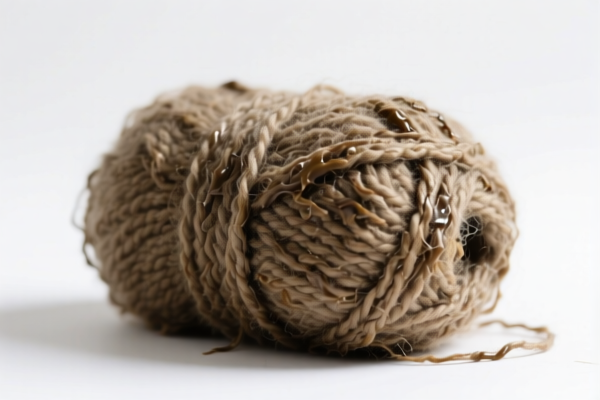
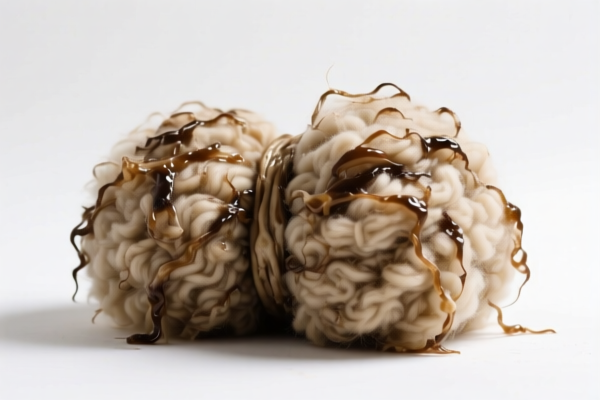
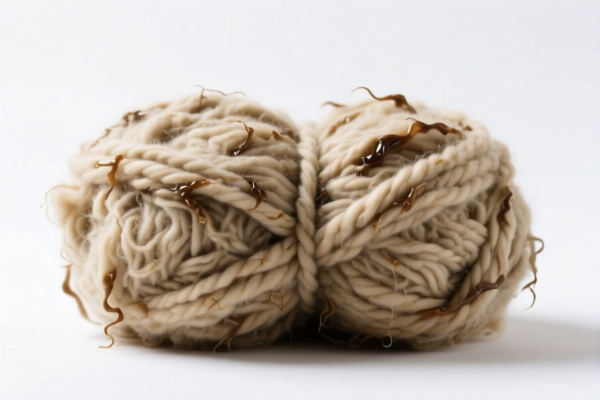
AI Analysis
🐑 Raw Wool (Grease Wool)
🌐 HS Code Reference & Customs Clearance Guide | 2026 Latest Tariff Analysis | Professional Clearance Strategy
📌 I. Product Definition & Classification: Do You Really Understand "Raw Wool"?
Raw Wool, specifically in its grease (unwashed) state, is the unprocessed fleece sheared directly from sheep. In international trade, this raw material is categorized not just by its origin, but by its physical preparation status (oily vs. scoured vs. brushed). The critical distinction lies in whether the wool retains its natural lanolin (grease) and whether it has undergone mechanical processing like combing or carding.
Key Distinction Criteria:
- "Grease Wool" / "Scoured Wool": Contains natural oils or has been washed but remains in its raw, unprocessed fiber state.
- "Unwashed" / "Uncleaned": Contains dirt, sweat salts, and lanolin; minimal processing.
- "Carded/Combed": Mechanical fiber alignment (excluded from the specific codes below if processed further, but often overlaps with "grease" if only lightly processed).
⚠️ Critical Classification Point:
- If the wool is unwashed, contains oil/grease, or is in its natural scoured state → It falls under 5101.11.
- If it is washed and cleaned to a high degree or carded/combed for spinning preparation → It may fall under different subheadings (not covered in the provided data, but crucial to avoid misclassification).
- Note: The provided data explicitly lists "Unwashed" and "Grease" wool under the same code, indicating they share the same tariff treatment in this context.
📦 II. HS Code Classification Details (2026 Latest Tariff Authority Match)
Based strictly on the provided <DATA> and <TAX> content, here is the precise classification for Raw Wool (Grease Wool):
| HS Code | Product Description | Applicable Scenario | Key Characteristics |
|---|---|---|---|
5101.11.20.00 |
Wool, not sorted (Wool, Grease) (Includes: Raw wool, unwashed; Wool from shearing) |
• Raw fleece sheared directly • Unwashed wool containing natural oils • Scoured wool (if classified as "not sorted") |
✅ Contains grease/oil or is unwashed ✅ Not sorted by fiber length/type |
5101.11.40.00 |
Wool, not sorted, containing grease (including scoured wool) (Includes: Grease wool, not carded/combed) |
• Wool with retained lanolin • Scoured wool that is still in "grease" state for tariff purposes |
✅ High grease content or scoured but unprocessed ✅ Not mechanically aligned |
🔍 Important Note on Data Discrepancy:
- The data shows5101.11.20.00used for both "Raw wool, unwashed" and "Wool, not sorted, grease".
-5101.11.40.00is specifically for "Wool, not sorted, containing grease" and "Wool, not carded/combed".
- Practical Advice: If your wool is heavily oiled/greasy or explicitly described as "scoured but not processed",5101.11.40.00is the safer, more specific classification. If it is simply "unwashed" or "raw",5101.11.20.00applies.
💰 III. 2026 Latest Tariff Rate Breakdown (Including Surtaxes & Policy Add-ons)
✅ Applicable Country: United States (US)
✅ Origin: China (CN)
✅ Effective Date: November 10, 2025 onwards (for subsequent imports)
🎯 1. All Raw Wool Codes Listed (5101.11.20.00 & 5101.11.40.00)
| Item | Content |
|---|---|
| Base Tariff | 0.0% (ad valorem) |
| Section 301 Surtax | +25.0% (From USITC Footnote 9903.88.01) |
| Section 122 Tariff | +10.0% (Specific to Chinese wool imports under recent trade actions) |
| Total Tariff Rate | 35.0% |
| Tax Calculation | CIF Value × 35% |
| De Minimis Eligibility | ❌ NOT Eligible (Deny De Minimis) Raw wool is explicitly excluded from the $800 de minimis exemption for Section 301/122 goods. |
| Legal Basis Path | USITC:5101.11.20.00 / 5101.11.40.00 → FOOTNOTE:9903.88.01 (Section 301) + Section 122 |
📌 Interpretation:
- "Base Tariff 0%": Raw wool has a low base duty to encourage raw material imports.
- "Section 301 25%": This is the standard retaliatory tariff on Chinese goods.
- "Section 122 10%": A newer addition targeting specific Chinese agricultural/textile raw materials, including wool.
- Total 35%: This is a significant cost driver. Importers must budget for this 35% levy on top of freight and insurance.
- No De Minimis: Unlike electronics, raw wool shipments cannot use the $800 de minimis rule to avoid customs duties. All shipments are subject to formal entry and full tariff payment.
🛠️ IV. Customs Clearance Practical Advice (Avoiding Pitfalls)
✅ 1. Required Documentation Checklist (Mandatory)
| Document | Required? | Explanation |
|---|---|---|
| ✅ Commercial Invoice | ✔️ | Must clearly state "Raw Wool, Grease Wool" or "Unwashed Wool". Include weight (gross/net) and origin. |
| ✅ Packing List | ✔️ | Detail package count, total weight, and any contamination risks. |
| ✅ Origin Certificate | ✔️ | Prove Chinese origin to apply correct tariff rates (or check for exemptions if applicable to other origins). |
| ✅ Phytosanitary Certificate | ✔️ | Critical for Wool. Must certify no pests, diseases, or plant contamination. Issued by Chinese Customs/Quarantine. |
| ✅ Animal Health Certificate | ✔️ | Required by USDA APHIS to confirm the wool is free from contagious animal diseases. |
| ✅ Bill of Lading/Air Waybill | ✔️ | Standard shipping document. |
⚠️ Warning: Without a valid Phytosanitary Certificate and Animal Health Certificate, the shipment will be rejected or returned by US Customs and Border Protection (CBP) and USDA.
✅ 2. Classification Strategy (Key Mnemonic)
🔥 "Grease = 5101.11, Unwashed = 5101.11, 35% Tax, No De Minimis!"
| Scenario | Correct HS Code | Tariff Rate |
|---|---|---|
| Unwashed, raw fleece with oil | 5101.11.20.00 |
35% |
| Scoured but still "grease" state, not processed | 5101.11.40.00 |
35% |
| Carded/Combed wool (for spinning) | Not in data | Check separate code |
| Synthetic "Wool" (Acrylic/Polyester) | Not Wool | Different HS (e.g., 5509/5510) |
📌 Tip: If your wool is synthetic (e.g., "wool-like" acrylic), do NOT use 5101.11. It will be misclassified. Use the correct synthetic fiber code.
✅ 3. Special Situations & Handling
| Situation | Handling Advice |
|---|---|
| Mixed Bales (Wool + Contaminants) | Declare true weight. CBP may inspect for pests. |
| Wool from Non-China Origin | If from Australia/NZ, tariffs may be lower (check FTAs). Section 301/122 only apply to Chinese origin. |
| Small Sample Shipments | Even small samples are subject to 35% tax. Do not attempt de minimis. |
| Re-export to Third Country | If imported into US and re-exported, check for duty drawback possibilities, but initial entry still requires payment. |
🌍 V. Global Market Comparison (2026 Latest)
| Country/Region | Recommended HS Code | Tariff (China Origin) | Certification Requirements | Notes |
|---|---|---|---|---|
| 🇺🇸 USA | 5101.11.20.00 / 5101.11.40.00 |
35% (25% Sec 301 + 10% Sec 122) | Phytosanitary + Animal Health | High tariff; no de minimis |
| 🇨🇳 China | 5101.11.20.00 |
Varies (Import Duty ~0-5%) | No special restrictions | Major consumer of raw wool |
| 🇪🇺 EU | 5101.11.20.00 |
0% (Most Favored Nation) | Phytosanitary | No Section 301/122 |
| 🇬🇧 UK | 5101.11.20.00 |
0% (Post-Brexit Trade Deal) | Phytosanitary | Preferential rate if eligible |
| 🇦🇺 Australia | 5101.11.20.00 |
0% | No phytosanitary for wool | Major exporter |
📌 Conclusion:
- The US market is the most expensive for Chinese raw wool due to the 35% combined tariff.
- EU and UK offer 0% duty for raw wool, making them more attractive for resale markets if sourcing from China.
- Always verify origin. If wool is from Australia/NZ, US tariffs may be lower or exempt (check current FTAs).
📌 VI. Common Errors & Pitfalls (Lessons Learned)
❌ Error 1: Using "De Minimis" for small wool samples
👉 Consequence: Package seized by CBP, back taxes + penalties imposed.
✅ Fix: Declare formally, pay 35% tax.
❌ Error 2: Misclassifying synthetic wool as "Raw Wool"
👉 Consequence: Incorrect HS code, potential fraud allegations, delay.
✅ Fix: Use correct synthetic fiber codes (e.g., 5509, 5510).
❌ Error 3: Missing Phytosanitary Certificate
👉 Consequence: Shipment rejected/destroyed by USDA.
✅ Fix: Ensure Chinese supplier provides valid certificate before shipment.
❌ Error 4: Assuming "Scoured" Wool is Exempt from Sec 122
👉 Consequence: Underpayment of 10% Sec 122 tariff.
✅ Fix: "Scoured" wool is still subject to 35% total if from China.
🎯 VII. Conclusion: Professional Clearance, Save Time & Money
🎯 Remember the Rules:
🔹 "Raw Wool from China = 35% Tax"
🔹 "No De Minimis, No Exceptions"
🔹 "Phytosanitary & Animal Health Certificates are Mandatory"
📌 Pro Tip:
If you are importing raw wool into the US, consider:
1. Pre-clearance: Work with a licensed customs broker to pre-verify classification.
2. Supply Chain Diversification: Source wool from Australia or New Zealand to avoid Section 301/122 tariffs (check current FTAs).
3. Budget Planning: Factor in the 35% tariff in your landed cost calculations from day one.
📣 Immediate Action Required:
📞 Contact a licensed US customs broker
📄 Request Phytosanitary & Animal Health Certificates from supplier
📦 Verify HS Code:5101.11.20.00or5101.11.40.00
💰 Prepare for 35% duty payment
✨ Professional Customs Clearance Starts with Accurate Classification!
💼 Every dollar of tax saved is pure profit!
Customer Reviews
About HS Code Classification
The Harmonized System (HS) is an internationally standardized nomenclature developed by the World Customs Organization (WCO) to classify traded products. Over 200 countries use the HS system as the basis for customs tariffs, trade statistics, and import/export regulations.
Each HS code follows a hierarchical structure:
- Chapter (2 digits) — Broad category of goods (e.g., Chapter 84: Machinery and Mechanical Appliances)
- Heading (4 digits) — More specific grouping within the chapter
- Subheading (6 digits) — Internationally standardized breakdown, used by all WCO member countries
- National subdivisions (8-10 digits) — Country-specific extensions for further classification, such as US HTSUS 10-digit codes
Correct HS code classification is essential for smooth customs clearance, accurate duty payment, and compliance with trade regulations. Misclassification can lead to customs delays, overpayment of duties, or penalties.
When importing from CN to US, the applicable tariff rates may include:
- Most-Favored-Nation (MFN) rate — The standard duty rate applied to WTO members
- General rate — Applied to countries without trade agreements
- Trade remedy duties — Additional tariffs such as Section 301 (anti-dumping), Section 232 (national security), or countervailing duties
The information provided on this page is for reference purposes only. For official classification, please consult with your local customs authority or a licensed customs broker.