Raw Wool (Wool Grease)
CN → US| HS Code | Tariff Rate | Origin | Destination | Doc |
|---|---|---|---|---|
| 5101114000 | 35.0% | CN | US | Official Doc |
| 5101112000 | 35.0% | CN | US | Official Doc |
Product Images
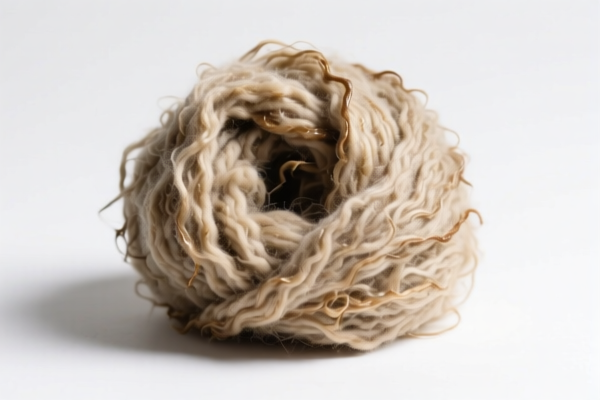
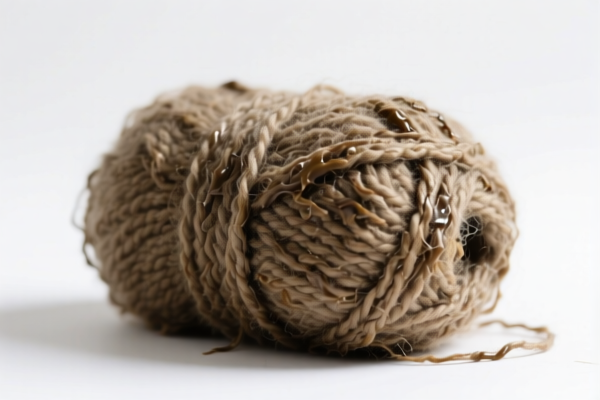
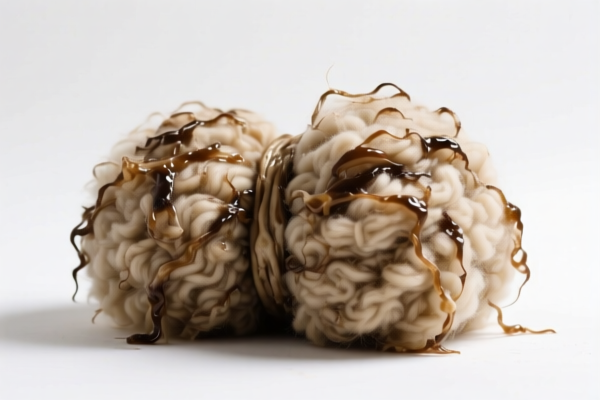
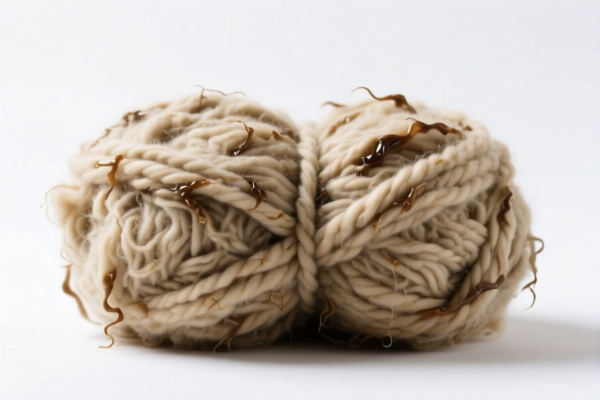
AI Analysis
🐑 Raw Wool (Greasy Wool / Wool Grease)
🌐 HS Code Reference & Customs Clearance Guide | 2024/2026 Latest Tariff Analysis | Professional Clearance Strategy
📌 I. Product Definition & Classification: Do You Understand "Raw Wool"?
Raw wool, specifically in its greasy state (often referred to as "Wool Grease" in trade contexts when focusing on the lipid content, but classified primarily as wool for import purposes), is the unprocessed fleece sheared from sheep. It contains natural impurities such as wool grease (lanolin), suint (dried sweat), dirt, and vegetable matter.
In international trade, the classification hinges heavily on two factors: 1. State of Processing: Is it uncarded and uncombed? (Yes, usually). 2. Fineness: Measured in "microns" or "sides" (s). The key threshold is often 46 microns/sides.
⚠️ Key Distinction:
- Greasy vs. Scoured: This guide applies to Greasy Wool (uncleaned). Scoured (cleaned) wool falls under different subheadings (e.g., 5101.21 or 5101.30).
- Fineness Thresholds:
- Not finer than 46s: Lower value, often used for carpets, insulation, or low-grade textiles.
- Finer than 40s but not finer than 44s: Higher value, suitable for high-quality apparel (suits, knitwear).
- Finer than 46s (e.g., Merino): Often excluded from the specific "unimproved/other" categories in the provided data, requiring specific high-fineness codes not listed in the source .
📦 II. HS Code Classification Details (Based on Provided Data)
Based on the provided , there are two specific HS Codes for Greasy, Shorn, Unimproved Wool. The primary differentiator is the fineness of the fibers.
| HS Code | Product Description | Key Criteria | Typical Use Case |
|---|---|---|---|
5101.11.40.00 |
Wool, not carded or combed: Greasy, including fleece-washed wool: Shorn wool: Unimproved wool; other wool, not finer than 46s: Other: Other wool, finer than 40s but not finer than 44s | - Greasy/Shorn - Fineness: 41s–44s (approx. 23-25 microns) - Not carded/combed |
Mid-to-high grade apparel wool, blending for fine knitwear, premium textiles. |
5101.11.20.00 |
Wool, not carded or combed: Greasy, including fleece-washed wool: Shorn wool: Unimproved wool; other wool, not finer than 46s: Other: Unimproved wool; other wool, not finer than 40s | - Greasy/Shorn - Fineness: ≤40s (coarser, ≥25 microns) - Not carded/combed |
Coarser wool for carpets, felt, upholstery, industrial felts, or low-grade blends. |
🔍 Critical Note on "Wool Grease":
While "Wool Grease" (Lanolin) is a valuable byproduct, if you are importing Raw Wool that still contains the grease naturally, it is classified under Chapter 51 (Wool). If you are importing extracted Lanolin (processed chemical/grease product), it falls under Chapter 35 (Albuminoidal substances). The HS codes below strictly apply to the Raw Wool fiber itself.
💰 III. 2026 Latest Tariff Rate Breakdown (Detailed Tax Analysis)
✅ Applicable Region: United States (US)
✅ Origin: China (CN) (Note: Tax rates depend on origin. If from other countries, refer to FTAs. Below reflects China-origin specific duties based on provided data.)
✅ Effective Date: Current Trade Policy (Subject to Change)
🎯 1. 5101.11.40.00 —— Greasy Wool, Finer than 40s but not finer than 44s
| Item | Content |
|---|---|
| Base Tariff | 0.0% (Ad Valorem) |
| Section 301 Additional Tariff | +25.0% |
| Total Effective Tariff | 25.0% |
| Calculation Basis | CIF Value × 25% |
| Exemption Eligibility | ❌ No (Generally, raw agricultural textiles from China are not exempt from Section 301 unless specifically excluded in annual reviews, which is rare for raw wool). |
📌 Explanation:
- Even though the base MFN (Most Favored Nation) rate is 0%, the 25% additional tariff applies to all goods under HS subheading 5101.11.40 from China due to the Section 301 Trade Action.
- This is a significant cost driver. Importers must budget for a 25% duty on the customs value.
🎯 2. 5101.11.20.00 —— Greasy Wool, Not Finer than 40s
| Item | Content |
|---|---|
| Base Tariff | 0.0% (Ad Valorem) |
| Section 301 Additional Tariff | 0.0% |
| Total Effective Tariff | 0.0% |
| Calculation Basis | CIF Value × 0% |
| Exemption Eligibility | N/A (Already 0%) |
📌 Explanation:
- This specific coarse wool classification enjoys a 0% total tariff rate.
- This makes it highly competitive for importers of carpet-grade or industrial felts from China compared to the finer grades.
🛠️ IV. Customs Clearance Operational Advice (Practical Pitfall Avoidance)
✅ 1. Mandatory Documentation Checklist
| Document | Required? | Description & Importance |
|---|---|---|
| ✅ Commercial Invoice | ✔️ | Must clearly state: "Raw Greasy Wool," "Shorn Wool," and exact Fineness (in microns or sides). Ambiguity leads to reclassification. |
| ✅ Certificate of Origin | ✔️ | Essential to prove origin. If from China, Section 301 applies. If from Australia/NZ, different rates may apply (check FTAs). |
| ✅ Phytosanitary Certificate | ✔️ | CRITICAL. Raw wool must be free from pests, disease, and contamination. Issued by the exporting country's agricultural authority. |
| ✅ Fumigation Certificate | ✔️ | Proof of treatment against insects/mites (e.g., ethylene oxide or phosphine). |
| ✅ Laboratory Test Report | ✔️ | Highly Recommended. Independent lab report confirming fiber diameter (microns). This proves whether it fits 5101.11.40 (>40s) or 5101.11.20 (≤40s). |
✅ 2. Declaration Strategy & Classification Tips
🔥 "Fineness Determines Tax, Purity Determines Clearance!"
| Scenario | Correct Declaration | Risk of Incorrect Declaration |
|---|---|---|
| High-Value Wool (23-25 micron) | 5101.11.40.00 |
If misclassified as 5101.11.20 → Underpayment of 25% tax → Penalty + Back Taxes. |
| Coarse Carpet Wool (25+ micron) | 5101.11.20.00 |
If misclassified as 5101.11.40 → Overpayment (no refund usually) or audit flag. |
| Washed vs. Greasy | Must specify "Greasy" | If you ship "Fleece-Washed" but label as "Greasy," or vice versa, it may be reclassified to scoured wool codes (higher base duty or different rules). |
| Mixed Lots | Separate by Fineness | Do not mix 22-micron and 28-micron wool in one HS code declaration. Split lot or use the coarsest classification for the whole lot (conservative approach). |
✅ 3. Special Considerations for "Wool Grease"
If you are extracting the grease (lanolin) from the wool in the destination country: - The raw wool remains classified under Chapter 51. - If you import finished Lanolin Oil, it is classified under HS 3503.00. - Customs Warning: Do not declare Lanolin as "Raw Wool" to avoid tariffs. If it is processed grease, it must be declared accurately. Mislabeled processed goods can lead to seizure.
🌍 V. Global Market Comparison (2024/2026 Context)
| Market | Recommended HS Code (Greasy Wool) | Base Tariff (China Origin) | Key Requirements |
|---|---|---|---|
| 🇺🇸 USA | 5101.11.40.00 or 5101.11.20.00 |
0% (Base) + 25% (Sec 301) for .40 0% (Total) for .20 |
Phytosanitary Cert, Fumigation Cert, CBP Exam |
| 🇪🇺 EU | 5101.11 (Similar structure) | 0% - 10% (Varies by Fineness) | REACH Compliance, Animal By-Products Regulation (ABPR) |
| 🇨🇳 China (Import) | 5101.11 | 0% - 10% | Import License (sometimes), Quarantine |
| 🇦🇺 Australia (Export) | 5101.11 | 0% (Majority) | OVR (Official Veterinary Report) |
📌 Conclusion:
- USA: The 25% tariff on finer wool (...40.00) is a major cost factor. Importers should verify if any exclusions apply.
- EU: Generally more favorable base rates but stricter animal welfare and phytosanitary rules.
📌 VI. Common Errors & Pitfall Guide (Lessons Learned)
❌ Error 1: Declaring "Raw Wool" without specifying "Greasy" or "Scoured"
👉 Consequence: CBP may classify as Scoured Wool (higher base duty) or request reclassification.
❌ Error 2: Ignoring Micron Count
👉 Consequence: If you declare 5101.11.20.00 (0% tax) for 24-micron wool (which is ...40.00), you will face 25% back-taxes + penalties. Always have a lab report.
❌ Error 3: Missing Phytosanitary Certificate
👉 Consequence: Detention at Border. Raw wool is a high-risk biosecurity item. Without this cert, the shipment will be rejected or destroyed.
❌ Error 4: Confusing "Raw Wool" with "Wool Tops"
👉 Consequence: Wool Tops are carded/combed (Chapter 51, different subheadings). Different rules and duties apply.
✅ Correct Practice:
"100% Greasy Shorn Wool, Unimproved, Average Fiber Diameter 24 Microns (44s), Phytosanitary Cert Attached, Lot No. XYZ, Origin: China"
🎯 VII. Conclusion: Precision in Classification Saves Money
🎯 Remember the Rule:
🔹 "Fineness Dictates Duty: >40s (Coarse) = 0%, 41-44s (Fine) = 25%!"
🔹 "No Phytosanitary Cert = No Entry!"
📌 Pro Tip:
If your wool is Finer than 46s (e.g., 20-micron Merino), it does NOT fall under the two codes above (...20 or ...40). It likely falls under "Finer than 46s" subheadings (e.g., 5101.11.60 or similar), which may have different tax rates (often 25% additional as well, but check latest HTS).
👉 Always verify the exact micron count against the official HTSUS tables.
📣 Immediate Action:
📞 Request a Lab Test for fiber diameter before shipment.
📄 Secure Phytosanitary & Fumigation Certs from the exporter.
📋 Confirm Origin: If not from China, Section 301 may not apply!
✨ Expert Customs Clearance, Starts with Accurate Classification!
💼 Every micron counts—both in quality and in cost.
Customer Reviews
About HS Code Classification
The Harmonized System (HS) is an internationally standardized nomenclature developed by the World Customs Organization (WCO) to classify traded products. Over 200 countries use the HS system as the basis for customs tariffs, trade statistics, and import/export regulations.
Each HS code follows a hierarchical structure:
- Chapter (2 digits) — Broad category of goods (e.g., Chapter 84: Machinery and Mechanical Appliances)
- Heading (4 digits) — More specific grouping within the chapter
- Subheading (6 digits) — Internationally standardized breakdown, used by all WCO member countries
- National subdivisions (8-10 digits) — Country-specific extensions for further classification, such as US HTSUS 10-digit codes
Correct HS code classification is essential for smooth customs clearance, accurate duty payment, and compliance with trade regulations. Misclassification can lead to customs delays, overpayment of duties, or penalties.
When importing from CN to US, the applicable tariff rates may include:
- Most-Favored-Nation (MFN) rate — The standard duty rate applied to WTO members
- General rate — Applied to countries without trade agreements
- Trade remedy duties — Additional tariffs such as Section 301 (anti-dumping), Section 232 (national security), or countervailing duties
The information provided on this page is for reference purposes only. For official classification, please consult with your local customs authority or a licensed customs broker.