Raw Wool (Wool Greasy)
CN → US| HS Code | Tariff Rate | Origin | Destination | Doc |
|---|---|---|---|---|
| 5101112000 | 35.0% | CN | US | Official Doc |
| 5101114000 | 35.0% | CN | US | Official Doc |
| 5101112000 | 35.0% | CN | US | Official Doc |
| 5101114000 | 35.0% | CN | US | Official Doc |
| 5101112000 | 35.0% | CN | US | Official Doc |
Product Images
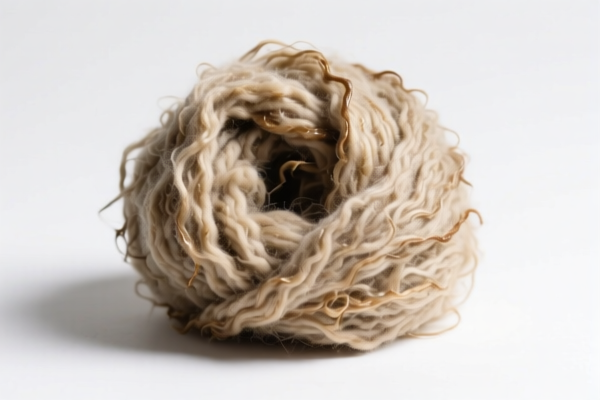
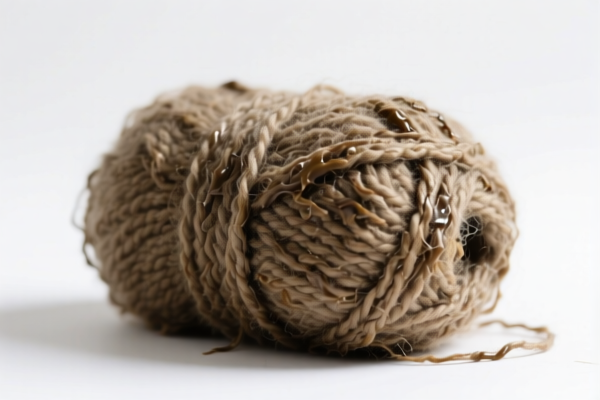
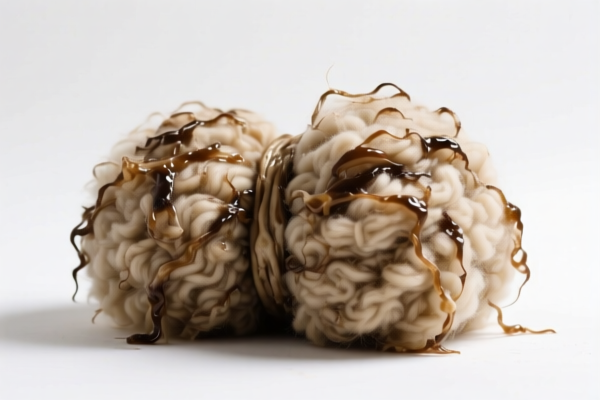
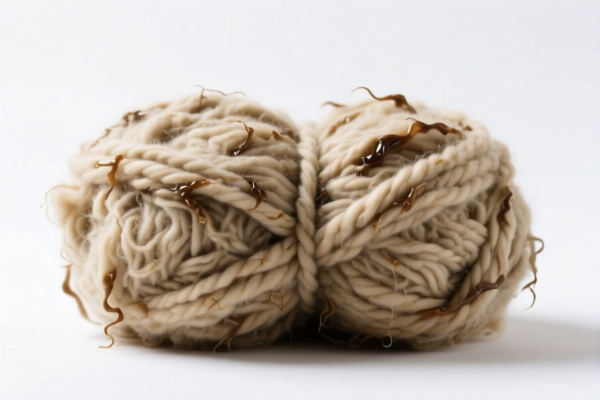
AI Analysis
🐑 Raw Wool (Wool Greasy)
🌐 HS Code Reference & Customs Clearance Guide | 2026 Latest Tariff Analysis | Professional Entry Strategy
📌 I. Product Definition & Classification: Do You Really Understand "Greasy Wool"?
Raw wool, specifically "Greasy Wool", is the natural fleece as it comes from the sheep, containing natural lanolin, sweat salts, dirt, and vegetable matter. It has not been carded or combed.
In international trade, this category is strictly divided based on: 1. Processing State: Greasy vs. Scoured. 2. Origin: Shorn Wool vs. Pulled Wool. 3. Quality Grade: Determined by fiber diameter (microns), often expressed in "s" (sides), where higher "s" means finer wool.
⚠️ Critical Distinction:
- Greasy Wool: Contains lanolin and impurities. Tax rates vary significantly based on fineness.
- Scoured/Washed Wool: Cleaned wool. Falls under different subheadings (e.g., 5101.21, 5101.31).
- Combed/Carded Wool: Processed fibers. Not applicable here.
📦 II. HS Code Classification Details (2026 Latest Tariff Authority Comparison)
Based on the provided <DATA>, here are the two specific HS codes for Greasy Shorn Wool with different quality grades:
| HS Code | Product Description | Key Differentiator | Fiber Fineness |
|---|---|---|---|
5101.11.20.00 |
Greasy Shorn Wool: Unimproved wool; other wool, not finer than 40s | Coarser wool (thicker fibers) | ≤ 40s (Approx. > 29.9 microns) |
5101.11.40.00 |
Greasy Shorn Wool: Other wool, finer than 40s but not finer than 44s | Finer wool (thinner fibers) | > 40s and ≤ 44s (Approx. 29.9 - 24.5 microns) |
🔍 Key Reminder:
- "40s" and "44s" refer to the Worsted Count system.
- 40s: Approximately 29.9 microns.
- 44s: Approximately 24.5 microns.
- Do not confuse "finer than 40s" with "coarser than 40s".
- Coarser (Thicker) →5101.11.20.00
- Finer (Thinner) →5101.11.40.00
💰 III. 2026 Latest Tariff Rate Breakdown (Including Additional Duties)
✅ Applicable Country: USA (US)
✅ Origin: China (CN)
✅ Effective Date: Current trade policies (Subject to USITC and IEEPA regulations)
🎯 1. 5101.11.20.00 —— Greasy Shorn Wool (Coarser than 40s)
| Item | Content |
|---|---|
| Base Tariff | 0.0% |
| Section 301 / USITC Additional Duty | 0.0% |
| IEEPA Additional Duty | 0.0% |
| Total Tax Rate | 0.0% |
| Tax Calculation | CIF Value × 0% = $0 |
| De Minimis Eligibility | ❌ Not Applicable (Usually subject to formal entry for raw materials) |
| Legal Basis Path | HTSUS:5101.11.20.00 → USITC:0.0% |
📌 Explanation:
- This code applies to coarser greasy wool (not finer than 40s).
- Currently, there is NO additional tariff (neither 25% Section 301 nor 10% IEEPA) applied to this specific subheading in the provided data.
- This makes it a low-cost entry point for coarser wool imports.
🎯 2. 5101.11.40.00 —— Greasy Shorn Wool (Finer than 40s but ≤ 44s)
| Item | Content |
|---|---|
| Base Tariff | 0.0% |
| Section 301 / USITC Additional Duty | 25.0% |
| IEEPA Additional Duty | Not Applied (Based on provided data showing only 25% total) |
| Total Tax Rate | 25.0% |
| Tax Calculation | CIF Value × 25% |
| De Minimis Eligibility | ❌ Not Applicable |
| Legal Basis Path | HTSUS:5101.11.40.00 → USITC:25.0% |
📌 Critical Warning:
- This code applies to finer greasy wool (between 40s and 44s).
- High Tariff Risk: A 25% additional tariff is explicitly stated in the<DATA>.
- Even though the base tariff is 0%, the total effective duty is 25%.
- Do not misdeclare coarser wool (0%) as finer wool (25%) or vice versa to evade duties; customs will test fiber diameter.
🛠️ IV. Customs Clearance Practical Advice (Battle-Tested Pitfall Guide)
✅ 1. Documentation Checklist (Non-negotiable)
| Document | Required | Purpose |
|---|---|---|
| ✅ Laboratory Test Report | ✔️ | Must show fiber diameter (microns) and "s" count. This is the single most critical document for classification. |
| ✅ Commercial Invoice | ✔️ | Clearly state "Greasy Shorn Wool" and specify quality grade (e.g., "42s"). |
| ✅ Packing List | ✔️ | Weight details (Gross/Net). |
| ✅ Bill of Lading / Air Waybill | ✔️ | Consistency with invoice. |
| ✅ Certificate of Origin | ✔️ | To prove origin (China). |
⚠️ Note: Customs may randomly sample wool for fiber diameter testing. Ensure your declaration matches the lab test.
✅ 2. Declaration Strategy (Key Mnemonics)
🔥 "Grade Determines Tax, Diameter is King, 40s is the Line, Mistake Costs You!"
| Scenario | Correct Declaration | Risk of Error |
|---|---|---|
| Wool diameter ~30 microns (> 40s) | 5101.11.20.00 (0%) |
High risk if declared as 44s |
| Wool diameter ~26 microns (40s-44s) | 5101.11.40.00 (25%) |
High risk if declared as coarser to save 25% |
| Scoured (Washed) Wool | ❌ Wrong HS | Must use 5101.21/5101.31 series |
| Combed Wool | ❌ Wrong HS | Must use 5105 series |
📌 Crucial Point:
- Misclassification Penalty: If you declare 25% wool as 0% wool, you face back duties + penalties + potential fraud charges.
- Lab Test is Law: US Customs and Border Protection (CBP) relies on ASTM D1442 or similar standard tests for fiber diameter.
✅ 3. Special Circumstances Handling
| Situation | Handling Advice |
|---|---|
| Mixed Lots (Different Grades) | Must separate or declare the highest tax rate for the entire lot. Do not mix 0% and 25% grades in one shipment without proper segregation. |
| Wool with High Lanolin Content | Still classified under 5101.11 if greasy. Lanolin content does not change HS code. |
| Shorn vs. Pulled Wool | Ensure the invoice specifies "Shorn" (from live sheep). Pulled wool (from dead sheep) may fall under different subheadings (e.g., 5101.19). |
| Origin Fraud | Do not claim free trade agreement benefits if origin is China. Ensure CO is accurate. |
🌍 V. Global Market Clearance Comparison (2026 Latest)
| Country/Region | Recommended HS Code | Tariff (China Origin) | Key Requirement | Note |
|---|---|---|---|---|
| 🇺🇸 USA | 5101.11.20.00 or .40.00 |
0% or 25% | Lab Test Report | High scrutiny on fiber diameter |
| 🇨🇳 China | 5101.11.xx | Varies (Low/Zero) | CCIB (if applicable) | Importing raw wool for domestic processing |
| 🇪🇺 EU | 5101.11 | 6.5% (Standard) | REACH Compliance | No Section 301 equivalent |
| 🇬🇧 UK | 5101.11 | 6.5% (Post-Brexit) | UKCA Marking (for finished goods) | Same as EU for raw wool |
| 🇮🇳 India | 5101.11 | 0% - 10% | Import Duty | Subject to anti-dumping if any |
📌 Conclusion:
- USA is the most complex market due to the 25% additional tariff on finer greasy wool.
- Accuracy in classification is paramount to avoid 25% penalties.
- For coarser wool (≤40s), the 0% rate is a significant cost advantage.
📌 VI. Common Errors & Pitfalls (Lessons from Blood and Tears)
❌ Error 1: Declaring 44s wool as 38s wool to save 25%
👉 Consequence: Customs lab test reveals true diameter → Back 25% duties + 25% penalty + Legal action.
❌ Error 2: Confusing "Greasy" with "Scoured"
👉 Consequence: Wrong HS code (e.g., 5101.21) → Delay in clearance + Inspection.
❌ Error 3: Not providing a lab test report for fiber diameter
👉 Consequence: Customs assigns a default high rate or holds shipment for testing → Storage fees + Delay.
❌ Error 4: Ignoring the "40s" boundary
👉 Consequence: Misclassification at the critical threshold → Audit risk.
✅ Correct Practice:
"Greasy Shorn Wool, Australian Origin, Diameter 27 Microns (42s), Cleaned Lanolin Content 15%, Lot No. XYZ, Laboratory Test Report Attached."
🎯 VII. Conclusion: Precise Classification Saves Millions!
🎯 Remember the Mantra:
🔹 "Coarse Wool: 0% Tax. Fine Wool (40s-44s): 25% Tax. Lab Test is the Law!"
🔹 "One micron difference, 25% cost difference. Do not gamble with customs."
📌 Pro Tip:
If you import finer wool (>44s), check for other HS codes (e.g., 5101.11.60) which may have different tariff rates. The provided data only covers 40s-44s. For wool finer than 44s, the tariff structure may change further.
📣 Immediate Action:
📞 Pre-clearance: Submit a Harbor Maintenance Tax (HMT) exemption request if applicable.
🔬 Lab Test: Obtain a third-party lab test report for fiber diameter before shipment.
📄 Documentation: Ensure the Commercial Invoice explicitly states the grade (s) and origin.
✨ Professional Customs Clearance Starts with Accurate Classification!
💼 Your cost efficiency depends on the right HS Code!
Customer Reviews
About HS Code Classification
The Harmonized System (HS) is an internationally standardized nomenclature developed by the World Customs Organization (WCO) to classify traded products. Over 200 countries use the HS system as the basis for customs tariffs, trade statistics, and import/export regulations.
Each HS code follows a hierarchical structure:
- Chapter (2 digits) — Broad category of goods (e.g., Chapter 84: Machinery and Mechanical Appliances)
- Heading (4 digits) — More specific grouping within the chapter
- Subheading (6 digits) — Internationally standardized breakdown, used by all WCO member countries
- National subdivisions (8-10 digits) — Country-specific extensions for further classification, such as US HTSUS 10-digit codes
Correct HS code classification is essential for smooth customs clearance, accurate duty payment, and compliance with trade regulations. Misclassification can lead to customs delays, overpayment of duties, or penalties.
When importing from CN to US, the applicable tariff rates may include:
- Most-Favored-Nation (MFN) rate — The standard duty rate applied to WTO members
- General rate — Applied to countries without trade agreements
- Trade remedy duties — Additional tariffs such as Section 301 (anti-dumping), Section 232 (national security), or countervailing duties
The information provided on this page is for reference purposes only. For official classification, please consult with your local customs authority or a licensed customs broker.