Raw bovine belly leather
CN → US| HS Code | Tariff Rate | Origin | Destination | Doc |
|---|---|---|---|---|
| 4101901010 | 17.5% | CN | US | Official Doc |
| 4101901020 | 17.5% | CN | US | Official Doc |
Product Images
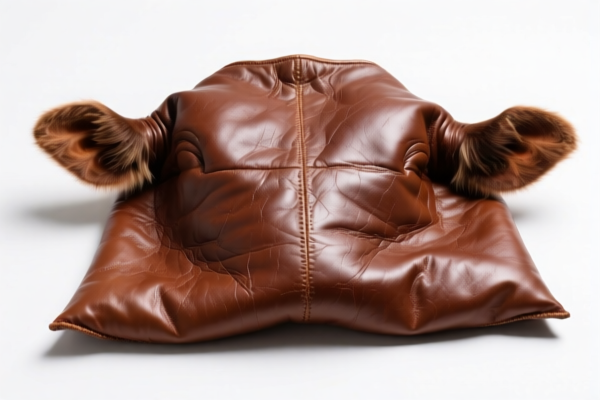
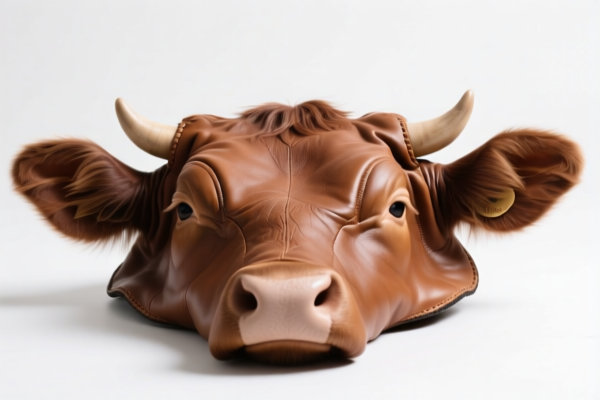
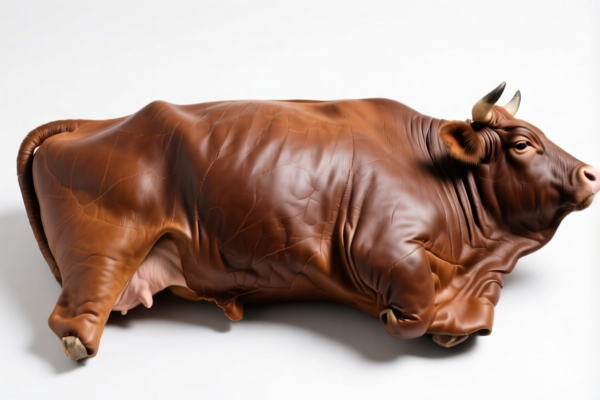
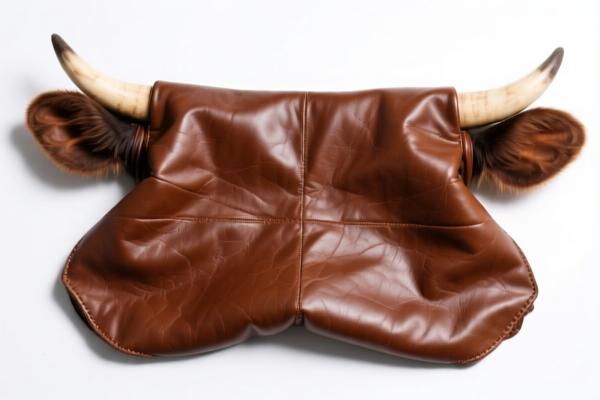
AI Analysis
🐄 Raw Bovine Belly Leather (Raw Hides of Bovine Animals)
🌐 HS Code Reference & Customs Clearance Guide | 2026 Latest Tariff Analysis | Professional Entry Strategy
📌 Part 1: Product Definition and Classification: What is "Raw Bovine Belly Leather"?
Raw bovine belly leather refers to the unprocessed hides of cattle (including buffalo). Specifically, it isolates the belly section of the hide, which is distinct from the stronger "butts" and "bends" (the back and flank areas).
In international trade, these are categorized by their state of preservation: * Fresh: Just slaughtered, no salt. * Wet-Salted: Preserved with salt to prevent rotting during transport. * Not Pretanned: The hair/flesh has not been chemically removed or tanned yet. It is in its raw, biological state.
⚠️ Key Distinction:
- If the hide is dehaired (hair removed) or limed (treated with lime), it may fall under different subheadings for "pretanned" or "prepared" skins.
- If it is dry-salted (dried completely) rather than wet-salted, it falls under different HS codes (e.g., 4101.21/22/29).
- This guide covers ONLY Fresh or Wet-Salted Bellies, as per the provided data.
📦 Part 2: HS Code Classification Details (2026 Latest Tariff Authority)
Based on the provided dataset, raw bovine bellies (fresh or wet-salted) are classified under two specific sub-headings. The distinction depends on whether they are declared specifically as "Bellies" or grouped under a broader "Other" category that includes bellies but is not explicitly labeled as such in the specific customs database structure.
| HS Code | Product Description | Key Characteristics | Tax Status |
|---|---|---|---|
4101.90.10.10 |
Butts and Bends of Bovine Animals (Note: In many 10-digit tariff schedules, "Bellies" are often grouped or explicitly listed here or in the "Other" category. Based on the description provided: "Other, including butts, bends and bellies... Of bovine animals: Fresh or wet-salted: Butts and bends") |
Butts & Bends: The upper back/shoulder area. High quality, thick. Includes Bellies: In some regulatory interpretations, bellies are included in this "Other" bucket if not explicitly separated. |
7.5% (0% Base + 7.5% Additional) |
4101.90.10.20 |
Other (Including Bellies) of Bovine Animals (Specifically: "Other, including butts, bends and bellies... Of bovine animals: Fresh or wet-salted: Other") |
Bellies: The lower abdominal area. Thinner, less uniform grain. "Other": Any remaining raw bovine parts not classified as butts/bends. This is the most likely code for pure belly leather if the tariff schedule distinguishes it from butts/bends. |
7.5% (0% Base + 7.5% Additional) |
🔍 Critical Note on "Bellies":
- HS 4101.90.10.10 explicitly mentions "Butts and Bends". If your shipment is 100% belly, customs might challenge this code if the local schedule requires "Other" for bellies.
- HS 4101.90.10.20 is labeled "Other". In standard HS nomenclature, "Other" usually captures the remaining items after Butts/Bends are defined. Therefore, Raw Bovine Bellies are most accurately declared under4101.90.10.20unless the specific country's 10-digit tariff explicitly lists "Bellies" under the 10.10 code.
- Both codes have the EXACT same tax rate.
💰 Part 3: 2026 Latest Tariff Rate Breakdown (Detailed Tax Clauses)
✅ Applicable Country: United States (US)
✅ Origin: China (CN) [Assumed based on typical 7.5% additional duty context]
✅ Effective Date: 2026 (Current Policy)
🎯 1. 4101.90.10.10 & 4101.90.10.20 — Raw Bovine Hides (Fresh/Wet-Salted)
| Item | Content |
|---|---|
| Base Tariff Rate | 0.0% (Ad Valorem) Raw hides and skins generally enter duty-free under MFN rates. |
| Section 301 / Additional Duty | +7.5% Specific to this category of raw animal products from China. |
| Total Tariff Rate | 7.5% |
| Tax Calculation | CIF Value × 7.5% |
| De Minimis Eligibility | ❌ Not Eligible Raw hides are subject to full duty declaration; they do not qualify for low-value shipment exemptions. |
| Legal Basis | Chapter 41 (Raw Hides and Skins) → Heading 4101 → Subheading 4101.90 → USHTS 4101.90.10.xx |
📌 Explanation:
- Base Rate (0%): The World Trade Organization (WTO) Common External Tariff usually sets raw hides at 0% to encourage raw material import for domestic tanning industries.
- Additional Duty (7.5%): This is a punitive tariff added under specific trade agreements or national security provisions (e.g., Section 301 or IEEPA).
- Total Impact: For every $10,000 CIF value of raw bovine bellies, you pay $750 in customs duties.
🛠️ Part 4: Customs Clearance Practical Advice (Pitfall Avoidance Guide)
✅ 1. Document Checklist (Mandatory)
| Document | Required? | Notes |
|---|---|---|
| Commercial Invoice | ✅ | Must clearly state: "Raw Bovine Hides - Belly - Wet-Salted/Fresh". Do NOT use vague terms like "Leather" (implies tanned). |
| Packing List | ✅ | Specify weight (Net/Gross) and number of hides. |
| Veterinary Health Certificate | ✅ | Critical. Raw hides require proof of disease-free status (e.g., Foot and Mouth Disease free zone). |
| Bill of Lading / Air Waybill | ✅ | Standard shipping docs. |
| ISF (Importer Security Filing) | ✅ | Must be filed 24 hours before loading if shipping to the US by vessel. |
✅ 2. Classification Tips (Key Mnemonics)
🔥 “Fresh/Wet Salt = 4101.90.10; Belly = .20 (Usually); Butts/Bends = .10”
| Scenario | Correct HS Code | Risk if Wrong |
|---|---|---|
| 100% Belly, Wet-Salted | 4101.90.10.20 ("Other") |
Using .10 (Butts/Bends) may cause misdeclaration penalties if audited. |
| Mixed Lot (Butts + Bellies) | Split Declaration or Best Fit | If mixed, customs may apply the rate of the most valuable part or require full separation. |
| Dried (Not Wet-Salted) | 4101.21 - 4101.29 |
ERROR: Do not use 4101.90.10. Different duty rates may apply. |
| Tanned/Prepared | 4104 or 4105 |
ERROR: Raw hides ≠ Tanned leather. Tanned hides have different codes (e.g., 4104.19) and different taxes. |
✅ 3. Special Handling Advice
| Situation | Recommendation |
|---|---|
| Smell/Preservation | Ensure hides are properly salted. Wet-salted hides must be packed to prevent leakage. Dry rotted hides may be rejected. |
| Origin Marking | Must clearly mark "Product of China" on the packaging. |
| Sanitary Control | Customs may inspect for pests. Ensure hides are free of blood clots, mud, and excessive flesh. |
| Value Declaration | Declare CIF Value (Cost + Insurance + Freight). Under-declaring raw hides is a common fraud trigger. |
🌍 Part 5: Global Market Comparison (2026)
| Country/Region | Recommended HS Code | Duty Rate (China Origin) | Remarks |
|---|---|---|---|
| 🇺🇸 USA | 4101.90.10.20 |
7.5% | Includes 7.5% additional duty. |
| 🇨🇳 China (Import) | 4101.20 (General) |
~10-13% | Varies by preservation type. |
| 🇪🇺 EU | 4101.21 - 4101.29 |
12% | Standard MFN rate for raw hides. |
| 🇮🇳 India | 4101.21 - 4101.29 |
Varies | May require specific import licenses. |
📌 Conclusion:
- The US 7.5% rate is relatively moderate compared to some other markets, but the additional duty is a fixed cost that must be priced into your FOB/CIF offers.
- Europe and India do not have this specific 7.5% "additional" tariff but have standard MFN duties.
📌 Part 6: Common Errors & Pitfalls (Lessons Learned)
❌ Error 1: Calling it "Leather" in the invoice.
👉 Consequence: Customs may classify it as "Finished Leather" (Chapter 41 or 42) with higher duties and complex certifications.
✅ Fix: Always use "Raw Hides" or "Unprocessed Skins".
❌ Error 2: Confusing "Wet-Salted" with "Dried".
👉 Consequence: Wrong HS Code (4101.2x vs 4101.9x). This can lead to duty miscalculation and audits.
✅ Fix: Specify "Wet-Salted" or "Fresh" clearly in the description.
❌ Error 3: Ignoring Veterinary Health Certificates.
👉 Consequence: Cargo held at port, incinerated, or returned.
✅ Fix: Obtain health certs from the exporting country's veterinary authority before shipment.
🎯 Part 7: Conclusion: Precision in Raw Material Import
🎯 Remember:
🔹 "Raw is Raw: Use Chapter 41."
🔹 "Belly is 'Other': Think .20, not .10."
🔹 "7.5% is the Cost: Plan Your Margin."
📌 Pro Tip:
If you are importing large volumes, consider applying for a Tariff Engineering study or Exclusion Request if available for specific 301/IEEPA goods, though raw hides often have limited exclusion scope.
📣 Immediate Action:
📞 Verify the exact 10-digit HS code with your customs broker based on the physical composition (pure belly vs. mixed).
📄 Secure the Veterinary Health Certificate before loading.
💰 Calculate your landed cost using 7.5% total duty.
✨ Professional clearance starts with accurate raw material classification!
💼 Every dollar saved on misclassification is pure profit!
Customer Reviews
About HS Code Classification
The Harmonized System (HS) is an internationally standardized nomenclature developed by the World Customs Organization (WCO) to classify traded products. Over 200 countries use the HS system as the basis for customs tariffs, trade statistics, and import/export regulations.
Each HS code follows a hierarchical structure:
- Chapter (2 digits) — Broad category of goods (e.g., Chapter 84: Machinery and Mechanical Appliances)
- Heading (4 digits) — More specific grouping within the chapter
- Subheading (6 digits) — Internationally standardized breakdown, used by all WCO member countries
- National subdivisions (8-10 digits) — Country-specific extensions for further classification, such as US HTSUS 10-digit codes
Correct HS code classification is essential for smooth customs clearance, accurate duty payment, and compliance with trade regulations. Misclassification can lead to customs delays, overpayment of duties, or penalties.
When importing from CN to US, the applicable tariff rates may include:
- Most-Favored-Nation (MFN) rate — The standard duty rate applied to WTO members
- General rate — Applied to countries without trade agreements
- Trade remedy duties — Additional tariffs such as Section 301 (anti-dumping), Section 232 (national security), or countervailing duties
The information provided on this page is for reference purposes only. For official classification, please consult with your local customs authority or a licensed customs broker.